Reading guide
Content guideOverview
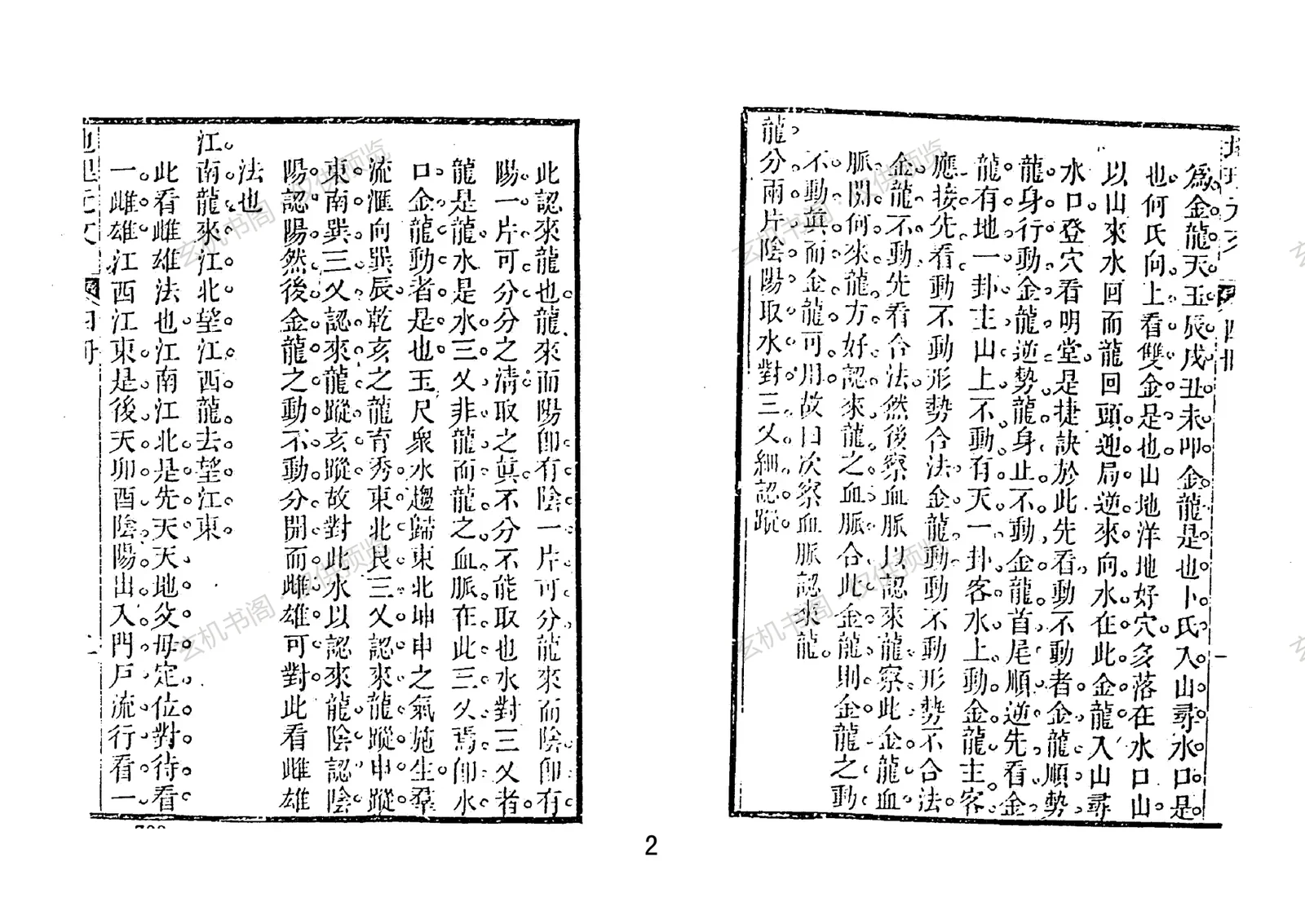
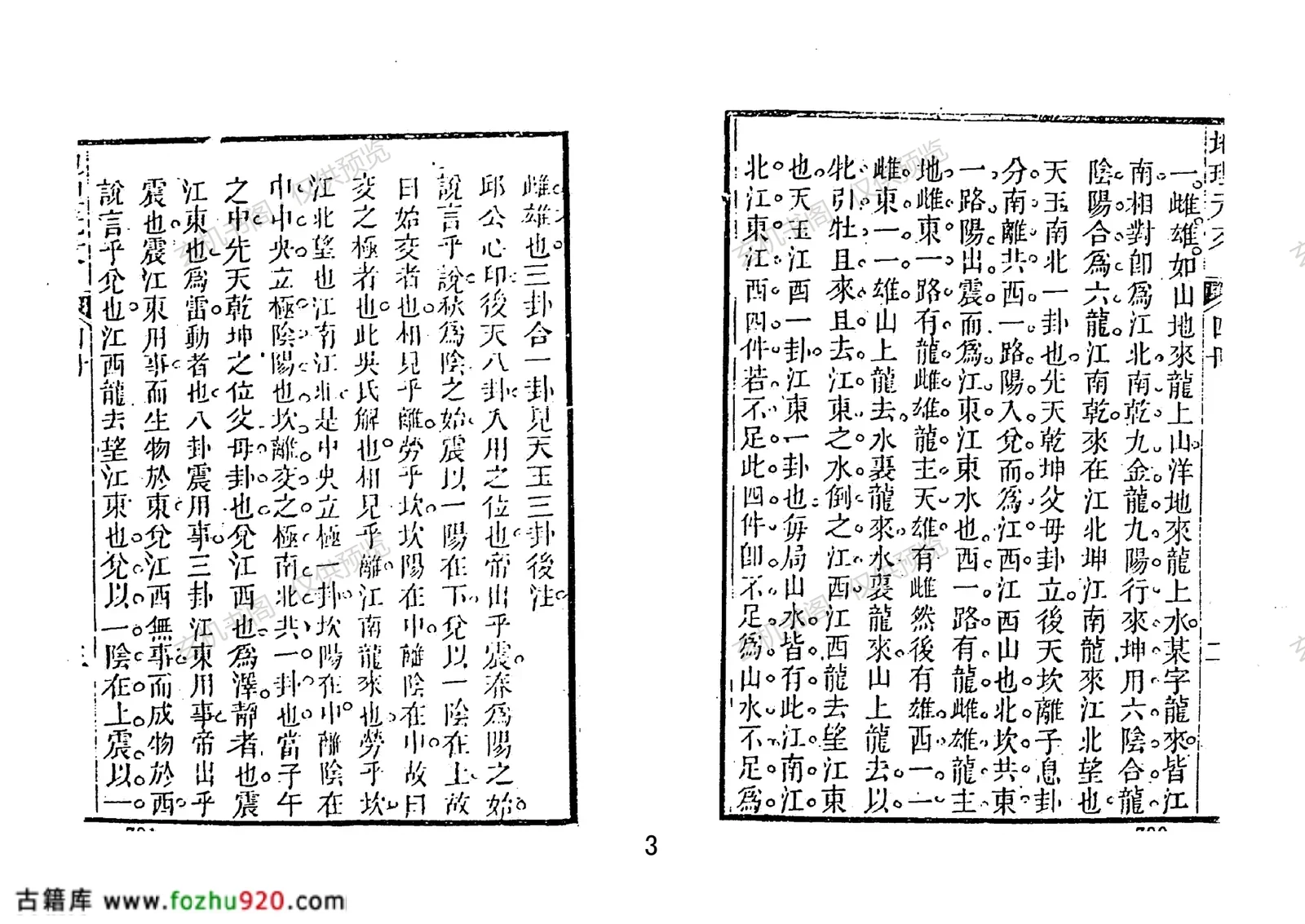
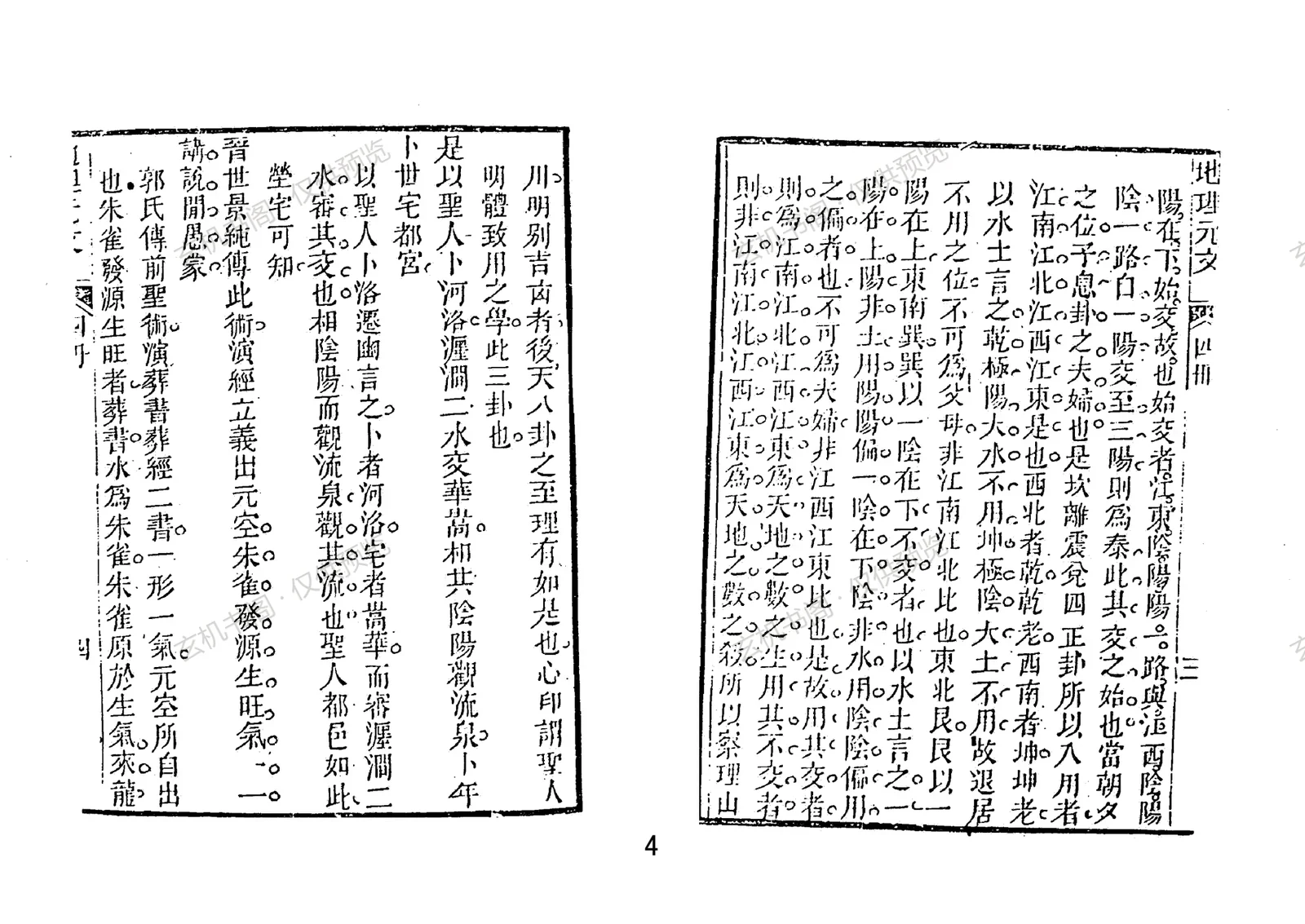
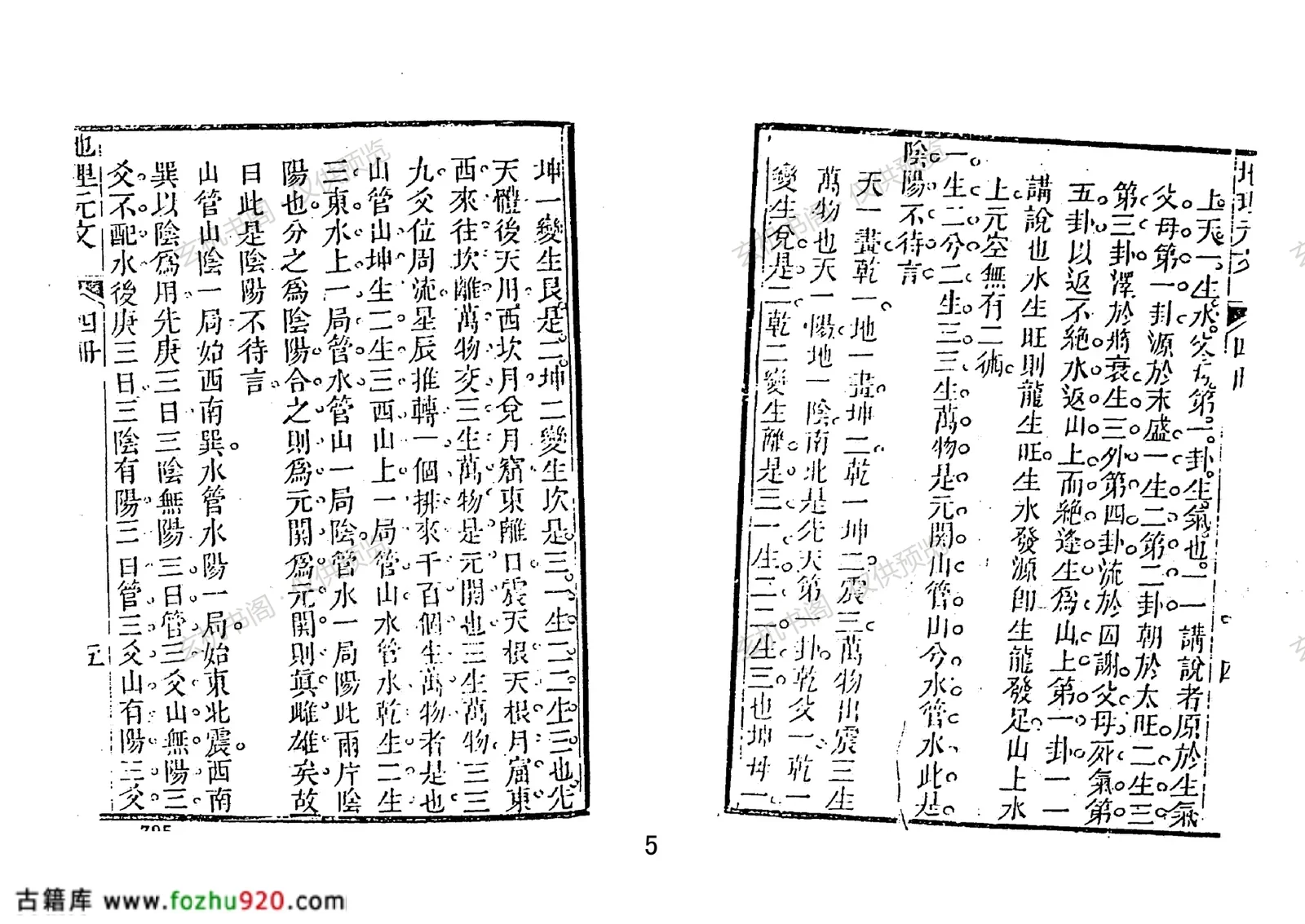
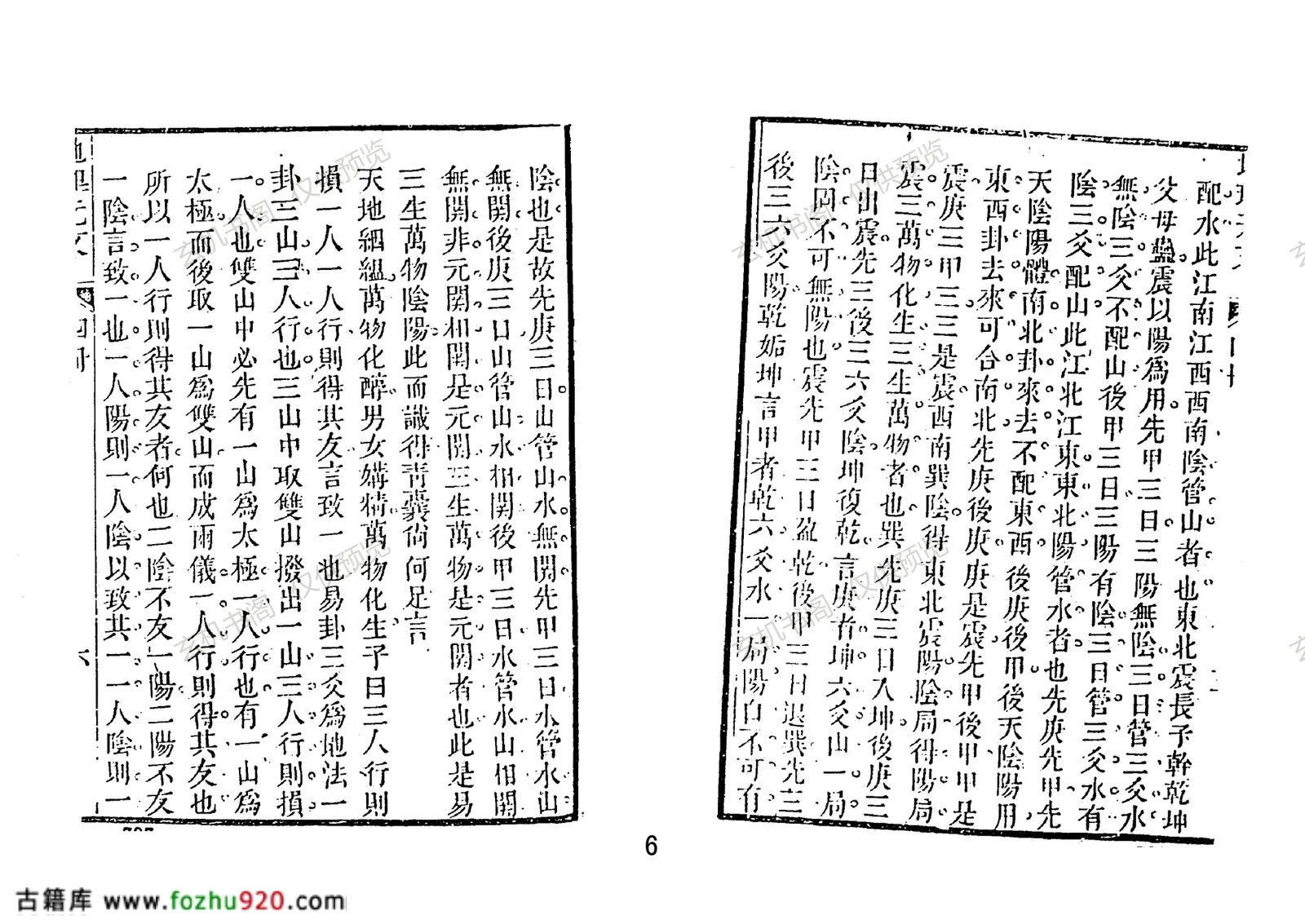
The book opens with a preface titled 'Qingnang Preface' and proceeds to discuss yang-zeng geography in a cluster of short, highly compressed essays. Its core theme is the pairing of male and female (cixiong) in mountains and waters: one should first determine whether the Golden Dragon is active, then trace the bloodline to identify the incoming dragon. The text lays out rules for matching dragon, water, and facing according to yin and yang, and it repeatedly invokes the Earlier and Later Heaven trigram arrangements to explain why certain directions and water outlets work together. Later sections discuss the generation and completion numbers of trigrams, the three males and three females, and how the dragon, cave, water, and orientation must be read as a whole. This is a classic-style sanhe feng shui text, archaic in language and dense in terminology, best studied alongside the Qingnang classics and the Book of Burial.
Contents
Qingnang Preface: male-female pairing as the core
Watching whether the Golden Dragon moves
Yin-yang of incoming dragons and site selection
Patterns such as 'dragon from Jiangnan, gaze to Jiangbei'
Earlier and Later Heaven trigrams and directions
Three males, three females, and male-female convergence
Key Points
Male-female pairing is the guiding principle
Active versus inactive Golden Dragon decides fit
Earlier and Later Heaven trigrams are key references
Dragon, cave, water, and facing are judged together
Archaic wording requires familiarity with Qingnang texts