Reading guide
Content guideOverview
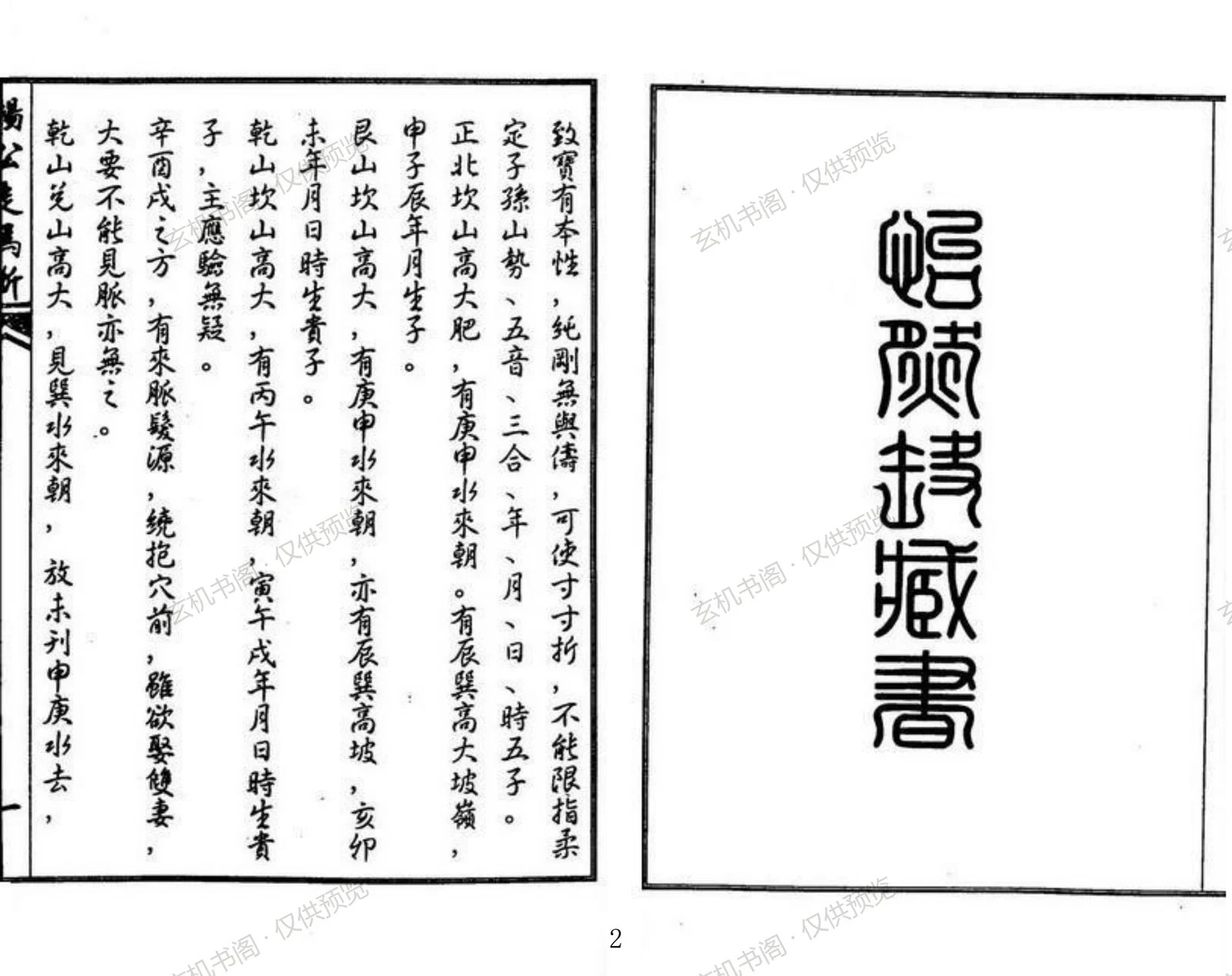
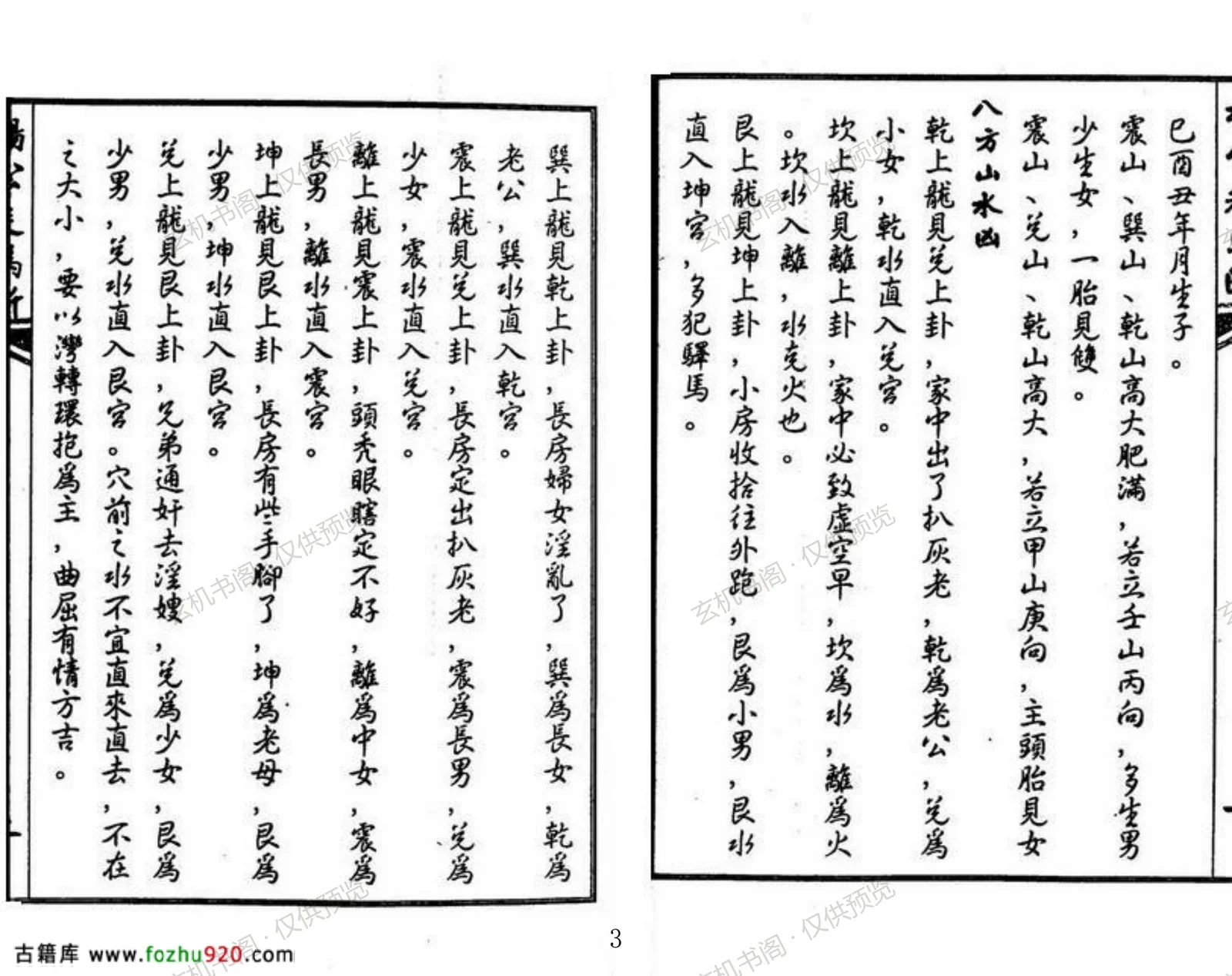
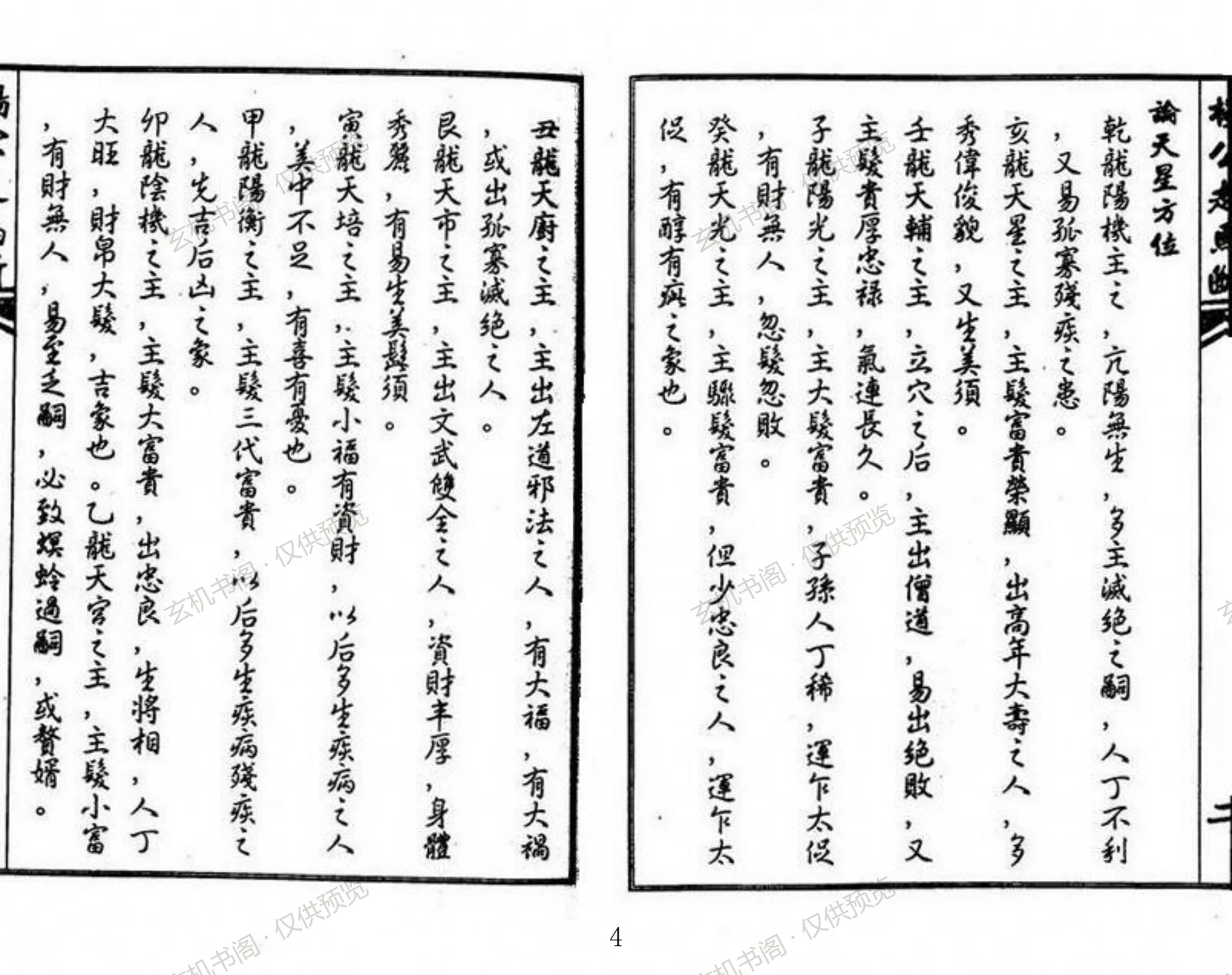
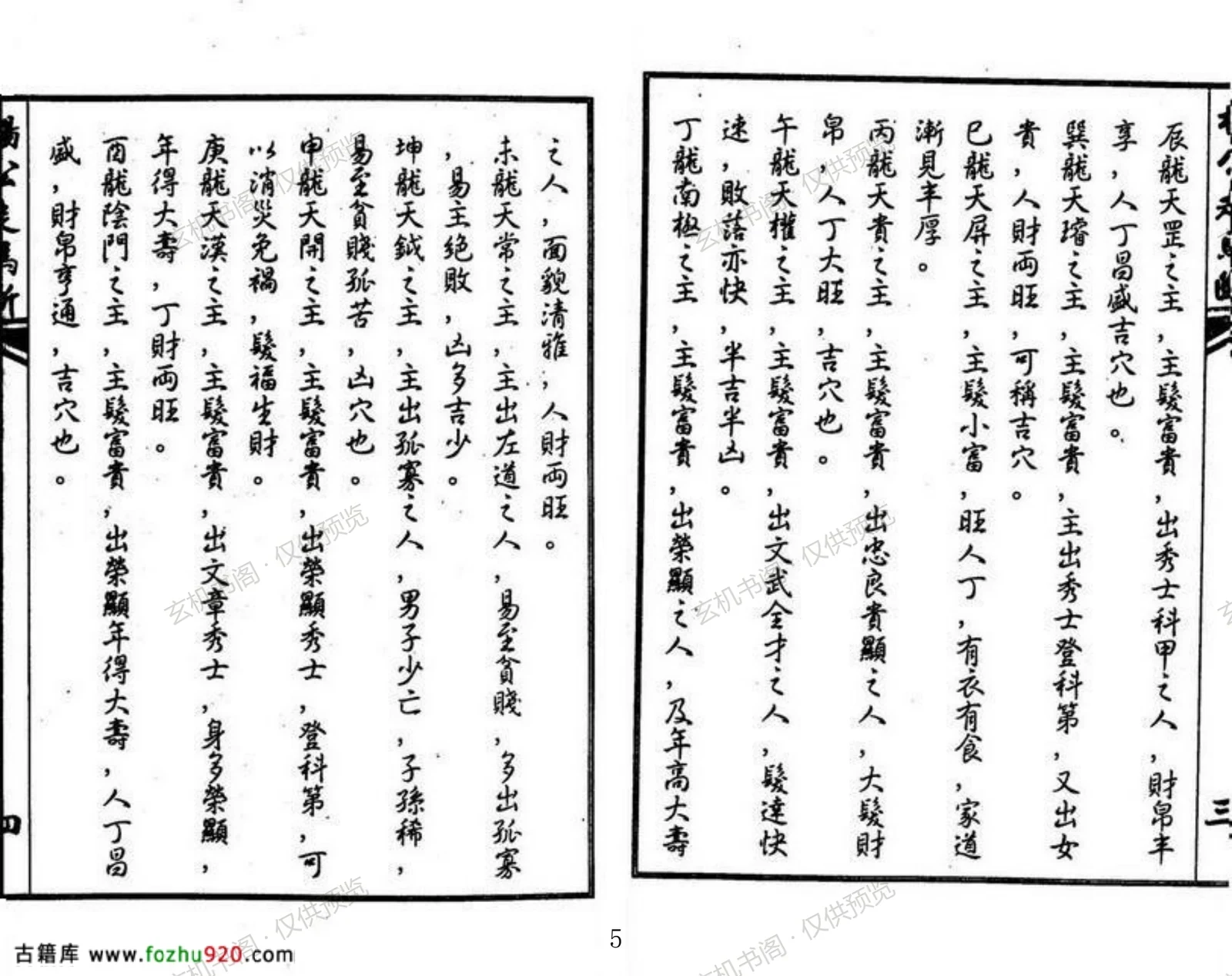
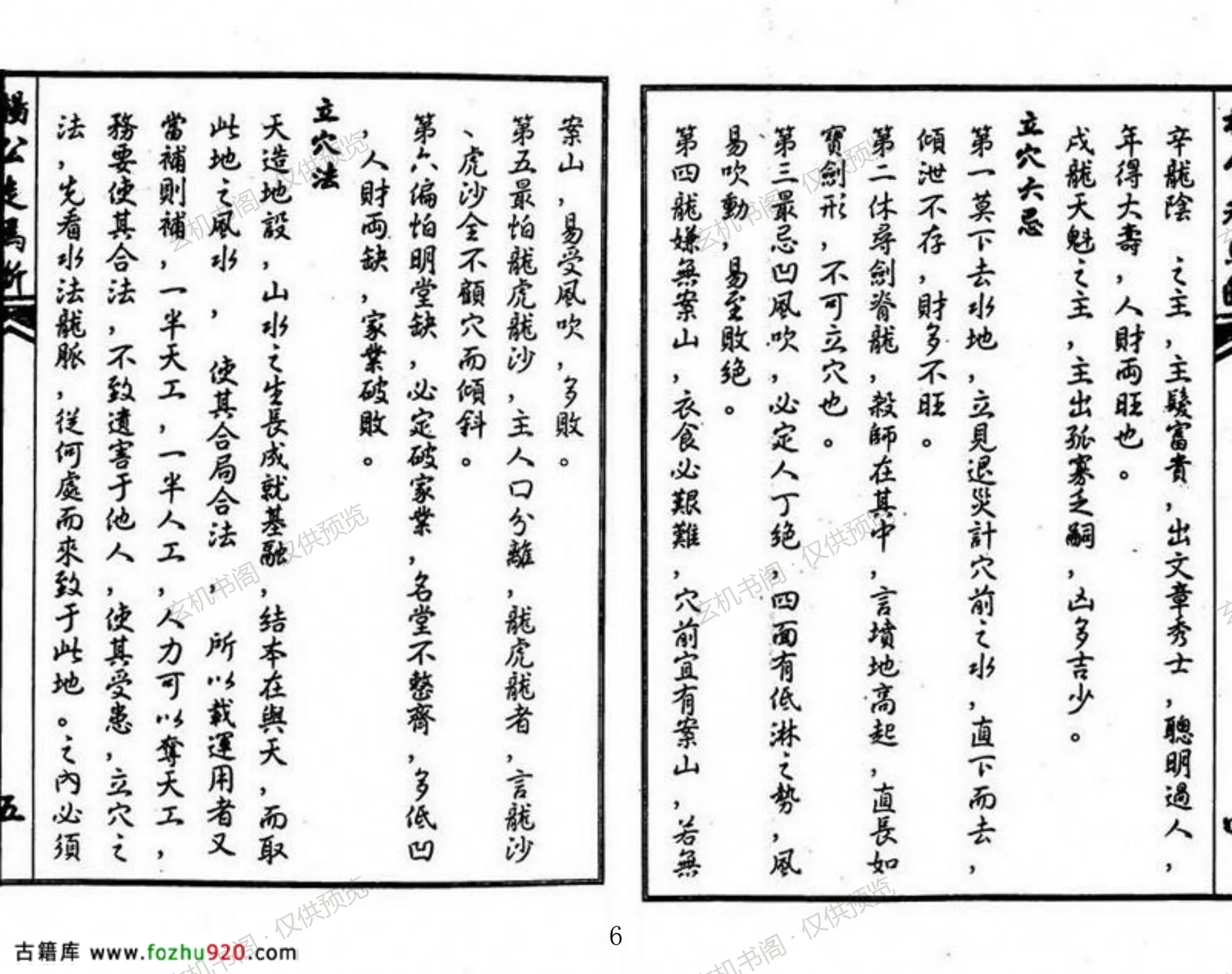
Yang Gong's Horse-Riding Judgments is a manuscript of formulaic feng shui judgments attributed to the Yang Gong (Yang Junsong) tradition. The visible pages center on the four elements of dragon,穴 (site), sand, and water. The text first discusses the innate nature of things and then uses specific mountain orientations such as Zi, Kan, Gen, and Qian to explain how tall mountains, incoming water directions, and birth years can indicate noble sons, wealth, loneliness, illness, or licentiousness. Later pages present 'eight-direction mountain-water judgments,' mapping the Qian, Kan, Gen, Zhen, Xun, Li, Kun, and Dui directions to family members and judging what kind of people will emerge from water or high sand in each direction. It then lists 'heavenly star direction' entries, such as Qian dragon indicating loneliness, Zi dragon indicating wealth but few descendants, and Gui dragon indicating sudden wealth with few loyal people. It also records the 'six taboos of site setting' and 'methods of site setting.' The language is formulaic and the judgments are direct, combining form-school landscape analysis with eight-trigram directions and heavenly star names. It is useful for readers studying Yang Gong feng shui judgments, manuscript formulas, and traditional kanyu terminology.
Contents
General discussion of dragon, site, sand, and water
Judgments for Zi, Gen, Qian, and other orientations
Eight-direction mountain-water judgments with six relations
Heavenly star directions and the fortunes of each dragon
Six taboos of site setting and site-setting methods
Key Points
Judges descendants, wealth, and illness by mountain height, direction, and water flow
Maps eight trigram directions to family members as an eight-direction judgment system
Lists fortunes associated with Qian, Zi, Gui, and other heavenly star directions
Proposes six taboos of site setting, avoiding water outlets, sword-ridge dragons, and drafty hollows
Uses formulaic judgments that directly state what kind of people will appear