Reading guide
Content guideOverview
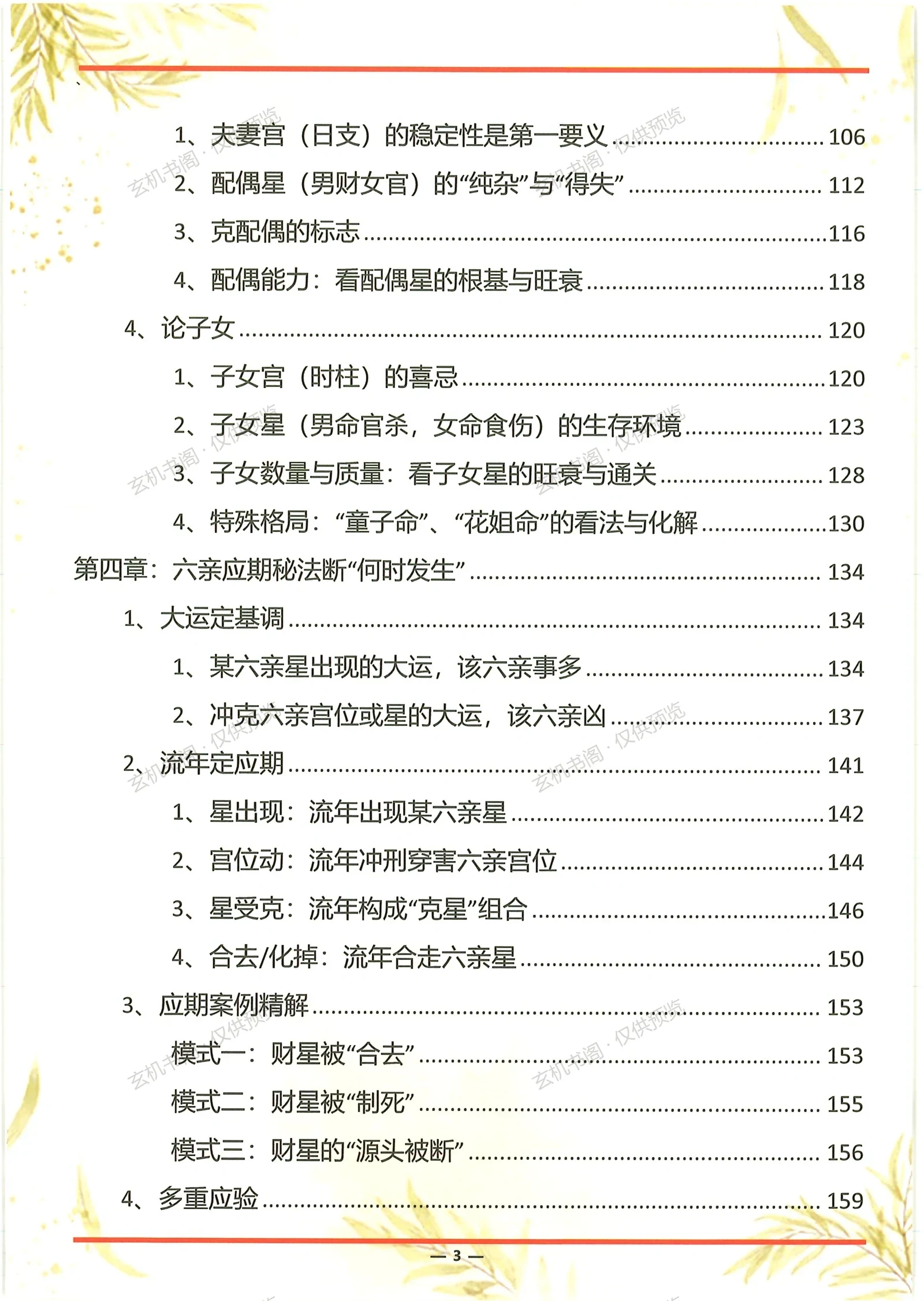
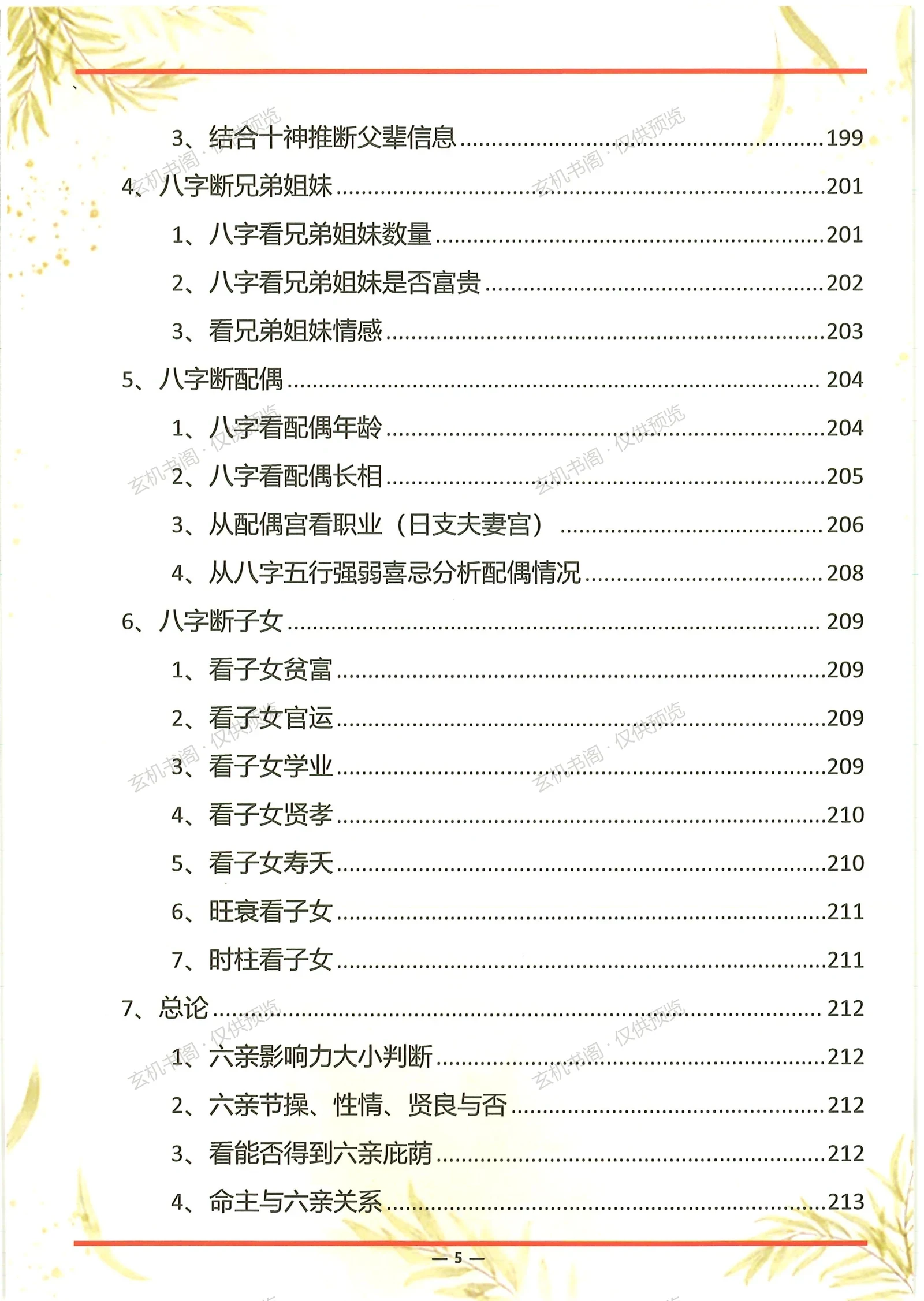
This book belongs to the blind-school (mangpai) tradition of Four Pillars astrology and focuses specifically on the six relatives. Chapter One establishes how to locate relatives: the year, month, day and hour pillars correspond to ancestors, parents, siblings, spouse and children, while the ten gods identify who is who, with rules for mismatched star-palace combinations. Chapter Two explains fortune judgment, distinguishing true from false relative stars and listing the signals of a harmed palace—harm, clash, punishment, direct control and combination. Chapter Three gives practical formulas and cases for ancestors, parents, siblings, spouse and children. Chapter Four addresses timing, using luck pillars and annual pillars to determine when events occur. Chapter Five covers advanced mental methods and special cases, and Chapter Six concludes with overall judgments on number, wealth, temperament and affection of relatives. The structure is clear, combining oral formulas with case analysis, making it an advanced practical reader.
Contents
Ch.1 Locating the six relatives: palaces and ten gods
Ch.2 Judging fortune: true/false stars and harmed palaces
Ch.3 Practical formulas and cases by relative type
Ch.4 Timing methods: luck pillars and annual pillars
Ch.5 Advanced methods and special cases
Ch.6 Concluding judgments on the six relatives
Key Points
Palaces locate relatives; ten gods identify them
Harm is most severe, clash next; punishment, direct control and combination also damage palaces
True stars with strong roots imply ability and longevity; false stars imply weakness or illness
Timing uses luck pillars for background and annual pillars for specific events
When one relative has several stars, choose the core representative star