Reading guide
Content guideOverview
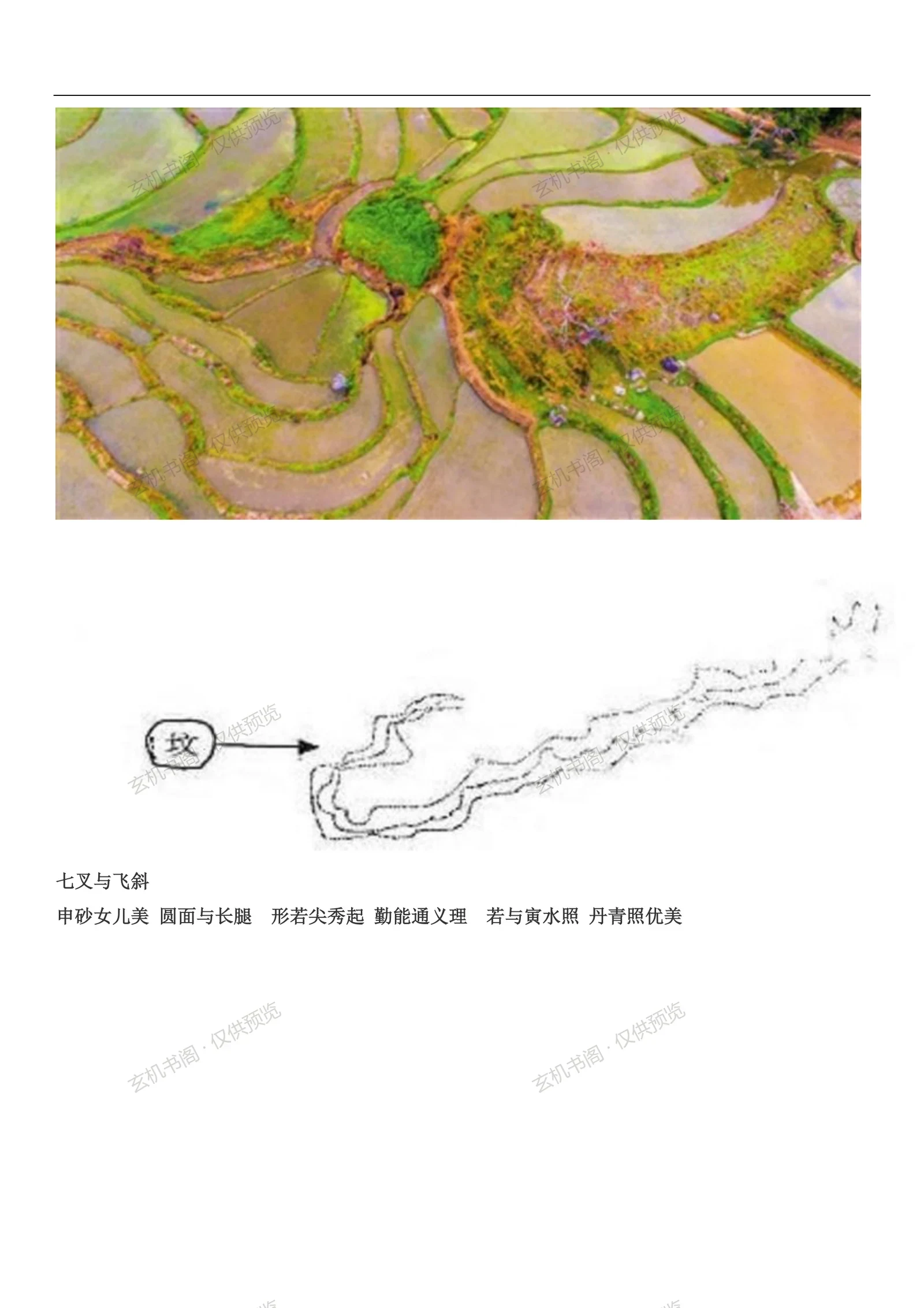
This booklet focuses on the 'Kun sand' section of the Jinsuo Yuguan, a classical Chinese fengshui text. It presents the original verses together with Yang Wu's annotations, explaining how the shape of sand (hills, buildings and other raised forms) in the later-heaven Kun sector — comprising the Wei, Kun and Shen directions — is read as auspicious or inauspicious. Verses such as 'Wei sand can bring wealth, but through improper conduct' and 'If the form is graceful as a sleeping beauty, ill water will spoil it' are each given a plain-language gloss: disorderly Wei sand is linked to ill-gotten gains and disreputable company, while well-formed sand brings legitimate wealth, property and family harmony. Stacked Kun sand is said to bring a household managed by women and accomplished daughters, especially when supported by water in the Gen direction, whereas broken or jagged sand is unfavorable. Photographs of skylines, farmhouses, family gatherings, gold bars and terraced fields are included to help readers match the verses to real landforms.
Contents
General principles of sand in the second-black Kun sector
Wei sand: wealth and improper conduct
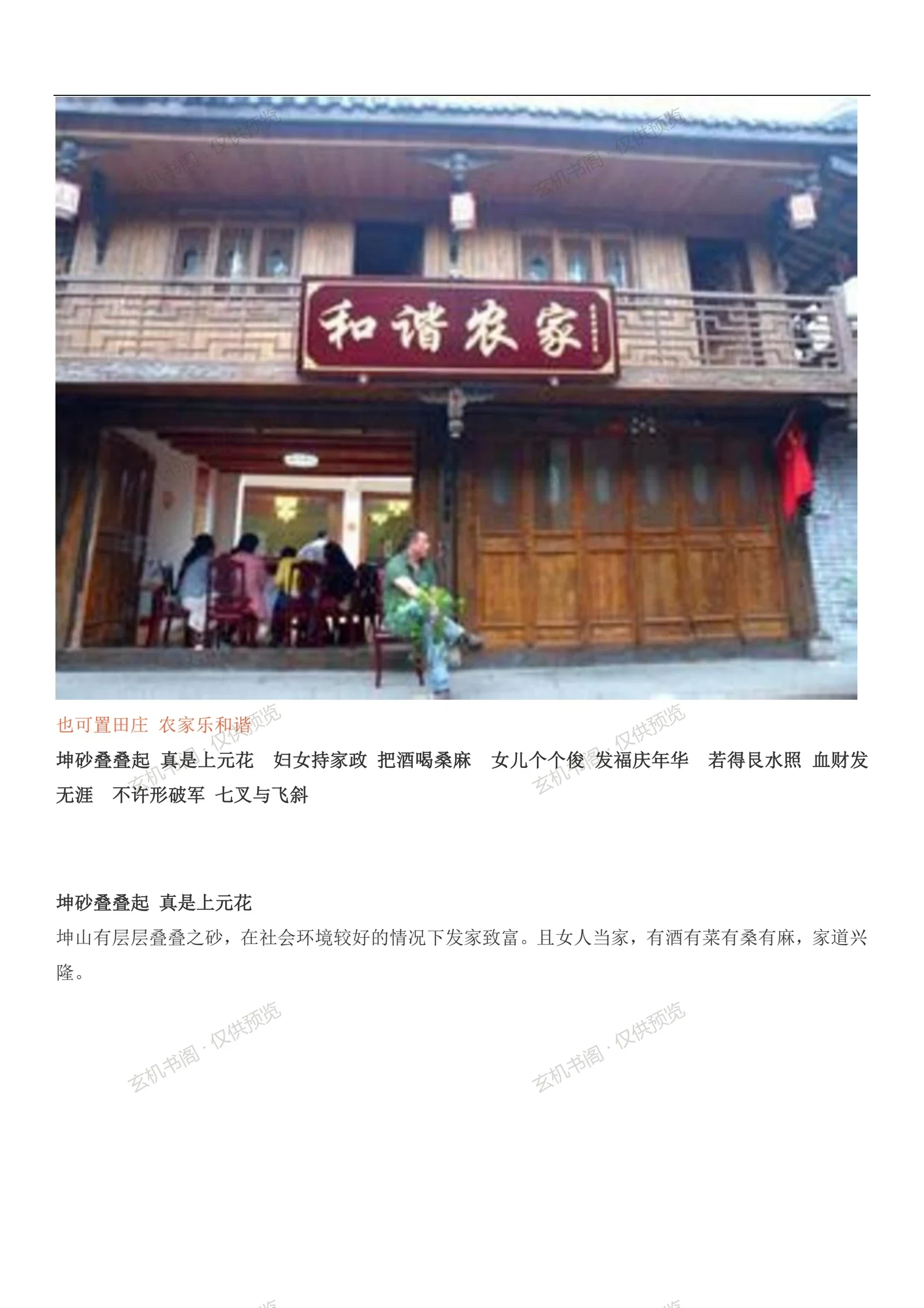
Graceful Wei sand and rural property
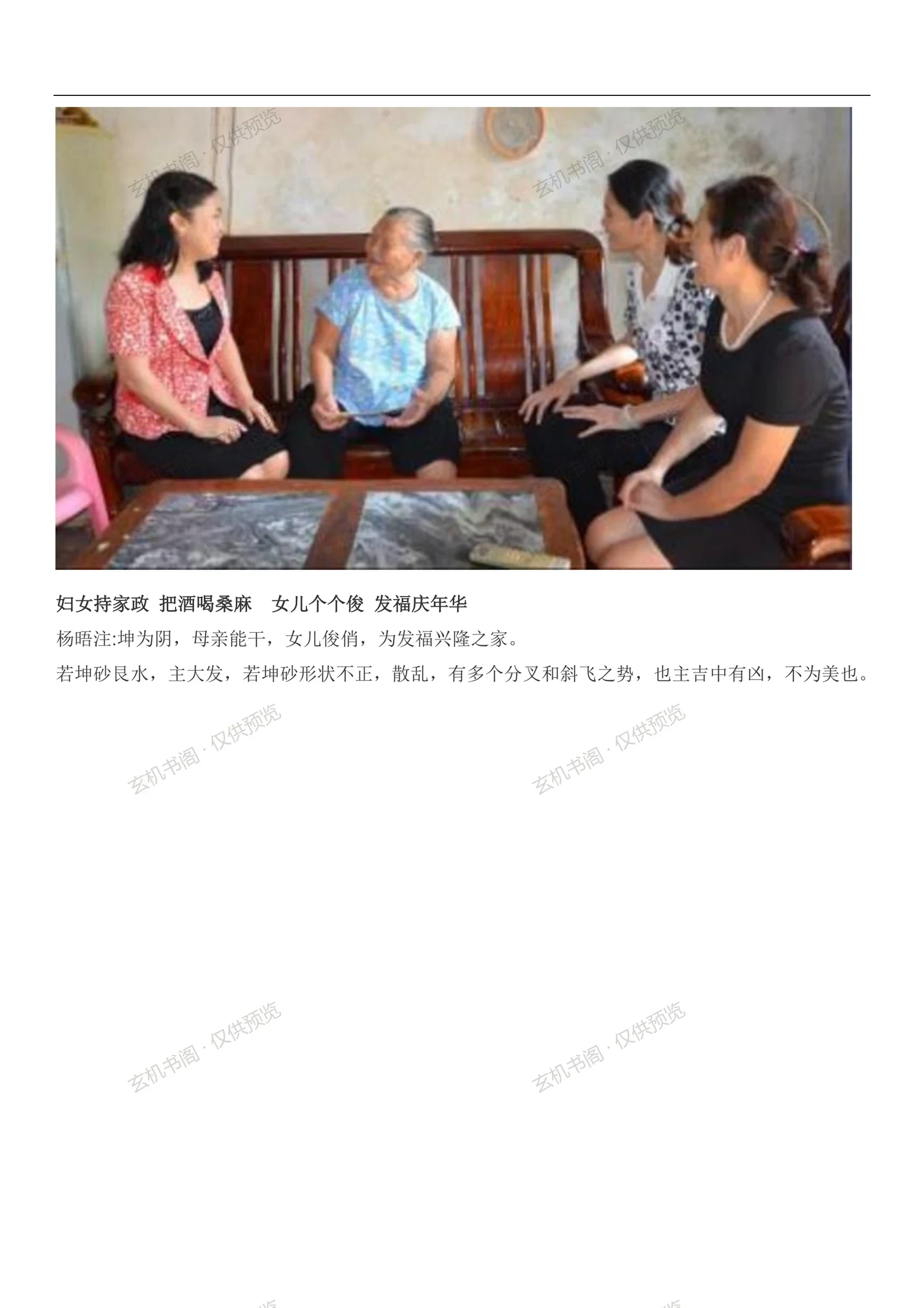
Stacked Kun sand: women manage the home, fine daughters
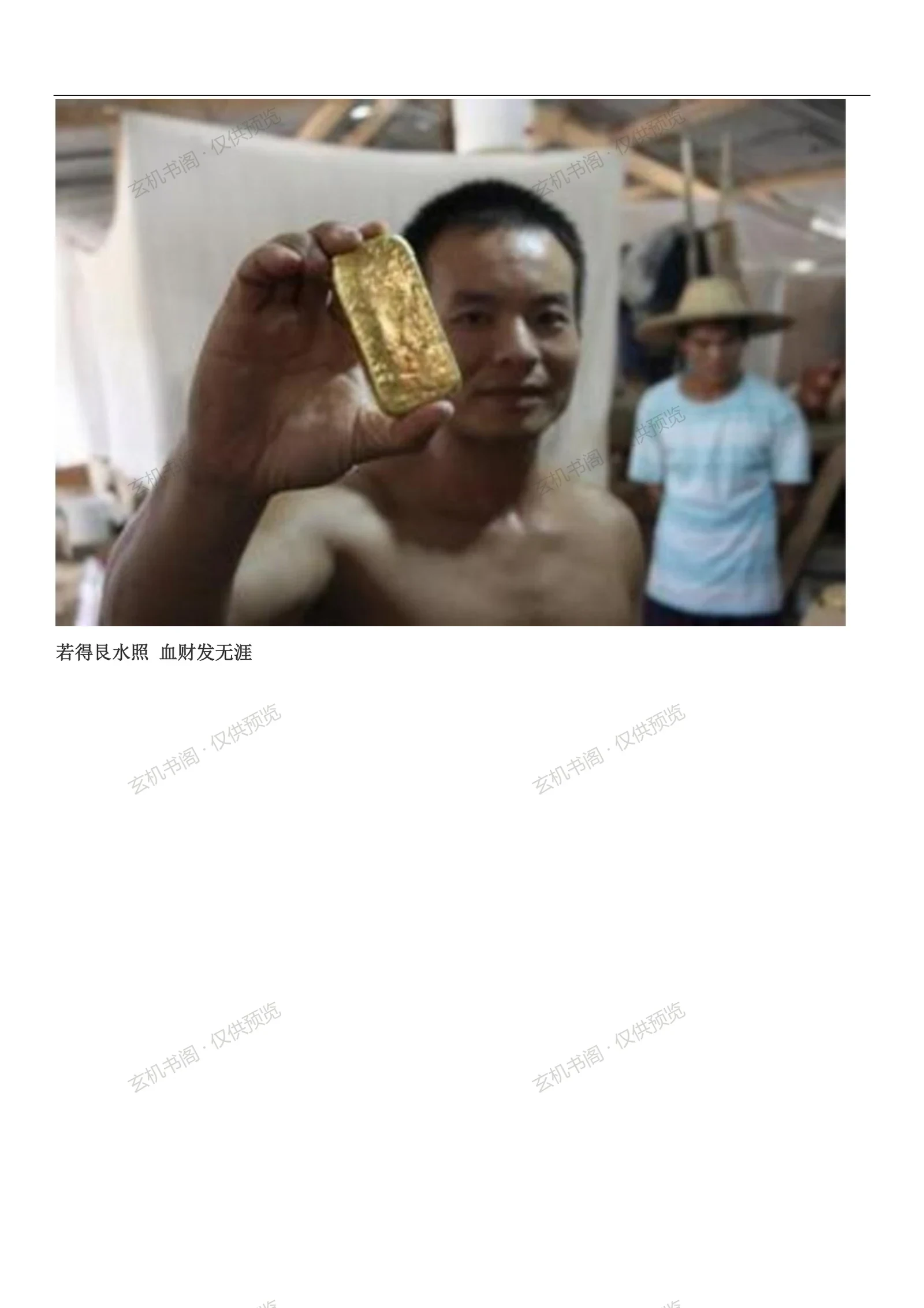
Gen water and sudden wealth
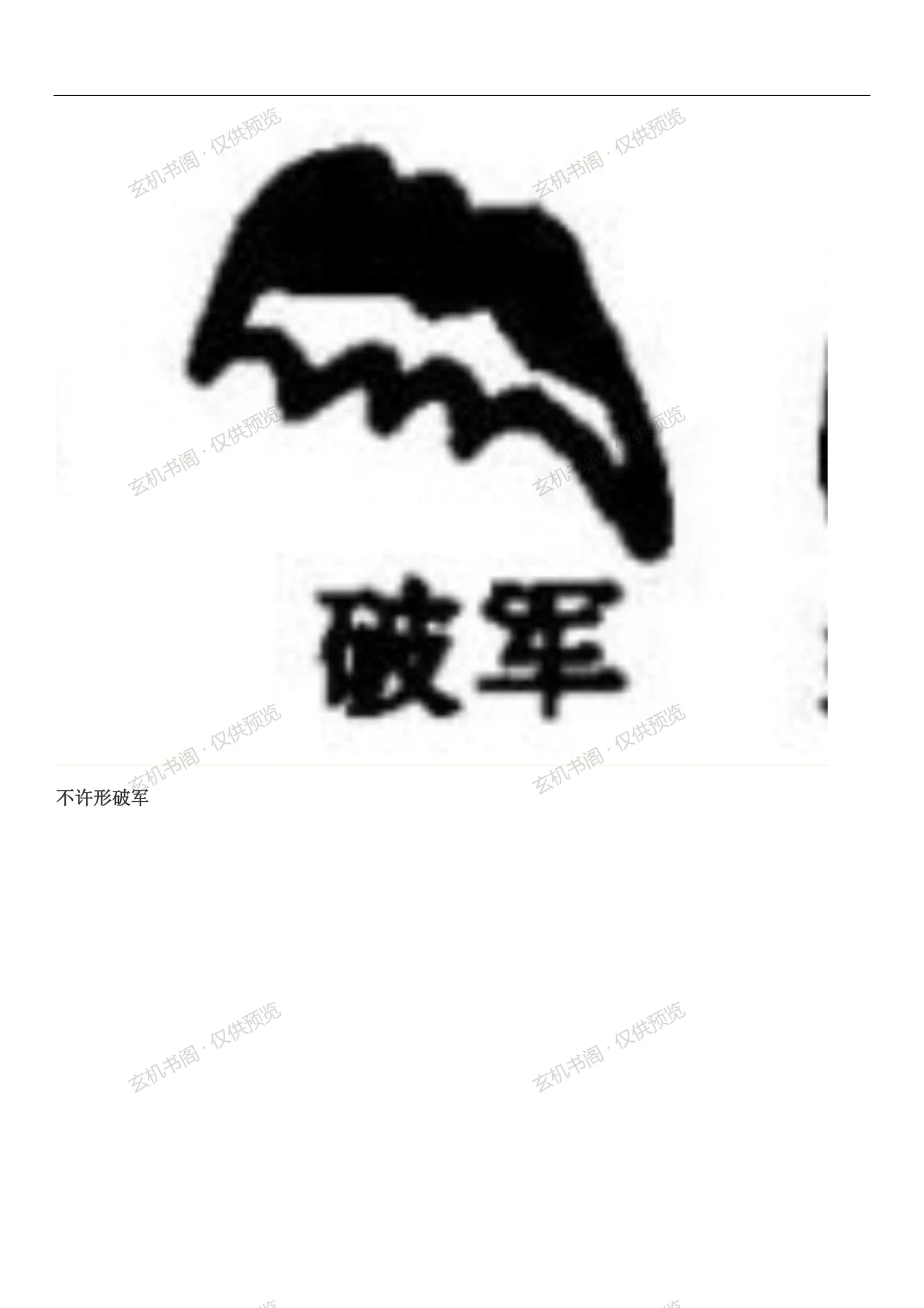
Broken sand and jagged, flying-slant forms
Shen sand: pretty daughters, diligent and principled
Key Points
The later-heaven Kun trigram governs the Wei, Kun and Shen sectors
Each verse is followed by a plain-language annotation
Well-formed sand brings legitimate wealth; broken sand is unfavorable
Stacked Kun sand favors women-led households and accomplished daughters
Water in the Gen direction is said to activate Kun sand
Photos illustrate the sand forms described