Reading guide
Content guideOverview
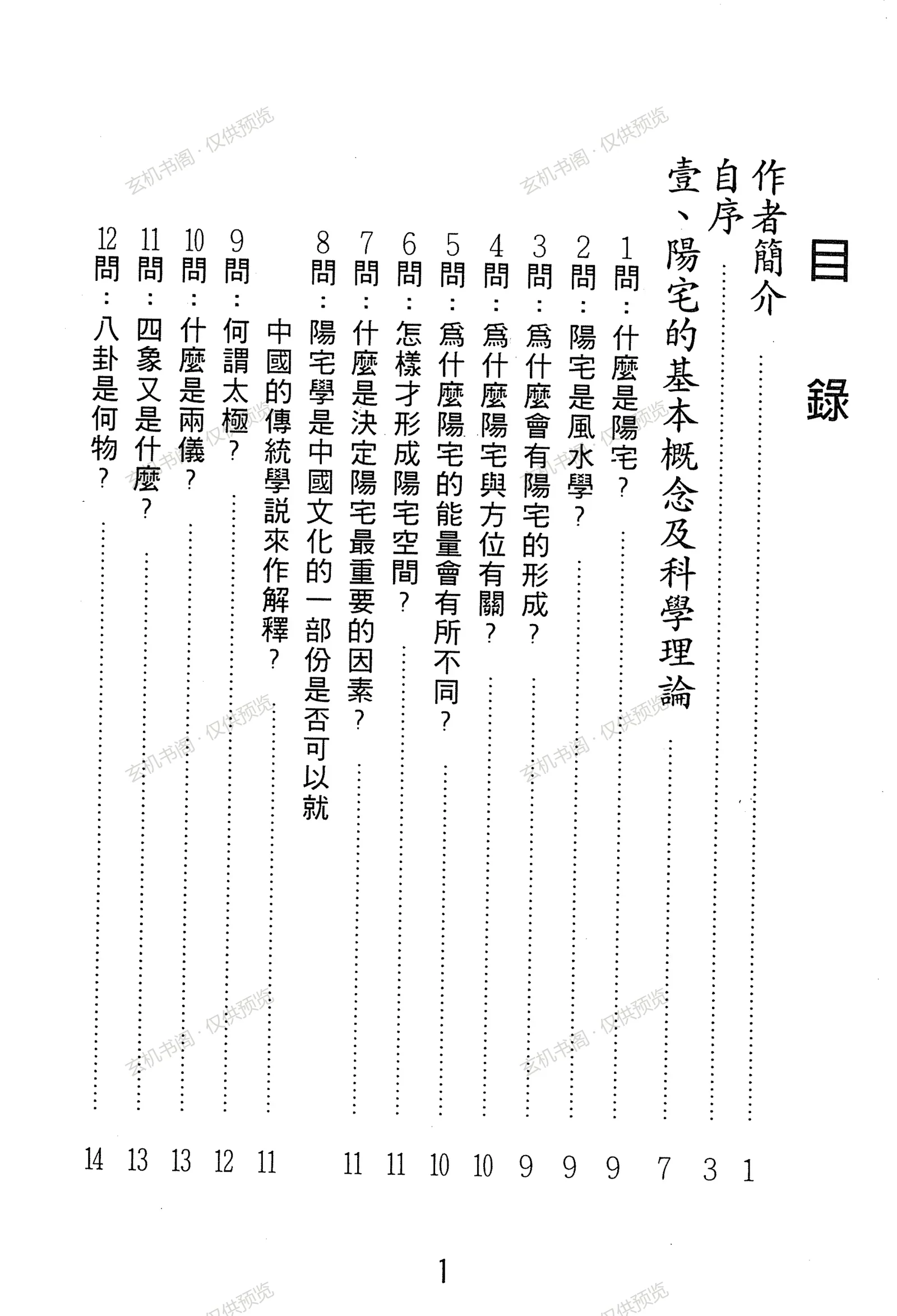
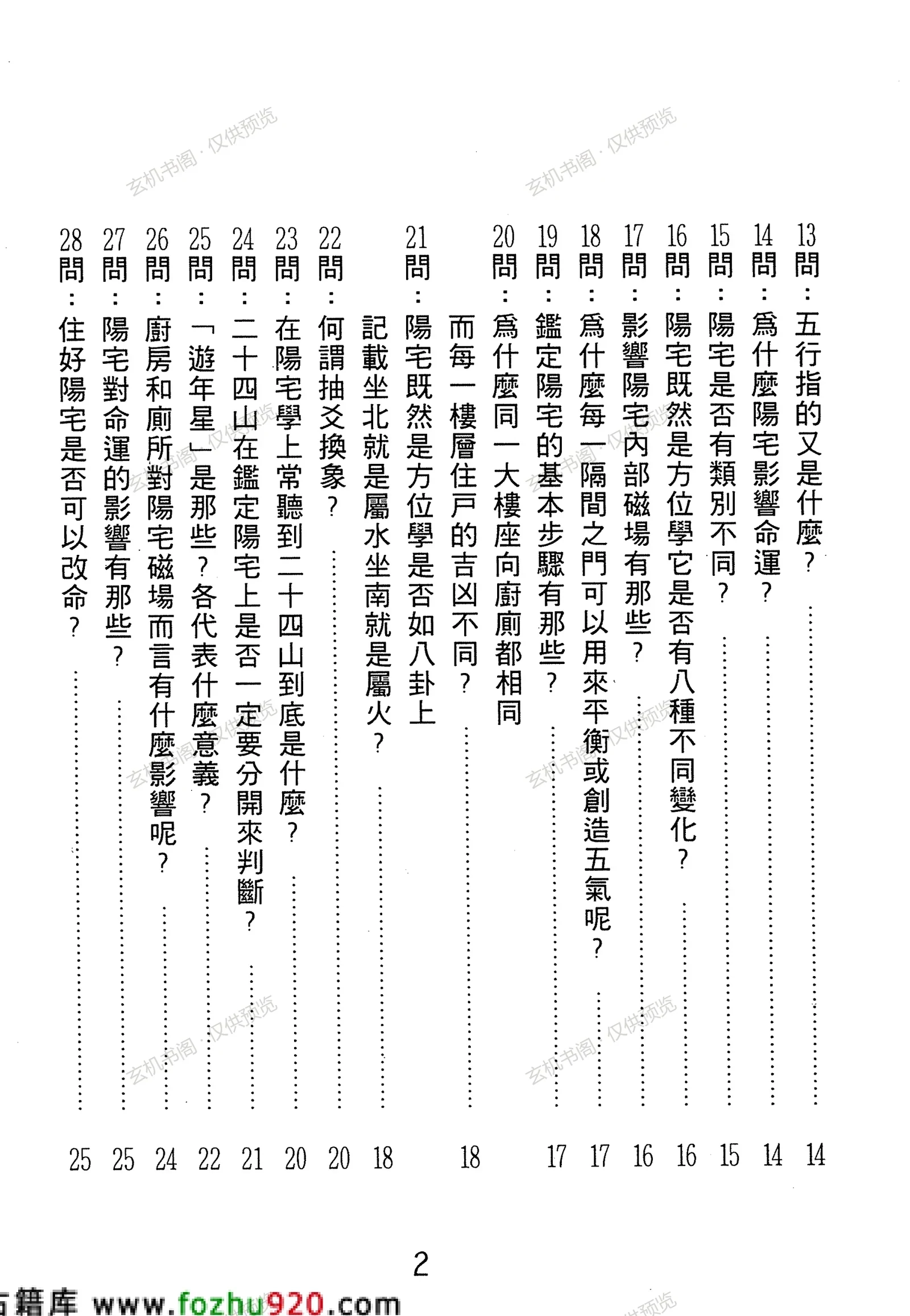
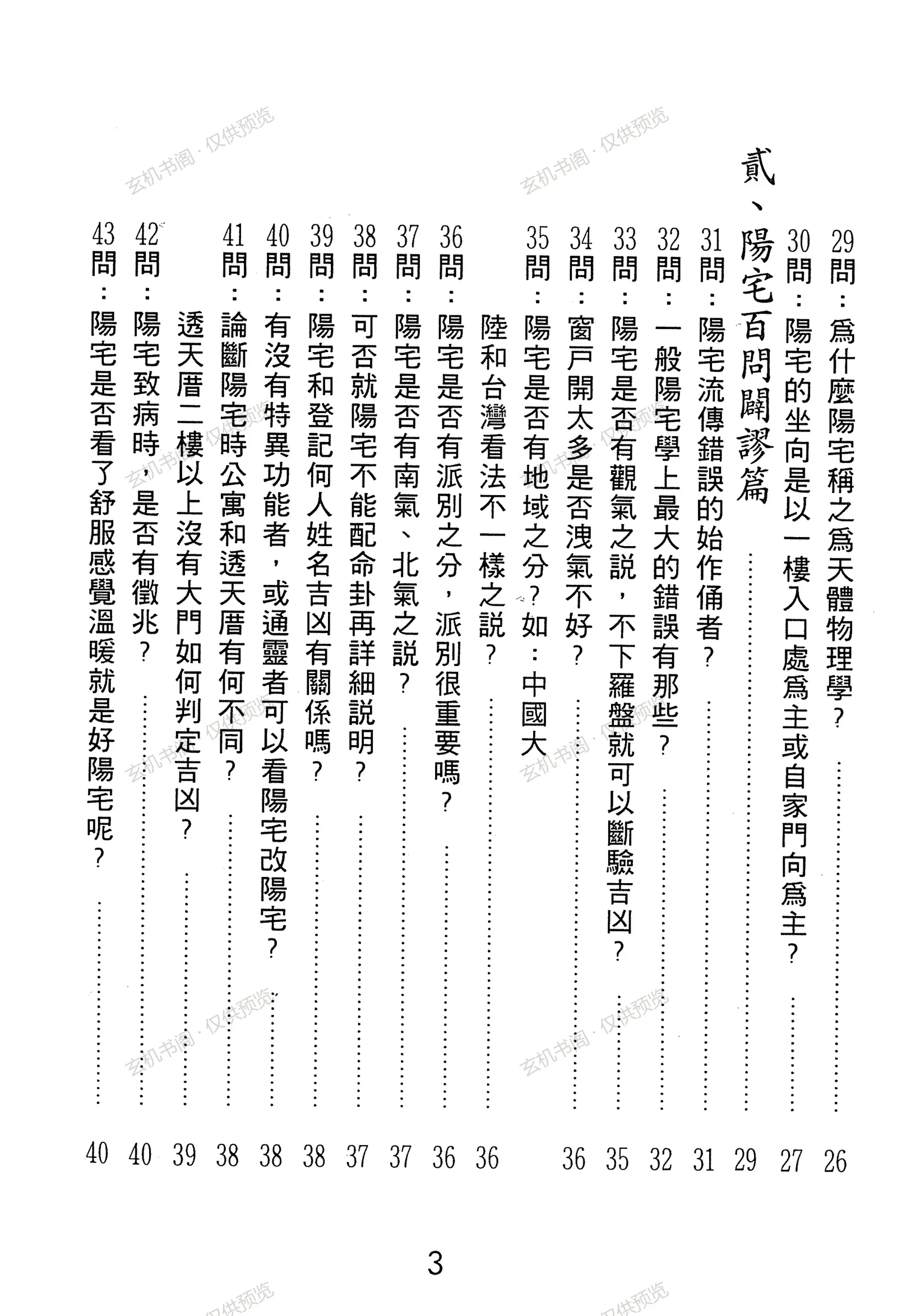
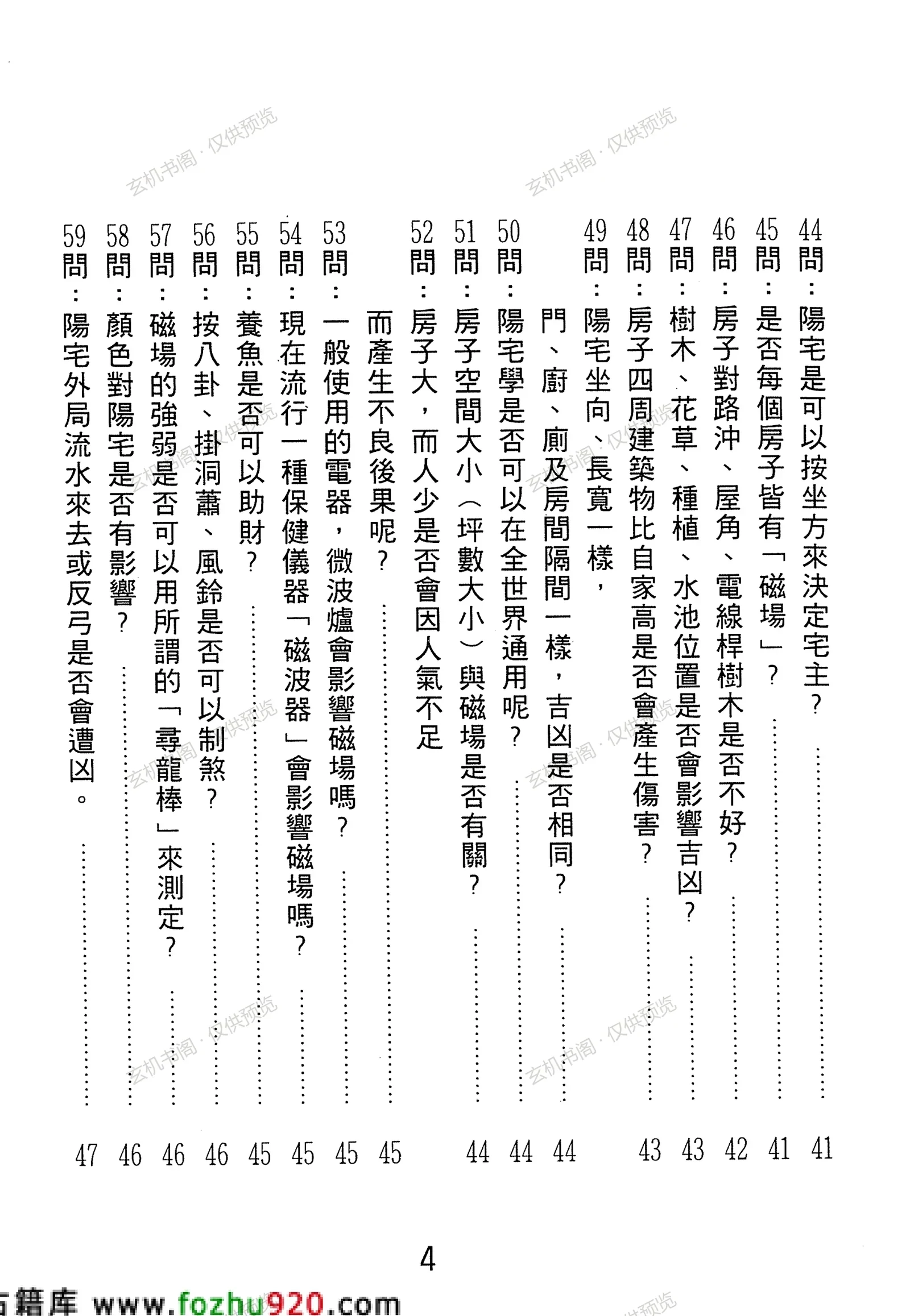
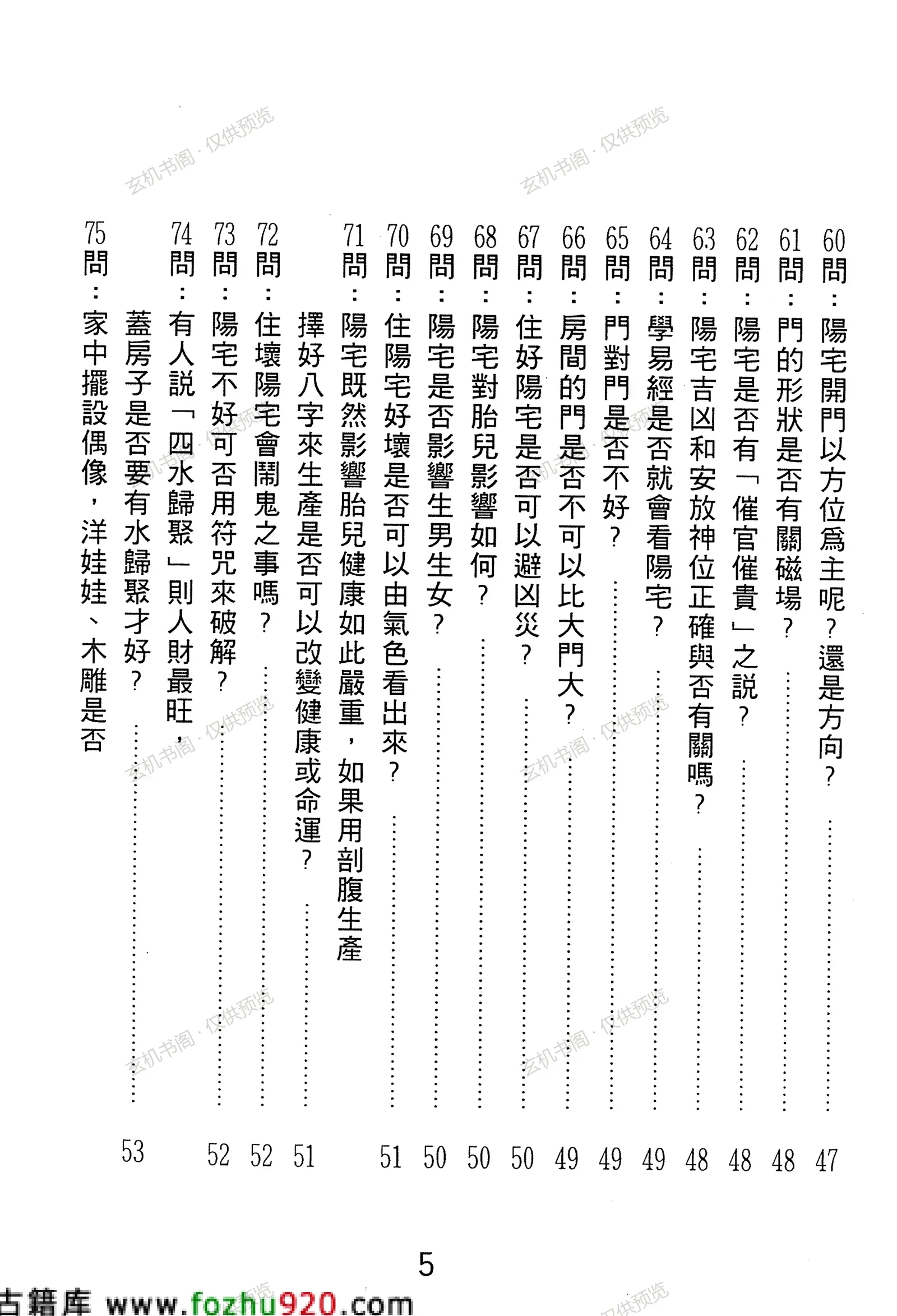
Written by Tang Sen, One Hundred Questions on Yangzhai uses a question-and-answer format to systematically explain the basic concepts and practical judgments of yangzhai feng shui. It begins with introductory questions such as what yangzhai is and what feng shui studies, then moves into the formation of dwellings, the relationship between energy and orientation, and traditional technical concepts including magnetic fields, the bagua, the five phases, the twenty-four mountains, and the drawing of yao lines. The table of contents shows two main parts: Part One, Basic Concepts and Scientific Theories of Yangzhai, covers questions 1 through 28 and focuses on definitions and theoretical frameworks; Part Two, A Critique of Common Errors in Yangzhai, starts at question 29 and examines mistaken ideas, sectarian disagreements, and practical difficulties, such as whether sitting orientation should be determined by the main door or the entrance, whether every floor has the same auspiciousness, whether too many doors and windows cause energy leakage, and how microwave ovens and magnetic devices affect a home's field. The book also touches on health, fertility, and fate, making it suitable for readers with a basic interest in yangzhai feng shui who want a quick-reference Q&A format.
Contents
Author introduction and preface
Part One: Basic concepts and scientific theories (Q1–28)
Part Two: Critiques of common errors (Q29–75)
Debates on sitting orientation and entrance judgment
Magnetic fields, appliances, and health in the home
Foundations of bagua, five phases, and twenty-four mountains
Key Points
Q&A format makes it easy to look up specific yangzhai concepts.
Part One establishes basic concepts: yangzhai, feng shui, magnetic fields, and bagua.
Part Two critiques common misconceptions and sectarian disagreements.
Discusses practical factors such as orientation, doors, floors, and windows.
Addresses modern topics including appliance magnetic fields, health, and fertility.