Reading guide
Content guideOverview
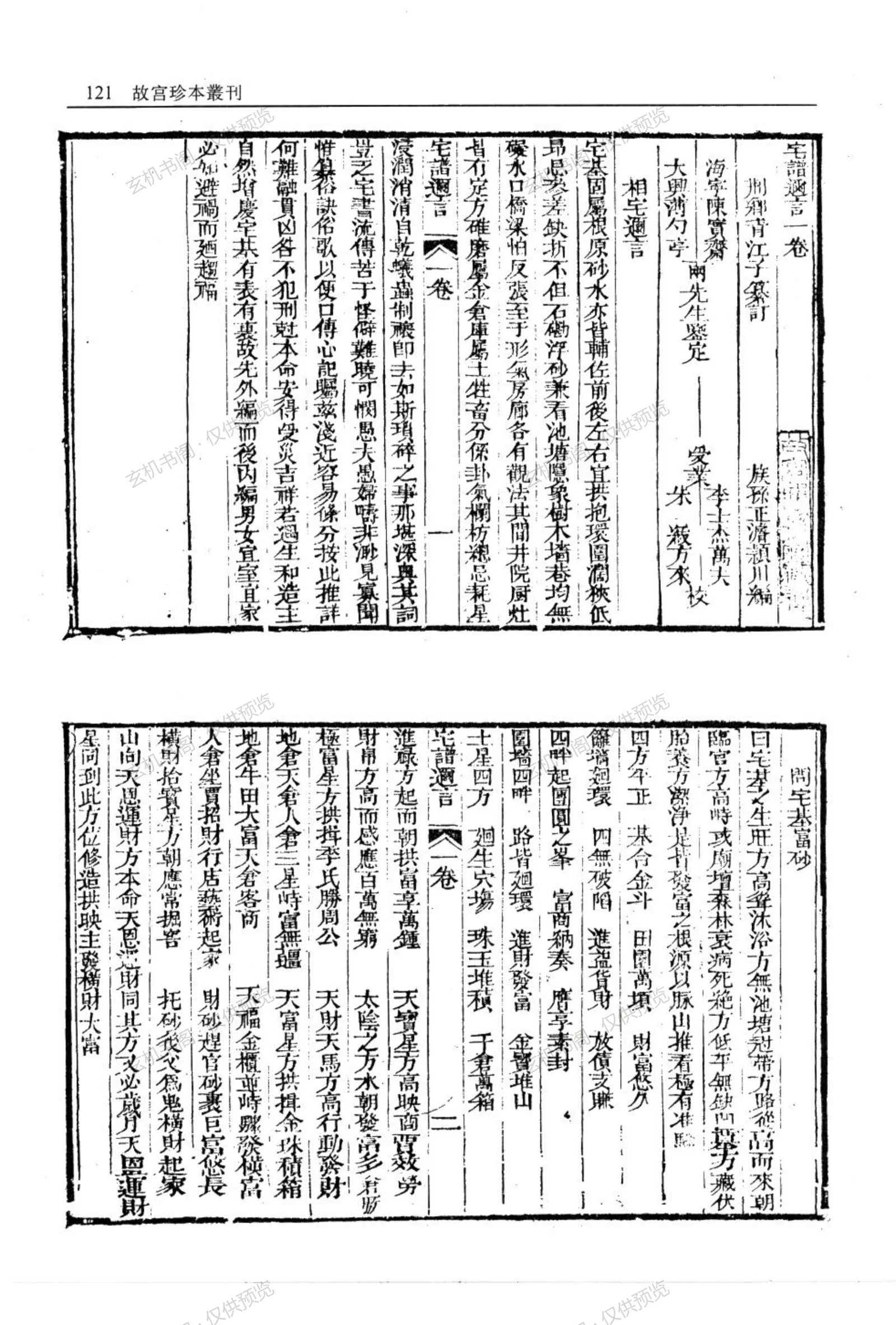
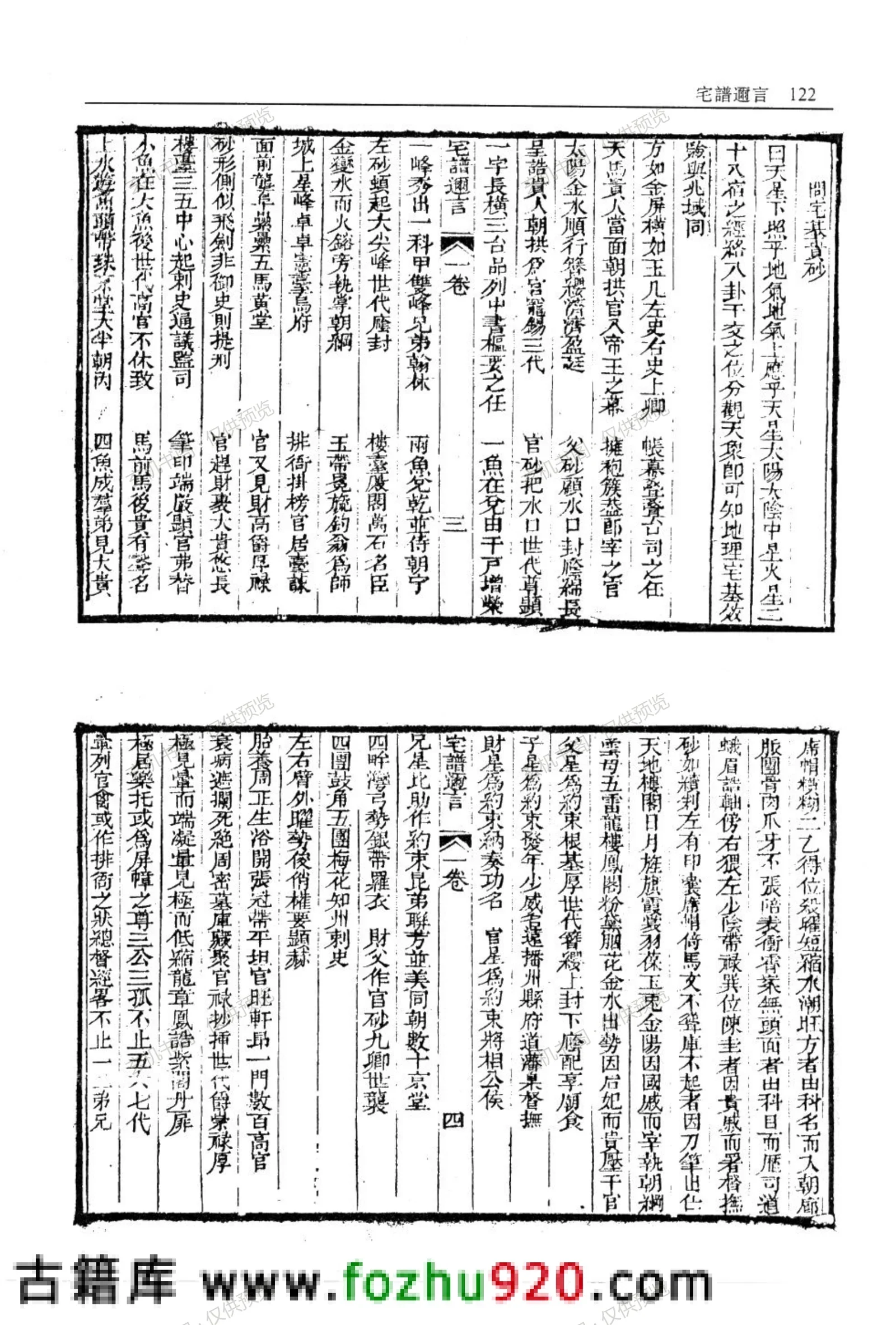
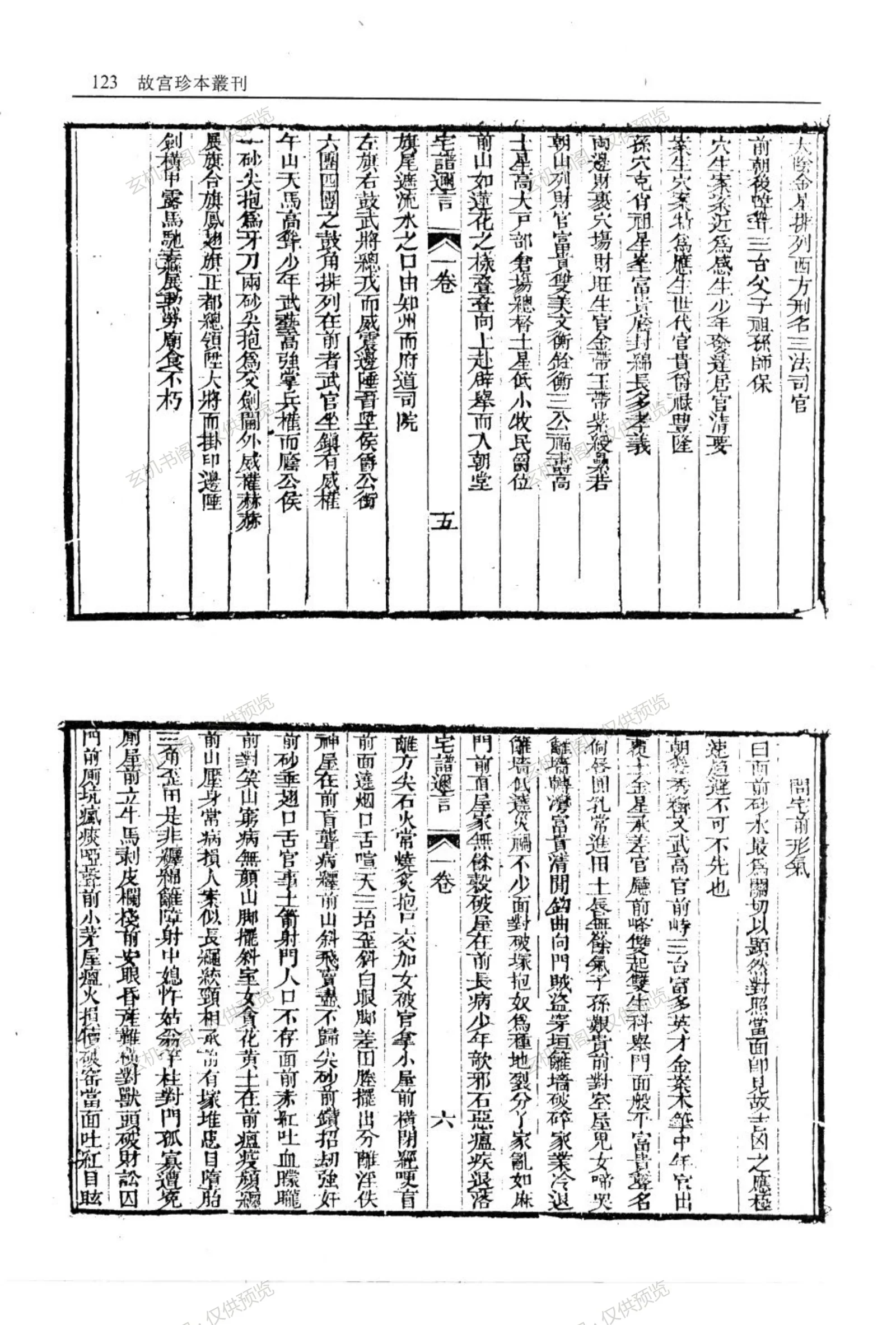
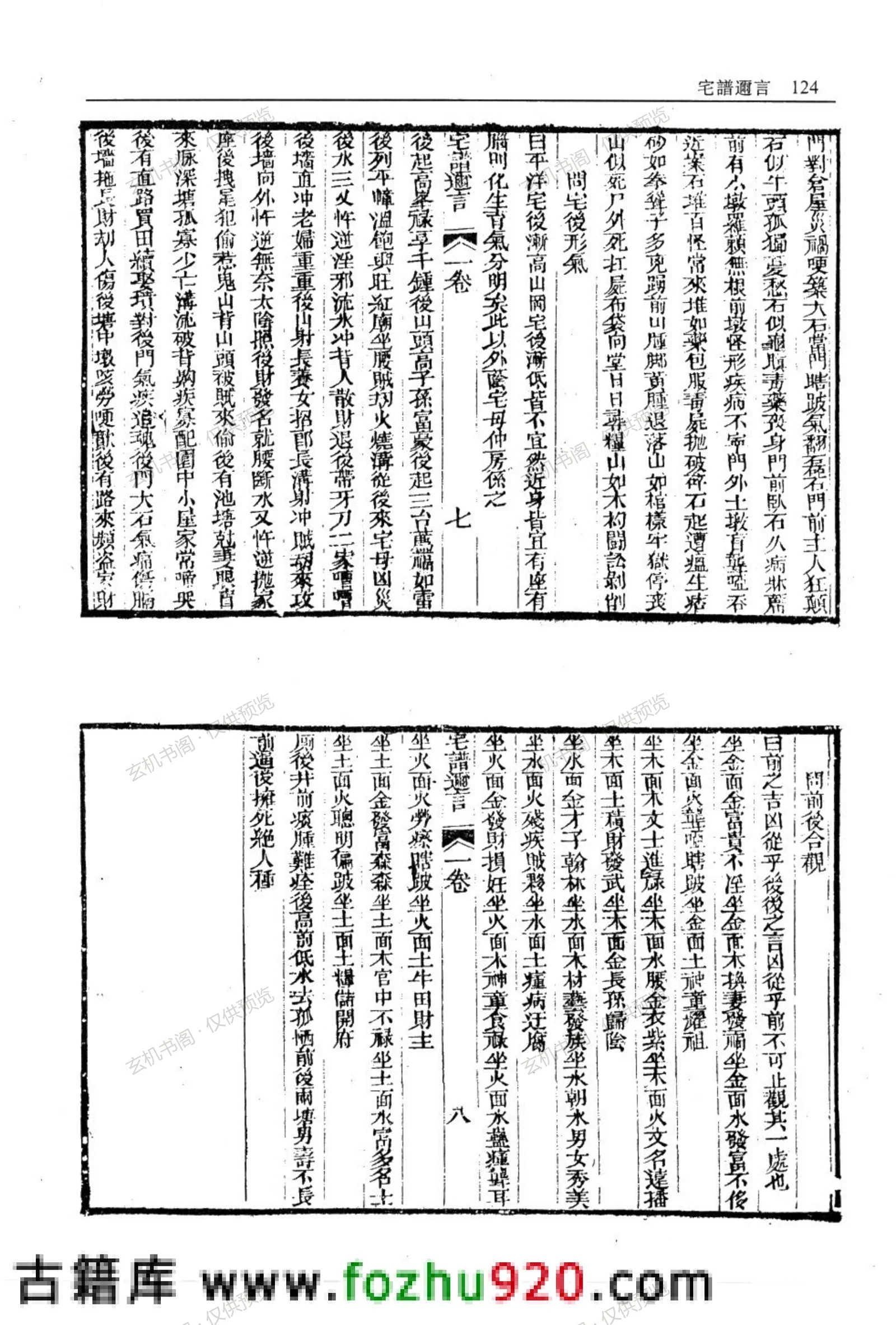
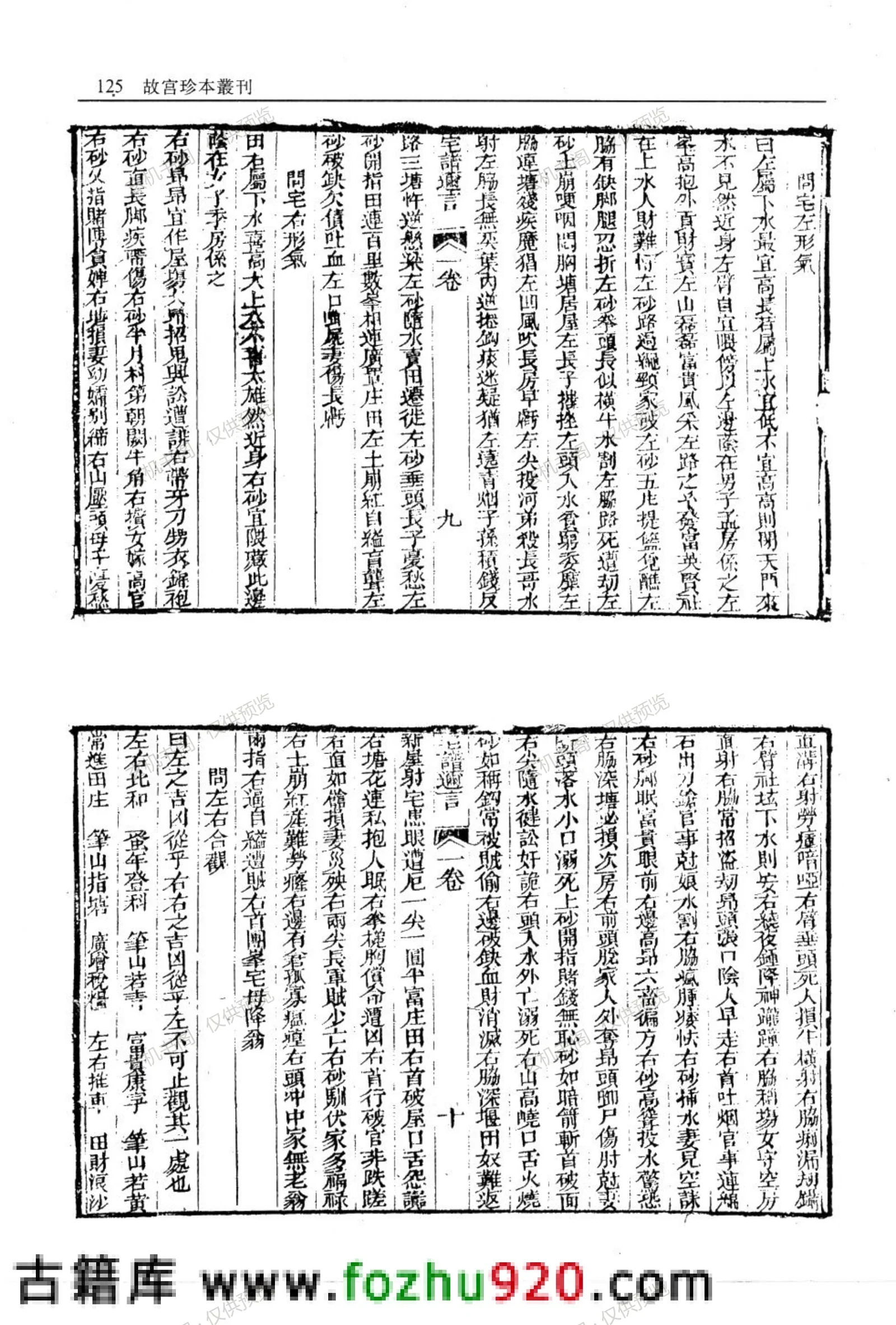
This volume, Zhai Pu Er Yan (Casual Remarks on Dwelling Manuals), is part of the larger Yangzhai Dacheng collection and is attributed at the chapter head to Wang Gan of Xin'an, with a preface dated 1717. It focuses on the form-and-energy (xingqi) approach to residential feng shui, examining how the external environment—sand formations, watercourses, roads, trees, bridges, and neighboring structures—interacts with house shape to produce good or bad outcomes. The table of contents lists topics such as site selection, wealthy and noble sand formations, front, rear, left, and right form-energy, water shapes, ponds, tree patterns, bridge orientation, road auspiciousness, shrines and shops, and water-mouth relations. The main text is organized as questions and answers, describing specific configurations and their purported human consequences. It is a representative work of the Sanhe form school and offers insight into Qing-era residential feng shui theory.
Contents
General remarks on house inspection and form-energy
Auspicious sand at the dwelling base
Front form-energy: gates, roads, and water
Rear form-energy: backing mountains and dragons
Left and right form-energy: flanking sand and water
Overall sand enclosure and combined left-right assessment
Water shapes, ponds, trees, bridges, and roads
Shrines, shops, and water-mouth relations
Key Points
Form-school emphasis on external sand and water configurations
Question-and-answer format explaining auspicious and inauspicious outcomes
Covers site base, four directions, water, roads, trees, and bridges
Stresses the interaction of form and energy in residential settings
Preserves a 1717 preface reflecting Qing feng shui discourse