Reading guide
Content guideOverview
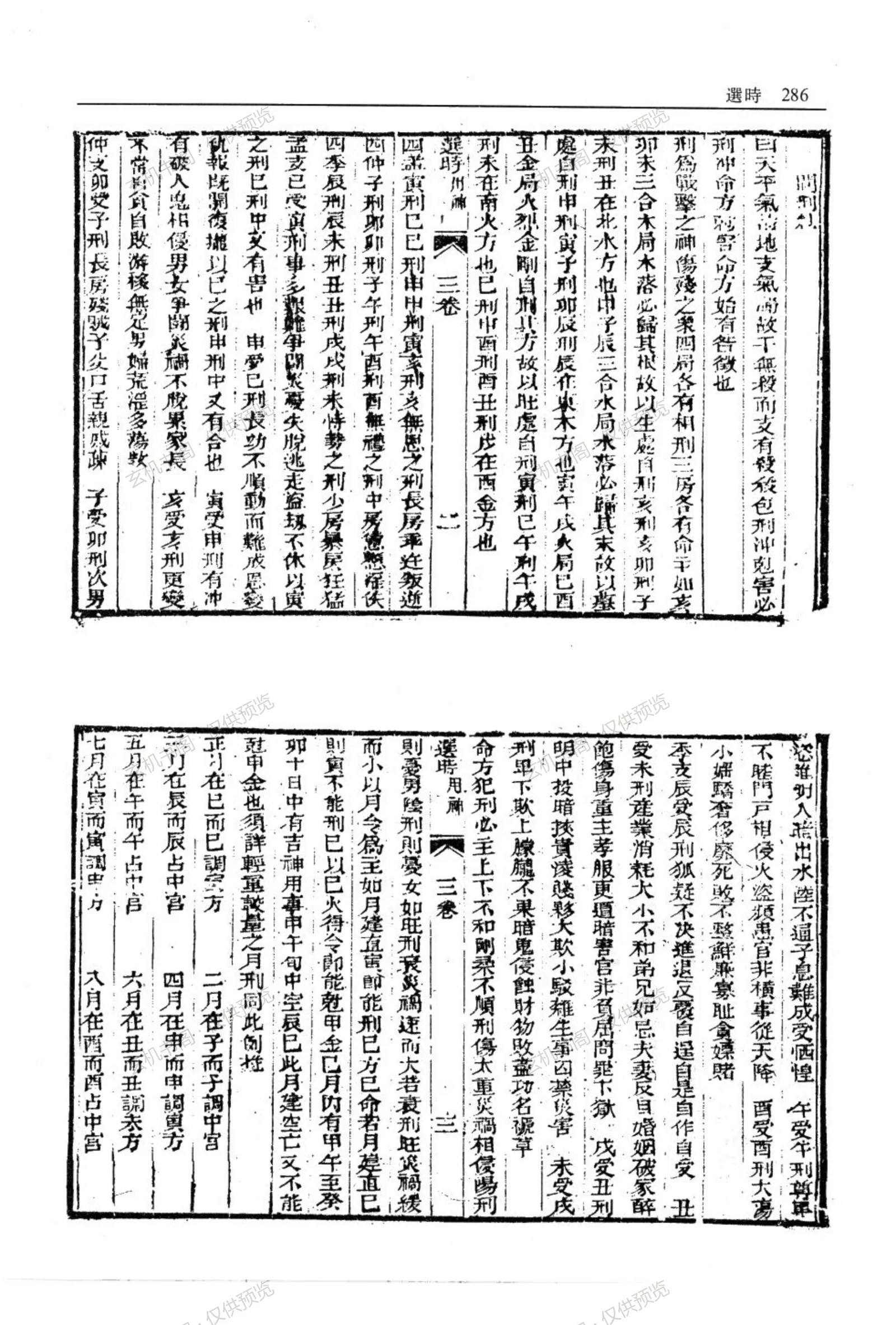
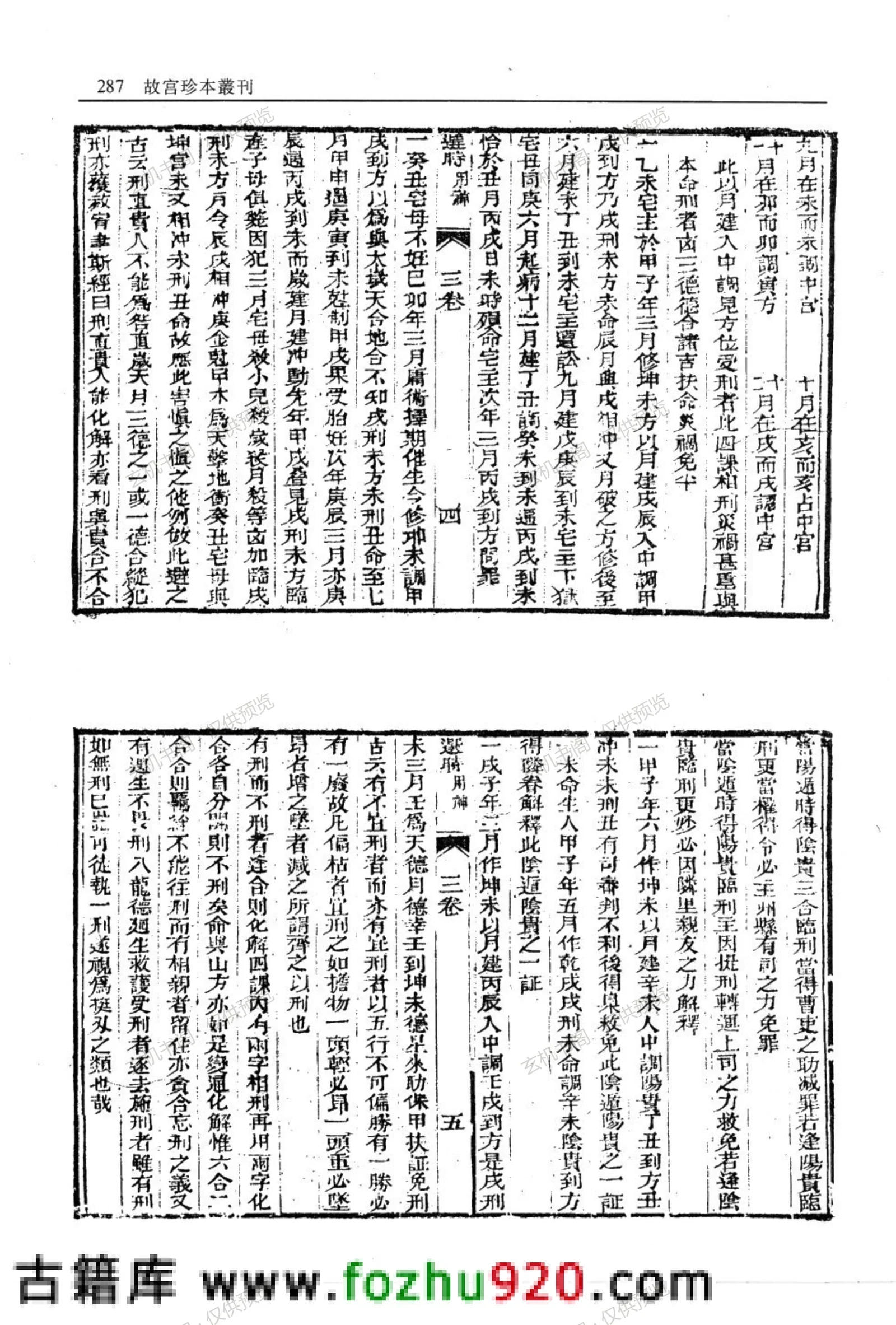
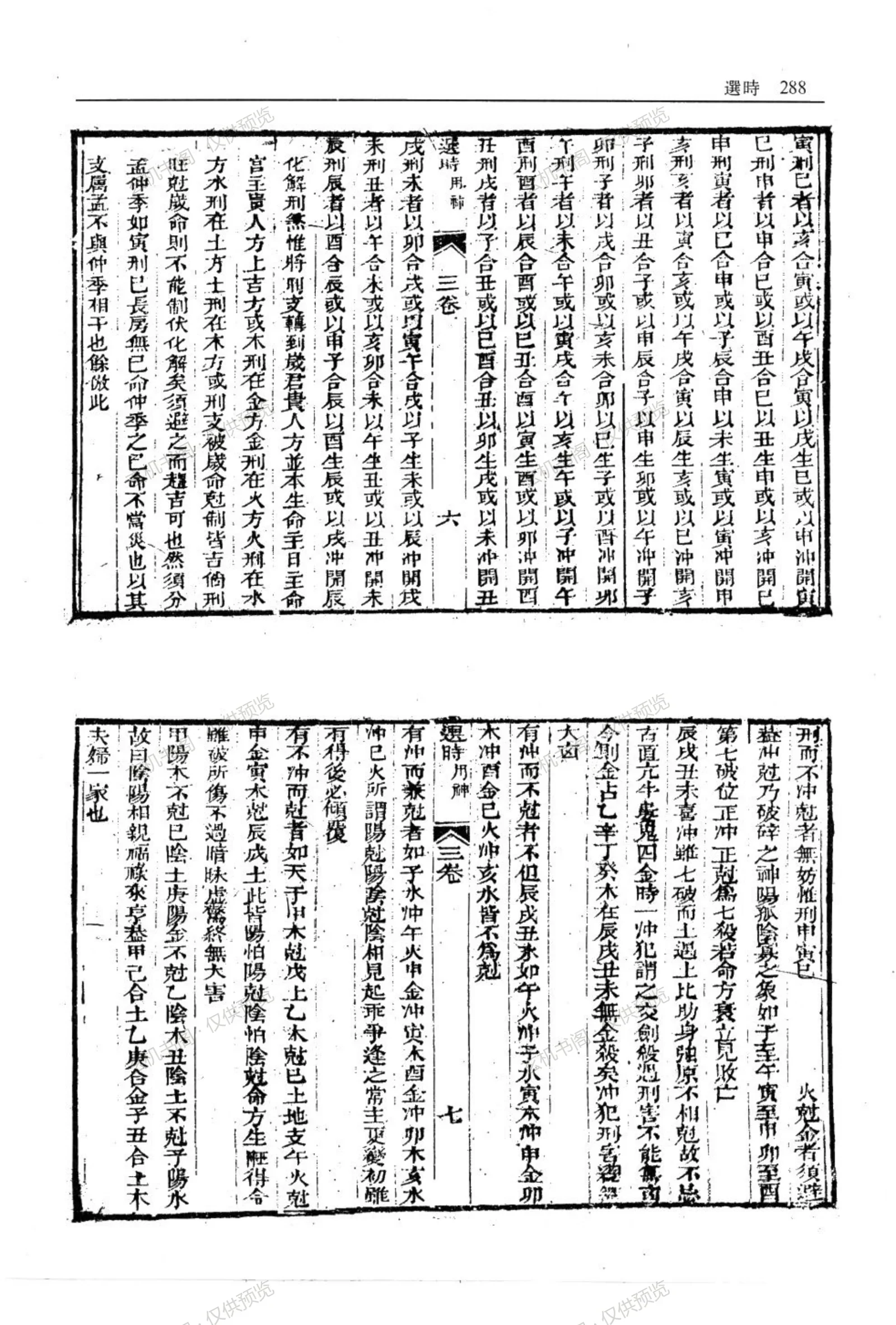
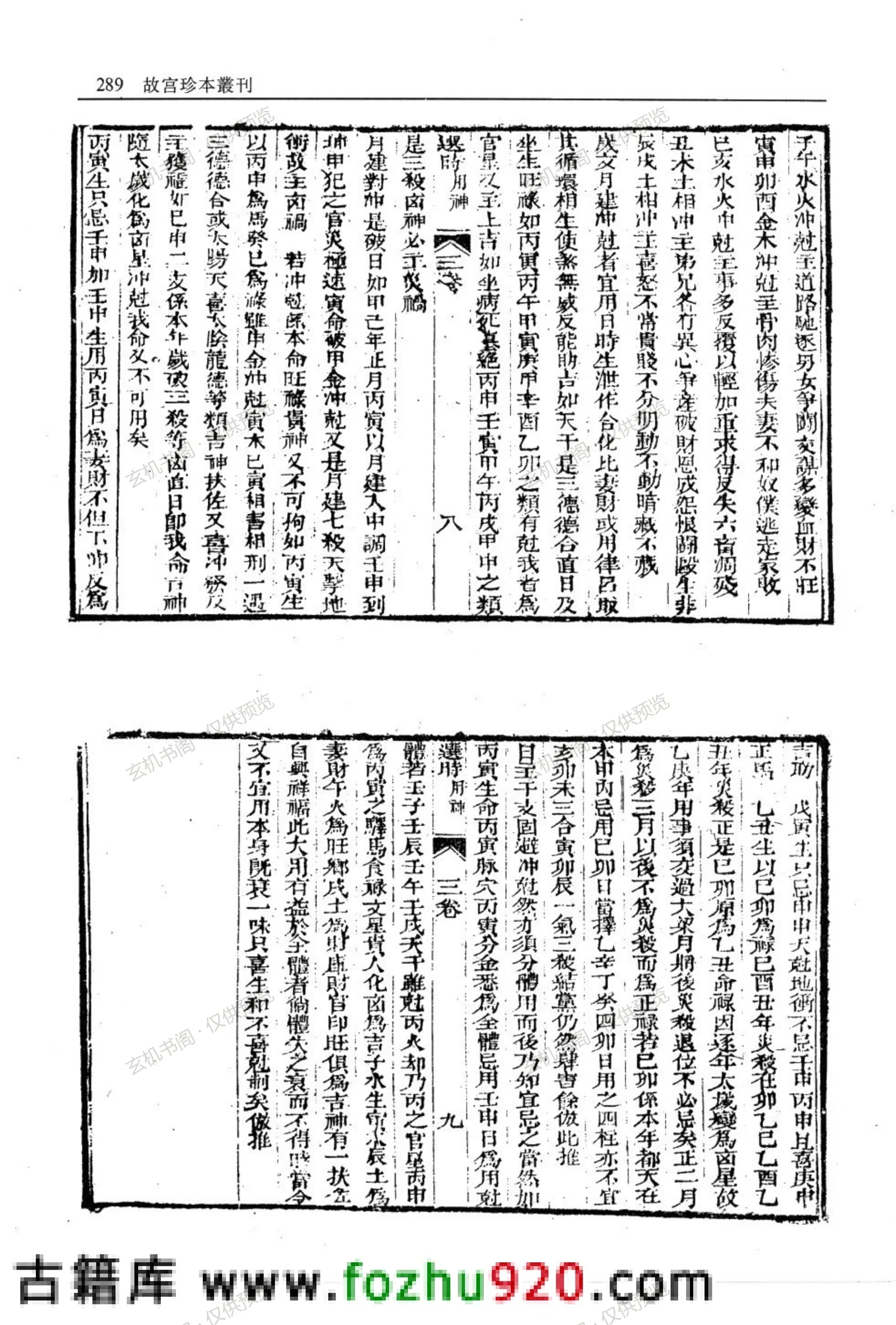
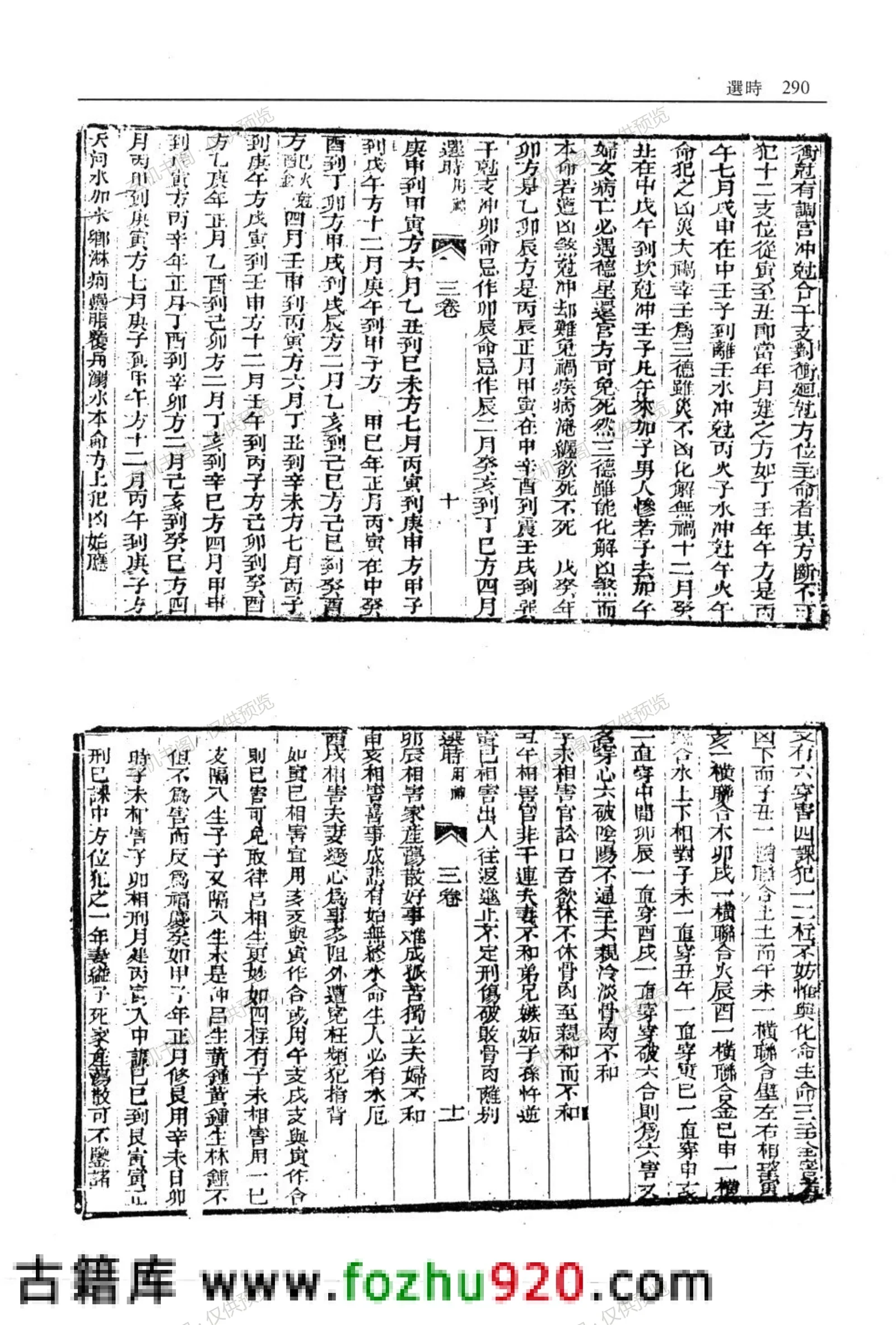
These two volumes belong to the date-selection ('Xuan Shi Zao Ming') portion of Yangzhai Dacheng. Volume three opens with general remarks on the 'useful god' (yongshen) of time selection, insisting that an auspicious date must match the client's birth year and the house's orientation rather than relying on generic lucky stars. It then discusses at length the interactions among punishments, clashes, controls, harms, the three harmonies, six harmonies, three virtues and noble stars. Volume four continues with stem-branch tables arranged month by month, giving worked examples of which orientation is favourable or unfavourable for which birth year, and repeatedly stresses methods of controlling, transforming and avoiding inauspicious influences. The material is presented as a reference manual with tabular layouts, useful for those studying traditional Chinese date selection for dwellings.
Contents
The 'useful god' of time selection and general principles
Punishments, clashes and the three/six harmonies
Auspicious stars such as the three virtues and noblemen
Monthly analysis of orientations and their remedies
Worked examples pairing stems with branches
Key Points
Date selection centred on the client's birth-year 'useful god' and orientation
Detailed treatment of clashes, punishments and harmonies
Tabular, month-by-month layout of judgements
Balances suppressing, transforming and avoiding inauspicious influences