Reading guide
Content guideOverview
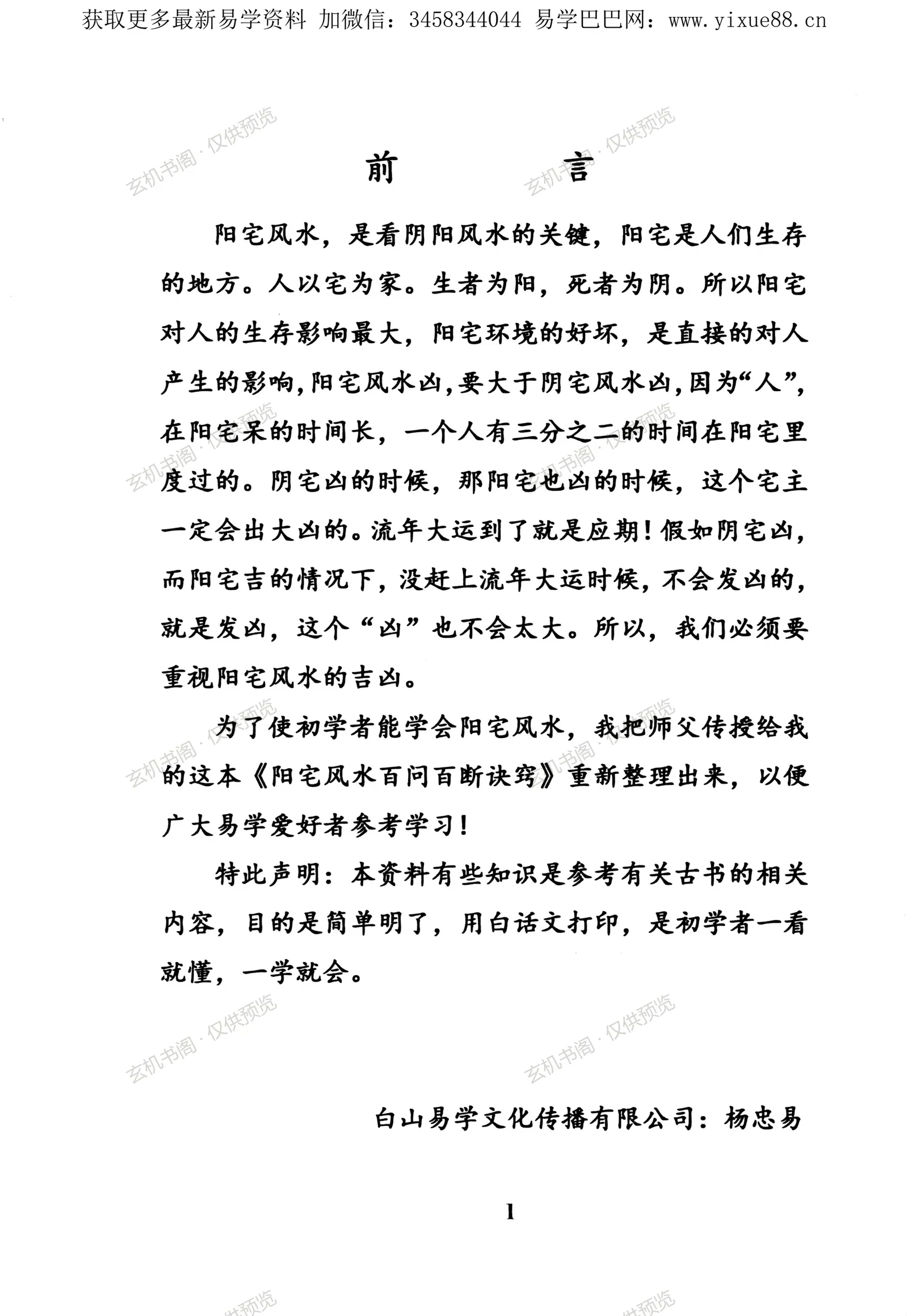
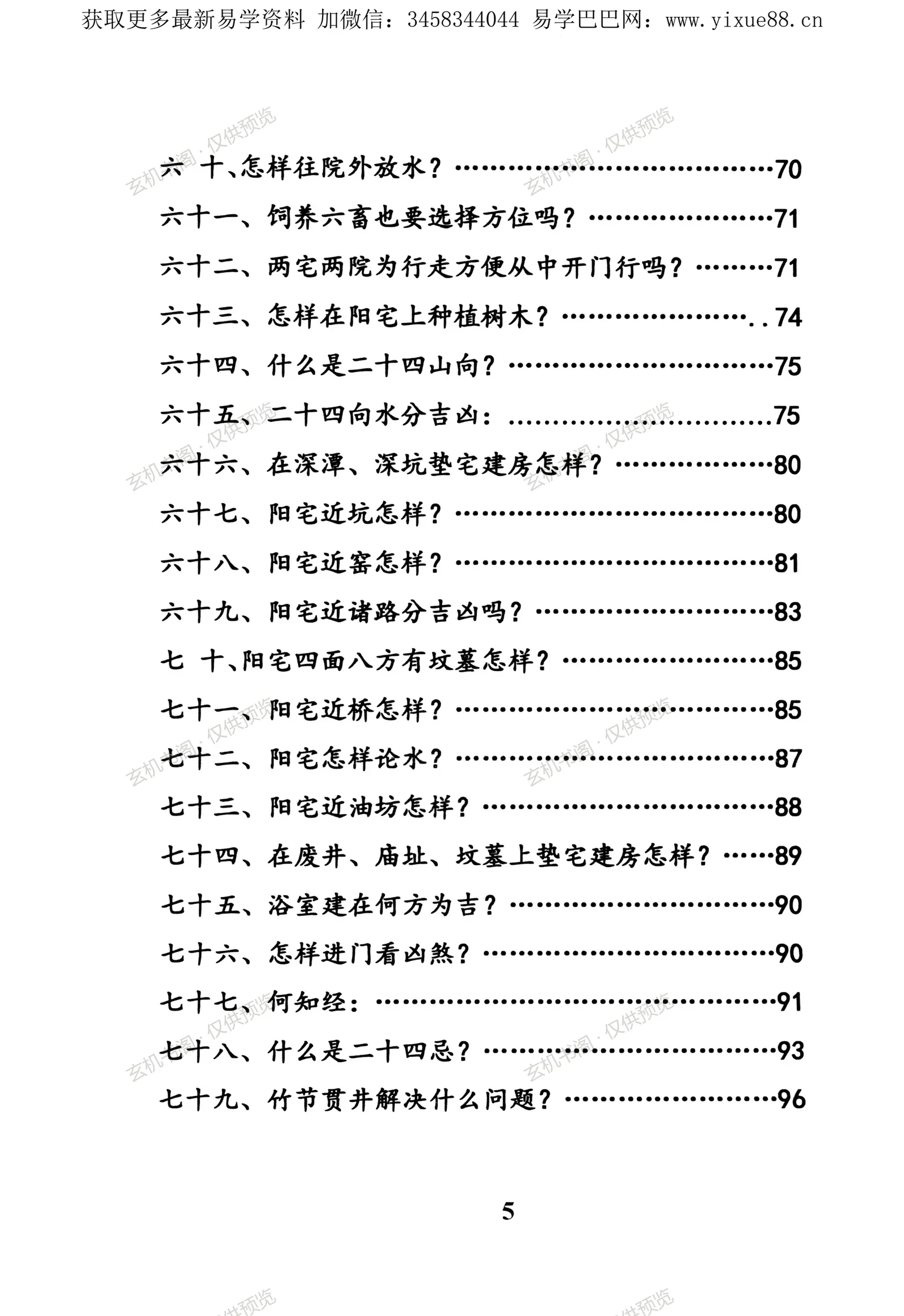
This is an introductory internal handbook on yang-dwelling (yangzhai) fengshui, titled Yangzhai Fengshui: Hundred Questions, Hundred Judgments, attributed to Yang Zhongyi. The preface argues that yang dwellings affect people more than yin dwellings because residents spend most of their time there, and notes that the material was organized from a teacher's transmission with reference to old texts and written in plain language for beginners. The main body is arranged as a series of questions and answers. It begins with how to start studying yang dwellings, the relationship between the nine stars and the bagua of a house, the distinction between east-four and west-four dwellings, types of courtyards, and the idea of auspicious stars occupying their proper positions. It then discusses why the same house brings misfortune to one resident and fortune to another, haunted or unsettled houses, the four animals, improper gate placement, gate orientation, and the shape and size of the foundation. The middle section centers on the three essentials of gate, main hall, and stove, and covers changing gates, closed and leaking qi, shared gates, alleys, high inauspicious stars, the nine stars' attributions, taiji, light wells, stairs, wings, and malformed houses such as ting-shi zhai and chuan-xin zhai. The later sections turn to practical matters: supplementary needle rooms and hidden-arrow rooms, use of the luopan, brick or stone water outlets striking the foundation, foundation and life palace, distance between gate and main hall, choosing auspicious dates, offending Tai Sui and the three sha, child sha, the twenty-eight mansions, placement of beds, stoves, toilets, and wells, the twenty-four mountains and directions, water discharge, tree planting, and the auspiciousness or otherwise of nearby pits, kilns, roads, bridges, graves, and oil presses, ending with twenty-four taboos. The entries are short and the conclusions direct, making the book useful as a lookup reference rather than a systematic treatise.
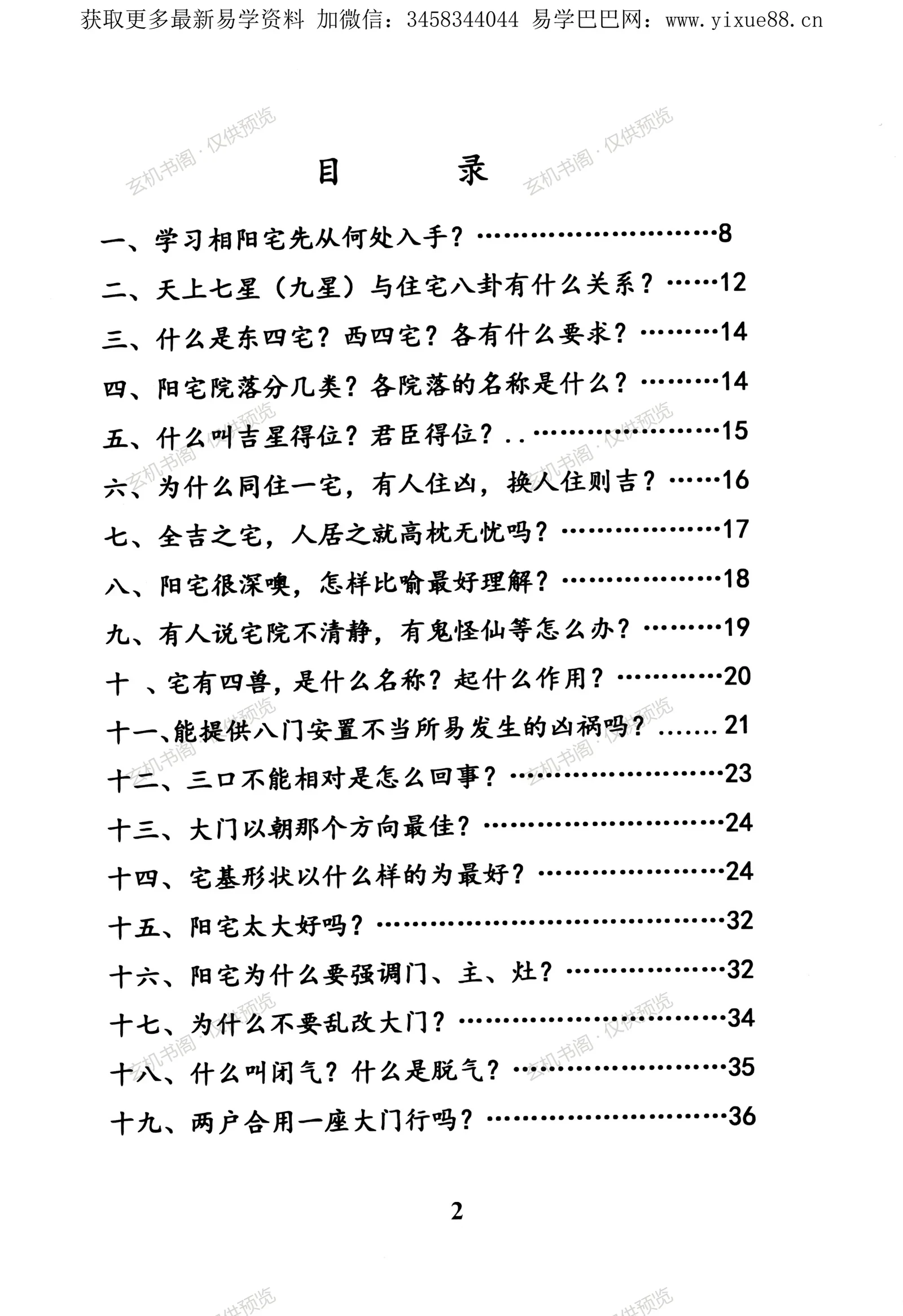
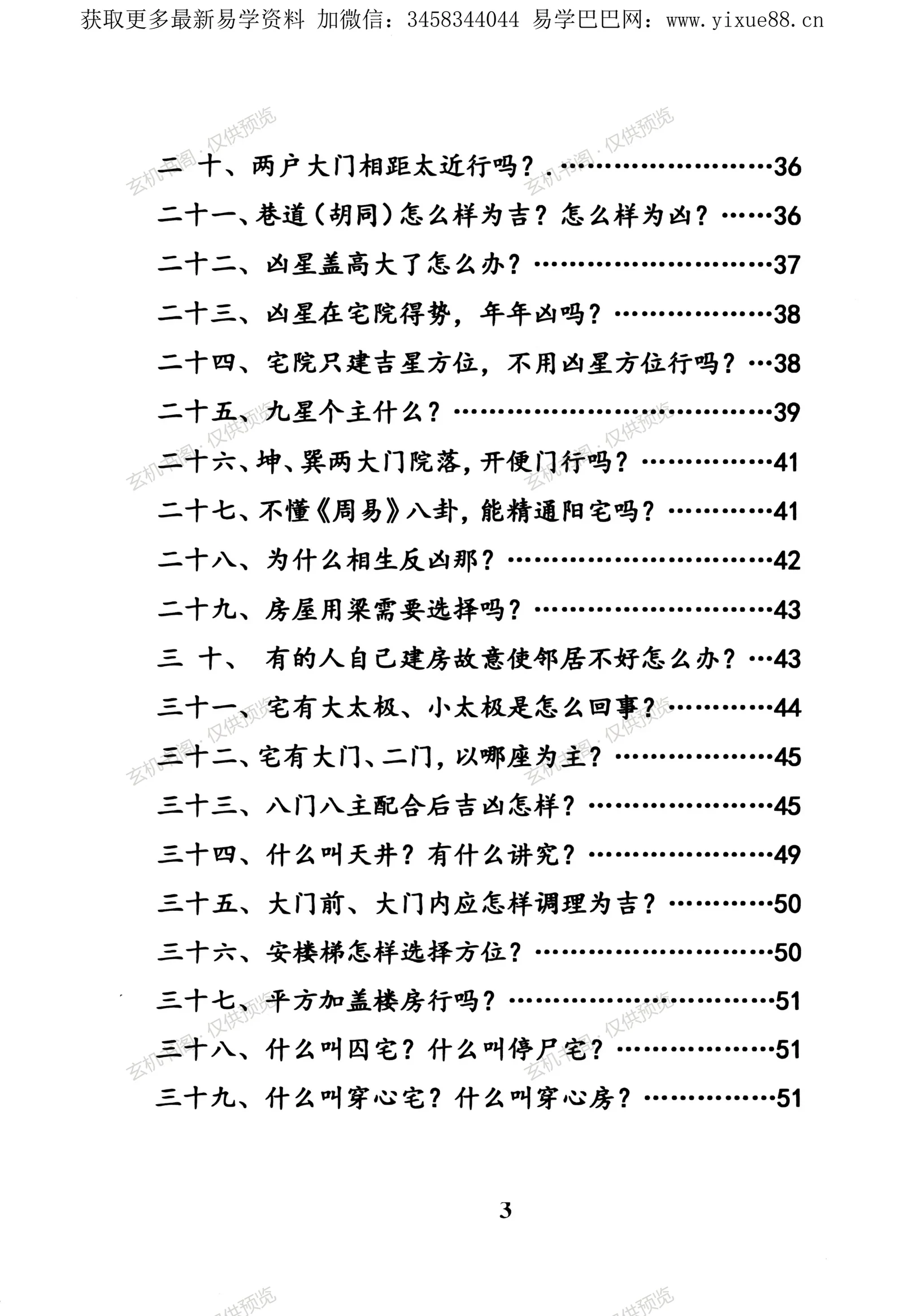
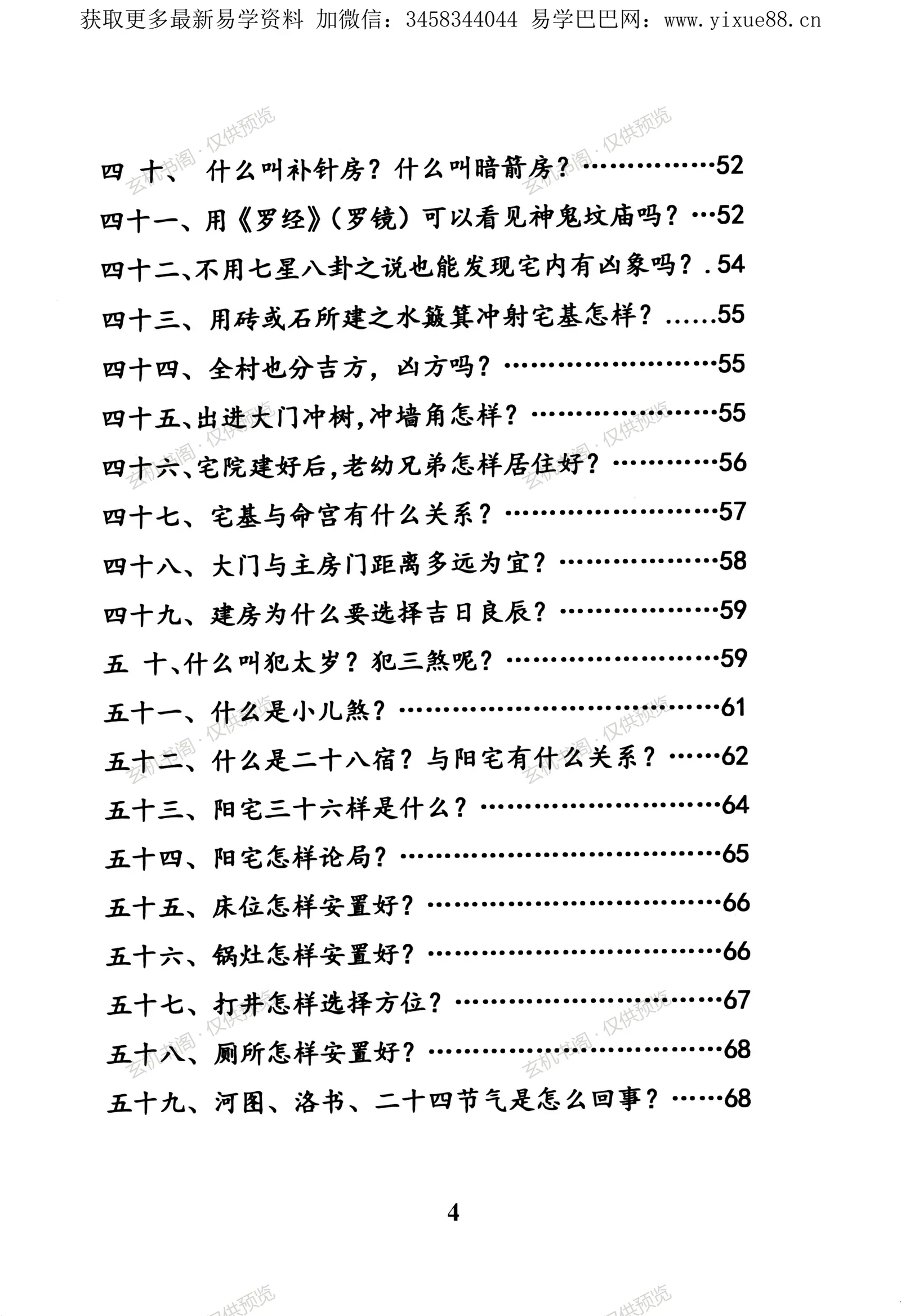
Contents
How to begin studying yang dwellings and the nine stars-bagua relation
East-four and west-four dwellings, courtyard types, auspicious star positions
Four animals, gate placement, gate orientation, foundation shape
The three essentials of gate, main hall, stove; changing gates and qi leakage
Malformed houses: ting-shi, chuan-xin, supplementary needle, hidden arrow
Foundation and life palace, date selection, Tai Sui, three sha, twenty-eight mansions
Beds, stoves, wells, toilets, twenty-four mountains, water discharge, planting
External conditions: roads, bridges, pits, kilns, graves, temples, and twenty-four taboos
Key Points
Organized as questions and answers, allowing readers to look up specific judgments.
Core framework is the nine stars and bagua, east-four/west-four dwellings, and the gate-main hall-stove triad.
Covers both house form and surroundings such as roads, bridges, pits, kilns, graves, and oil presses.
Later sections address the twenty-four mountains, water discharge, date selection, and spirit taboos.
The author presents it as plain-language introductory material compiled from a teacher's transmission and old texts, not a scholarly critical edition.