Reading guide
Content guideOverview
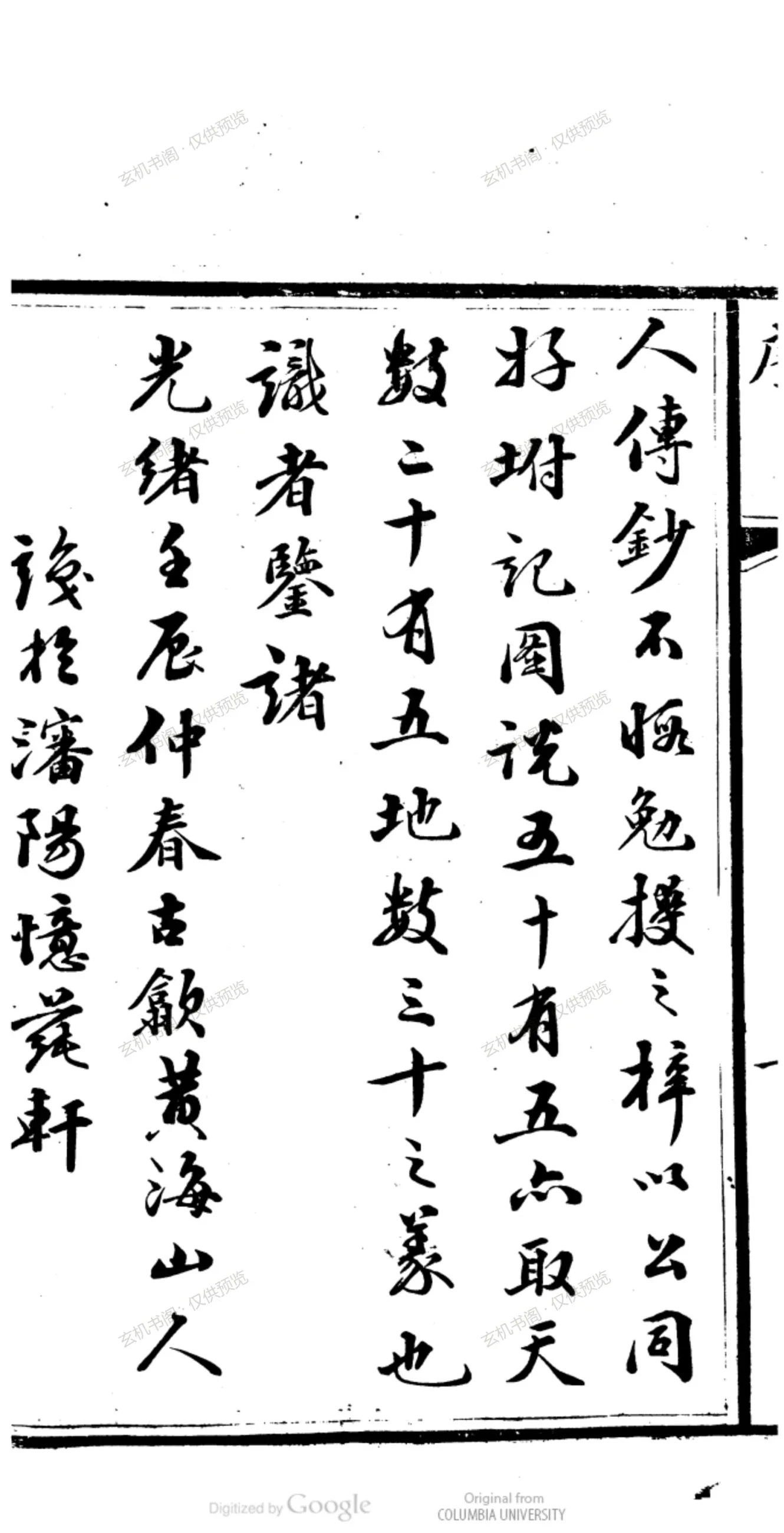
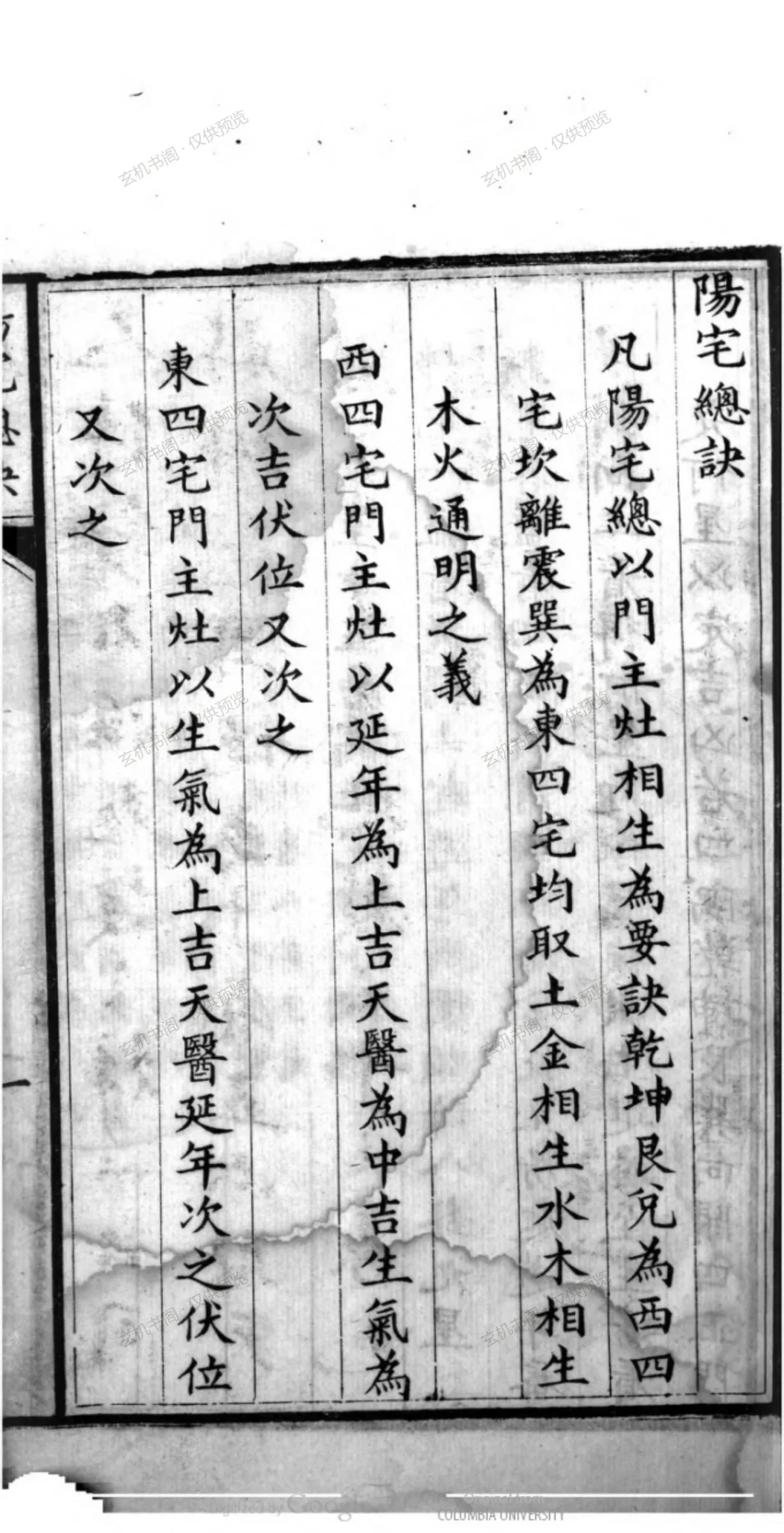
This is a woodblock-printed feng shui text on yang-dwelling (residential) geomancy, published in 1892 (Guangxu 18). Based on the visible cover, preface, and opening chapter, the book follows the traditional Eight Mansions (Bazhai) school. The preface discusses the ancient art of Qingniao and the relationship between dwellings, geography, and yin-yang qi flow. The first chapter, 'General Principles of Yang Dwellings,' states that the key to auspiciousness lies in the mutual generation of the door, main hall, and stove. It categorizes houses into East Four Mansions (Kan, Li, Zhen, Xun) and West Four Mansions (Qian, Kun, Gen, Dui), detailing the ranking of auspicious sectors such as Yannian (Longevity), Tianyi (Heavenly Doctor), and Shengqi (Life-Giving) for each group. The text also incorporates the five elements (water, wood, fire, earth, metal) and their interactions. As a practical manual of the Eight Mansions school, it provides clear formulas and is suitable for readers interested in traditional Chinese architectural feng shui and Bazhai theory.
Contents
Cover: Title, 1892 edition, Wenmei An collection
Preface: On the Qingniao art and yin-yang qi in dwellings
General Principles: Door, main hall, and stove mutual generation
Auspicious rankings: East and West Four Mansions
Key Points
Core theory is the Eight Mansions (Bazhai) feng shui, emphasizing mutual generation among door, main hall, and stove.
Divides dwellings into East Four Mansions (Kan, Li, Zhen, Xun) and West Four Mansions (Qian, Kun, Gen, Dui).
West Four Mansions ranking: Yannian (best), Tianyi (middle), Shengqi (next), Fuwen (last).
East Four Mansions ranking: Shengqi (best), Tianyi (next), Yannian (next), Fuwen (last).
Uses the five elements (water, wood, fire, earth, metal) to explain residential auspiciousness.