Reading guide
Content guideOverview
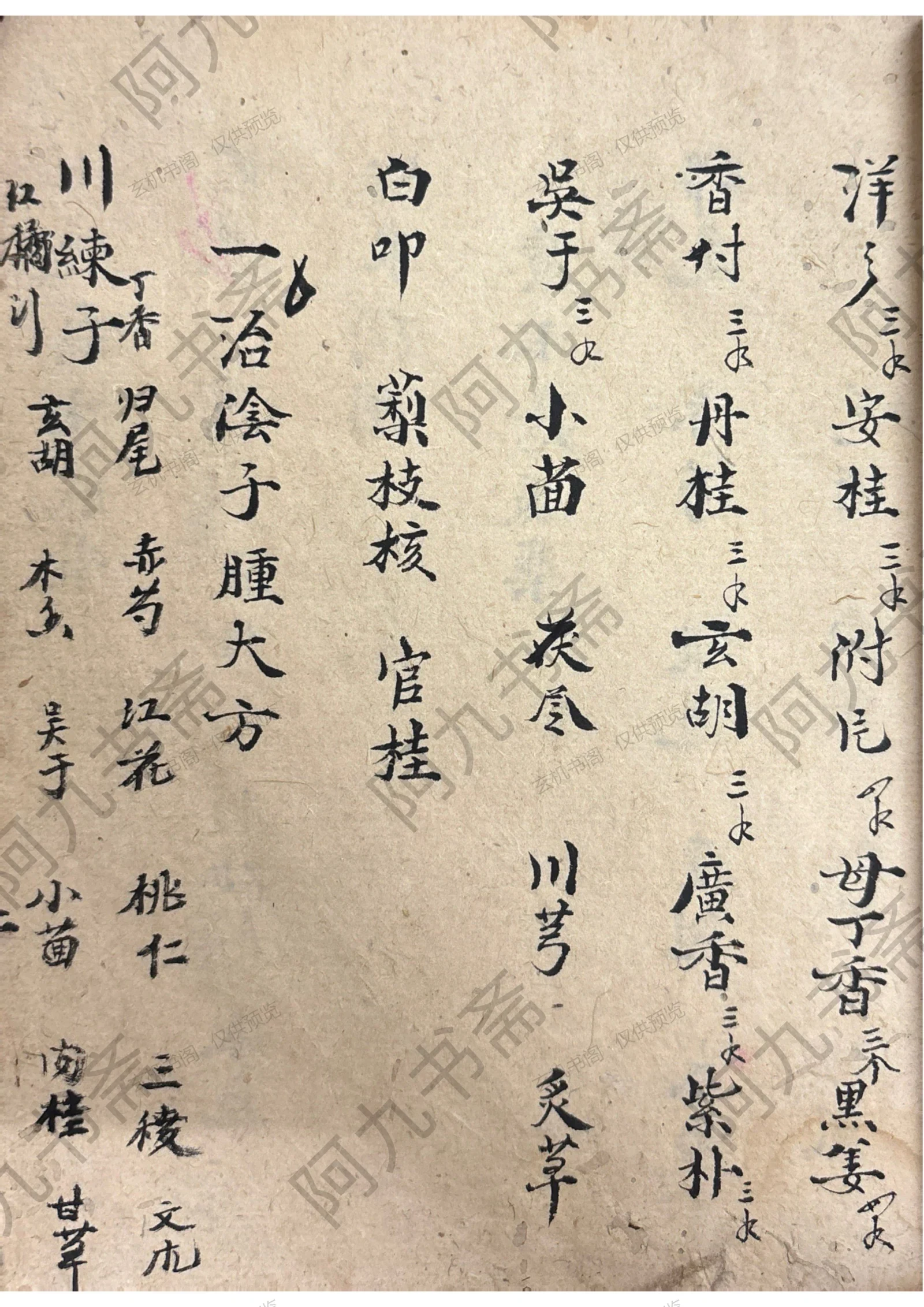
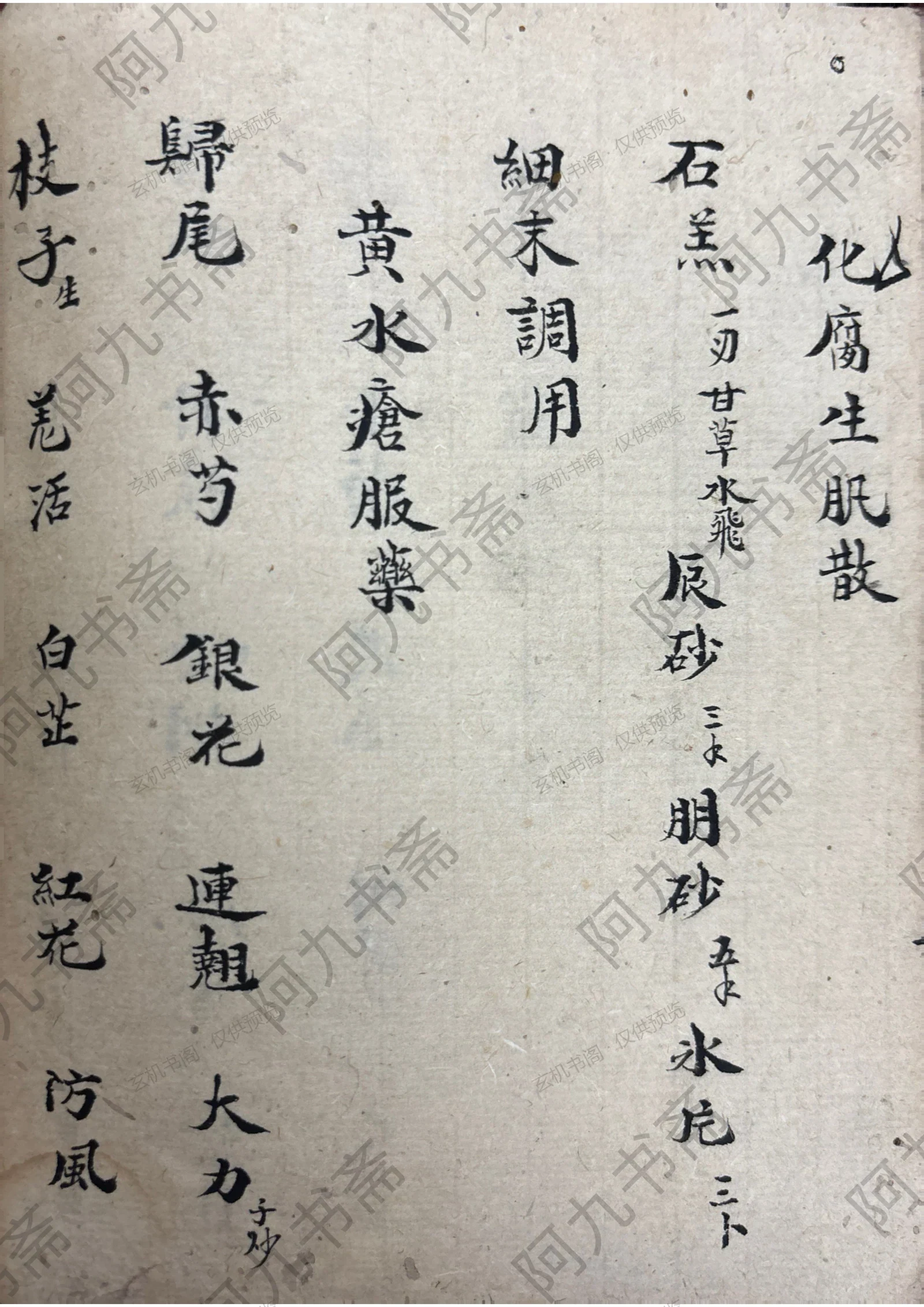
The cover reads 'Secret Transmission of the Robe and Bowl, Autumn,' with Zheng Huishou named as editor, and an inner leaf inscribed 'Plasters, Pills and Powders'; a further hand adds 'Rongyang shi.' This is a typical household medical formulary in manuscript. Entries give the formula name or indication first, then list ingredients with preparation and dosage in smaller interlinear script. Visible material includes throat-blowing powders such as 'Chuihou fang' and 'Chuihou dan,' internal throat decoctions of reed root, platycodon, cimicifuga and licorice, a formula for 'contracted yin' using cinnabar and borax ground to a fine powder, and a formula for scrotal swelling built on melia, fennel, evodia, cinnamon, peach kernel and safflower to warm the channels and quicken blood. A 'powder for removing necrosis and generating flesh' uses lime, cinnabar, borax and mercury for external application. Small annotations beside drug names mark processing or quantities. The text is practical and hastily written, representing the folk formulary branch of traditional medical and divinatory miscellanies; it is useful for studying local remedies, manuscript prescribing habits and external surgery methods.
Contents
Cover title, season marker and editor attribution
Inner inscription 'Plasters, Pills and Powders'
Throat-blowing powders and related throat formulas
Formula for contracted yin and its application
Internal formula for scrotal swelling (warming and quickening)
Necrosis-removing, flesh-generating powder and surgery powders
Key Points
Opens with throat-blowing powders, stressing external treatment
Includes folk surgery formulas for contracted yin and scrotal swelling
Frequently uses melia, evodia, cinnamon and fennel for warming dispersal
The flesh-generating powder contains mercury, borax and cinnabar
Terse entries with small interlinear notes on dosage and processing