Reading guide
Content guideOverview
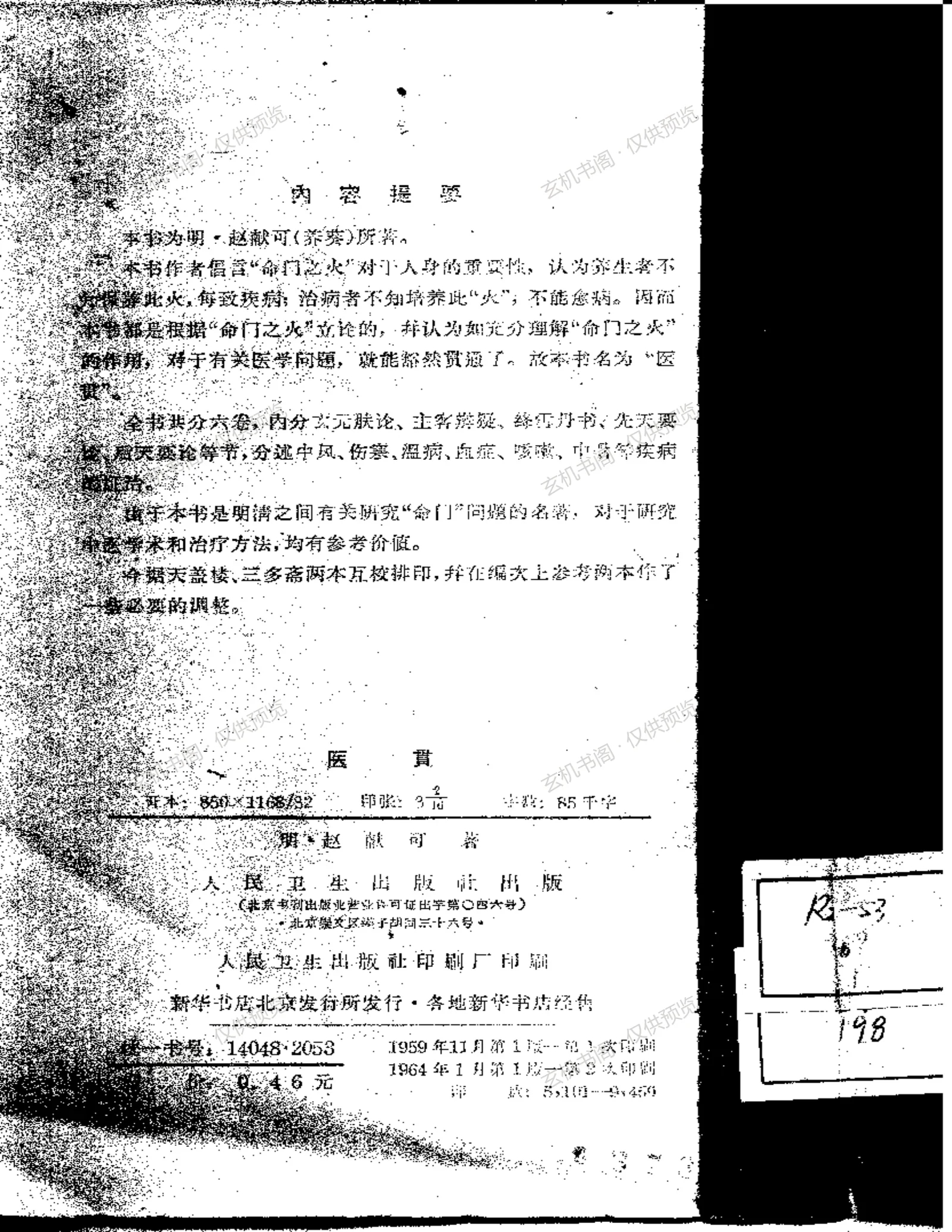
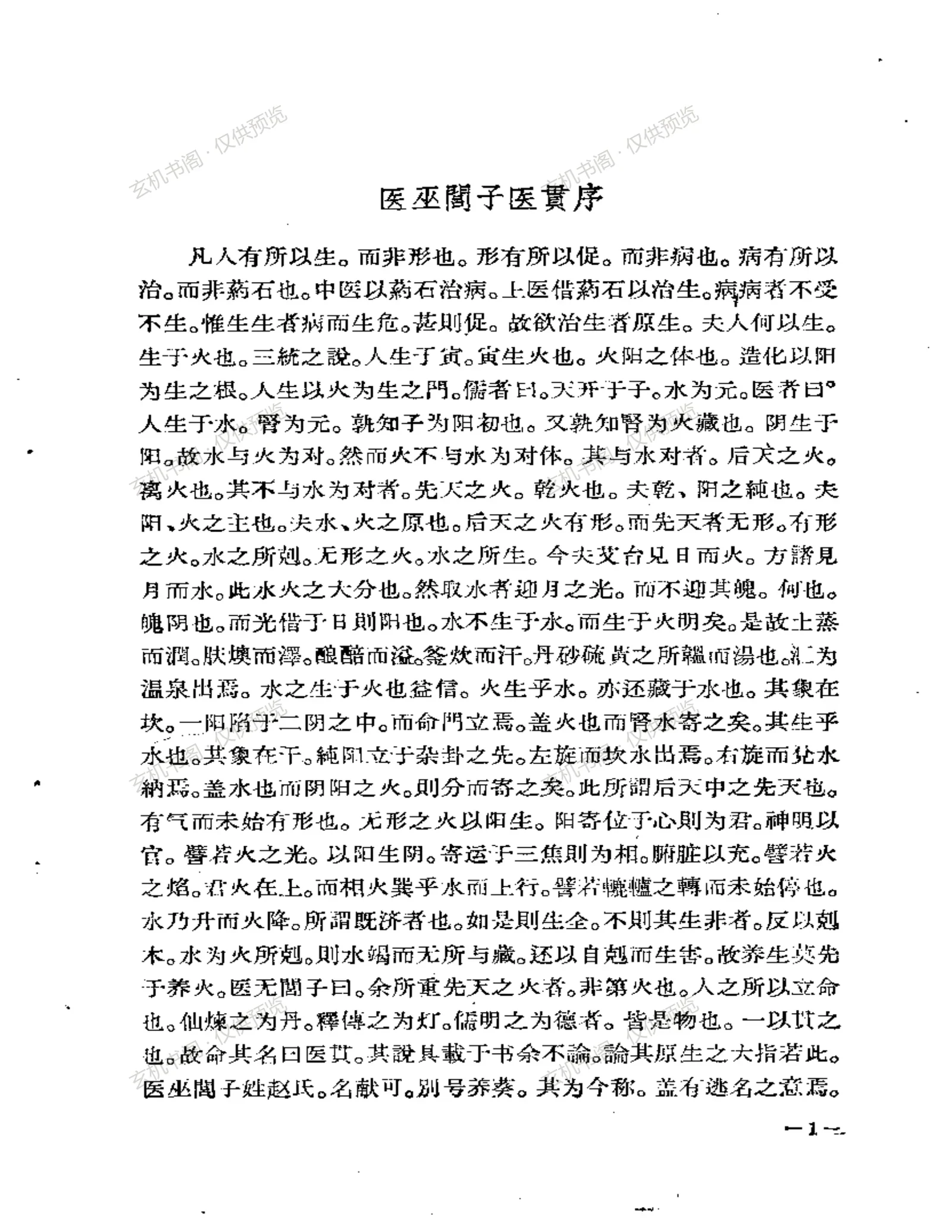
Yi Guan is a comprehensive medical work by the Ming dynasty physician Zhao Xianke (style name Yiwulüzi). The book consists of six volumes: Volume One discusses the twelve organs, yin-yang, and the five elements, proposing the 'fire of the life gate' as the root of human life and critiquing the view that the heart is the sovereign organ; Volume Two covers wind-stroke, cold damage, and warm diseases; Volume Three addresses blood disorders; Volume Four details the 'innate essentials,' including formulas like Bawei Wan and Liuwei Wan; Volume Five discusses phlegm, cough, vomiting blood, asthma, and wasting-thirst; Volume Six covers acquired conditions, including Buzhong Yiqi Tang, dietary injuries, summerheat, malaria, and dysentery. The entire work is organized around the life gate fire, integrating health preservation and treatment, and is a key text for studying the Ming dynasty life gate theory and the warming-tonifying school.
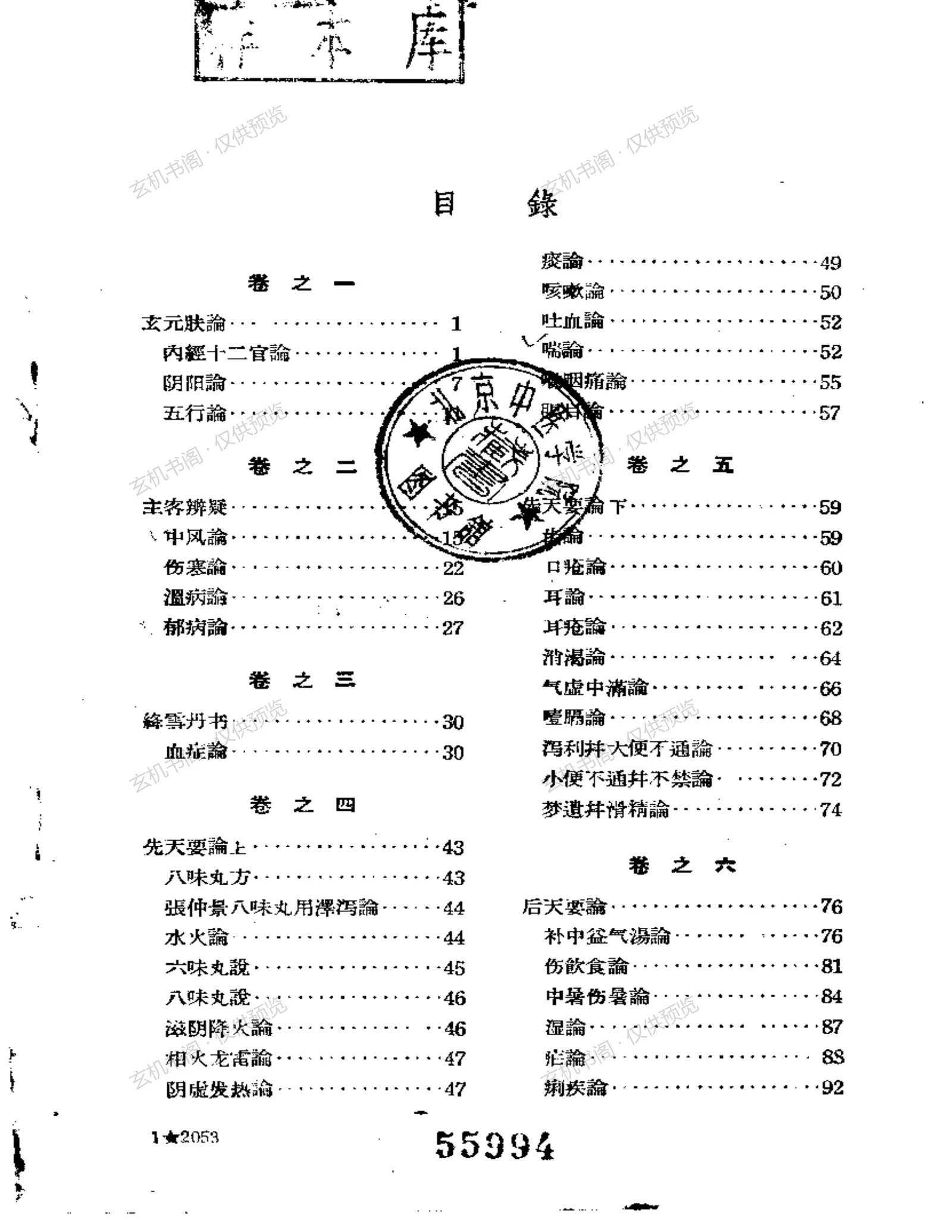
Contents
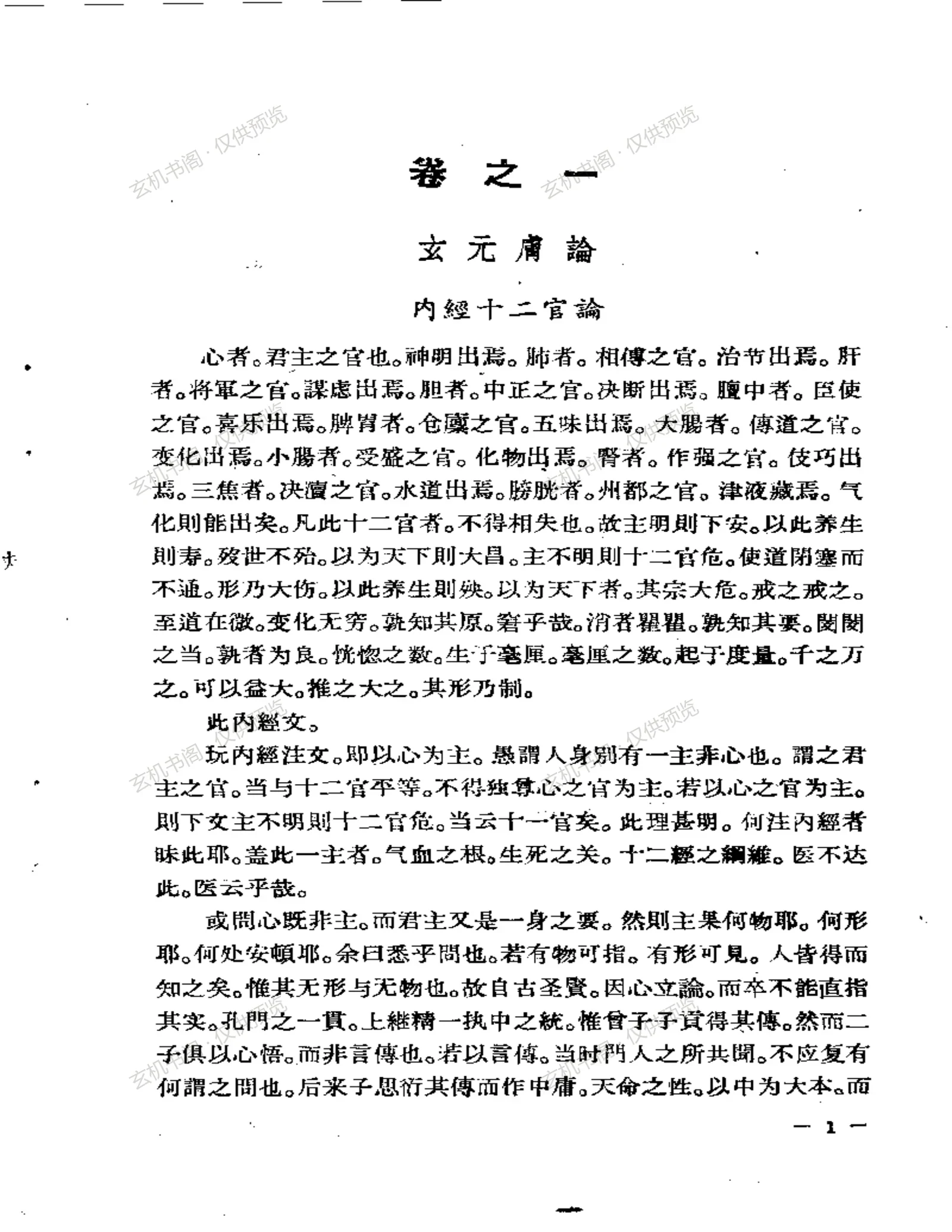
Volume 1: Profound discourse on the twelve organs, yin-yang, and five elements
Volume 2: Distinguishing host and guest (wind-stroke, cold damage, warm disease)
Volume 3: Blood disorders
Volume 4: Innate essentials (Bawei Wan, Liuwei Wan, water-fire theory)
Volume 5: Miscellaneous diseases (phlegm, cough, asthma, wasting-thirst)
Volume 6: Acquired essentials (Buzhong Yiqi Tang, malaria, dysentery)
Key Points
Centers on the 'fire of the life gate' as the core theory for health and healing.
Volume 4 elaborates the formulas Bawei Wan and Liuwei Wan, reflecting warming-tonifying thought.
Discusses various diseases including wind-stroke, cold damage, blood disorders, phlegm, cough, and wasting-thirst.
A significant Ming-Qing text on the 'life gate' with reference value for research.