Reading guide
Content guideOverview
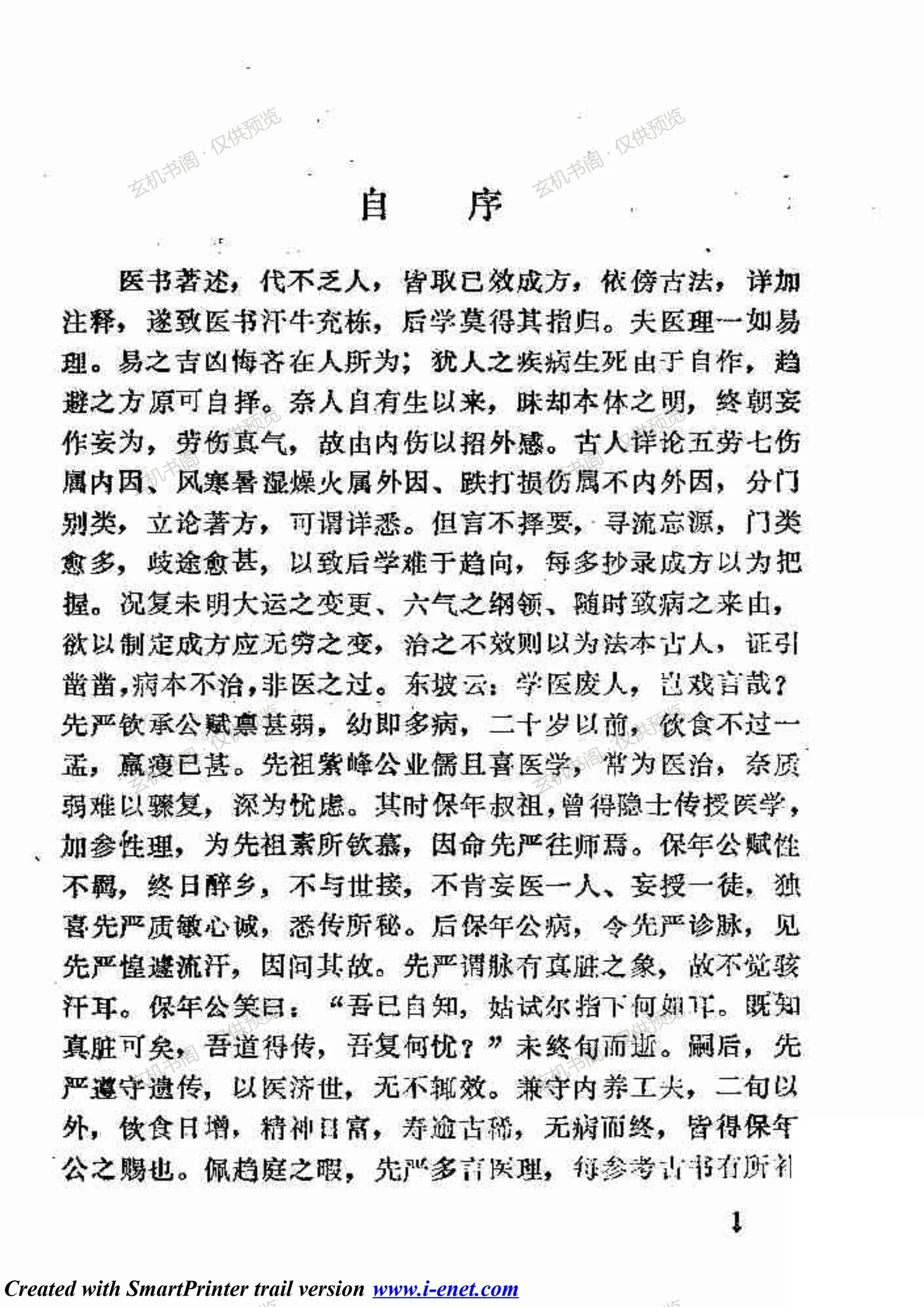
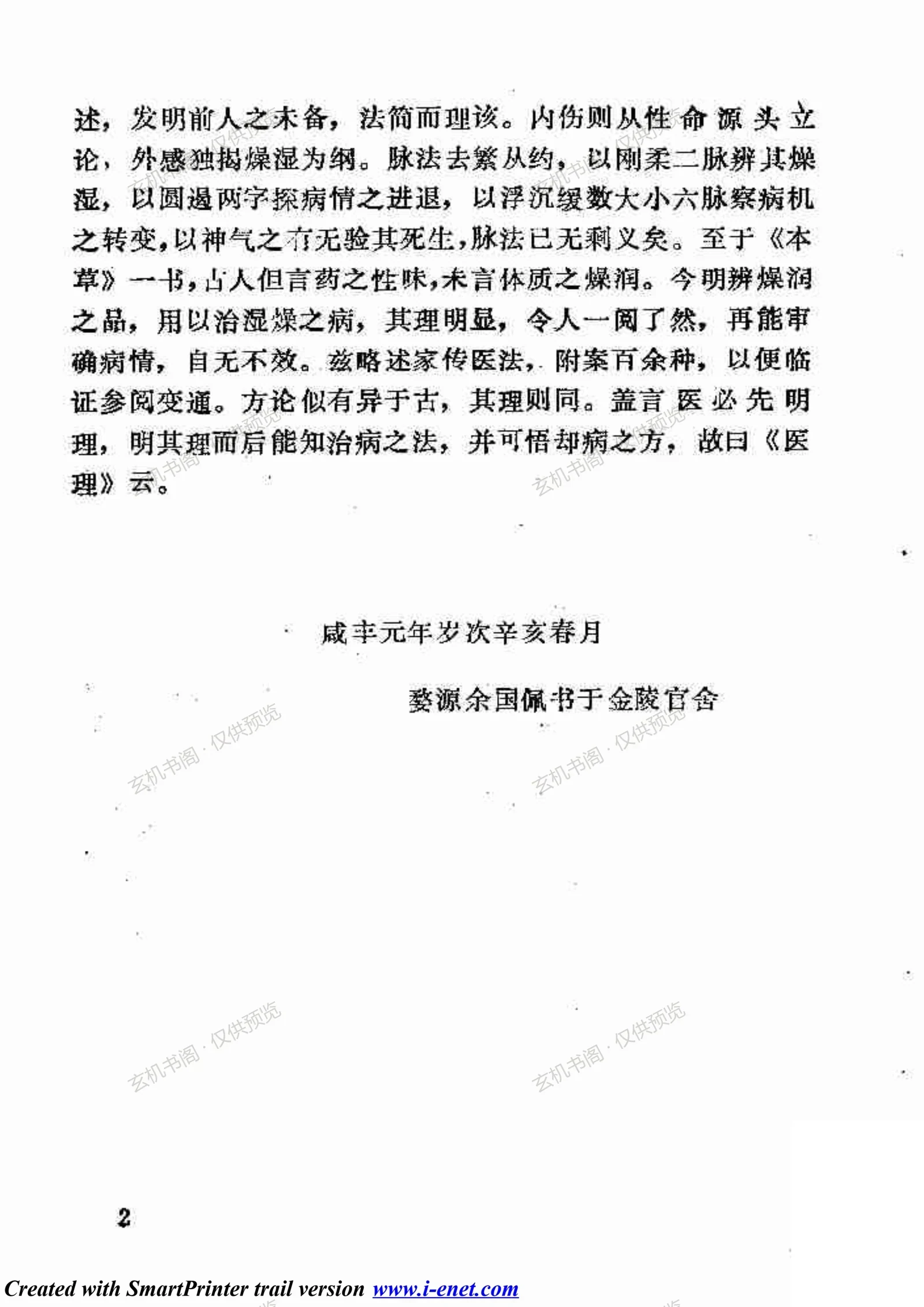
Yili (Medical Principles) is a compact Qing-dynasty treatise by Yu Guopei of Wuyuan, composed around 1851 and comprising twenty-one essays in roughly twenty thousand characters. Edited from a 1910 transcription, it joins Yijing and Daoist theory with medicine, insisting that a physician must first understand principle before knowing method. Its central theme is dryness and dampness: the six qi are reduced to these two, pulse diagnosis is simplified to firm and soft qualities, and disease progression is read through floating, sinking, slow, rapid, large and small pulses, with vitality of spirit determining life or death. The book also covers the five elements, circuit qi, internal and external injury, summerheat, external medicine, inquiry and palpation, menstrual regulation, and the properties of gypsum.
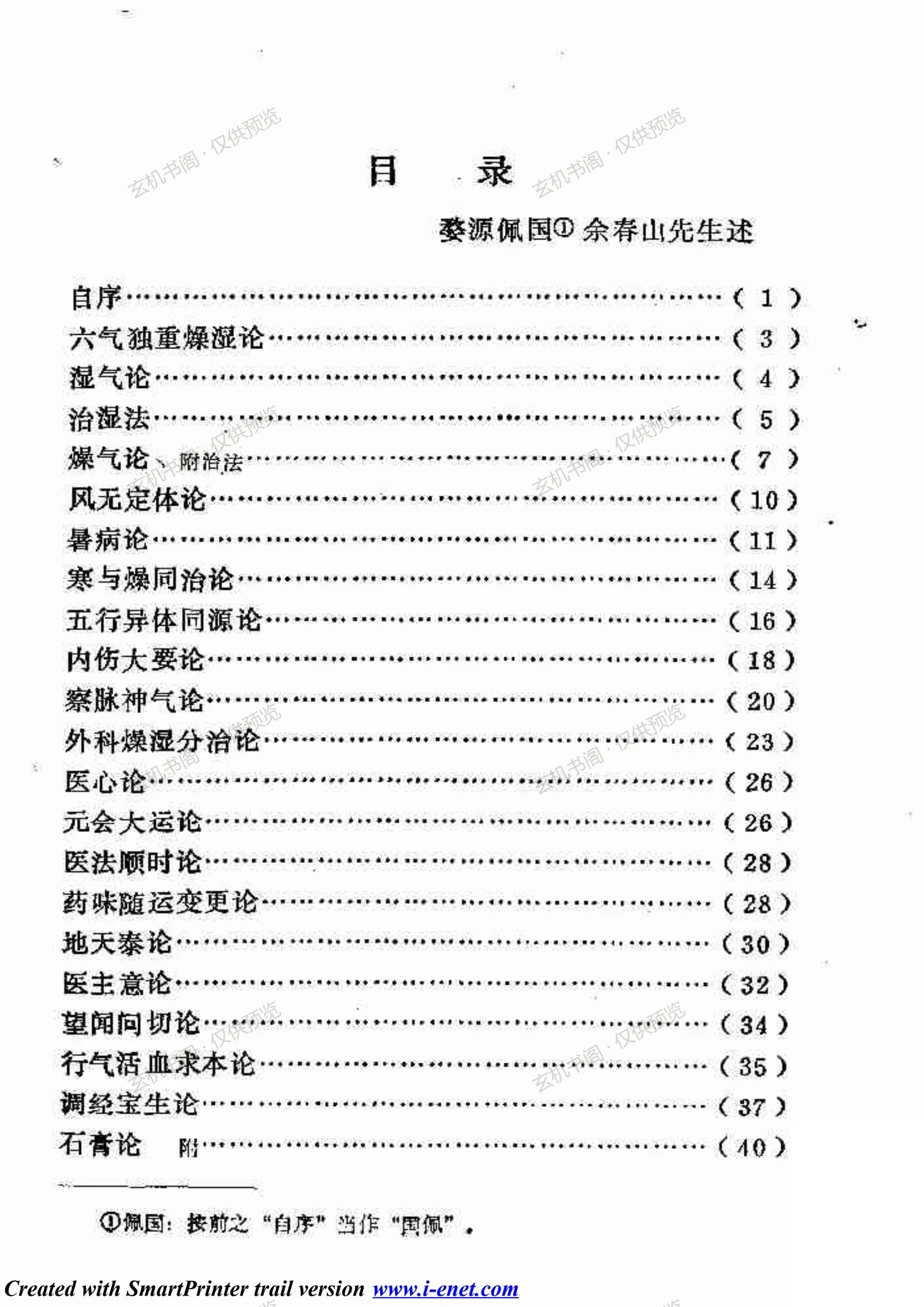
Contents
Preface: family medical lineage and purpose
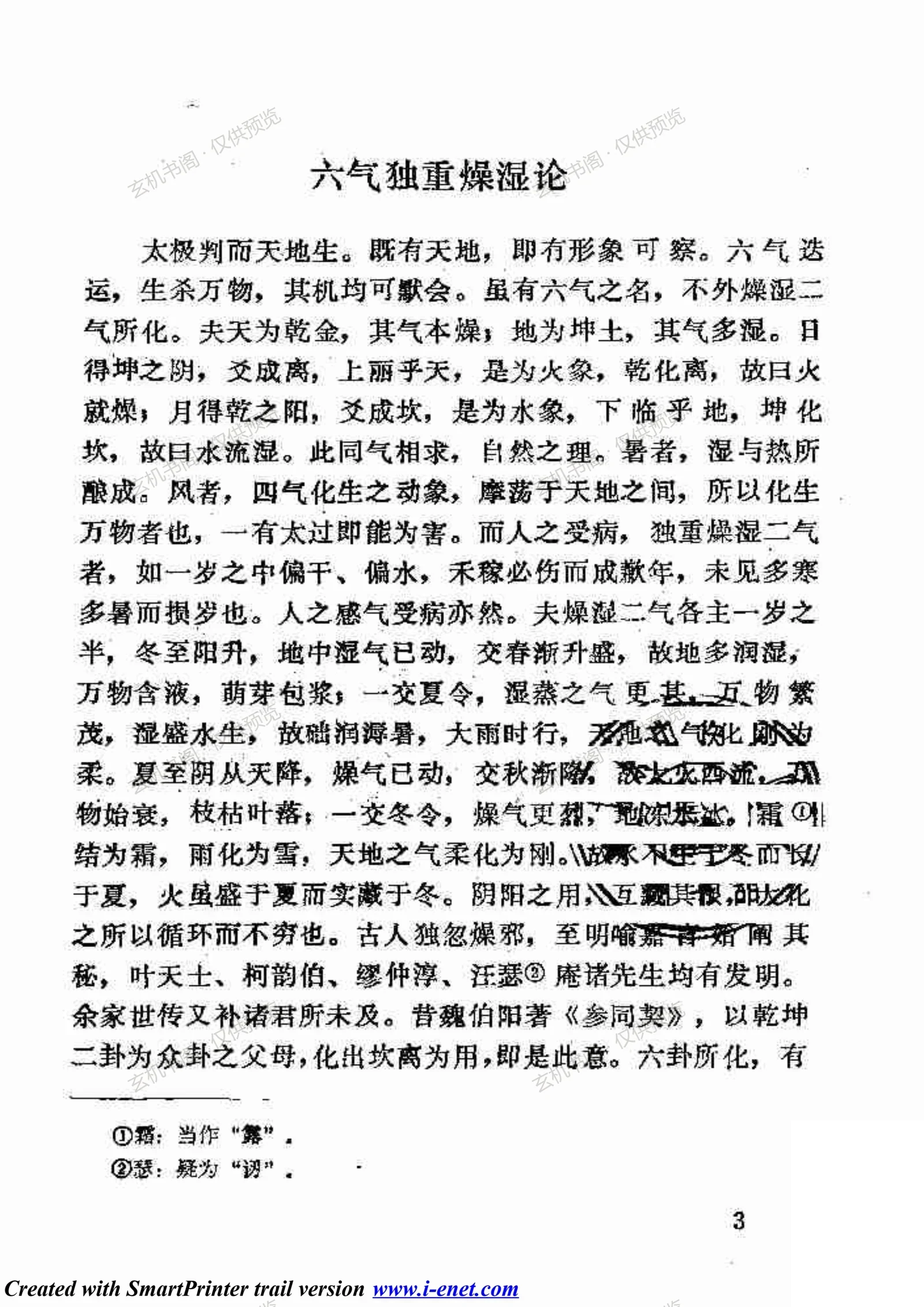
On the six qi and the primacy of dryness-dampness
Dampness theory and treatment; dryness theory with methods
Wind, summerheat, and combined cold-dryness treatment
Internal injury, pulse-spirit diagnosis, external medicine
Medical mind, circuit qi, seasonal practice, drug properties
Diagnostic intent, four examinations, menstrual care, gypsum
Key Points
Dryness and dampness serve as the master framework for all six qi
Pulse method simplified to firm and soft qualities
Floating, sinking, slow, rapid, large and small pulses track change
Yijing and Daoist ideas integrated into medical reasoning
Drug properties expanded by constitutional dryness or moisture
Covers internal, external and gynecological medicine plus seasonal qi