Reading guide
Content guideOverview
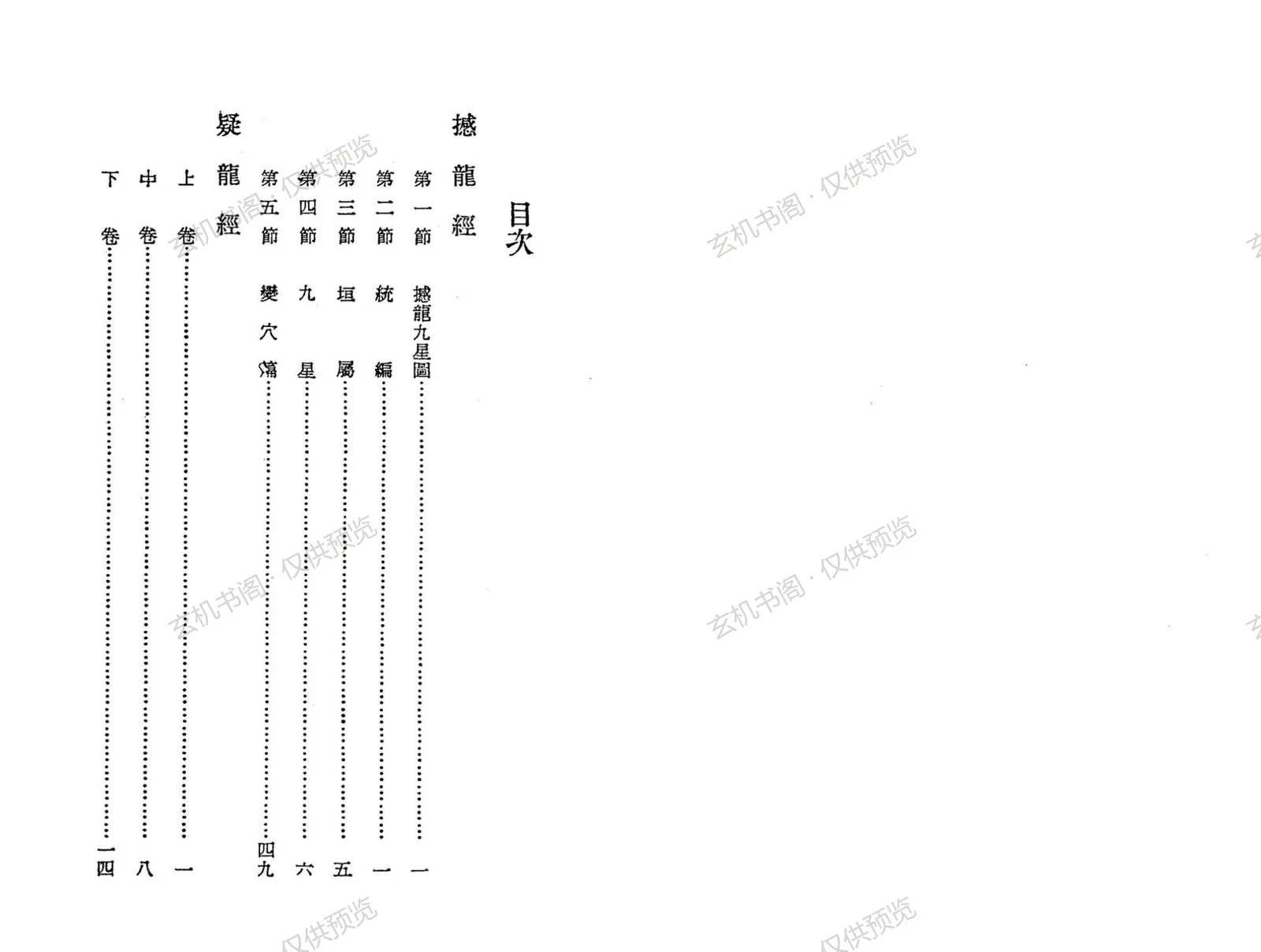
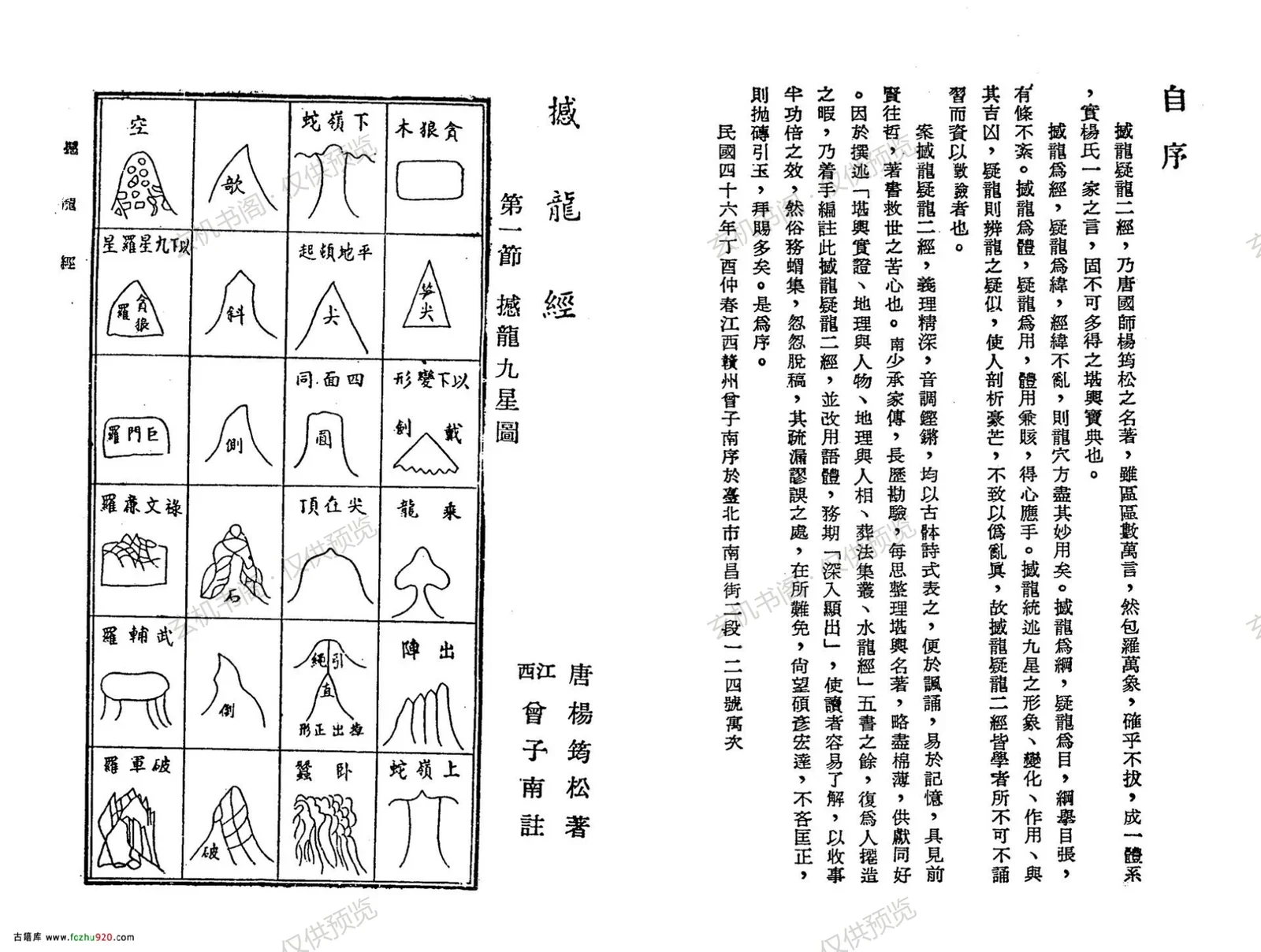
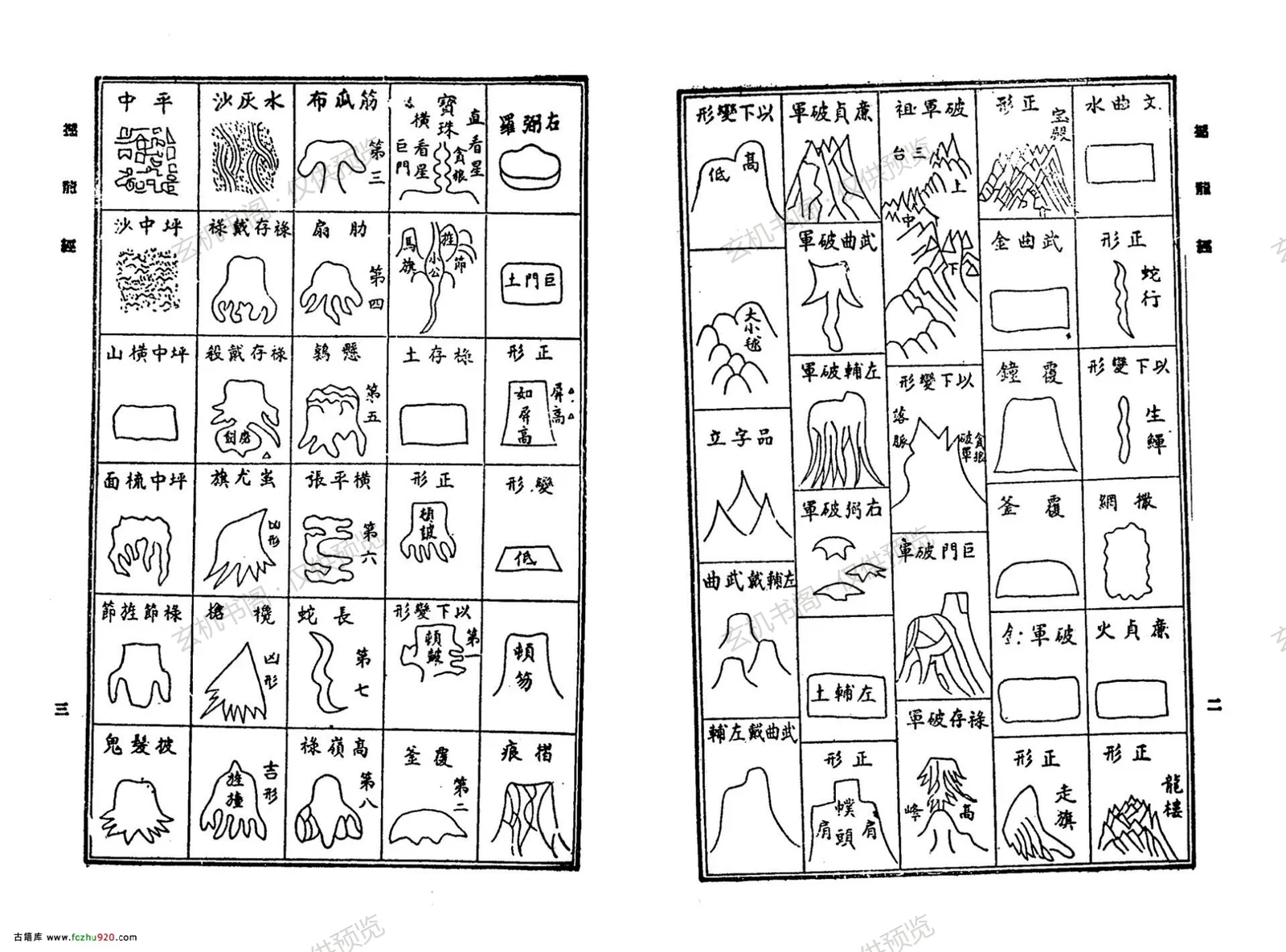
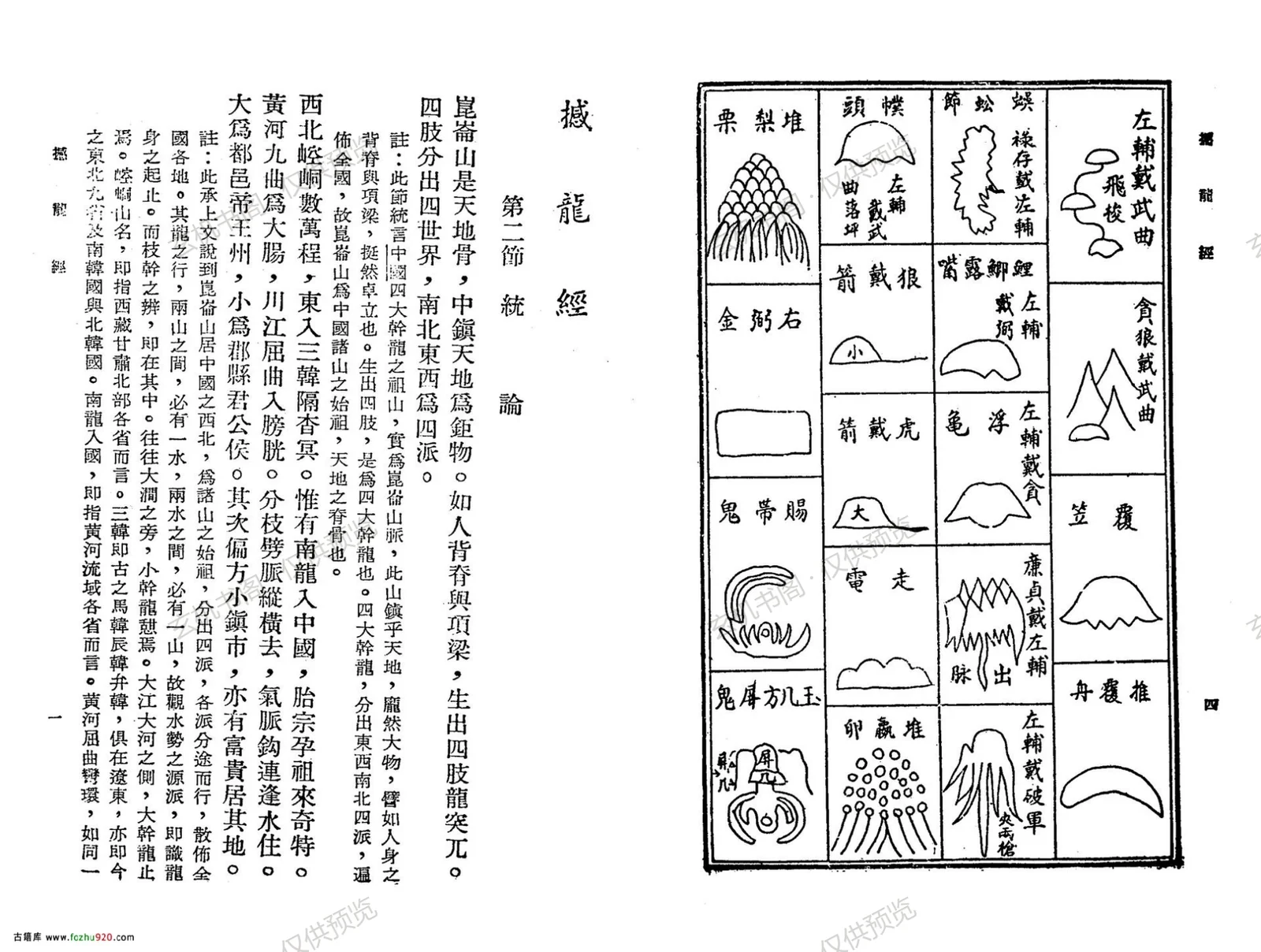
This is a combined, annotated edition of two classic landscape-form (luantou) fengshui texts: the Hanlong Jing and the Yilong Jing. The cover names Zeng Zinan as annotator, and the preface identifies the Tang-dynasty author Yang Yunsong with Zeng Zinan's commentary and diagrams. The table of contents shows the Hanlong Jing in five sections—nine-star diagram, general discourse, enclosures, the nine stars, and transformed sites—while the Yilong Jing is divided into upper, middle, and lower volumes. The preface notes that both works are written in ancient-style verse, rich in meaning and easy to chant, yet hard to understand without guidance. The most distinctive feature is the many nine-star diagrams, which map star names such as Tanlang, Jumen, Lucun, Wenqu, Lianzhen, Wuqu, Pojun, Zuofu, and Youbi onto mountain outlines, marking auspicious and inauspicious forms plus numerous variants. Readers can use the five sections and three volumes as a skeleton: first learn the shapes from the diagrams, then read the verses with the commentary, and grasp the idea that the dragon is the body while the stars are the function.
Contents
Preface: origins of the two texts and editorial approach
Hanlong Jing, section 1: nine-star diagram
Hanlong Jing, section 2: general discourse
Hanlong Jing, section 3: enclosures
Hanlong Jing, section 4: the nine stars
Hanlong Jing, section 5: transformed sites
Yilong Jing: upper, middle, and lower volumes
Key Points
Combines Yang Yunsong's Hanlong Jing and Yilong Jing with Zeng Zinan's annotations.
Organizes mountain forms under nine stars, from Tanlang to the auxiliary stars.
Extensive diagrams distinguish auspicious, inauspicious, and variant forms.
The Hanlong Jing has five sections; the Yilong Jing has three volumes.
Written in verse for memorization, but dense with technical terms.