Reading guide
Content guideOverview
This is a Yuan-dynasty Yijing work attributed to the Daoist scholar Lei Siqi of Linchuan. The surviving portions, juan 1 and juan 2, begin with a discussion of divination in the Hongfan chapter and then proceed to the procedure of yarrow-stalk casting: the Great Expansion number, dividing and counting stalks, and the generation of the sixty-four hexagrams and 384 lines. The text compares divination cases recorded in the Zuozhuan with hexagram and line statements, and in juan 2 examines the origins of hexagram figures through yin-yang and odd-even number theory. Quoting extensively from the Yijing and earlier commentaries, it illustrates how Song-Yuan scholars combined numerical-image methods with philosophical interpretation. It is useful for understanding the concrete operations and theoretical basis of classical Yijing divination.
Contents
Juan 1: origins of divination and the Hongfan chapter
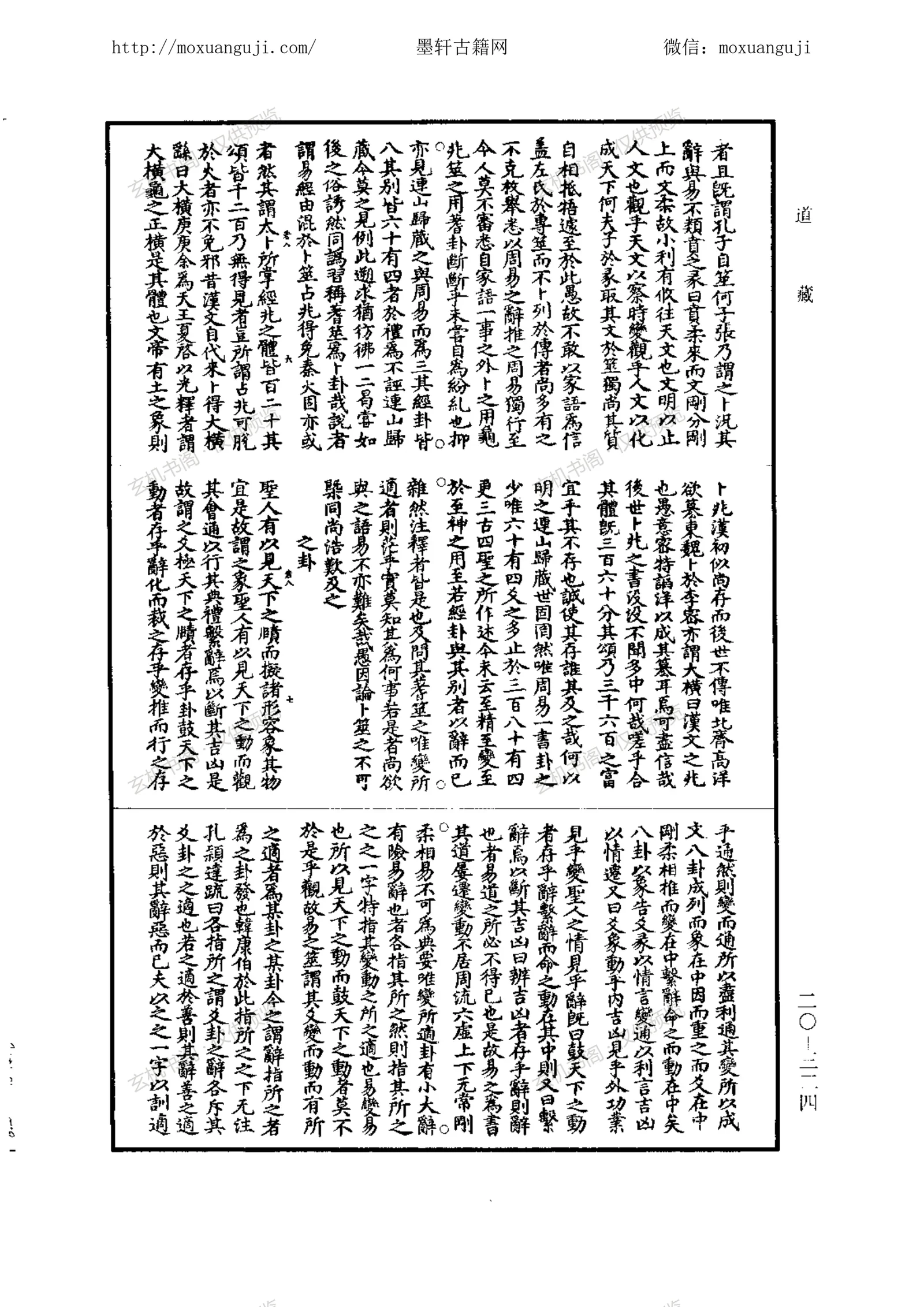
Yarrow-stalk casting and the Great Expansion number
The numbers of the sixty-four hexagrams and 384 lines
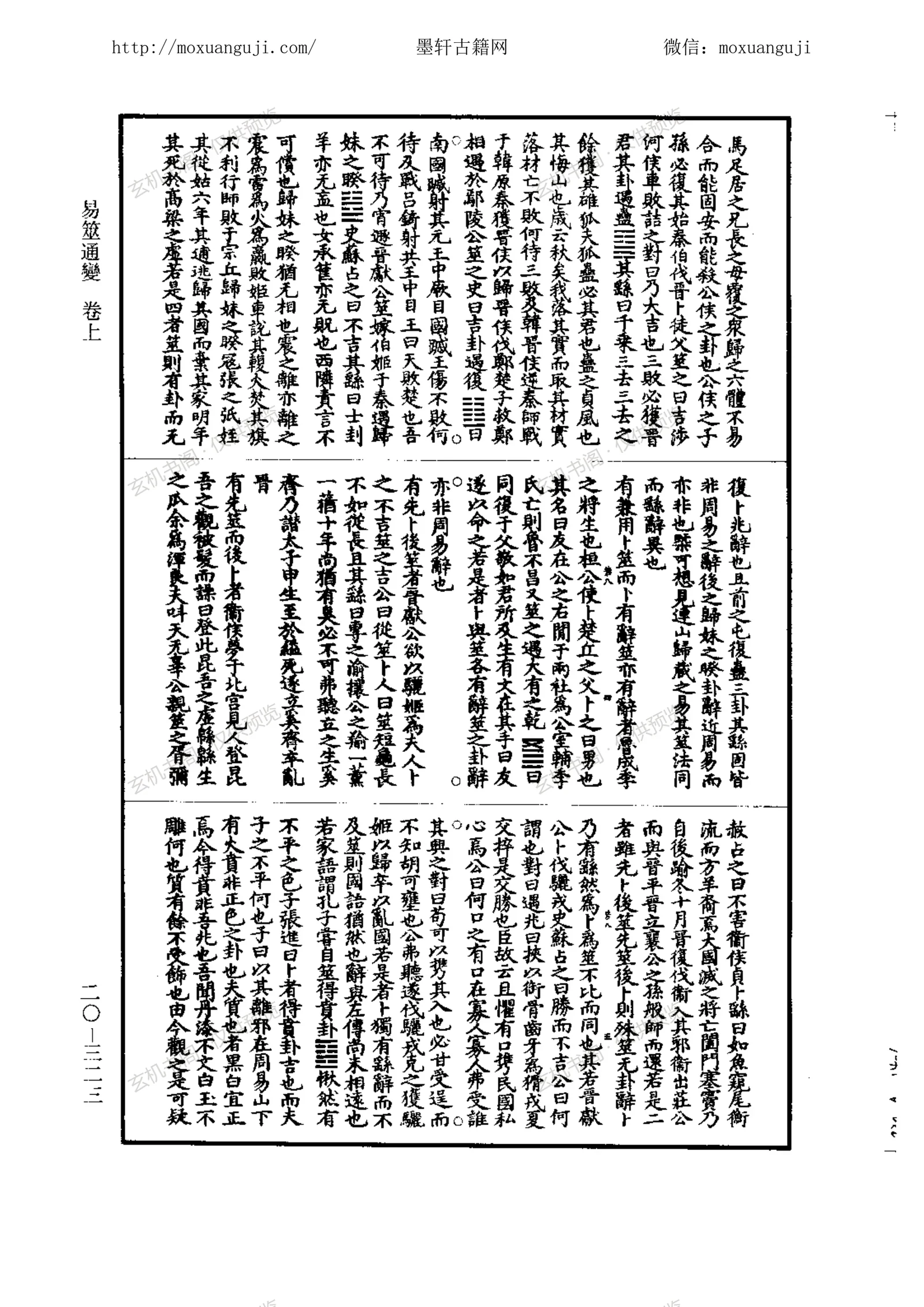
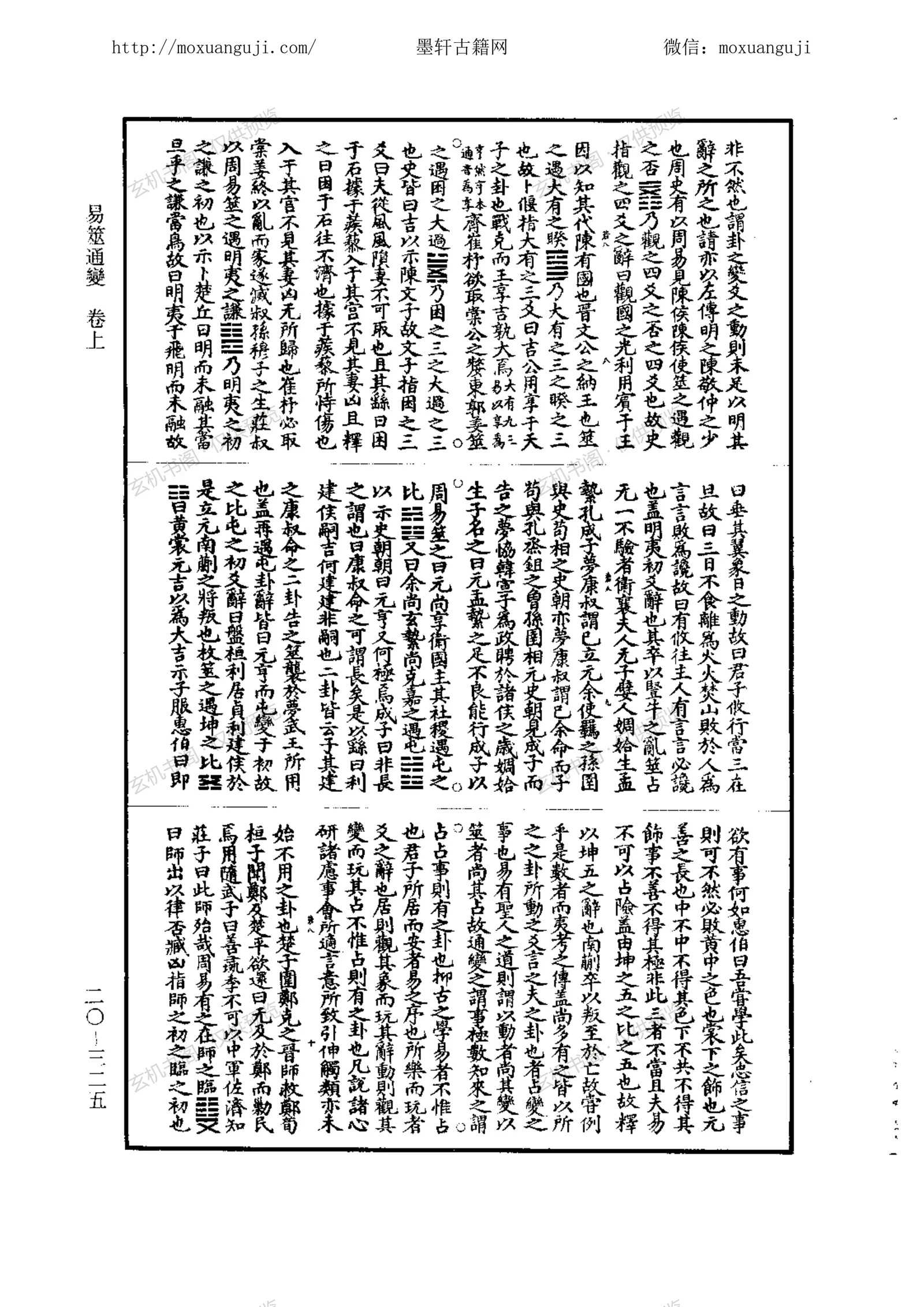
Zuozhuan divination cases and hexagram-line judgments
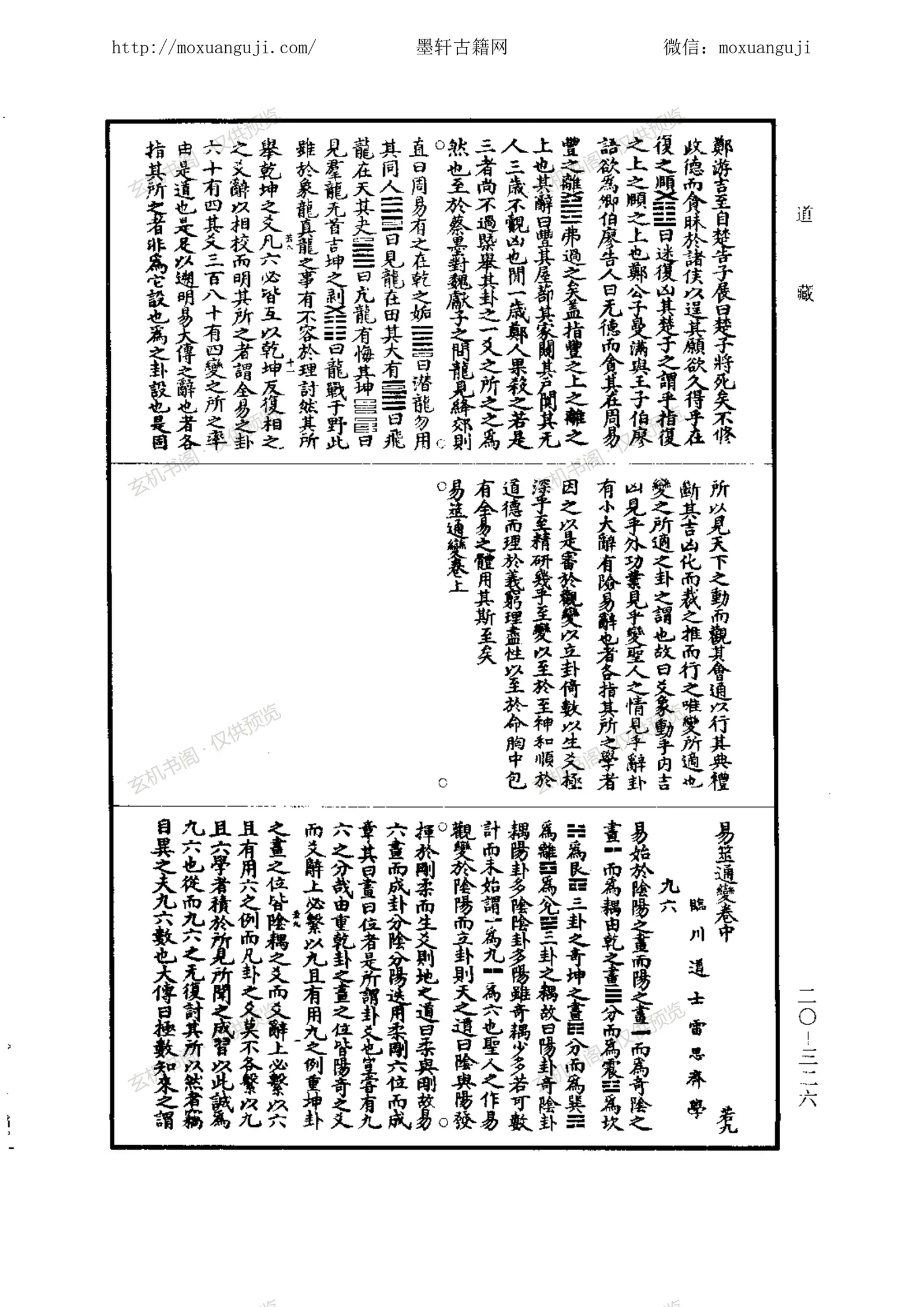
Juan 2: yin-yang, odd-even, and the origin of hexagram figures
Key Points
Grounds divination in the Hongfan chapter's 'doubts' section
Details the Great Expansion number and yarrow-stalk casting procedure
Uses Zuozhuan divination cases to verify hexagram-line judgments
Discusses hexagram figures through yin-yang and numerical relationships
Reflects the Yuan Daoist integration of numerical-image and philosophical Yijing studies