Reading guide
Content guideOverview
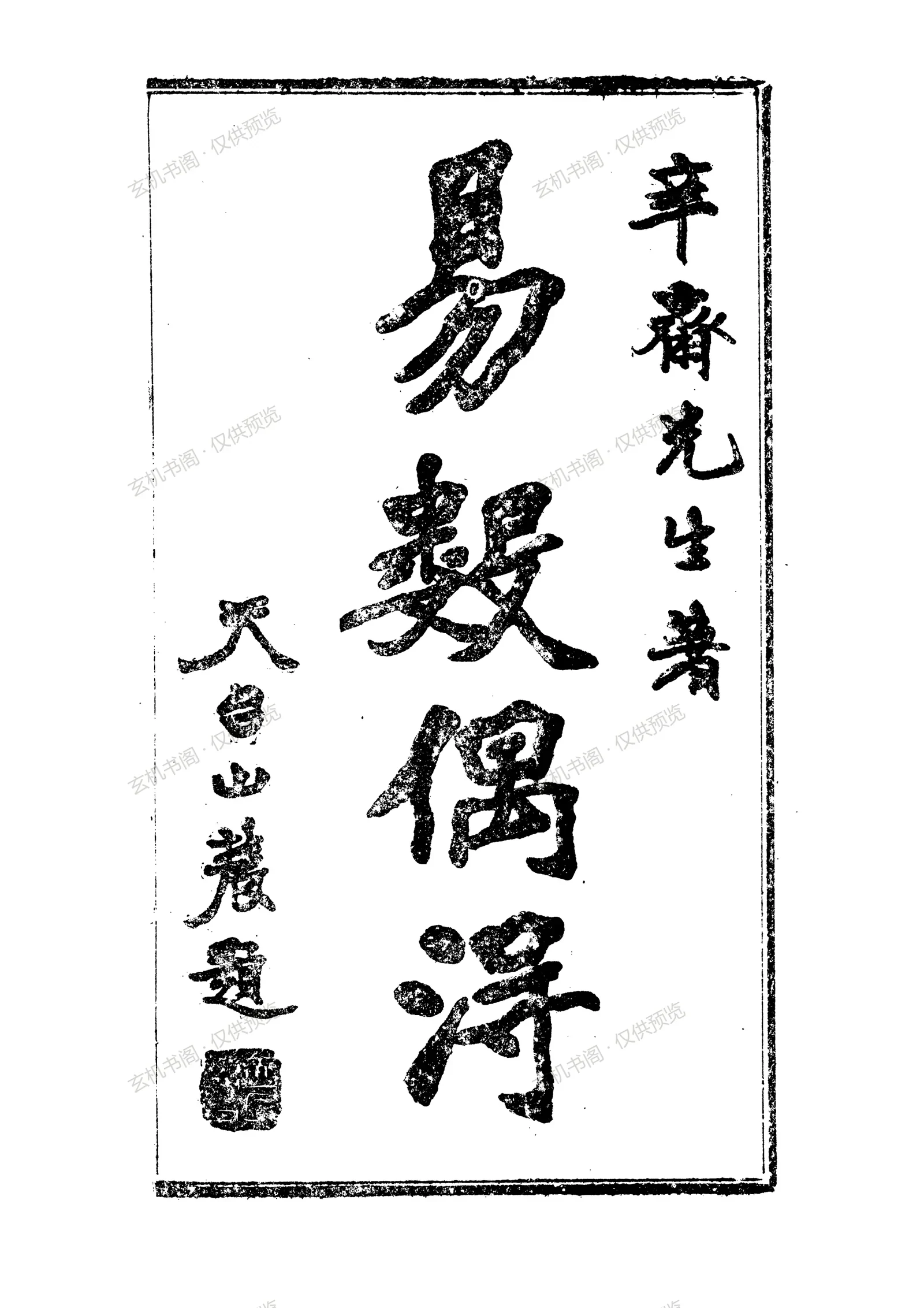
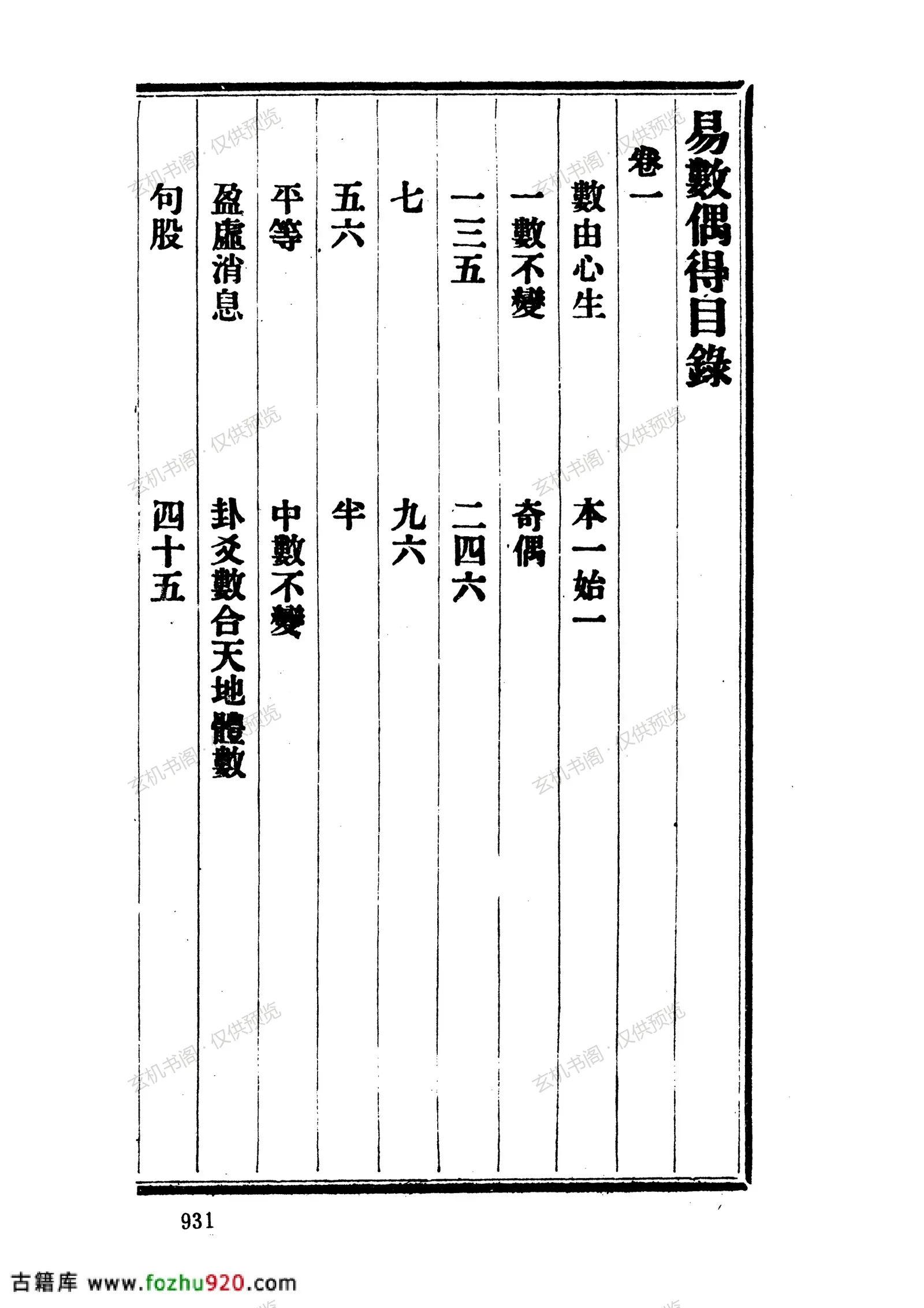
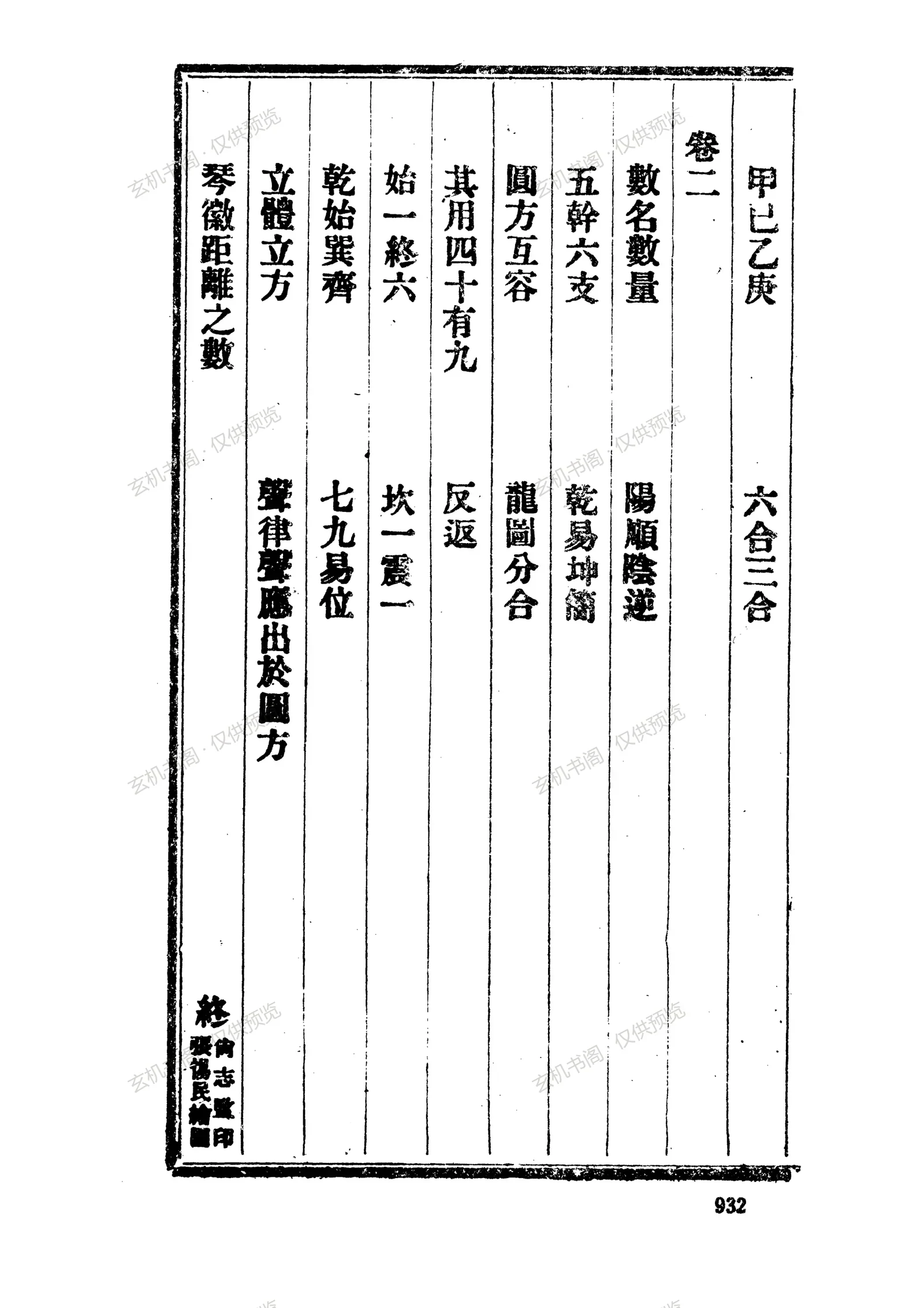
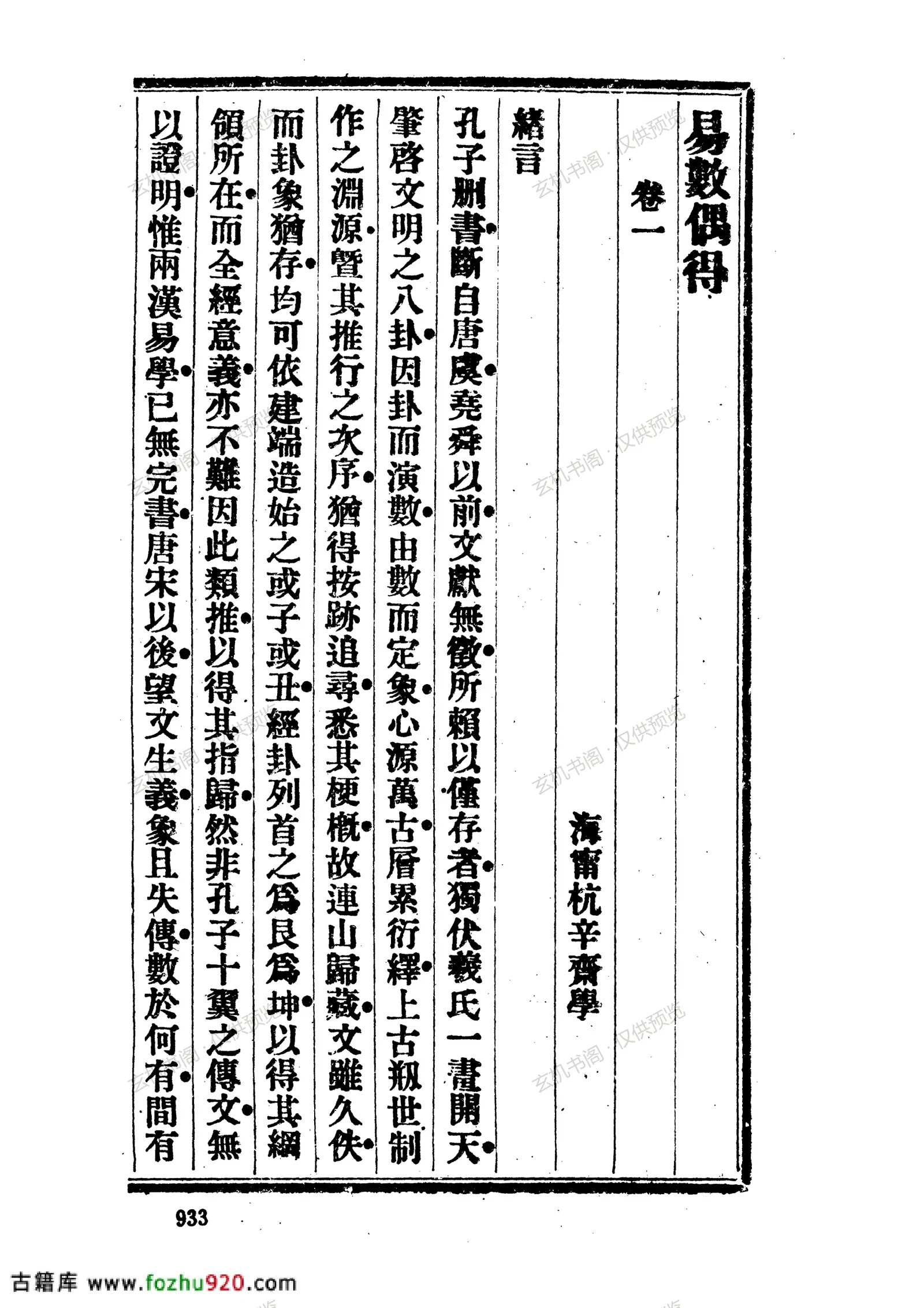
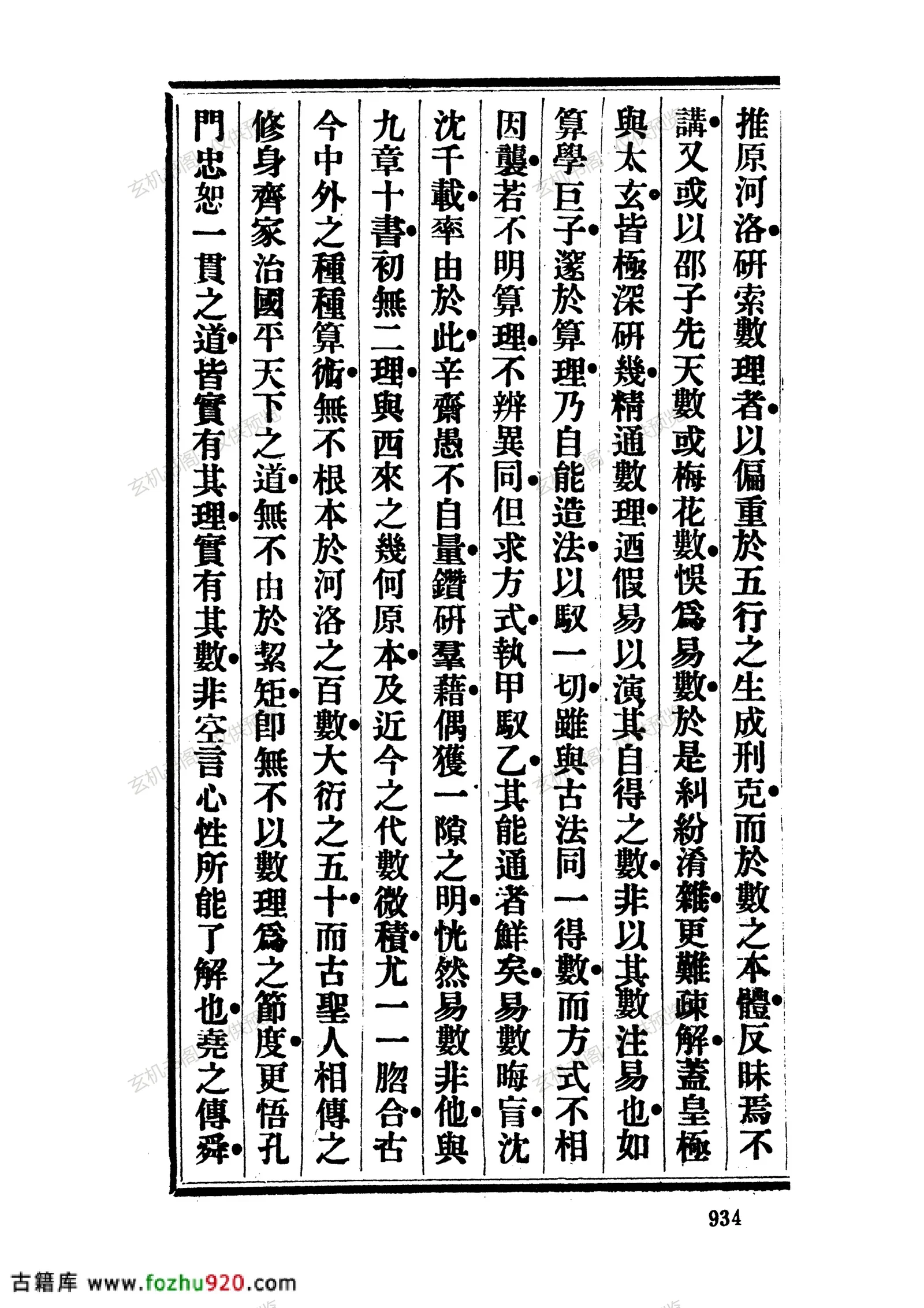
This work by Hang Xinzai examines the numerical dimension of the Yijing. Its opening preface traces the origins of Yi numbers from Fuxi's hexagrams through Han-dynasty scholarship, arguing that numbers arise naturally rather than from arbitrary speculation. Volume one covers topics such as numbers arising from the mind, odd and even, the numbers one through nine, the numbers of Heaven and Earth, and the gougu method. Volume two extends to stems and branches, six harmonies and three harmonies, yang following and yin reversing, square and circle intercontainment, the Longtu diagrams, the number forty-nine used in divination, and the numbers of pitch pipes and qin studs. The preface also engages Western geometry and the Nine Chapters on the Mathematical Art, showing a comparative interest in Chinese and Western calculation. The book suits readers with a foundation in Yijing studies who are interested in Xiangshu numerology and traditional mathematics.
Contents
Preface: origins and method of Yi numbers
Vol. 1: numbers from mind, odd-even, generated numbers
Vol. 1: hexagram numbers and the gougu method
Vol. 2: stems and branches, harmonies, yin-yang order
Vol. 2: square-circle, Longtu, the great expansion number
Vol. 2: pitch pipes and qin stud distances
Key Points
Derives Yi numbers from Hetu Luoshu and hexagrams
Clarifies odd-even, generated and Heaven-Earth numbers
Incorporates stems, branches, pitch pipes and gougu
Criticizes interpreters who ignore mathematical reasoning
Compares Chinese and Western mathematical traditions