Reading guide
Content guideOverview
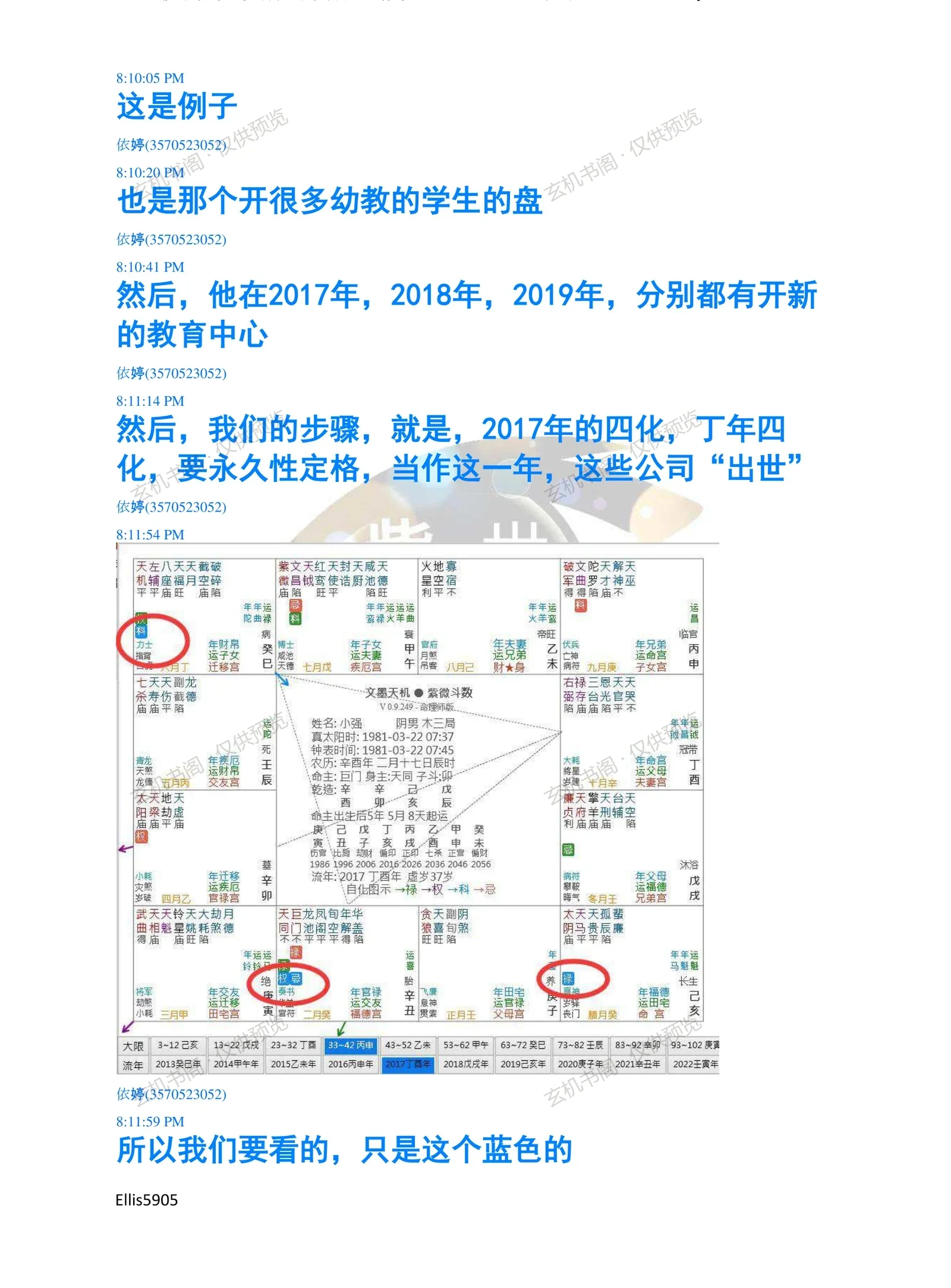
This handout is a transcript of Lesson 39 in Yiting's Zi Wei Dou Shu systematic course, presented as classroom chat screenshots with spoken explanations and diagrams. Its core is the Lu Ming method: it contrasts Hua Lu, which is abstract, emotional and expansive, with Lu Cun, which is concrete and material, likes being installed with Yang and Tuo, and dislikes sitting alone. The lesson states that a yearly chart contains three Hua Lu (birth-year, major-limit, and annual) plus three corresponding Lu Cun, for six lu stars in total. Where these six cluster in the twelve palaces shows the year's strongest palace and overall fortune. From this the teacher derives practical choosing methods: selecting people born in Jia years (year ending in 4) or Wu years (ending in 8) to reinforce a Lian Zhen Tan Lang career palace, and using a stem-to-year-ending table to fix auspicious timing and a business's founding year. The final pages show a full chart of a student running a preschool tutoring chain who opened branches in 2017, 2018 and 2019, treating each opening year's stem four-transformations as the company's permanent birth-year four-transformations for later readings.
Contents
Course opening: elements of choosing timing
Lu Ming method: Hua Lu versus Lu Cun
Passive waiting versus active creation
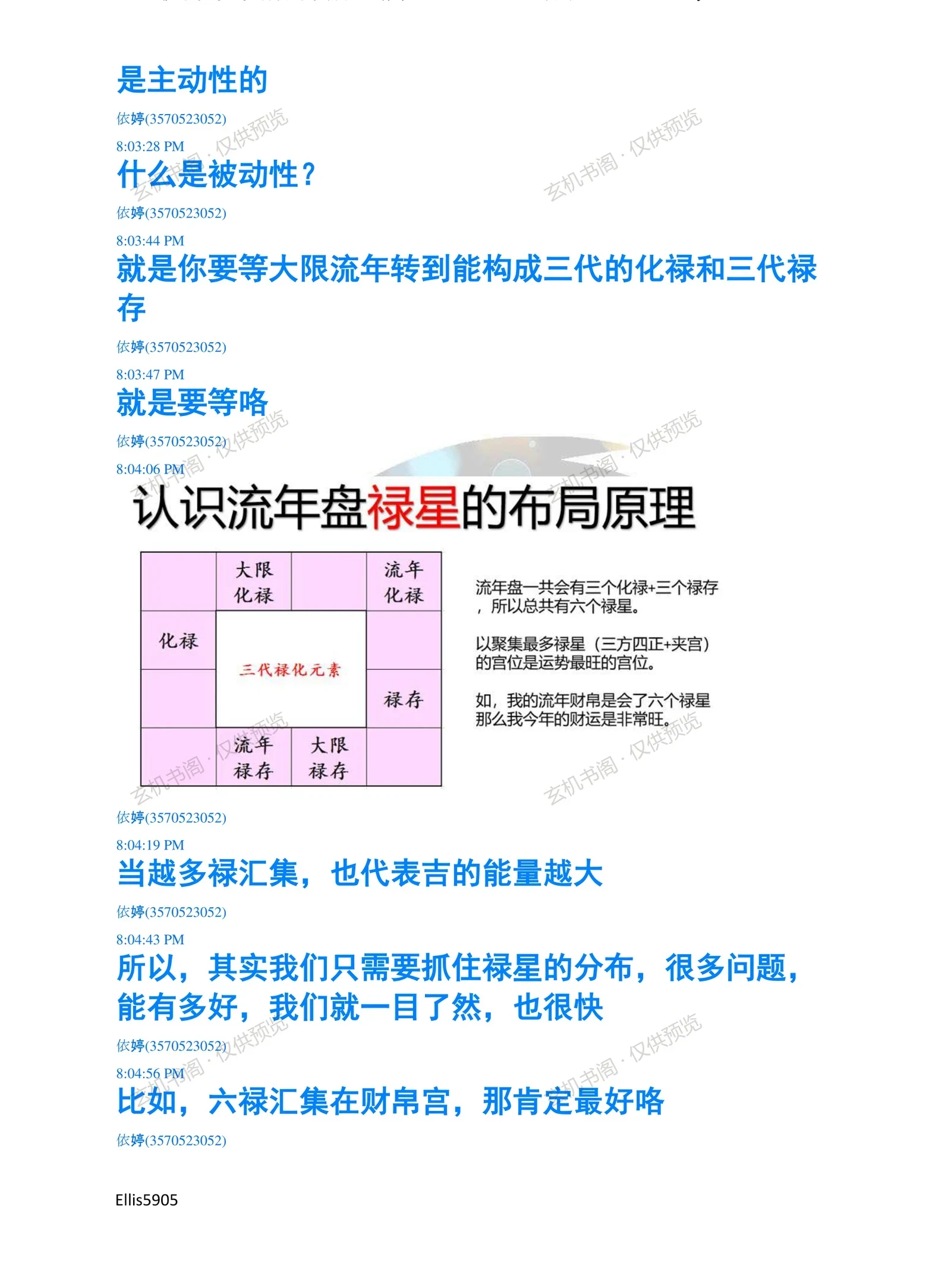
How the six lu stars lay out in a yearly chart
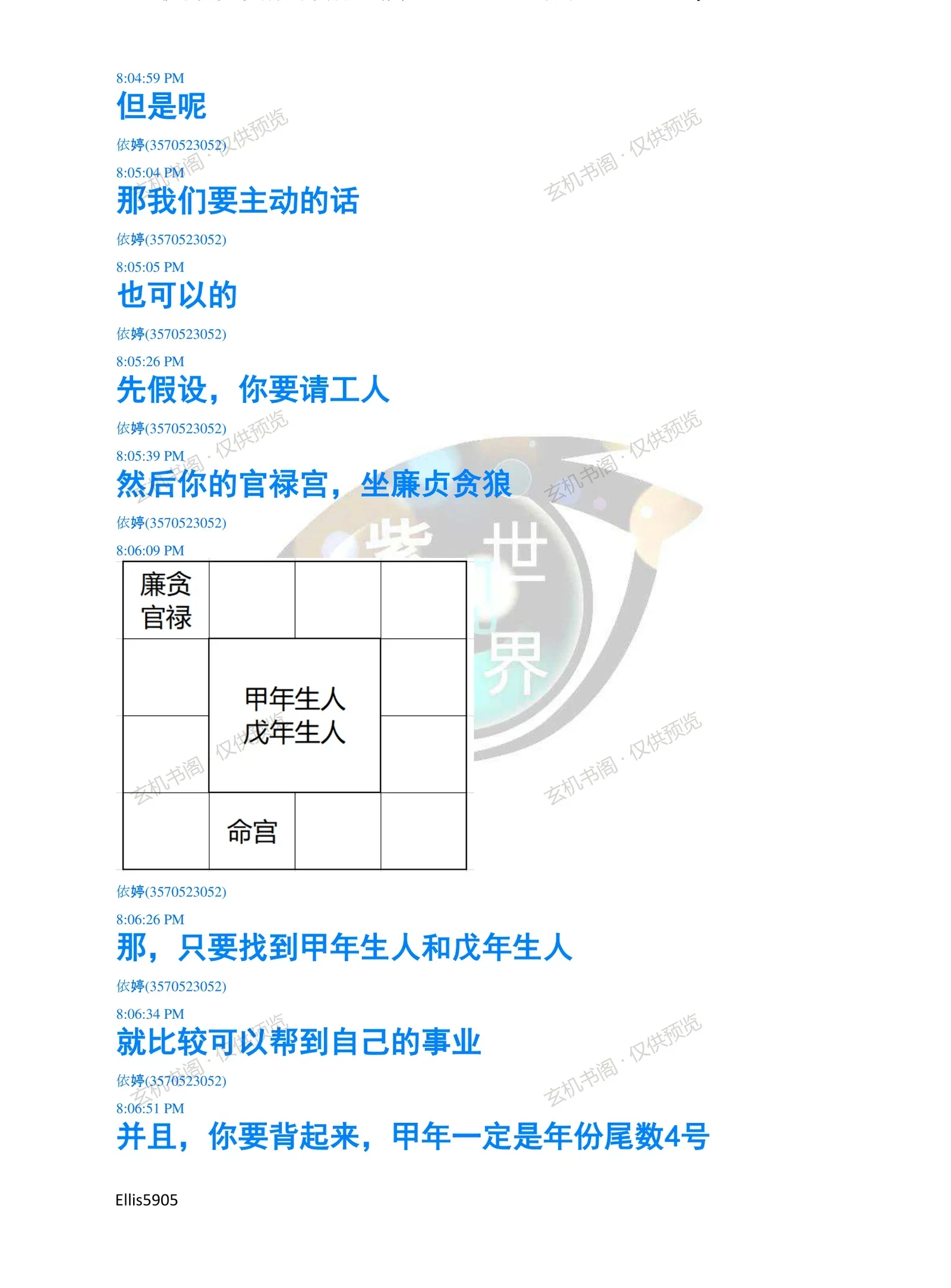
Choosing people via the Lian Tan career palace
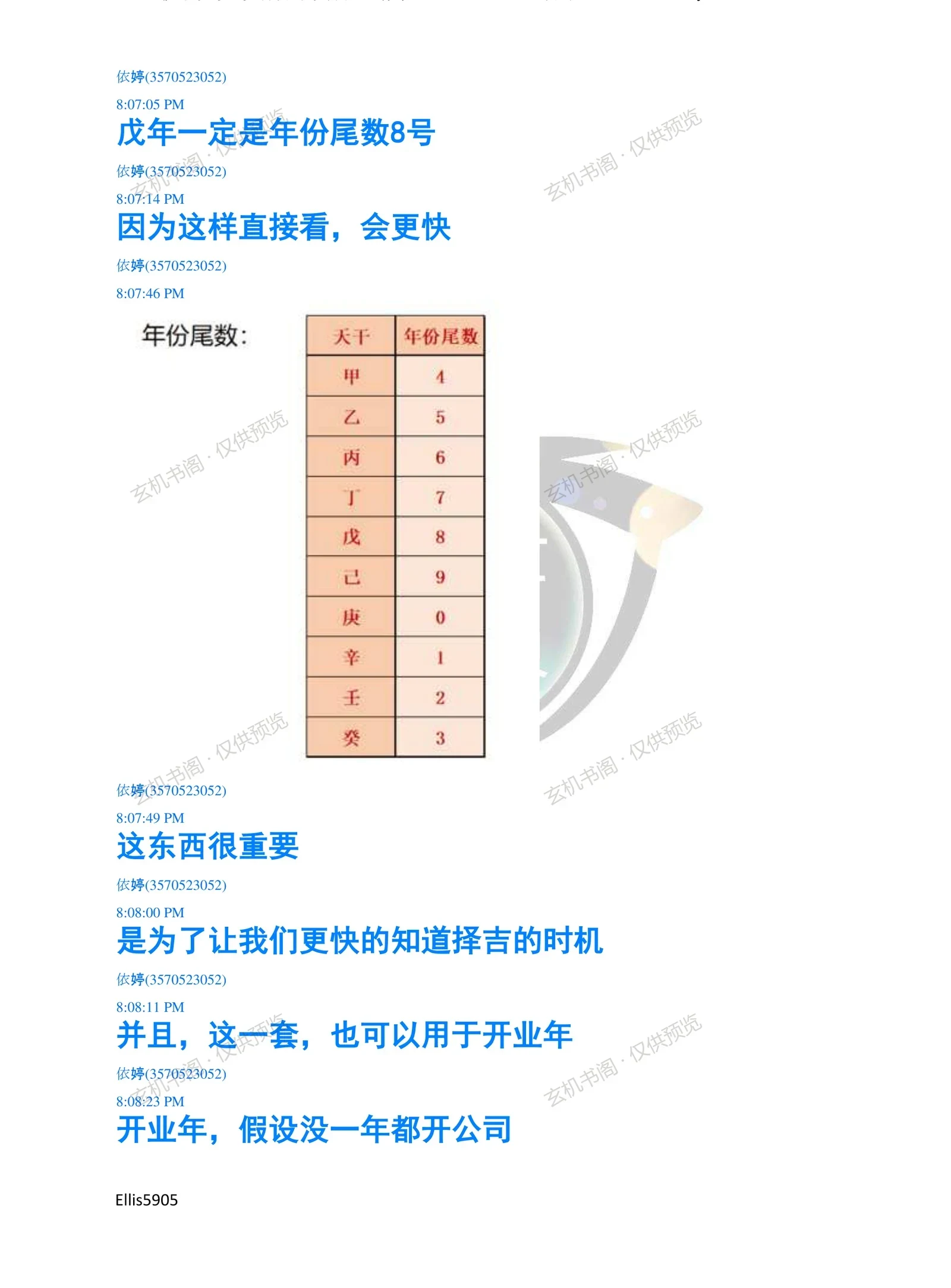
Table linking year endings to heavenly stems
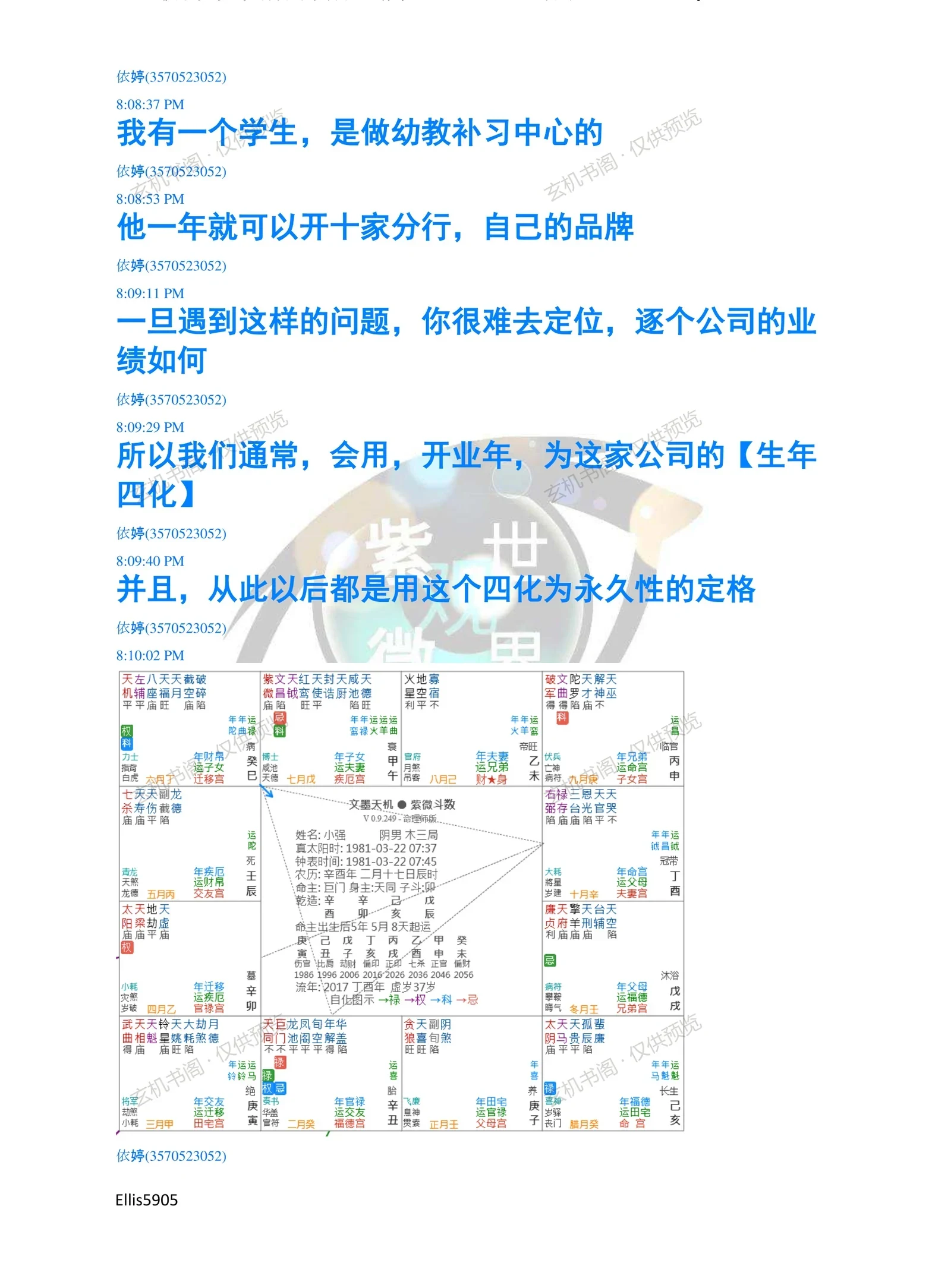
Founding-year four transformations as permanent setting
Case chart of a tutoring chain's branch openings
Key Points
Hua Lu is abstract and feeling-based; Lu Cun is material and concrete.
A yearly chart holds three Hua Lu and three Lu Cun, six in all.
Where the six lu gather marks the year's most prosperous palace.
Jia years end in 4 and Wu years in 8; can be used to choose partners.
A founding year's four transformations become a company's permanent chart.