Reading guide
Content guideOverview
This handout is a transcript of Yiting's Zi Wei Dou Shu systematic course session 09-19. It begins with the basic method of reading the three directions and four positions, then introduces the idea that the twelve palaces should not be read rigidly. Using the parents palace as an example, the author demonstrates how to re-establish a center and derive the mother's palace, how to assign parental roles in single-parent households, how the siblings palace serves as a secondary position and major influence on marriage, and how to locate a spouse's parents. It is an advanced, orally transmitted approach suited to learners who already know the standard meanings of the twelve palaces.
Contents
Pre-class interaction and opening
Reading three directions and four positions
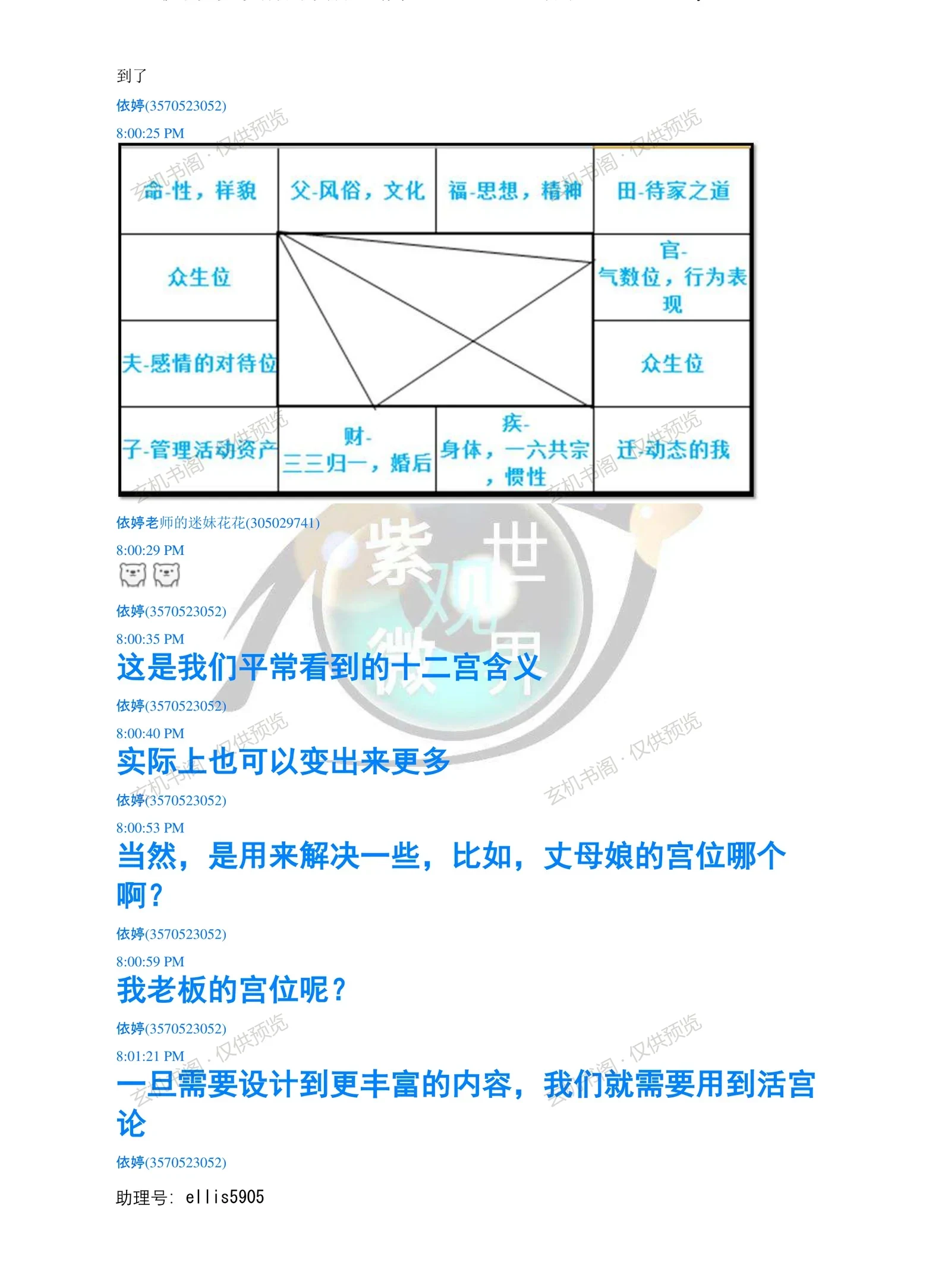
Standard meanings of the twelve palaces and the flexible palace method
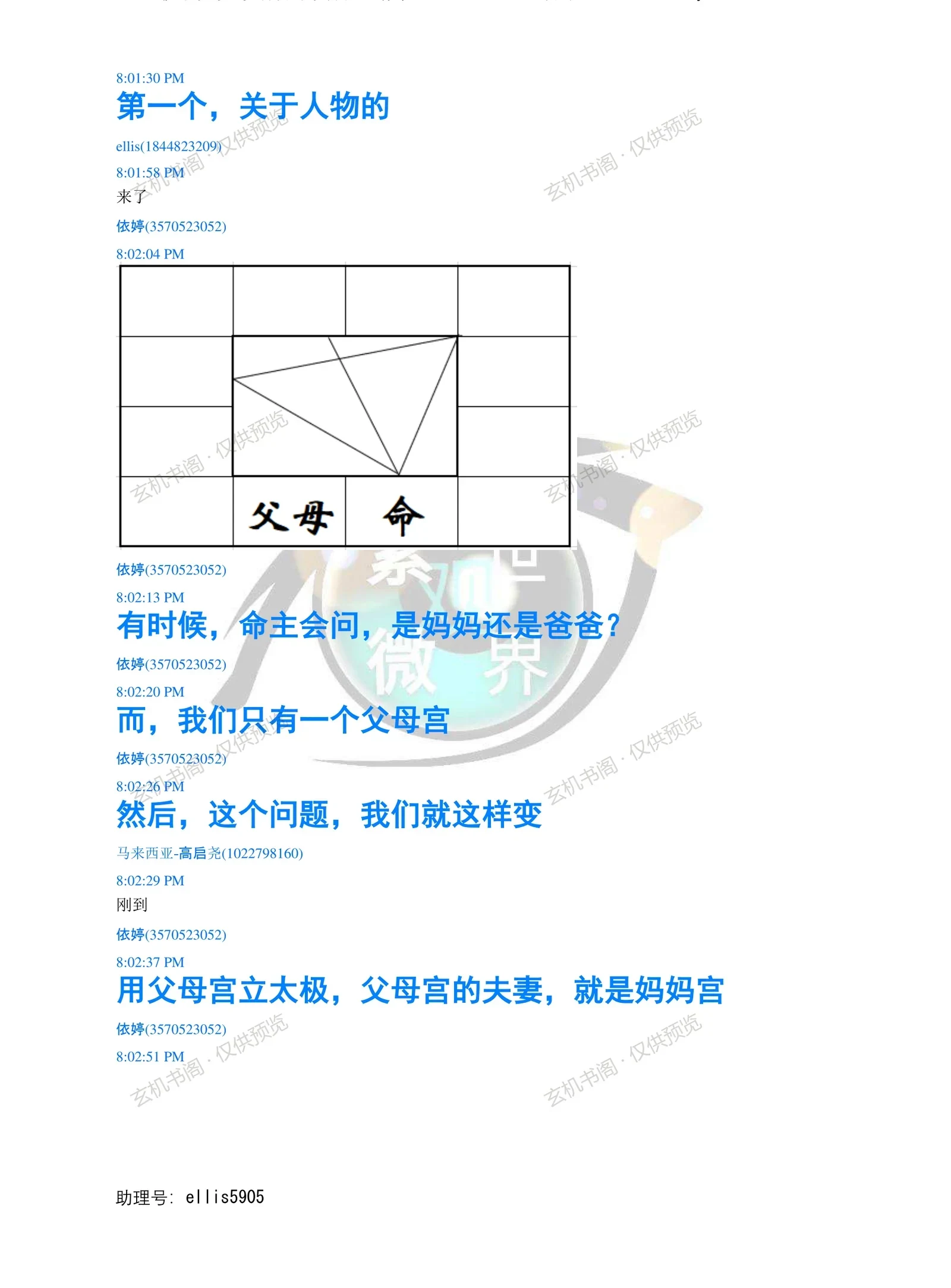
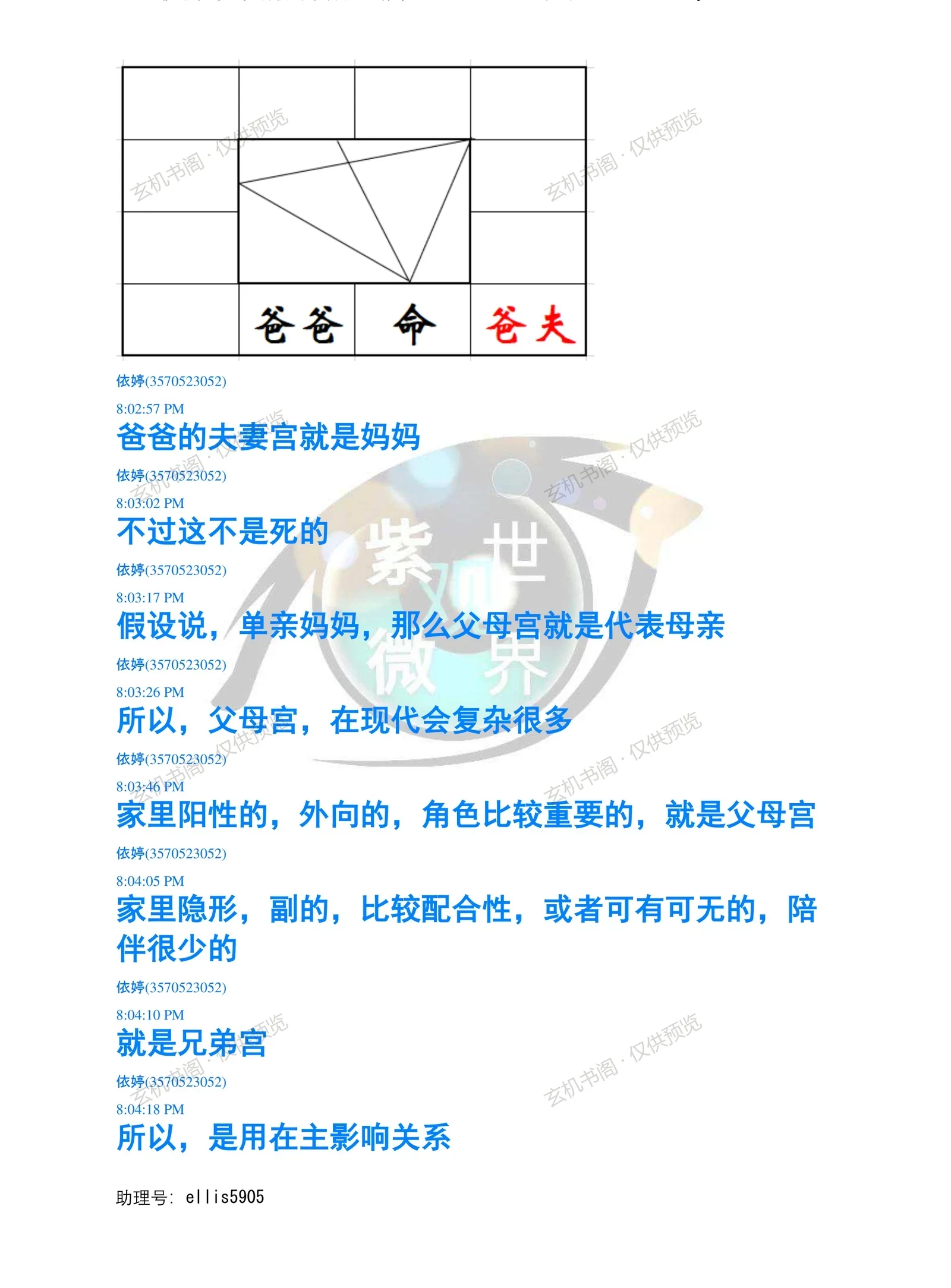
Using the parents palace as a center to derive the mother's palace
Single-parent households and parental role assignment
The siblings palace as a major influence
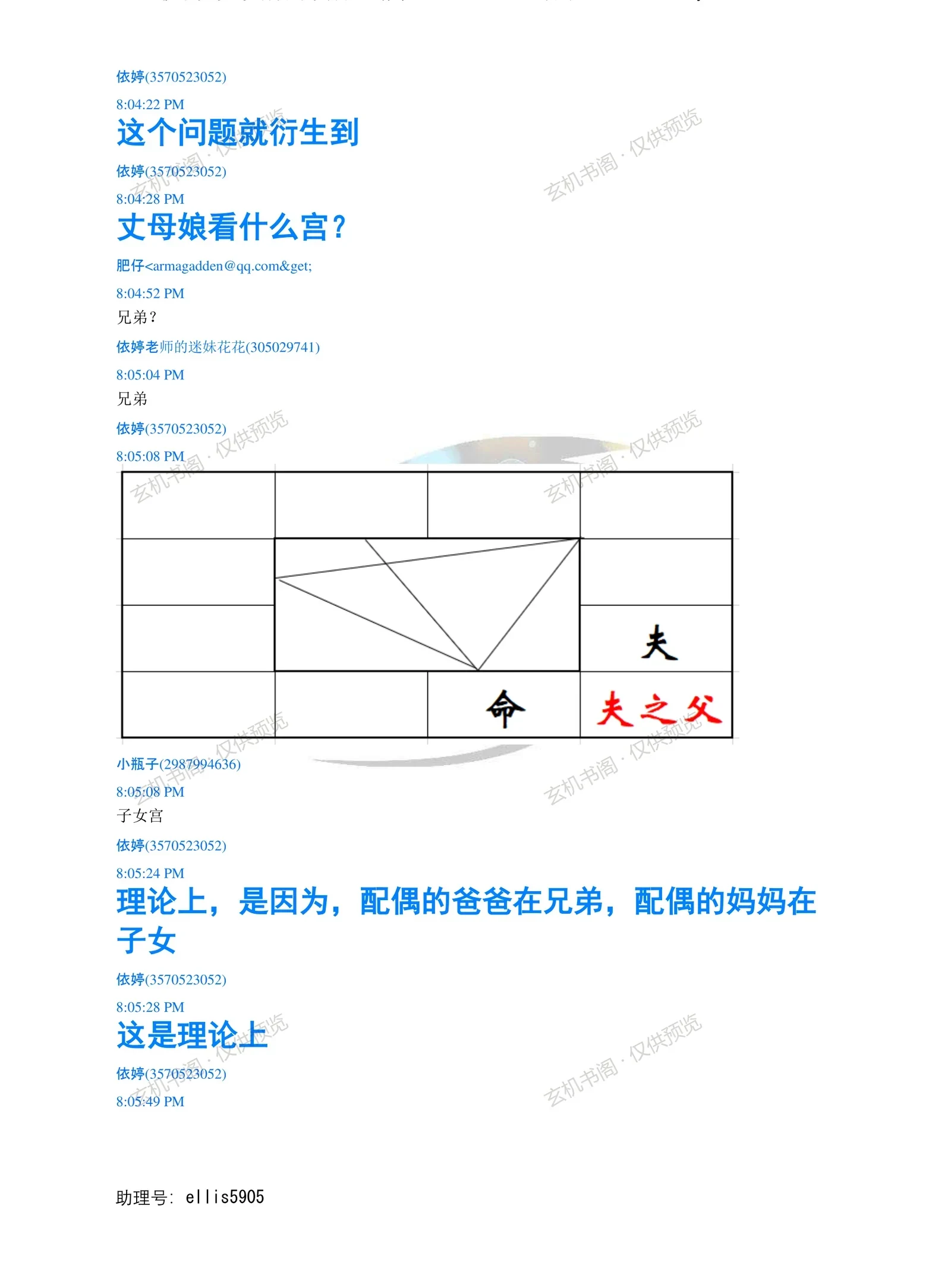
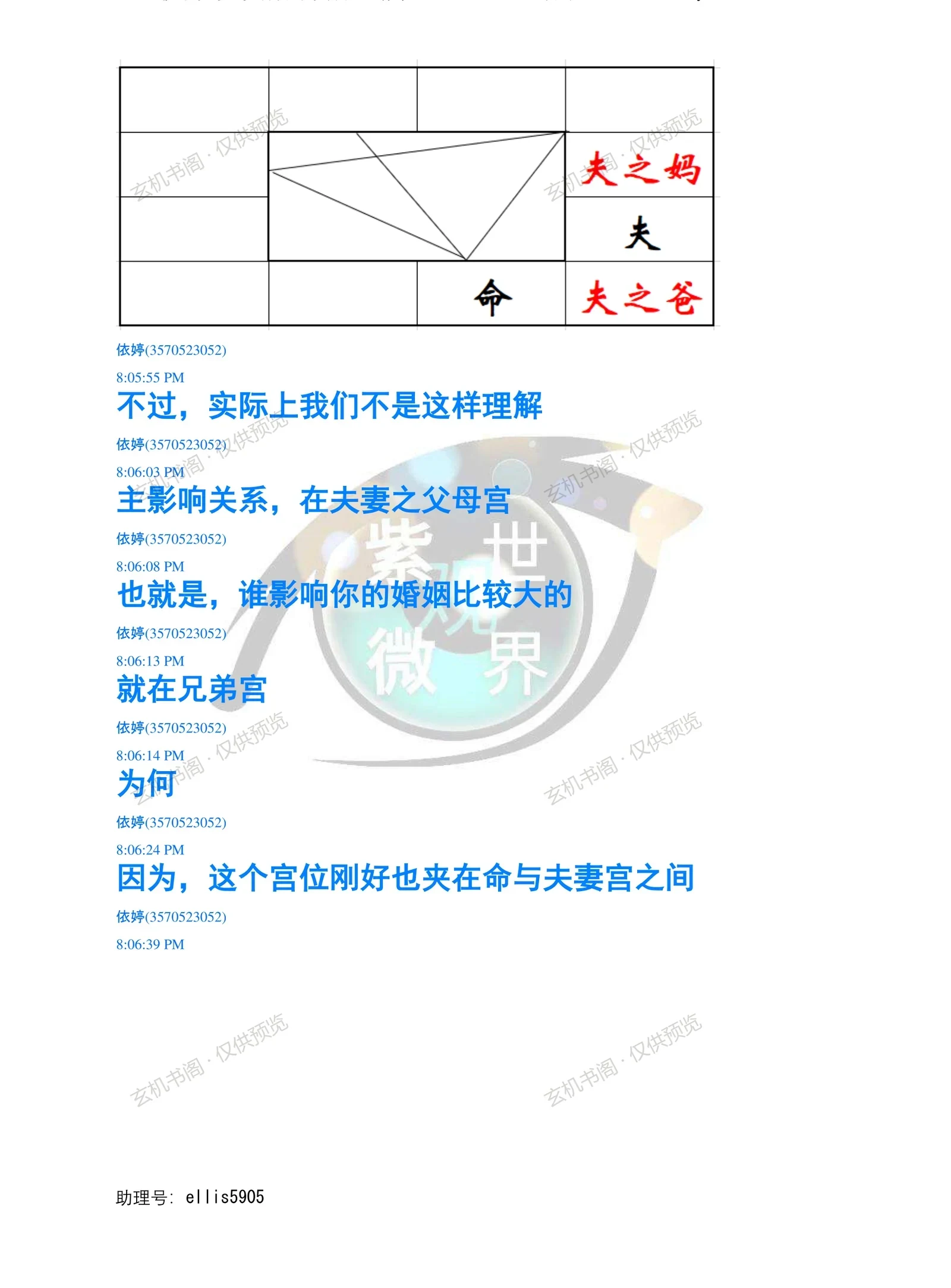
Locating a spouse's parents
Key Points
Read the three directions and four positions before discussing patterns.
The twelve palaces are a base, but a new center can be set for each question.
Setting the parents palace as center makes its spouse palace the mother's palace.
In single-parent families, assign the parents palace by the main influential role.
A spouse's parents have theoretical positions, but actual influence matters more.
The siblings palace sits between the self and spouse palaces, strongly affecting marriage.