Reading guide
Content guideOverview
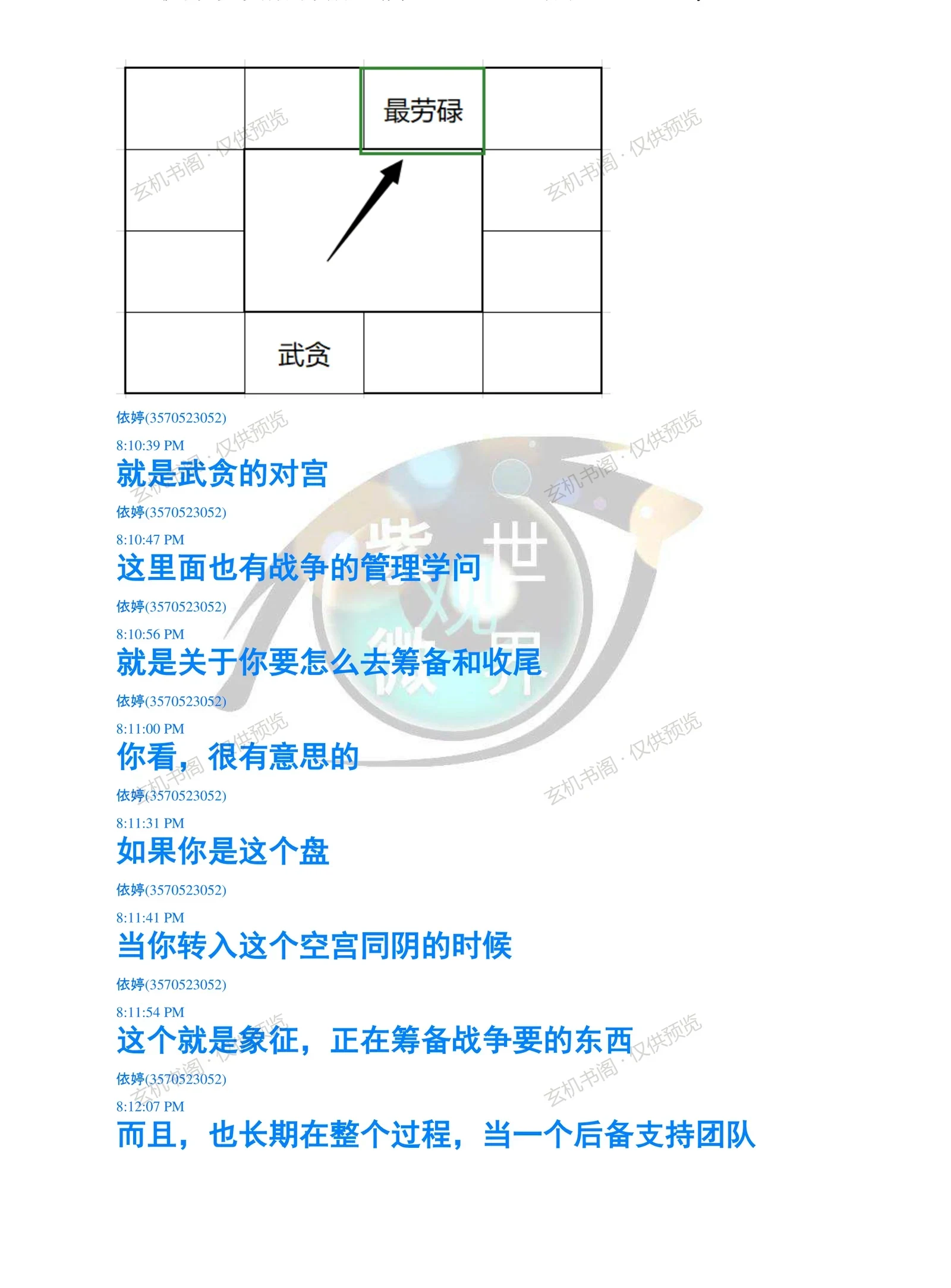
These are lecture notes from Yiting's Zi Wei Dou Shu systematic class, presented in chat-log form from the first page. Two main threads run through it. First, a simple method for judging fortune: when the san fang si zheng of the natal wealth palace, the decade wealth palace and the yearly wealth palace all fall in strong palaces, that year is the best for wealth, though details blur. The same layering is applied to health, where strong sha and ji in the natal, decade and yearly disease palaces mark the weakest period. Second, the Zi Sha Si Hai chart is used as an example, treating Zi Wei Qi Sha, Lian Zhen Po Jun and Wu Qu Tan Lang positions as a 'battlefield'. The lecture discusses the ethics of war, or 'zhan de', illustrated by Cao Cao cutting his hair in place of his head, and reads the three empty palaces on the chart as wartime and the busiest phase, with the palace opposite Wu Tan being the most laborious and the empty palace with Tian Tong and Tai Yin signifying preparation and logistical support. The material is aimed at beginners who want quick, mnemonic-based judgments and symbolic associations.
Contents
Opening: a simple Zi Wei technique from the teacher
Wealth: three layers of wealth-palace san fang si zheng
Health: natal, decade and yearly disease palace afflictions
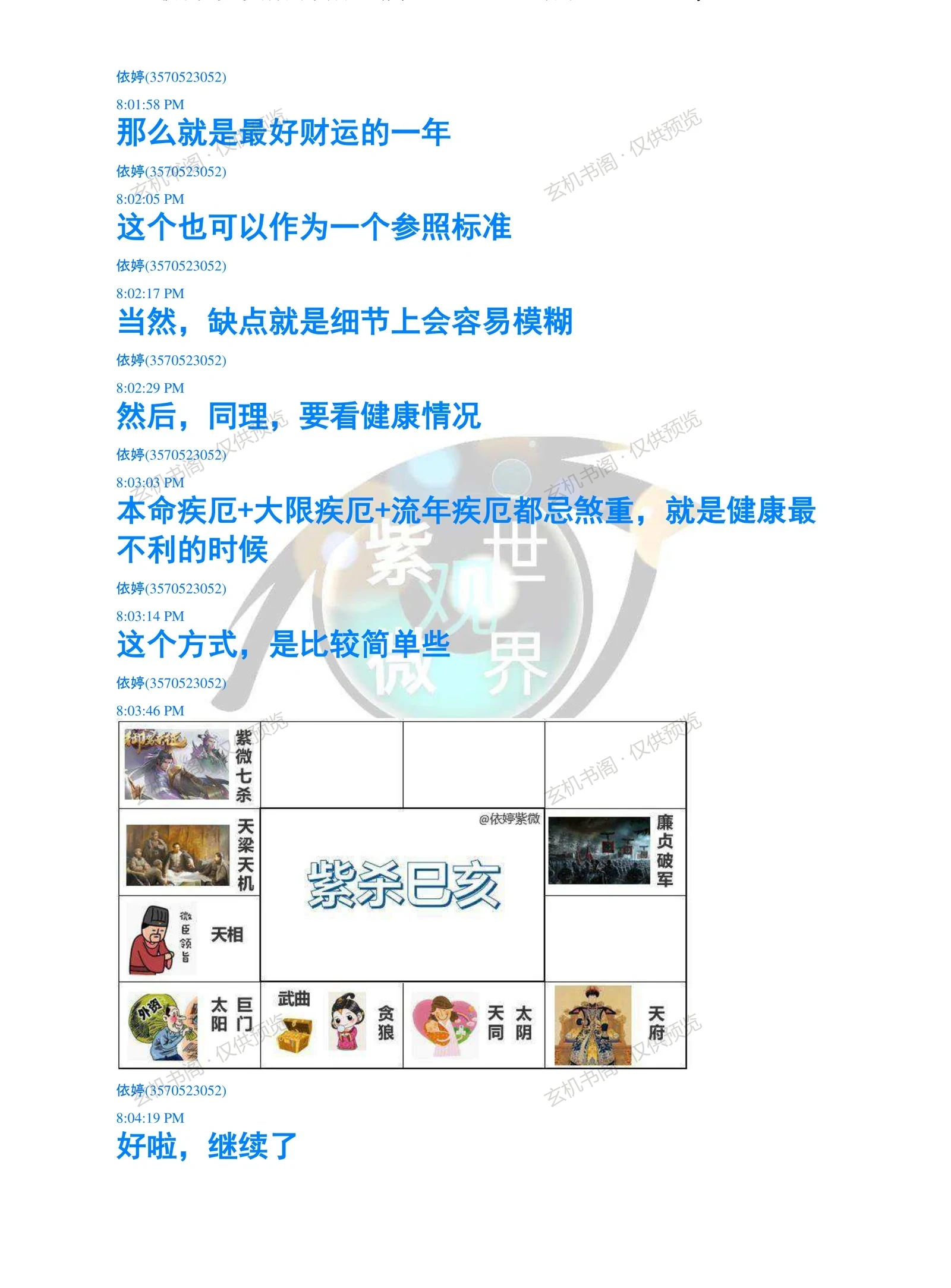
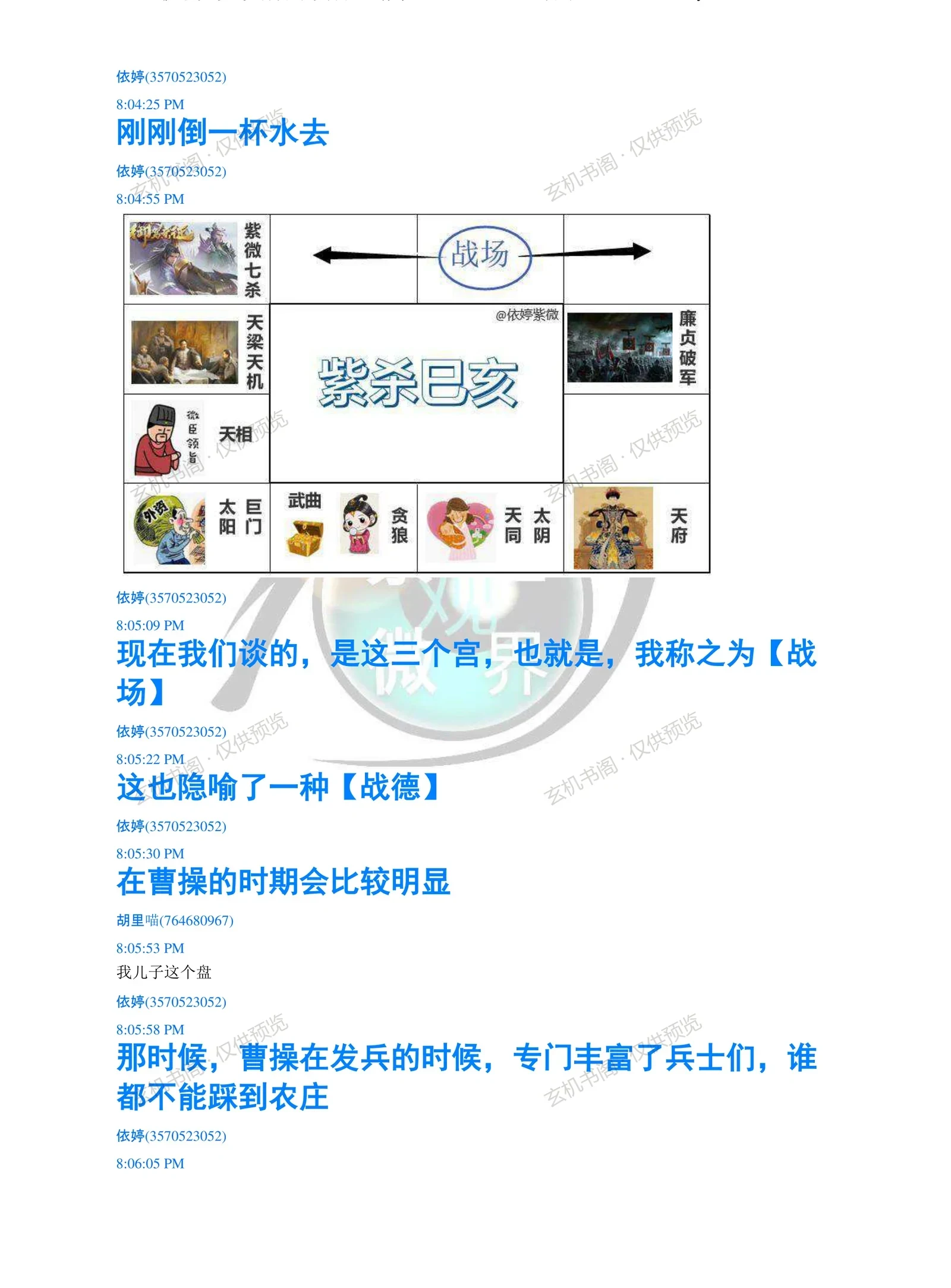
Structure of the Zi Sha Si Hai chart
Battlefield metaphor and the ethics of war
Three empty palaces as wartime and the busiest phase
Wu Tan opposite palace and the Tong Yin preparation
Key Points
Layered wealth palaces across natal, decade and year pinpoint peak wealth years
The same layering applies to illness palaces for health lows
The Zi Sha Si Hai chart is read as a battlefield with wartime ethics
Three empty palaces mark busy wartime periods, with the Wu Tan opposite the most laborious
The empty Tong Yin palace symbolizes preparation and backline support