Reading guide
Content guideOverview
This book traces the convergence of the Huangdi Neijing and the Zhouyi. The opening chapter reconstructs the ancient cosmological observations behind concepts such as round heaven and square earth, seasonal qi transformation, and the interplay of yin and yang, arguing that Chinese medical diagnosis and pharmacology rest on reading qi through form. The author distinguishes three layers of Inner Canon teaching—great method, master method, and heart method—and grounds the great method in three Yijing principles: penetrating all affairs, marking rise and decline, and drawing lessons from rise and fall. The nine great discourses are treated as the general doctrine of the Inner Canon, with particular attention to the Great Discourse on the Heavenly Origin, analyzed section by section: qi and yin-yang, the three-in-one method of five movements, the Dipper as marker, the substance and function of three yin and three yang, and the three guidelines of qi quantity, form flourish or decline, and mutual summoning and loss. Calendrical reckoning by the twelve branches and sun-moon conjunctions is used to explain five-movement cycles. Throughout, the book insists that medical-Yijing convergence lies in concrete methods and regularities rather than vague analogy.
Contents
Ch.1 Convergence of Yijing and Inner Canon theory
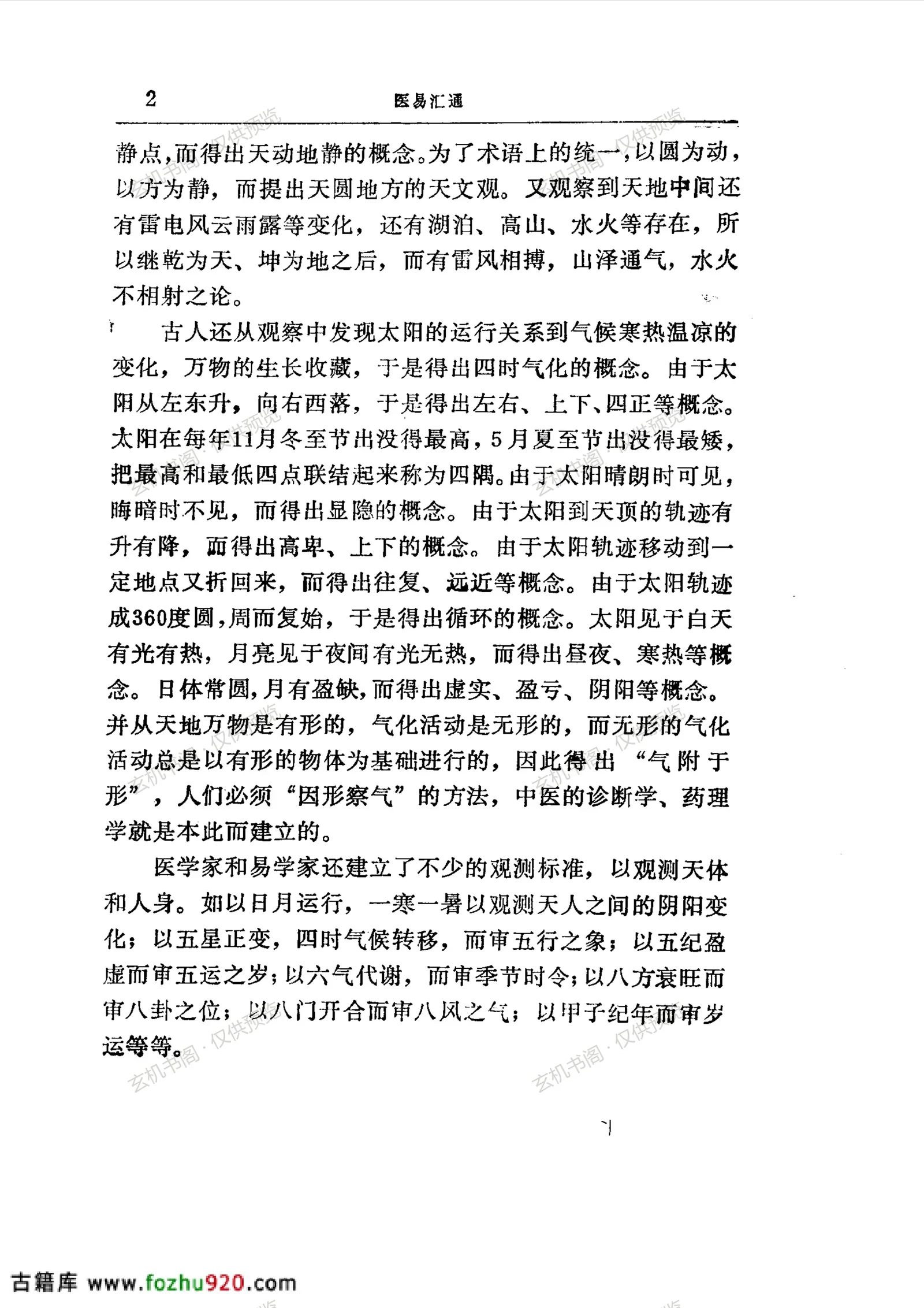
Ancient cosmology: round heaven, square earth, seasonal qi
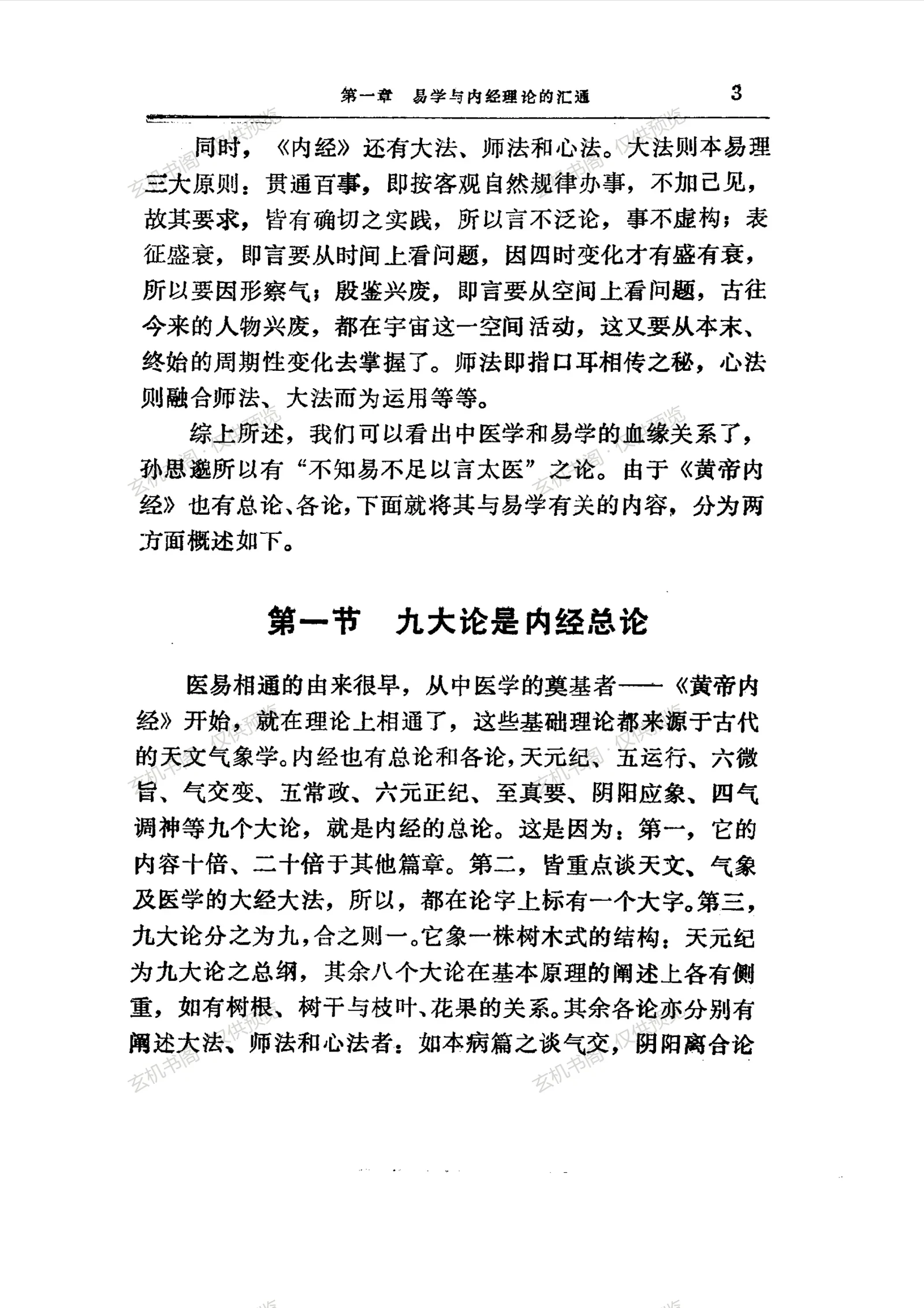
Origin of medical-Yijing convergence and Sun Simiao's dictum
Section 1: the nine great discourses as general doctrine
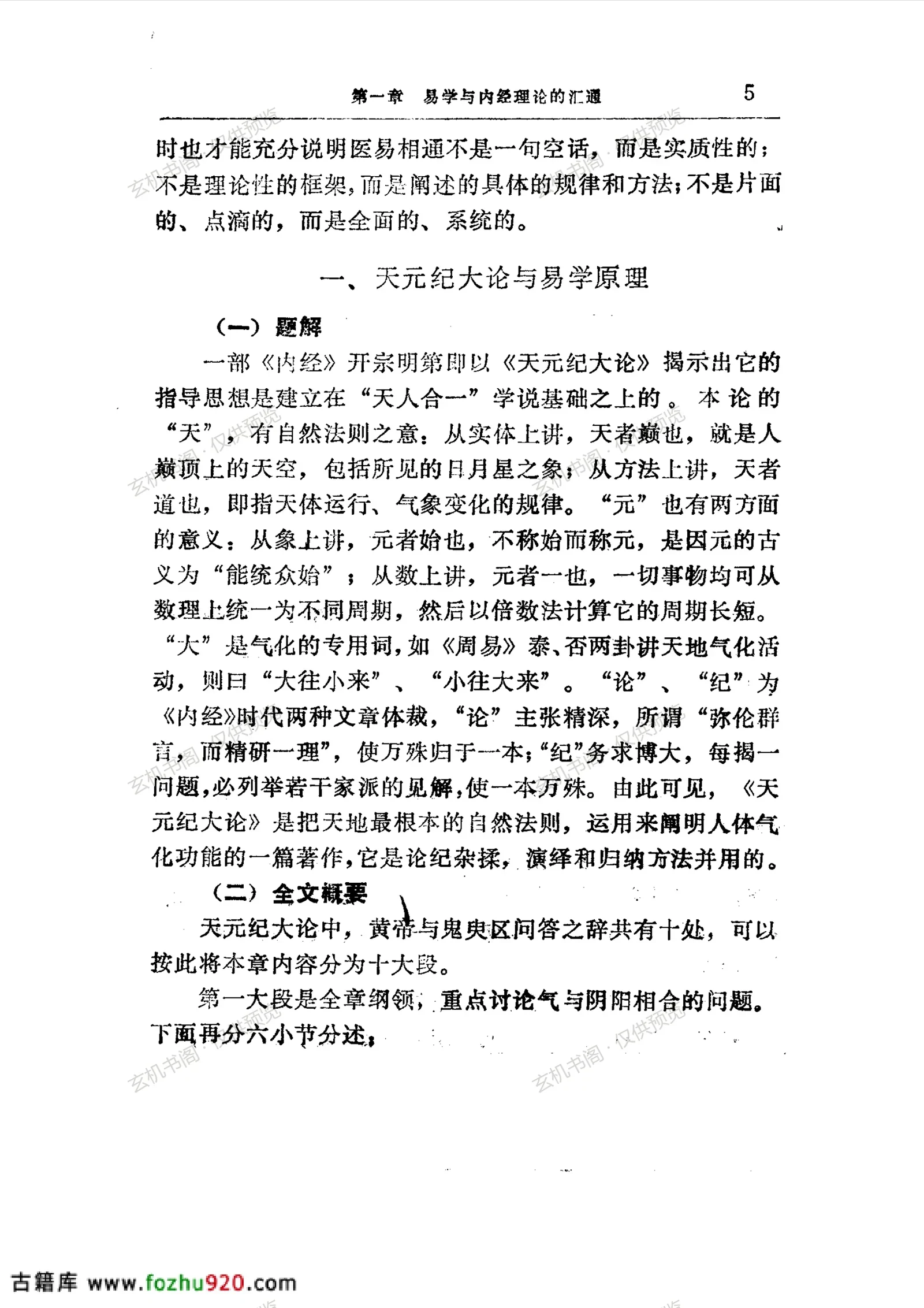
1. The Great Discourse on the Heavenly Origin and Yijing
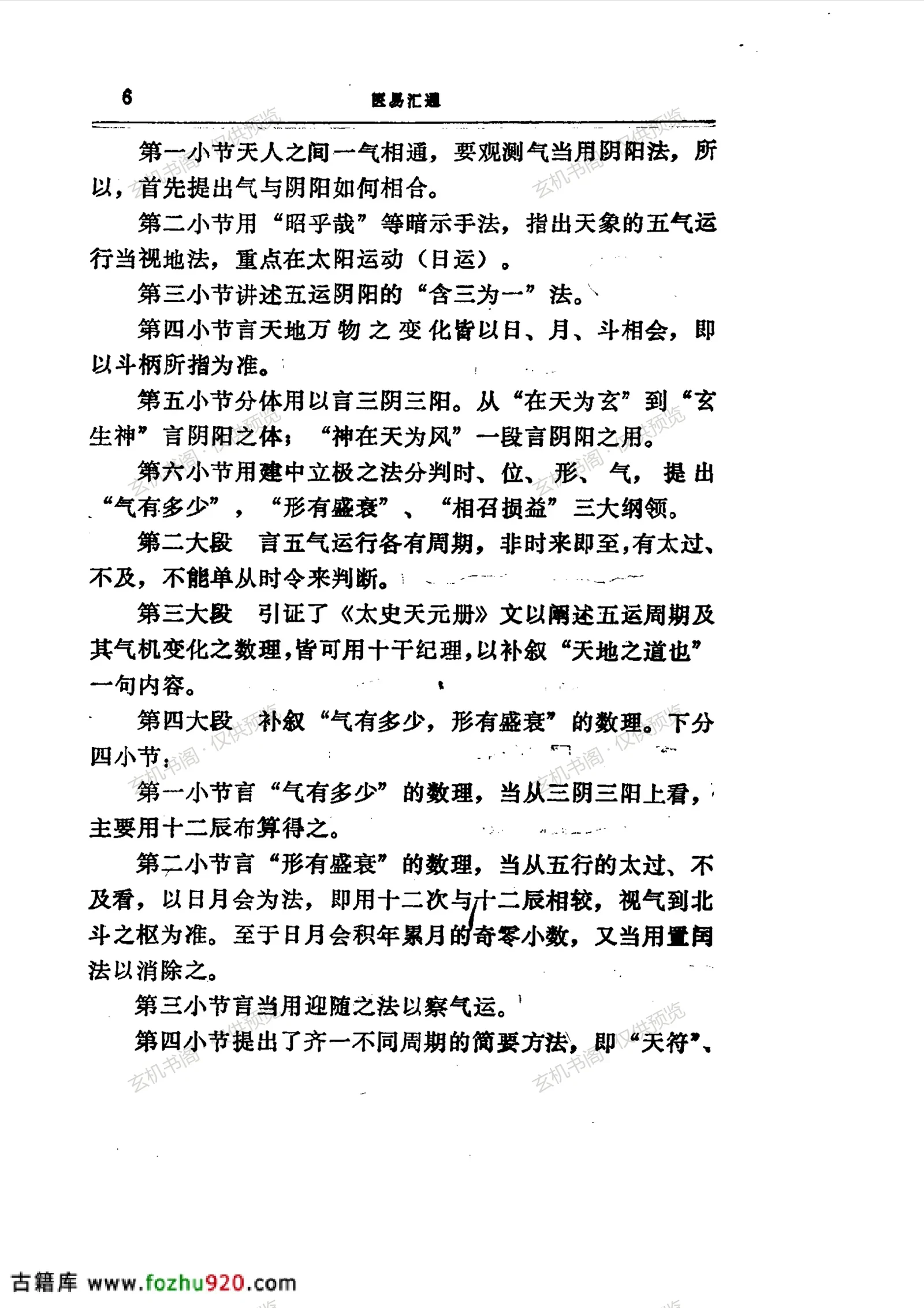
Ten sections and six subsections of the discourse
Key Points
Three Yijing principles frame the Inner Canon's great method
The nine discourses function as the Inner Canon's general theory
The Heavenly Origin discourse is read in ten sections and six subsections
Three guidelines: qi quantity, form decline, mutual summoning
Twelve branches and sun-moon conjunction explain five-movement cycles