Reading guide
Content guideOverview
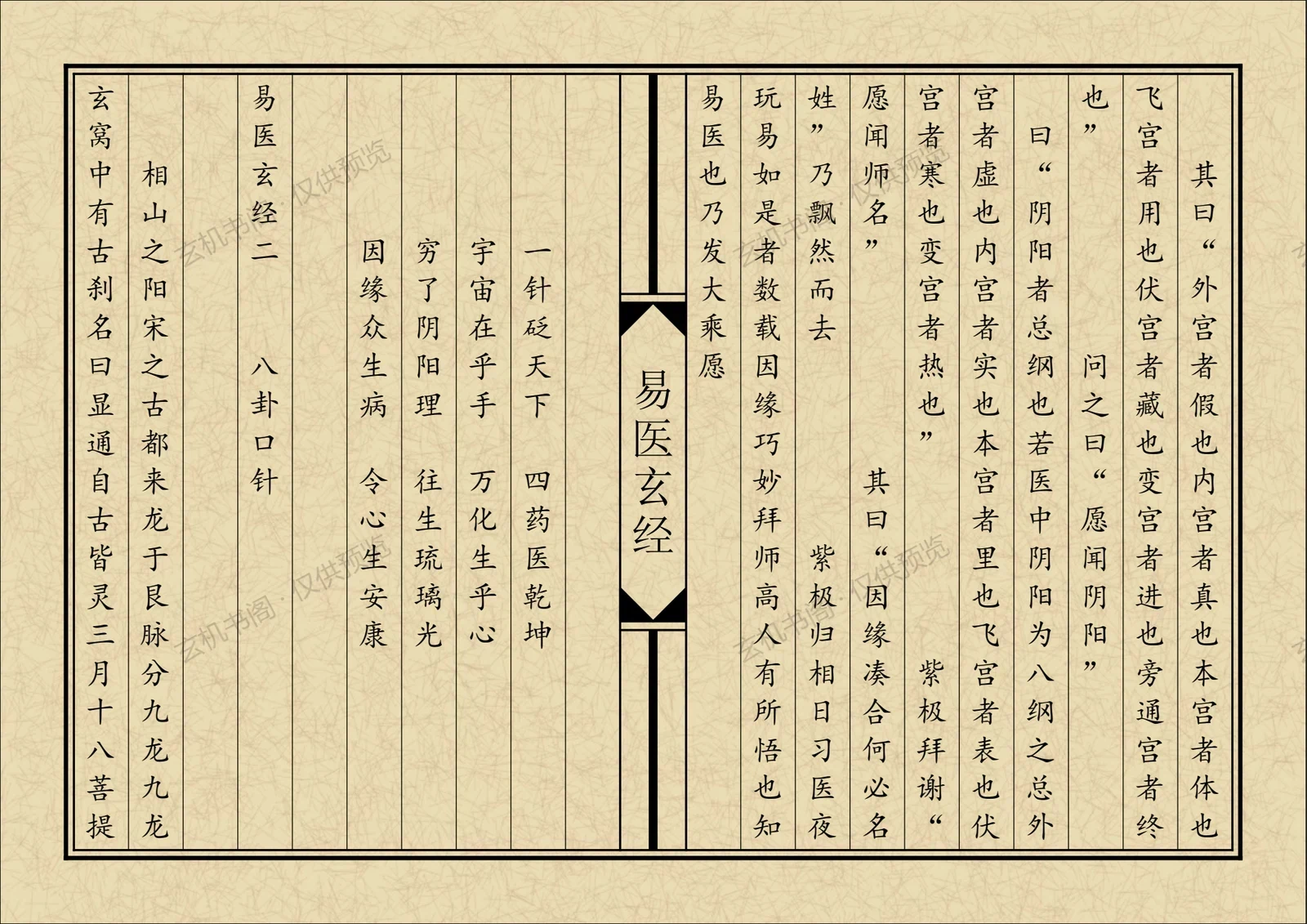
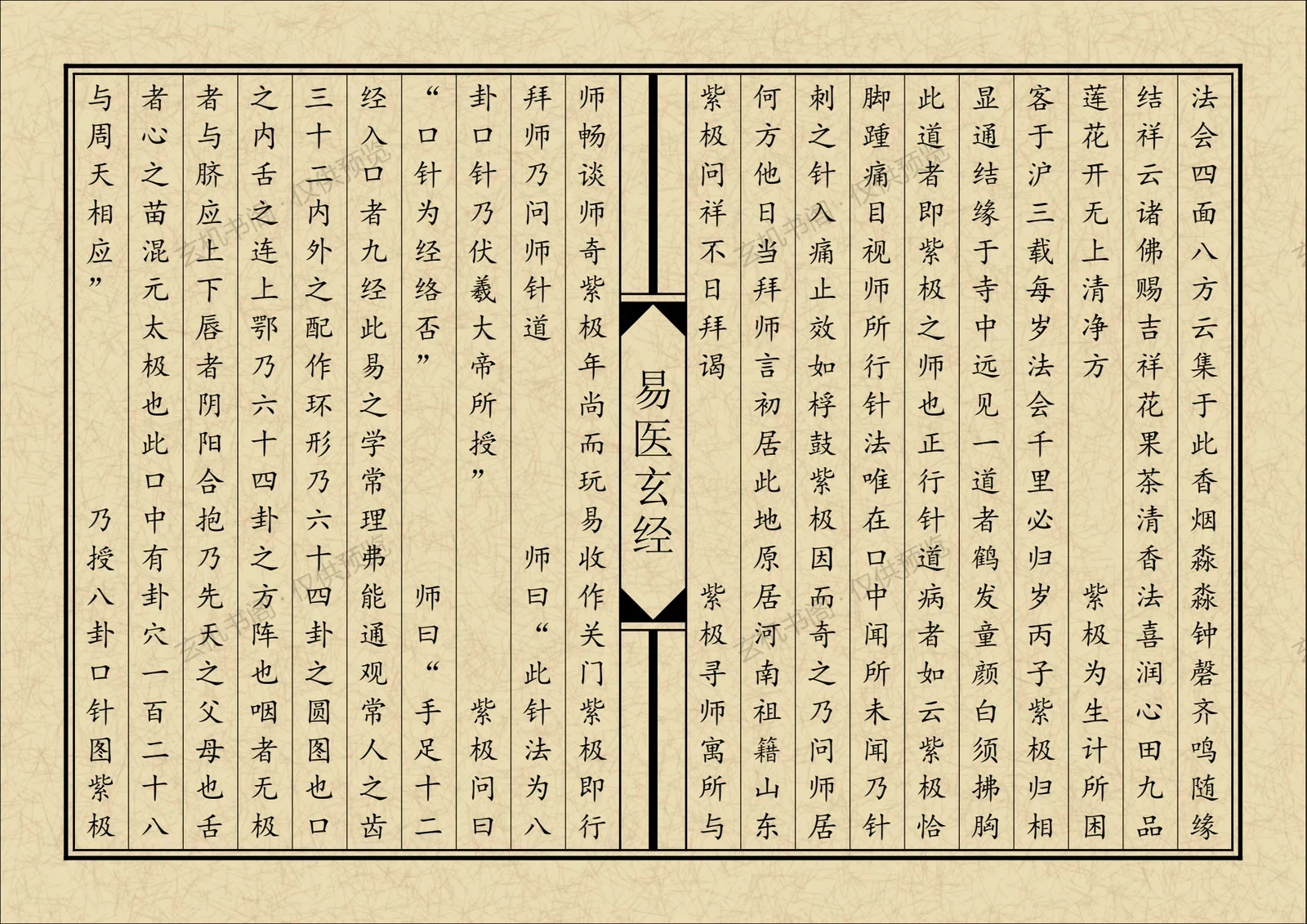
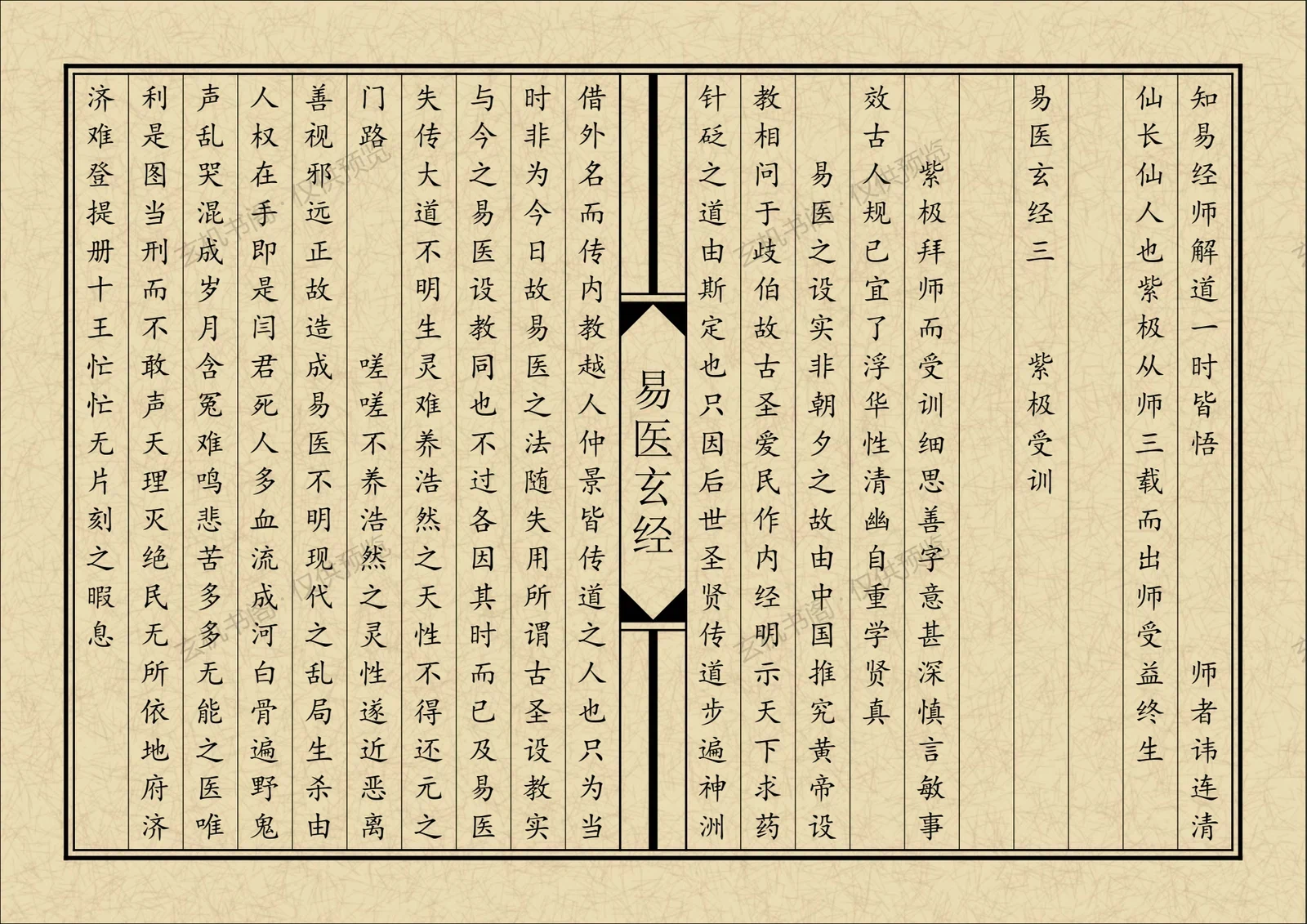
Yiyi Xuanjing opens with Zijji encountering a strange master at Mount Nan and receiving teachings on the Changes. Written largely as a dialogue, it asks whether Yi and medicine are truly connected, then moves through najia, nayin, the eight palaces, flying and hidden palace hexagrams, and the so-called oral acupuncture. The text links the nine and twelve channels, the sixty-four hexagram circle, and the human body, presenting acupuncture as a method rooted in bagua. Later passages describe Zijji’s training, his teacher Lianqing, and the transmission of medical and Yijing knowledge. The book is brief and compact, using conversations to connect hexagram theory, palace transformations, and needling, and is best suited to readers interested in the shared roots of Yijing and Chinese medicine, especially najia and bagua-based acupuncture.
Contents
A stranger transmits the Changes to Zijji
Najia and nayin: asking whether Yi and medicine connect
Eight palaces and flying-hidden hexagram transformations
The oral acupuncture method and bagua chart
Zijji’s training and lineage
Key Points
Uses dialogue to argue that Yijing and medicine share one root
Explains the eight palaces, flying palaces, hidden palaces, and hexagram changes
Proposes oral acupuncture by mapping sixty-four hexagrams to channels
Stresses the transmission of Yi learning and medical service