Reading guide
Content guideOverview
Yi Yin is a comprehensive manual of six-line divination centered on na jia. The prefatory volume lays out foundational rules such as trigram imagery, five-phase interactions, six relatives, six spirits, na jia, body placement, monthly hexagram body methods, the Five Tiger escape method, flying and hidden spirits, and the ocean-bottom eye single-line movement judgment, alongside general judgments attributed to Liu Bowen and Zhang Xingyuan. Volume one covers trigram directional charts, Hetu numerical correspondences, long-life placement, and the Grand Year song. Volumes two through eight classify divination by topic: life destiny, monks and Daoists, family dwellings, graves, weather, court, warfare, servants, marriage, childbirth, education, examinations, requests, travel, missing persons, trade, shop opening, illness, litigation, theft, loss, and flight. The preface stresses that divination should prioritize life destiny, family dwellings, graves, marriage, and illness, which explains their placement at the beginning. The work is a key reference for studying traditional six-line divination.
Contents
Prefatory volume: trigram imagery, na jia, six relatives, spirits, and general judgments
Volume 1: trigram directions, Hetu five phases, long-life placement, Grand Year song
Volume 2: life destiny and monastic divination
Volume 3: life destiny divination
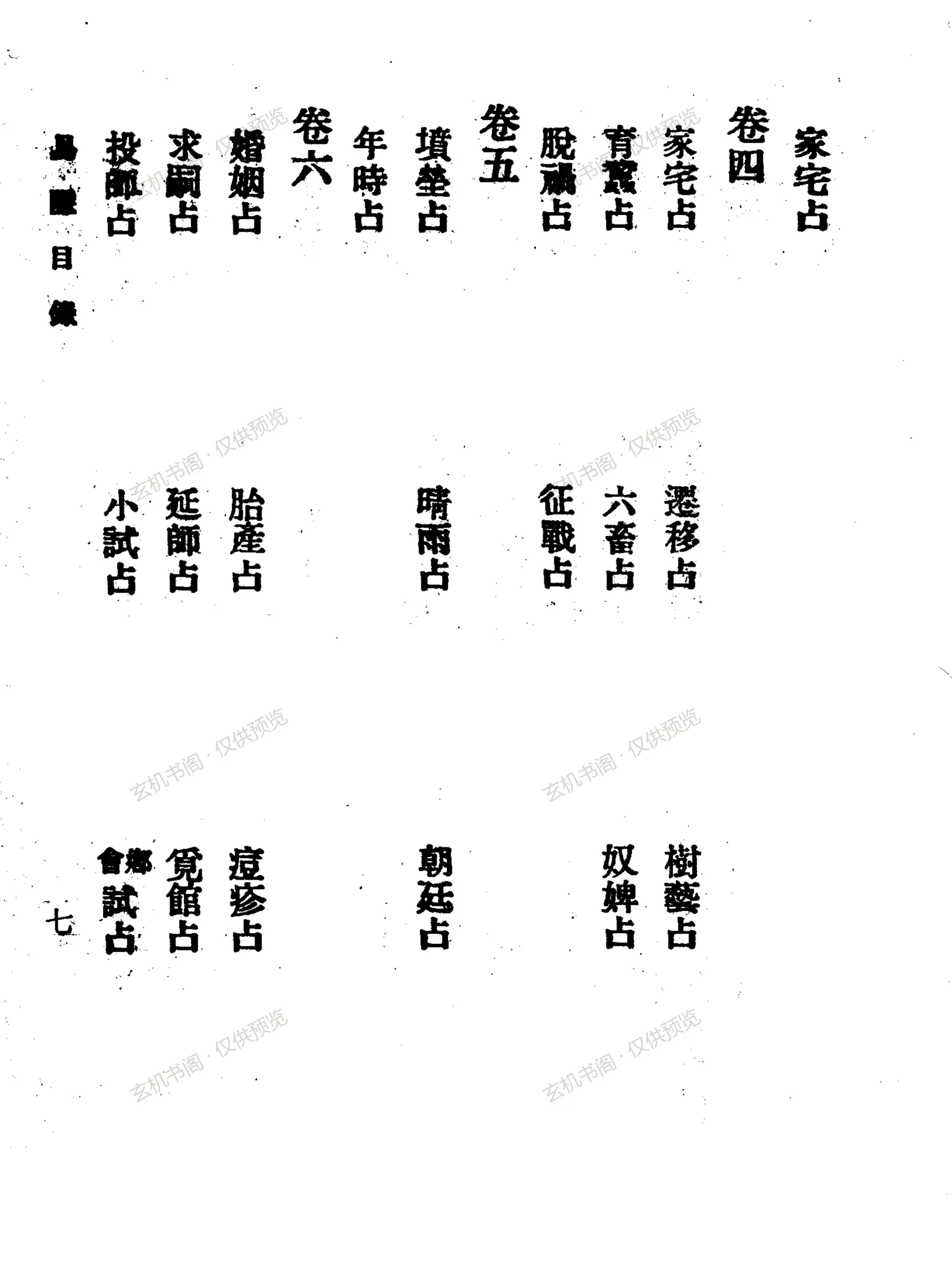
Volume 4: family dwellings, relocation, planting
Volume 5: graves, weather, court, warfare, servants
Volume 6: marriage, childbirth, education, examinations, requests, heirs
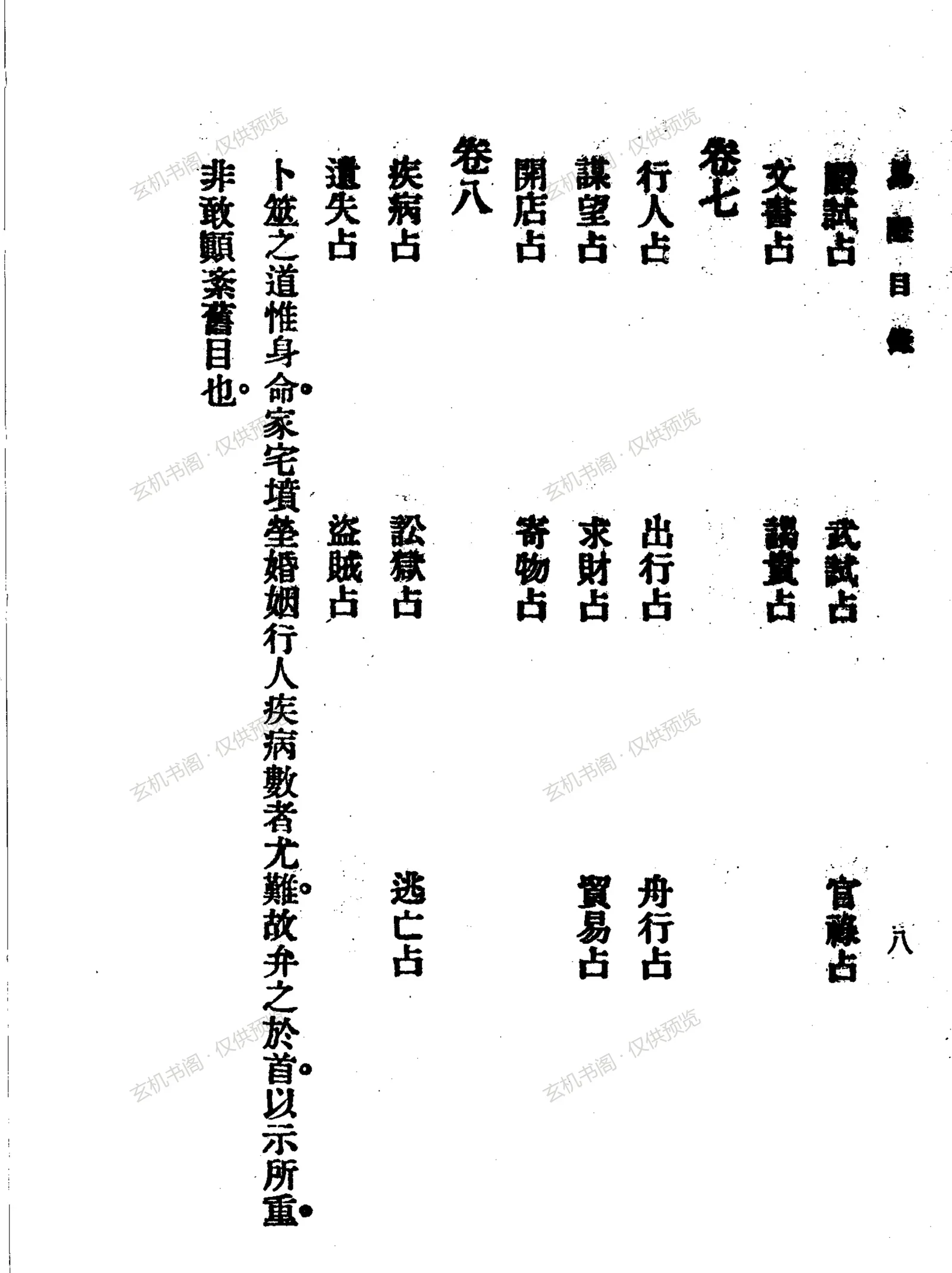
Volumes 7-8: travel, wealth, illness, litigation, theft, loss
Key Points
The prefatory volume systematically organizes six-line basics: trigram imagery, na jia, six relatives, six spirits, body placement, and monthly hexagram body methods.
Includes general judgments by Liu Bowen and Zhang Xingyuan and the Ocean-Bottom Eye single-line movement judgment.
Focuses on life destiny, family dwellings, graves, marriage, and illness, as stated in the preface.
Topical volumes cover a wide range of social, human, and natural affairs.
Emphasizes orthodox divination methods and the source of Yi imagery, criticizing vulgar practices.