Reading guide
Content guideOverview
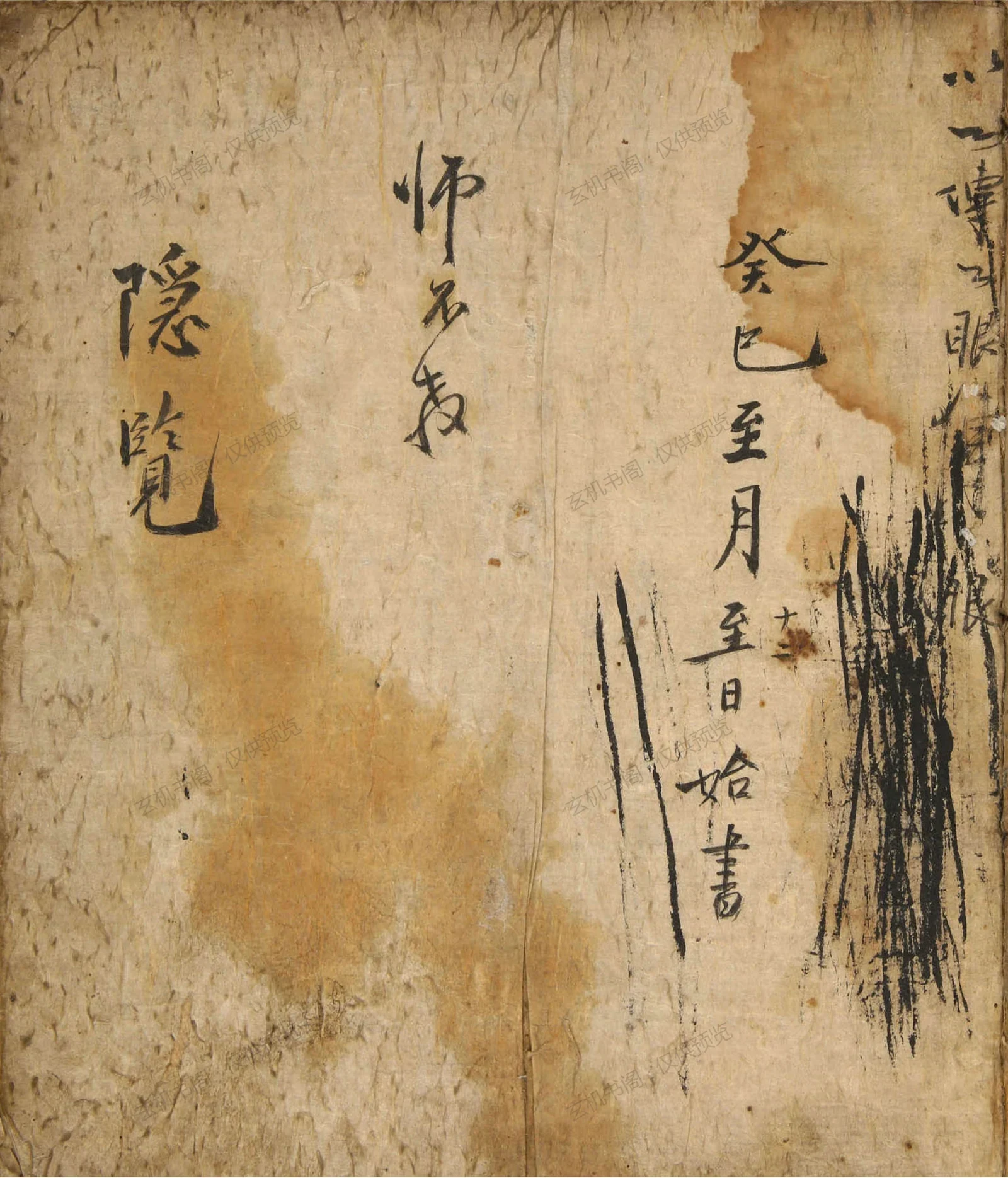
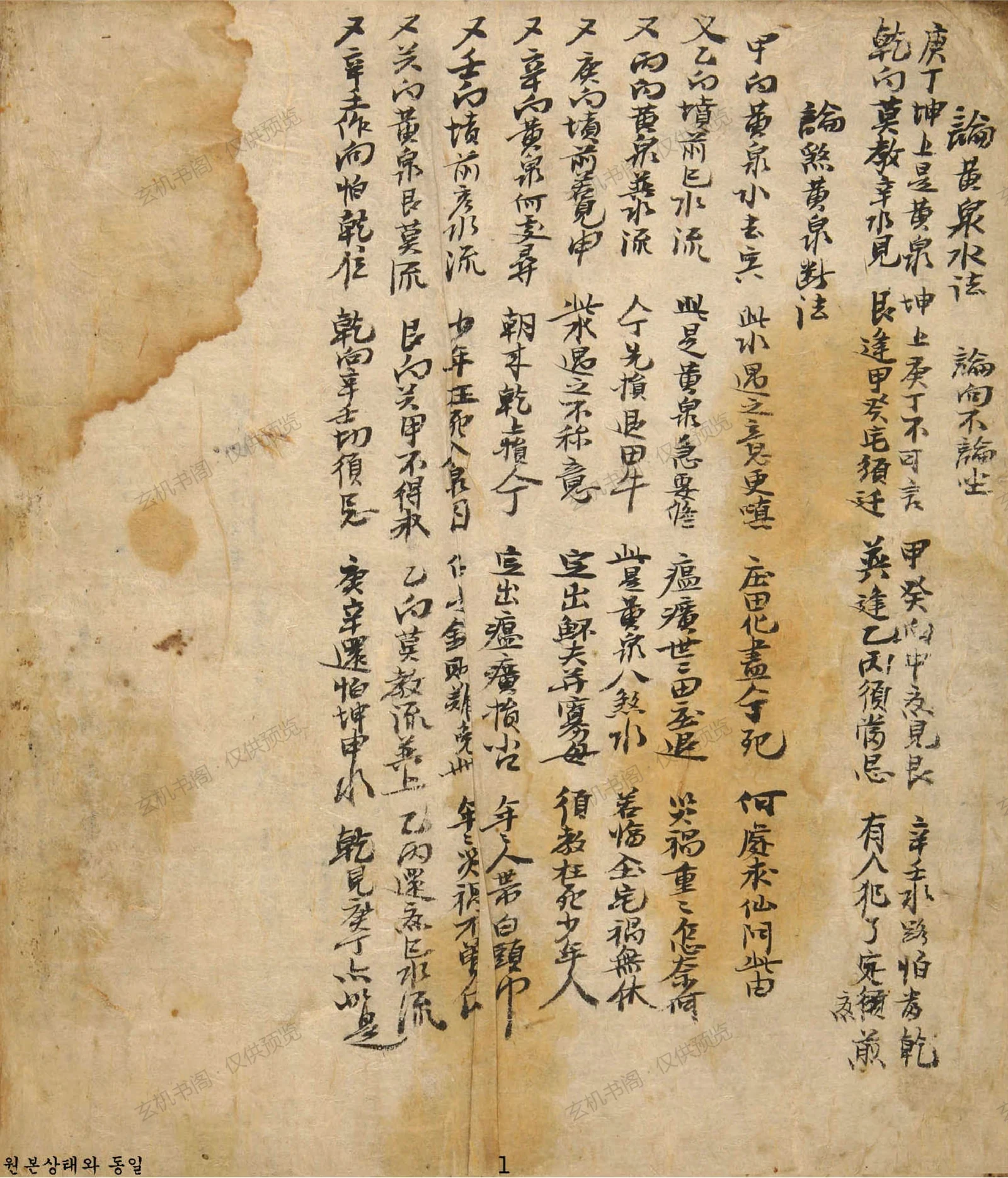
The cover reads Yinlan, while the file name gives Kanyu Yipian Jin. The visible pages show a manuscript that is not a single coherent fengshui treatise but a miscellany. The first body pages begin with 'On Yellow Spring Water Methods' and 'On Directions Rather Than Birth,' discussing the auspicious and inauspicious placements of Yellow Spring water, incoming and outgoing water, and their effects, with references to the twenty-four mountains such as Qian, Kun, Gen, Xun, Jia, Geng, Bing, and Ren. The text then turns to 'The Five Elements Function of National Master Zhi Jingluan,' covering the three auspicious and four inauspicious dragon forms, five-element body shapes,窝钳乳突 (concave,钳, breast,突) landforms, qi-taking and穴-setting, and sand-water responses, which belong to the xingshi or landscape school. The final visible page, however, is 'Plain Talks on Farming,' discussing plowing, burning grass, planting beans, reclaiming wasteland, and manuring fields with cattle and horse dung, which is unrelated to fengshui. Overall, this appears to be a practical folk manuscript combining fengshui and farming notes. It is useful for readers studying the form of folk术数 manuscripts, Yellow Spring water methods, and landscape-school terminology. Because the pages are damaged and the handwriting is blurred, the date, author, and complete contents still require checking against the original.
Contents
On Yellow Spring Water Methods: directions and water flow
On Directions Rather Than Birth: omens and fortunes
Zhi Jingluan's five-element functions of dragons
Concave,钳, breast,突 and qi-taking穴-setting
Sand-water responses and true/false dragons
Plain Talks on Farming: plowing, burning, manuring
Key Points
Centers on Yellow Spring water methods, listing auspicious and inauspicious water flows for the twenty-four mountains.
Emphasizes direction matching and omens rather than birth data.
Cites 'National Master Zhi Jingluan' on three auspicious and four inauspicious dragons and five-element forms.
Stresses concave,钳, breast, and突 landforms, qi-taking, and sand-water responses.
Appends farming notes, showing a mixed manuscript composition.