Reading guide
Content guideOverview
This book introduces the foundational theories of feng shui for yin and yang dwellings. It begins with the concept of qi as the source of all things, explaining that feng shui is essentially the art of observing qi, and cites the Laozi, Zhang Zai, the Guanzi Dili Zhimeng, and the Zangshu to discuss how living qi and dead qi relate to fortune. It then explains yin-yang in dwelling orientation, site selection, and terminology such as reverse and顺, followed by the four symbols (Azure Dragon, White Tiger, Vermilion Bird, and Black Tortoise): their origins in the twenty-eight lunar mansions, their directional meanings, and their use in judging terrain. The style is accessible, making it suitable for beginners building a theoretical framework.
Contents
Qi in yin-yang dwellings: qi as the source of all things
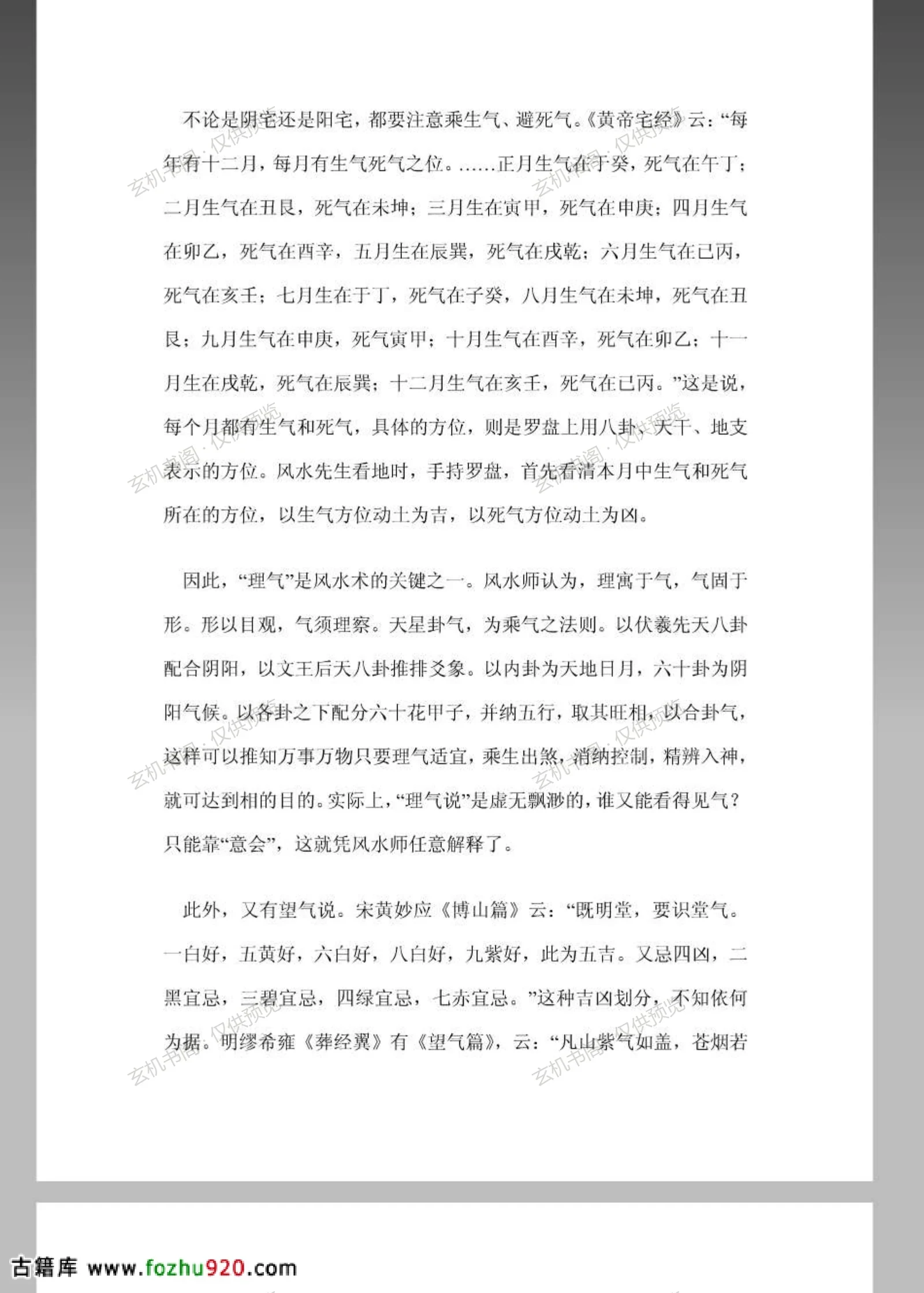
Living and dead qi: harnessing versus avoiding
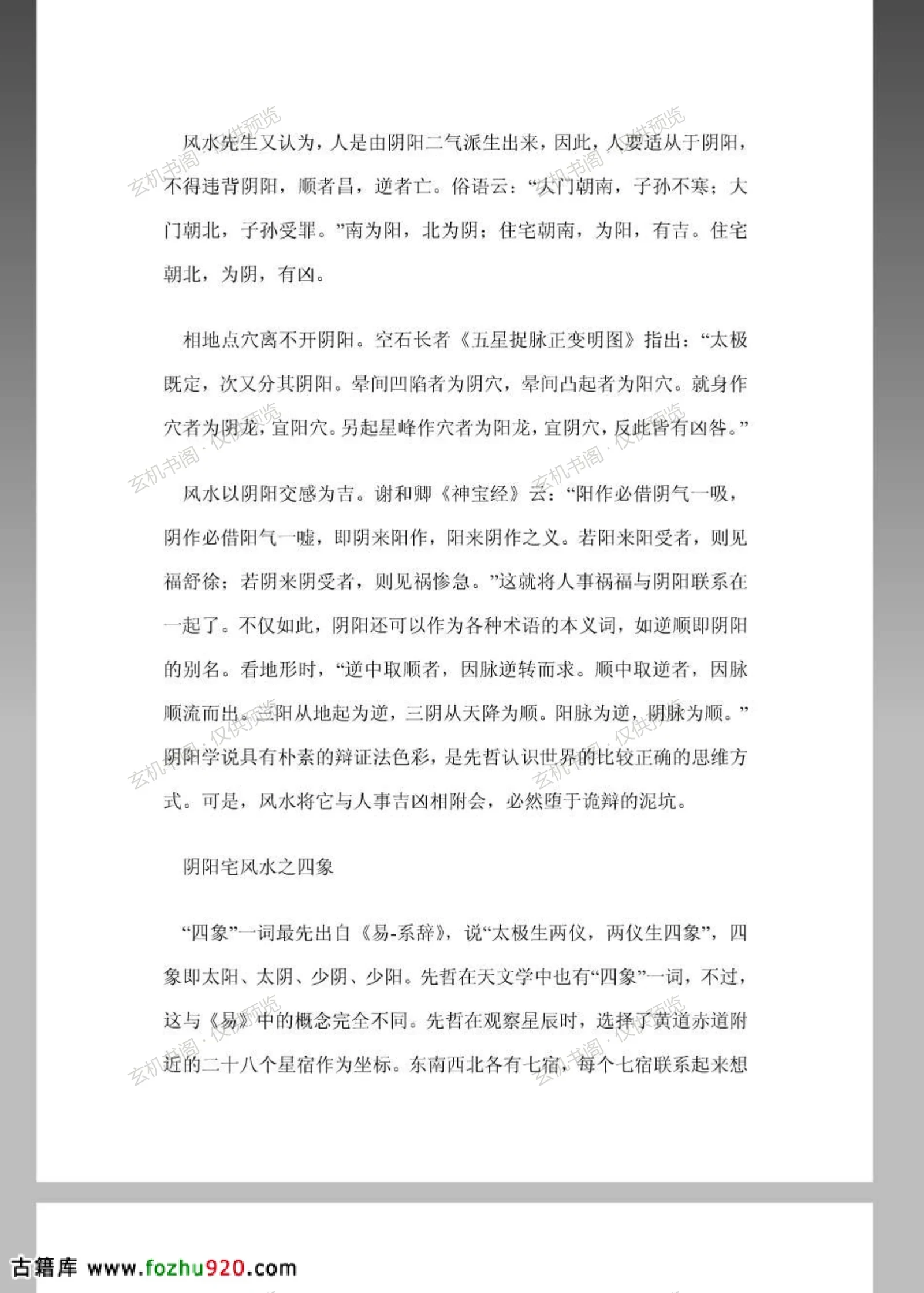
Yin-yang in dwellings: orientation and site selection
Yin-yang interaction and fortune
The four symbols: origins and directions
Applying the four symbols to terrain
Key Points
Qi is central: feng shui means harnessing living qi and avoiding dead qi.
Classical texts like Zangshu and Huangdi Zhaijing link qi, landscape, and fortune.
Yin-yang guides orientation, site selection, and reverse/顺 judgments.
The four symbols derive from the lunar mansions and are used as terrain metaphors.