Reading guide
Content guideOverview
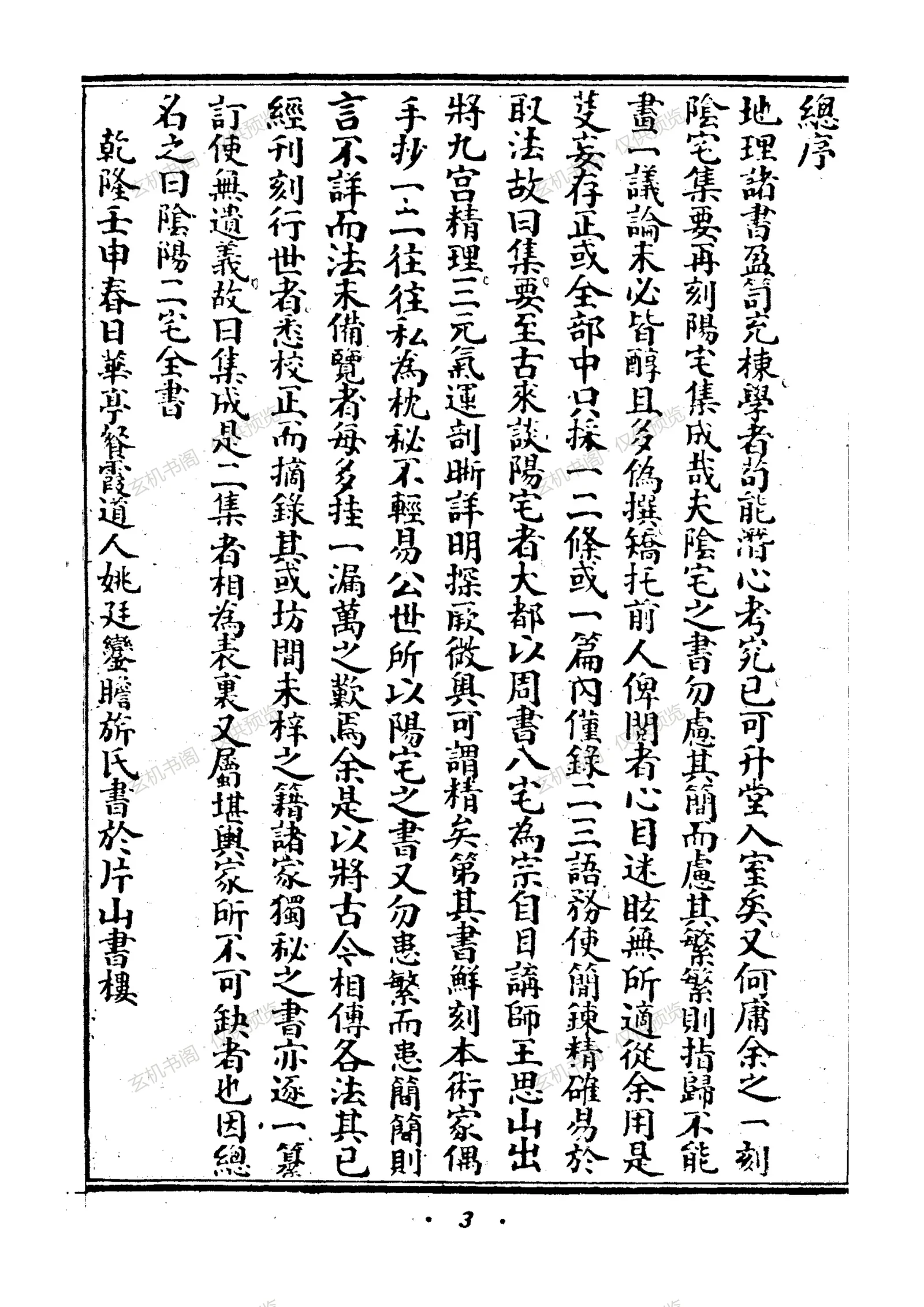
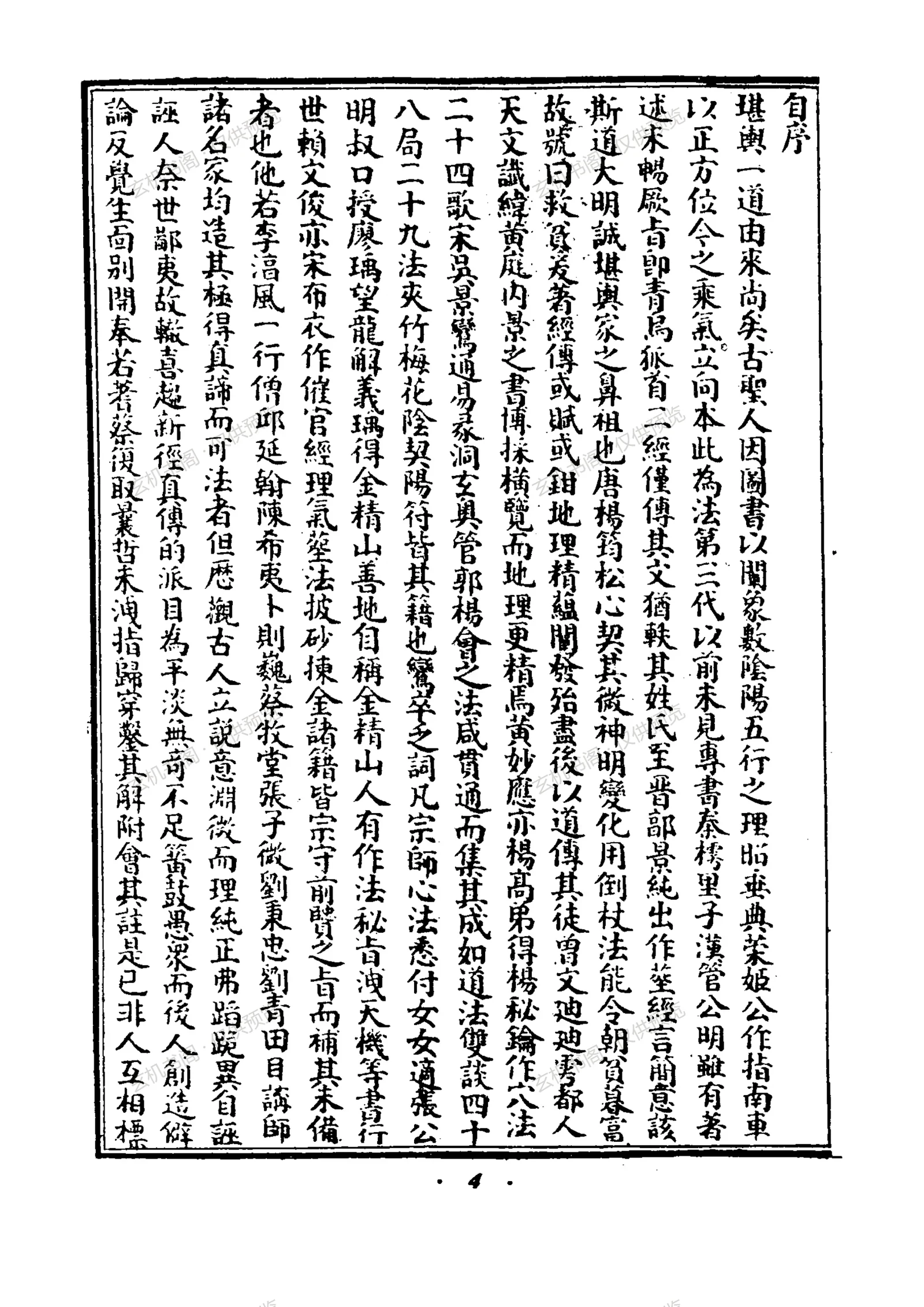
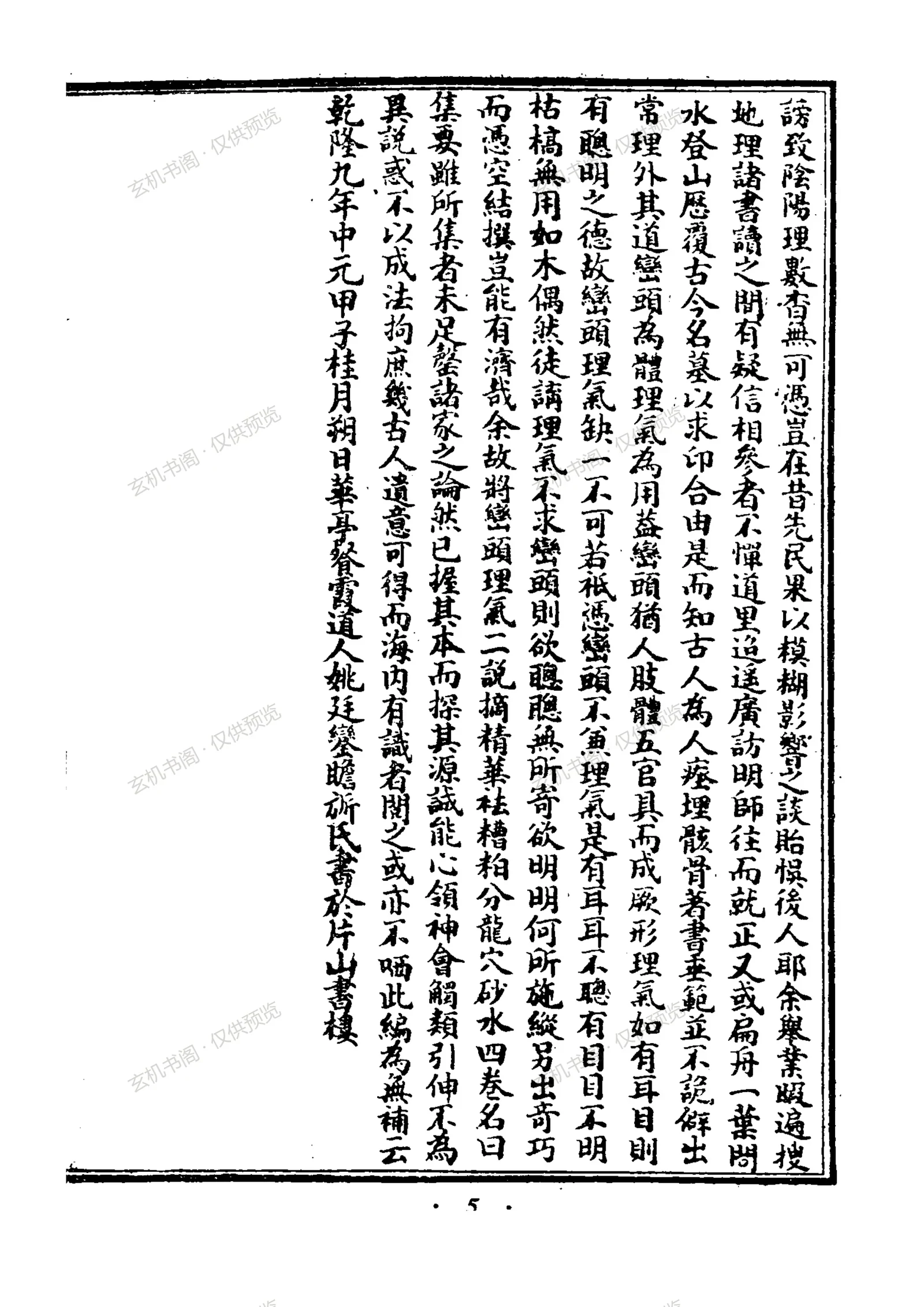
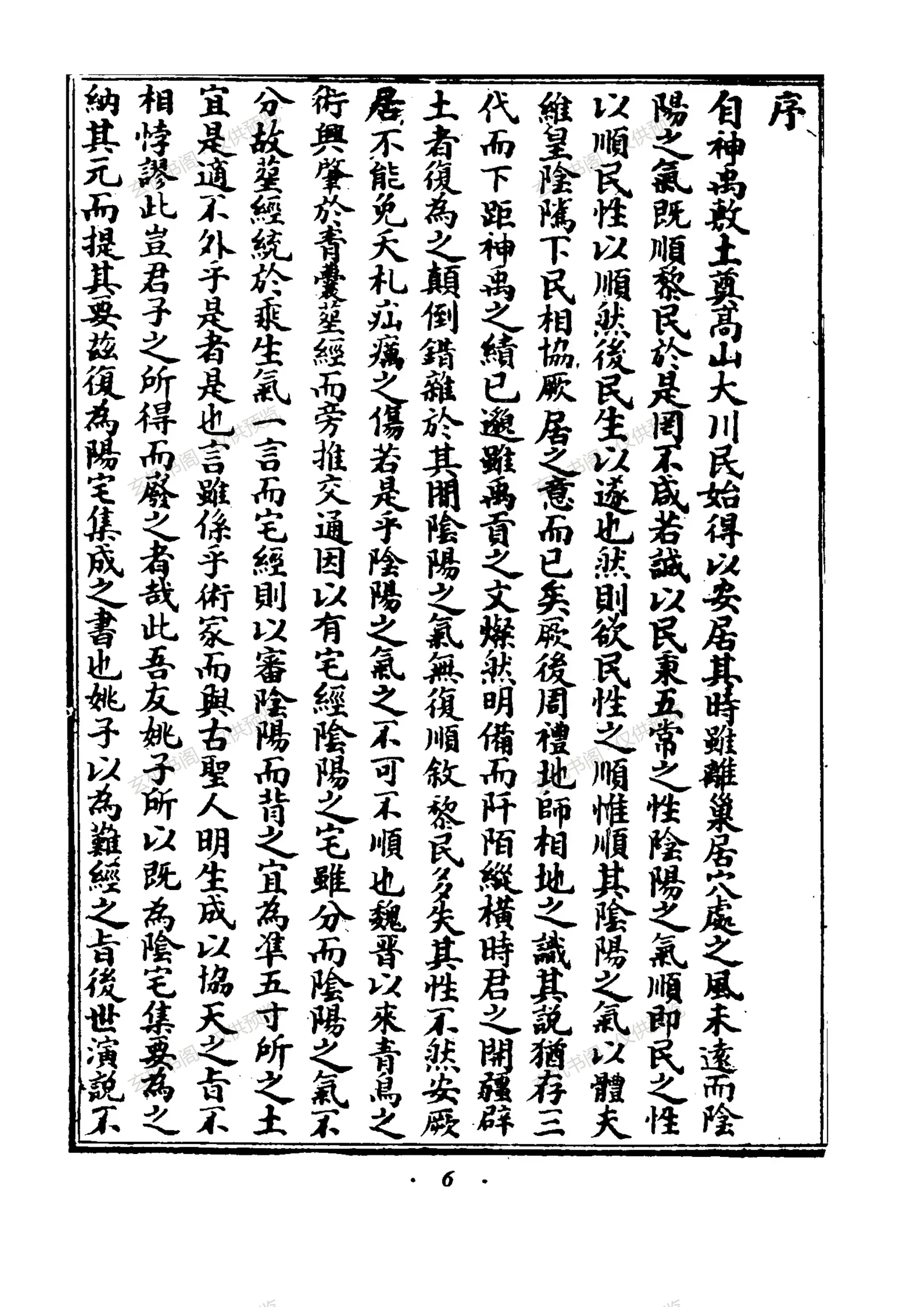
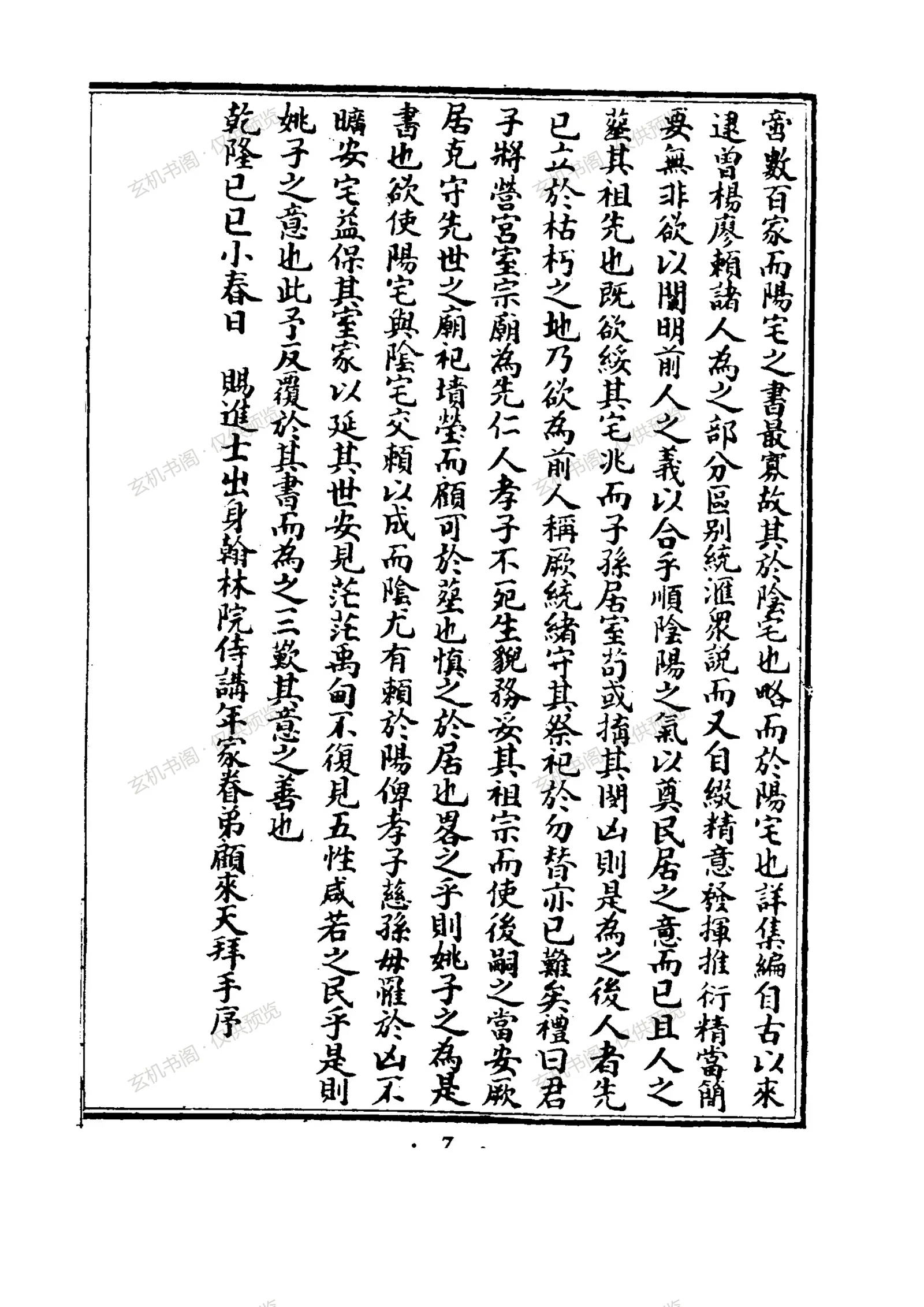
This is a Qing-era compilation on yin-dwelling (grave-site) geomancy by Yao Zhanqi, styled Canxia Daoren. The cover gives the main title Yinzha Jiyao and the subtitle Illustrated Complete Book of Dragon, Cavity, Sand and Water. The opening pages contain a general preface, the compiler's own preface dated to the ninth year of the Qianlong reign, and a preface by Yao Tingluan dated to the seventeenth year. Yao explains that geomancy books had multiplied and were often misattributed, so he selected essentials from past authorities and organized them around the four categories of dragon, cavity, sand and water, with illustrations. The general preface insists that landform is the body and理 qi the function, criticizing those who discuss qi without reading the terrain. The visible portion is prefatory only; the illustrated body is not shown here, so the description of its four-part structure rests on the subtitle.
Contents
General preface: rationale for the compilation and the body-function relation
Compiler's preface: lineage of the form school from Yang, Zeng, Liao and Lai
Preface by Yao Tingluan: yin and yang dwellings complement each other
Four-part body (per subtitle): illustrated dragon, cavity, sand, water
Key Points
Organized around four essentials: dragon, cavity, sand, water
Stresses landform as body and qi as function, against empty qi talk
Draws on form-school authorities such as Yang Yunsong and Lai Wenjun
Compiled in the early Qianlong period as a practical digest
Subtitle indicates a heavily illustrated, diagram-based manual