Reading guide
Content guideOverview
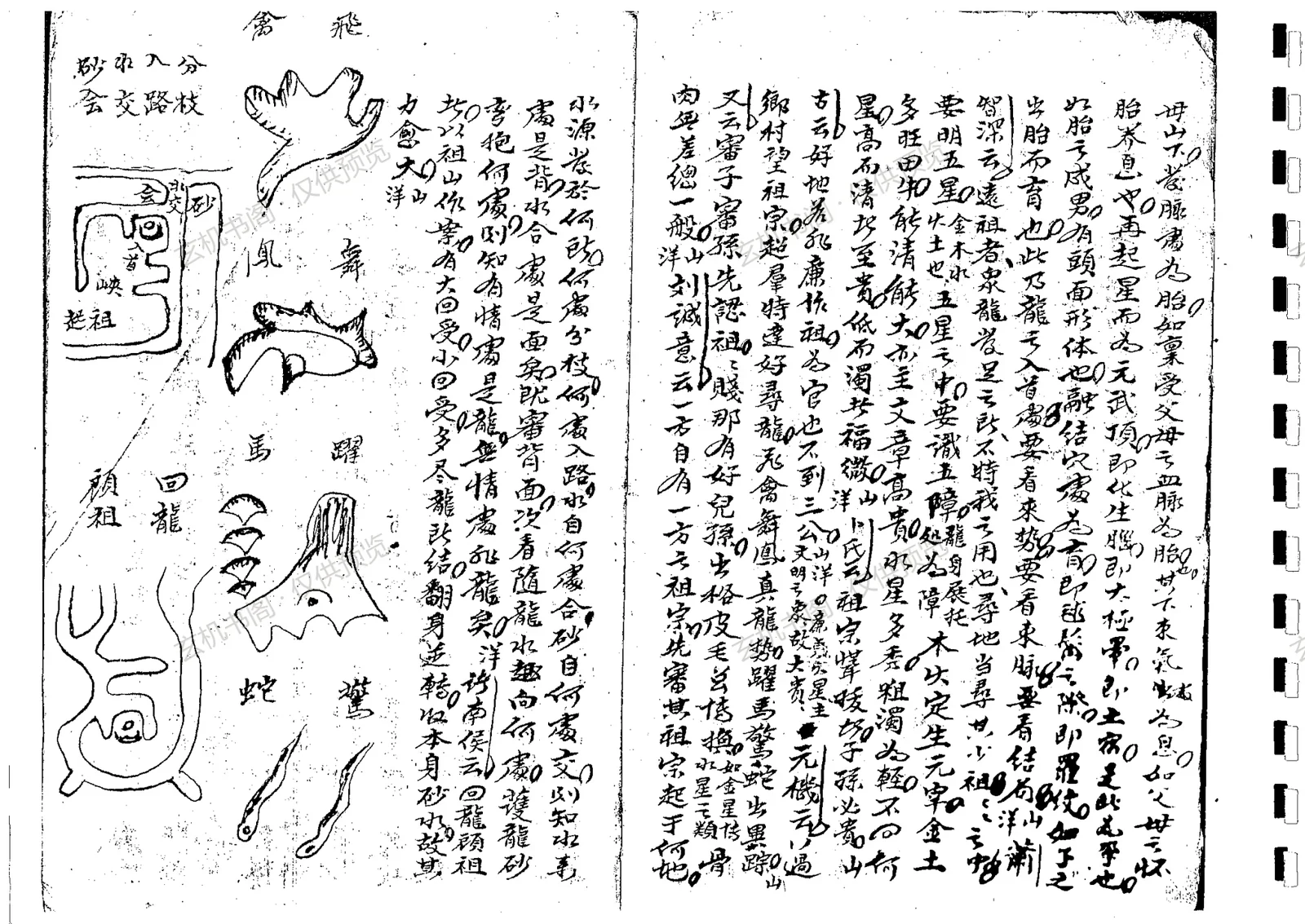
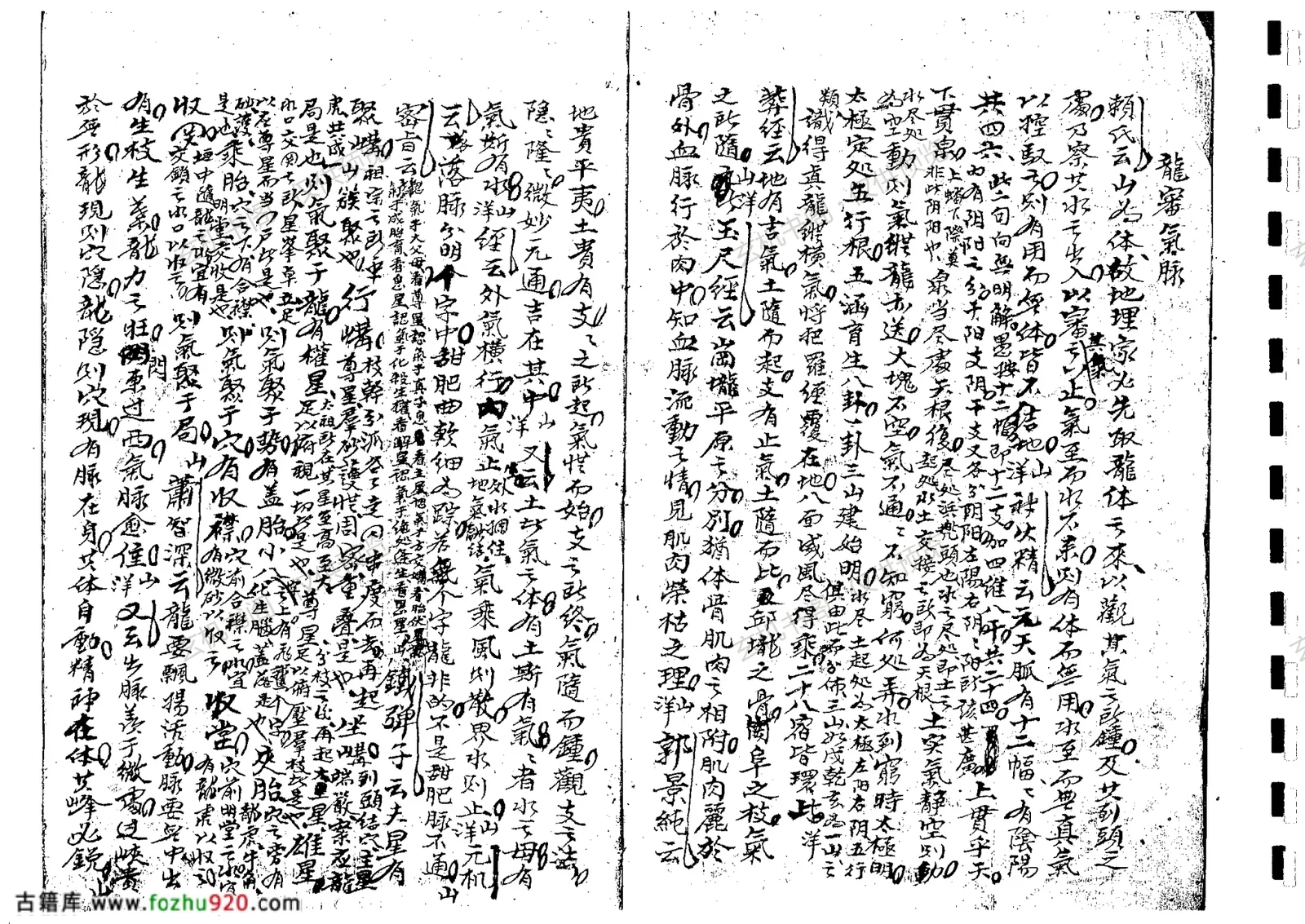
This Qing-dynasty feng shui manuscript, attributed to Yao Tingluan, focuses on the core theories of yin dwelling (burial) siting. It covers the four key elements—dragon, spot, sand, and water—and their auspicious or inauspicious signs. The text discusses identifying dragon veins and their branches, the theory of mountain and plain dragons, tracing ancestral dragons, and the five-element forms for locating burial spots. Emphasizing the differences between mountain dragons and flatland dragons, it explains how to find true dragon confluences by observing terrain, water flow, and sand peaks. Written in cursive script and illustrated with diagrams of animal forms and branch structures, the book offers a detailed look at traditional form-school feng shui. It is suitable for readers with a foundation in feng shui who wish to deepen their understanding of yin dwelling practices.
Contents
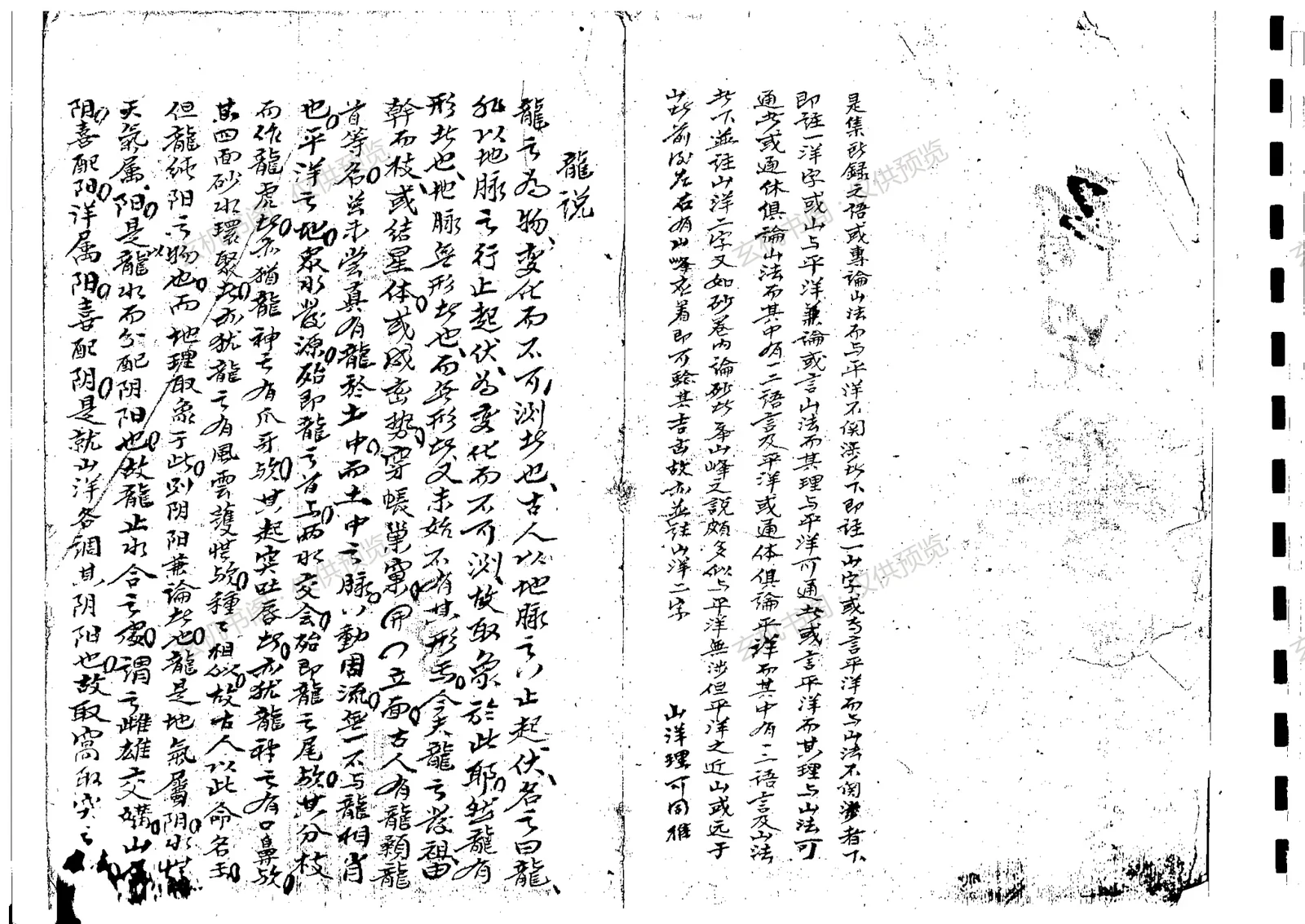
On Dragons: Dragon vein transformations and mountain-plain distinctions
Mountain-Plain Theory: Interconnected principles of plain and mountain dragons
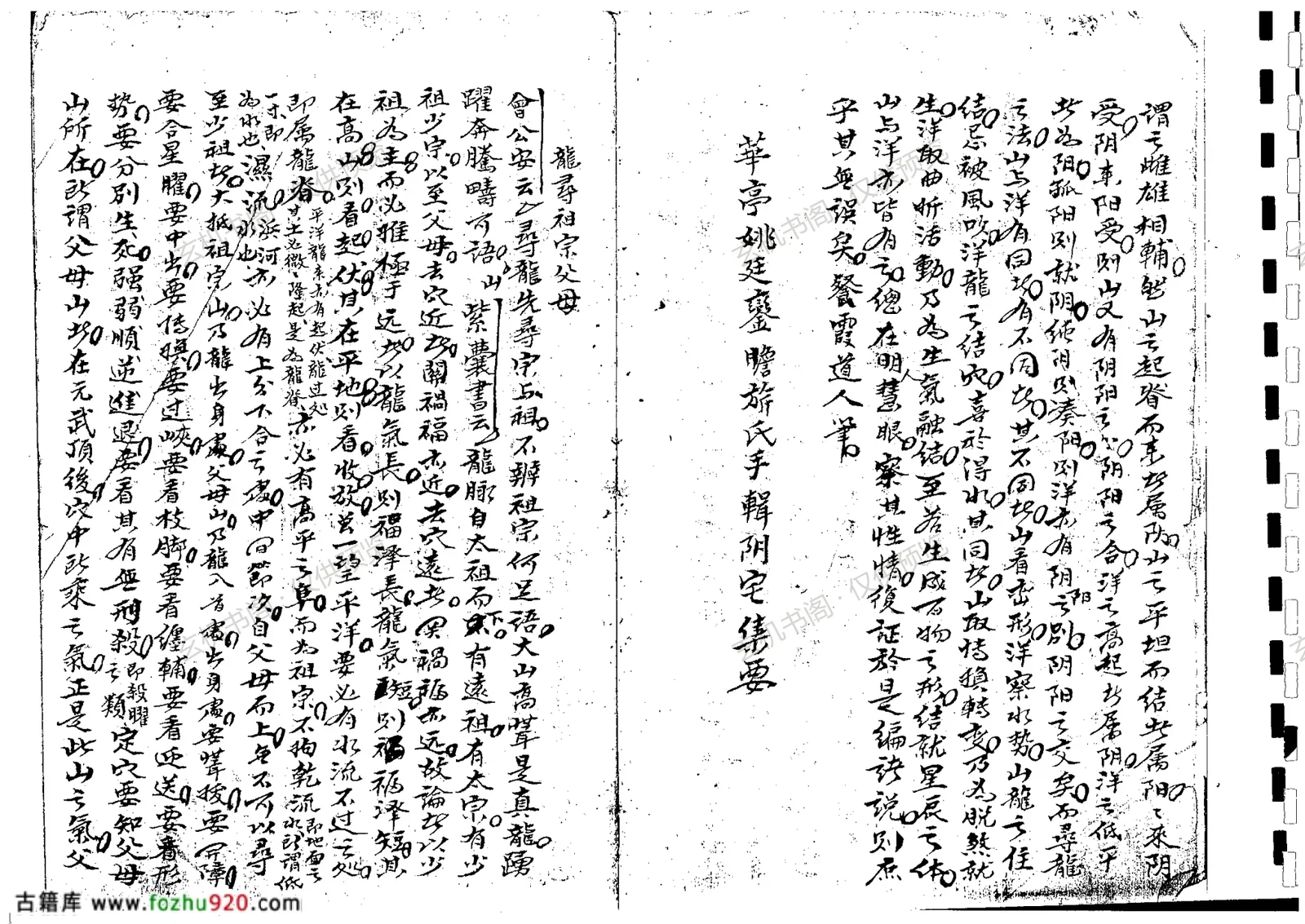
Seeking Dragon Ancestors: Tracing the source of dragon veins
Five-Element Forms and Spot Methods: Auspicious spots by planetary forms
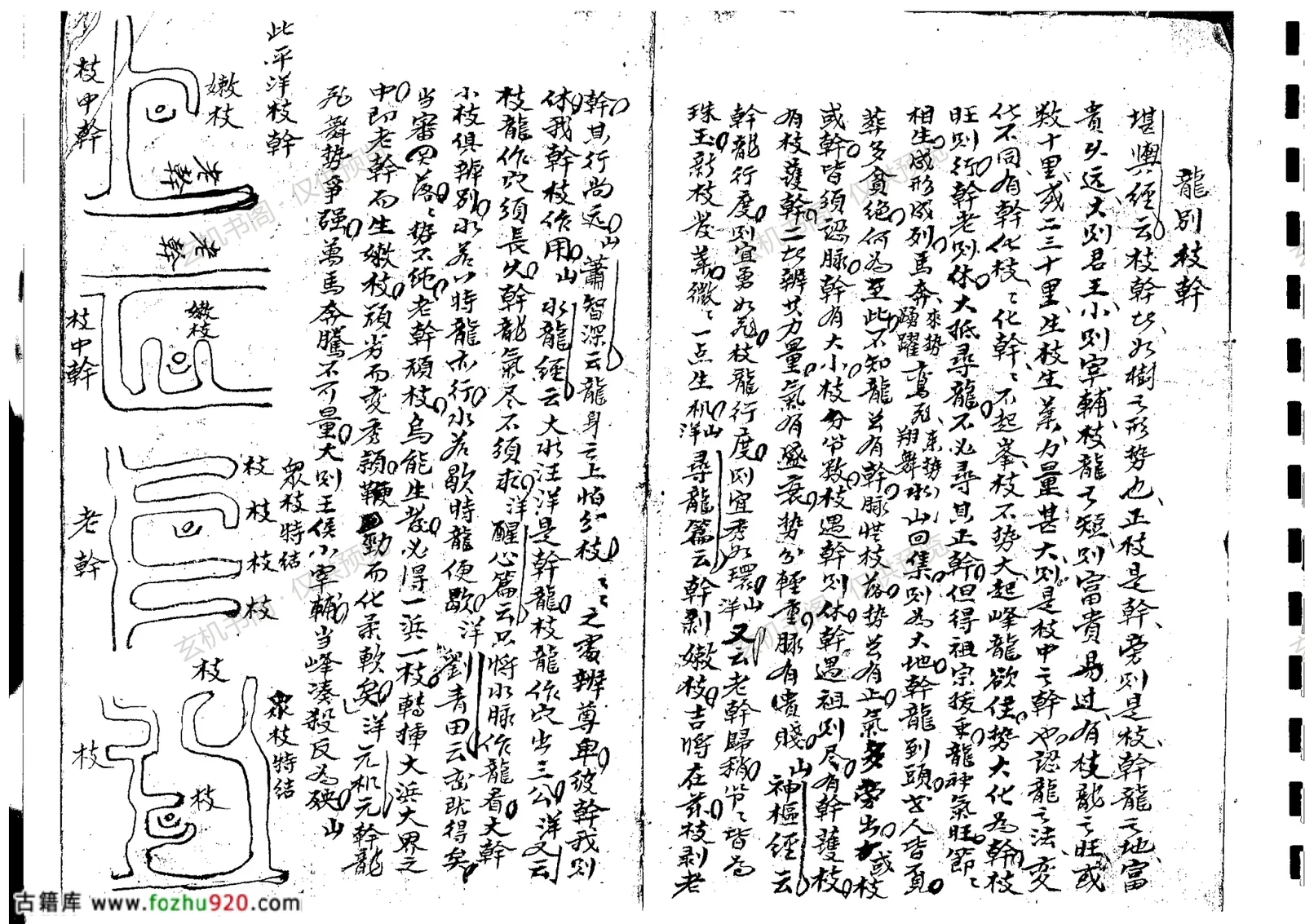
Distinguishing Branches and Trunks: Evaluating noble vs. wealthy sites
Dragon Cave Qi Vessels: On the visible and hidden qi vessels
Key Points
Highlights the differences and connections between mountain dragons and flatland dragons in form and theory.
Stresses tracing the dragon's ancestry to identify true confluences.
Uses five-element forms (metal, wood, water, fire, earth) to assess spots and sand-water auspiciousness.
Distinguishes branch dragons from trunk dragons: trunk dragons yield nobility, branch dragons yield wealth.
Emphasizes the visible and hidden aspects of qi vessels as key to feng shui fortune.