Reading guide
Content guideOverview
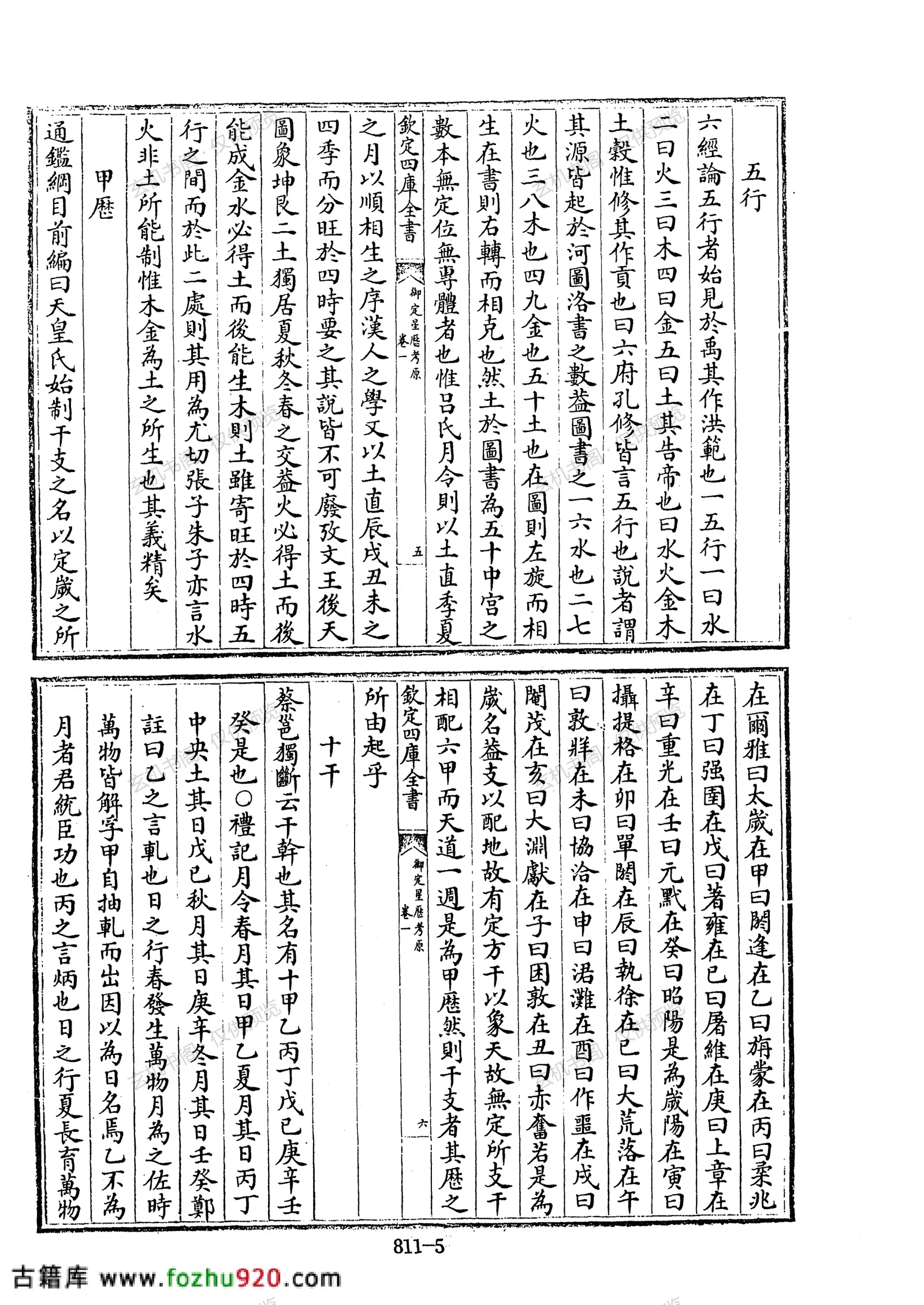
The Yuding Xingli Kaoyuan is an imperially commissioned Qing-dynasty work on calendrical astrology and date selection, compiled by Li Guangdi and others under imperial order and included in the Siku Quanshu. The six-volume work begins with fundamental cosmological and calendrical principles, covering heaven and earth, yin-yang, the Five Phases, the sexagenary cycle, the twenty-eight lunar mansions, and the seven luminaries. It then discusses the meaning and correspondences of the ten heavenly stems and twelve earthly branches, the twelve pitch-standards, the five records, and the eight trigrams, before addressing the spirits and deities used in selecting auspicious days and hours. The book provides a systematic theoretical framework for traditional date selection and is an important source for the study of Chinese calendrical astrology and official calendrical thought.
Contents
Cosmological principles: heaven, earth, yin-yang, and celestial motion
Five Phases: generation and overcoming, Hetu and Luoshu
Ten Heavenly Stems: meanings and yin-yang correspondences
Twelve Earthly Branches: meanings and monthly associations
Five Records: cycles of sun, moon, and stars
Eight Trigrams: early and later heaven arrangements and stem-branch correspondences
Key Points
An officially commissioned reference work on date selection with a rigorous structure
Grounded in numerology, the Five Phases, and the sexagenary cycle
Systematically discusses spirits and methods of choosing auspicious dates
Preserves rich historical material on calendrical astronomy and numerology