Reading guide
Content guideOverview
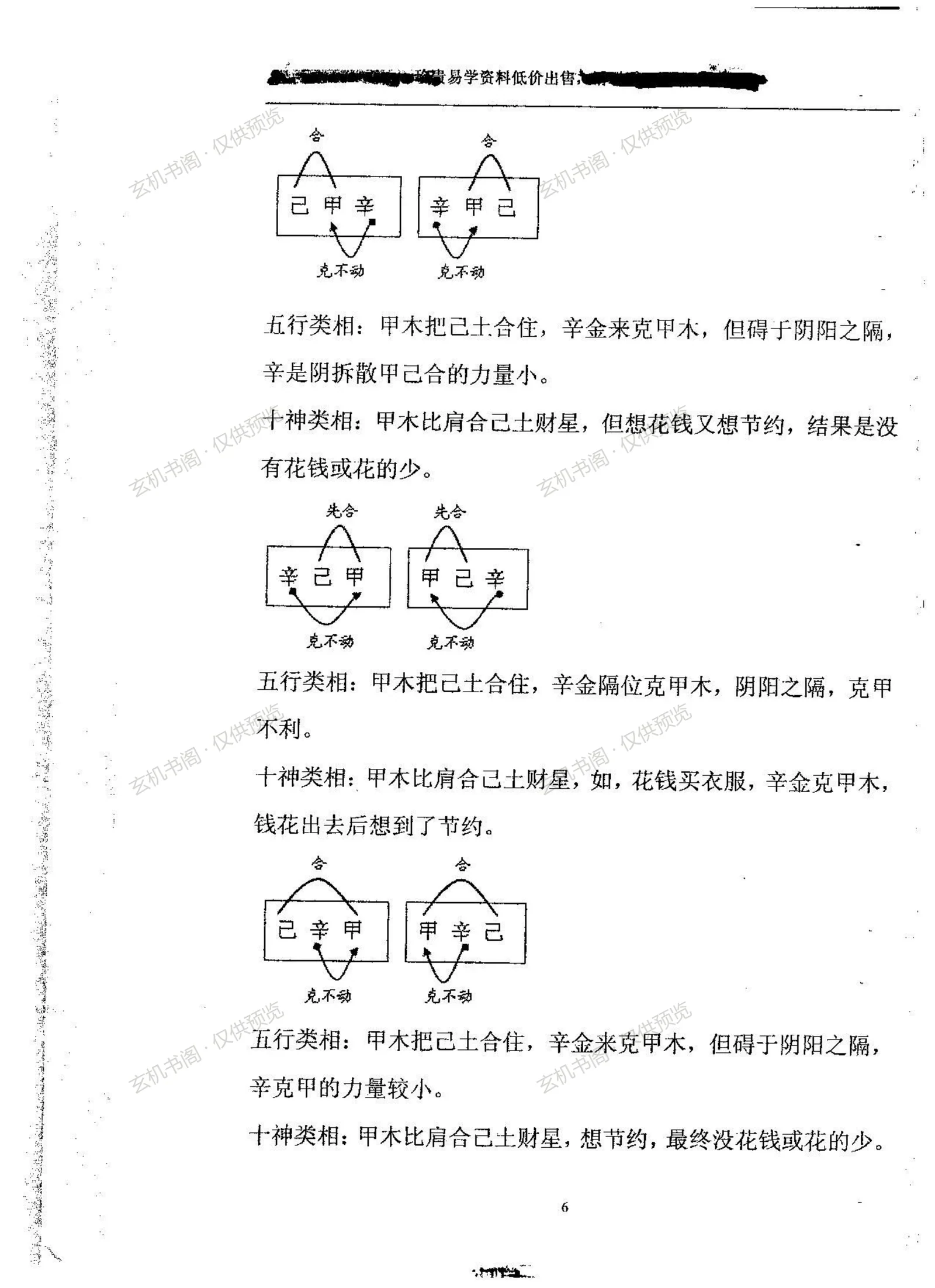
These first six pages of Hu Yiming's Bazi lecture notes form a foundational section. They list the ten heavenly stems and twelve earthly branches with their yin-yang qualities, then set out the five-element generating and controlling cycles, the heavenly stem combinations, and the earthly branch six and three harmonies. The Ten Gods are then introduced relative to the day master, defining seal, officer, output, peer, and wealth stars with their regular and irregular forms, followed by mnemonic verses for their generation and control. A short passage discusses how yin and yang differ in controlling force. The largest portion treats heavenly stem combinations, arguing that a combination is essentially a control relation, and uses diagrammed cases around the Jia-Ji combination to show how Geng metal or Yi wood can block, precede, or follow it, read through both five-element and Ten Gods imagery.
Contents
Ten heavenly stems, twelve earthly branches, and yin-yang
Five-element cycles, stem combinations, branch harmonies
Defining the Ten Gods relative to the day master
Mnemonic verses for Ten Gods generation and control
Differences in yin-yang controlling force
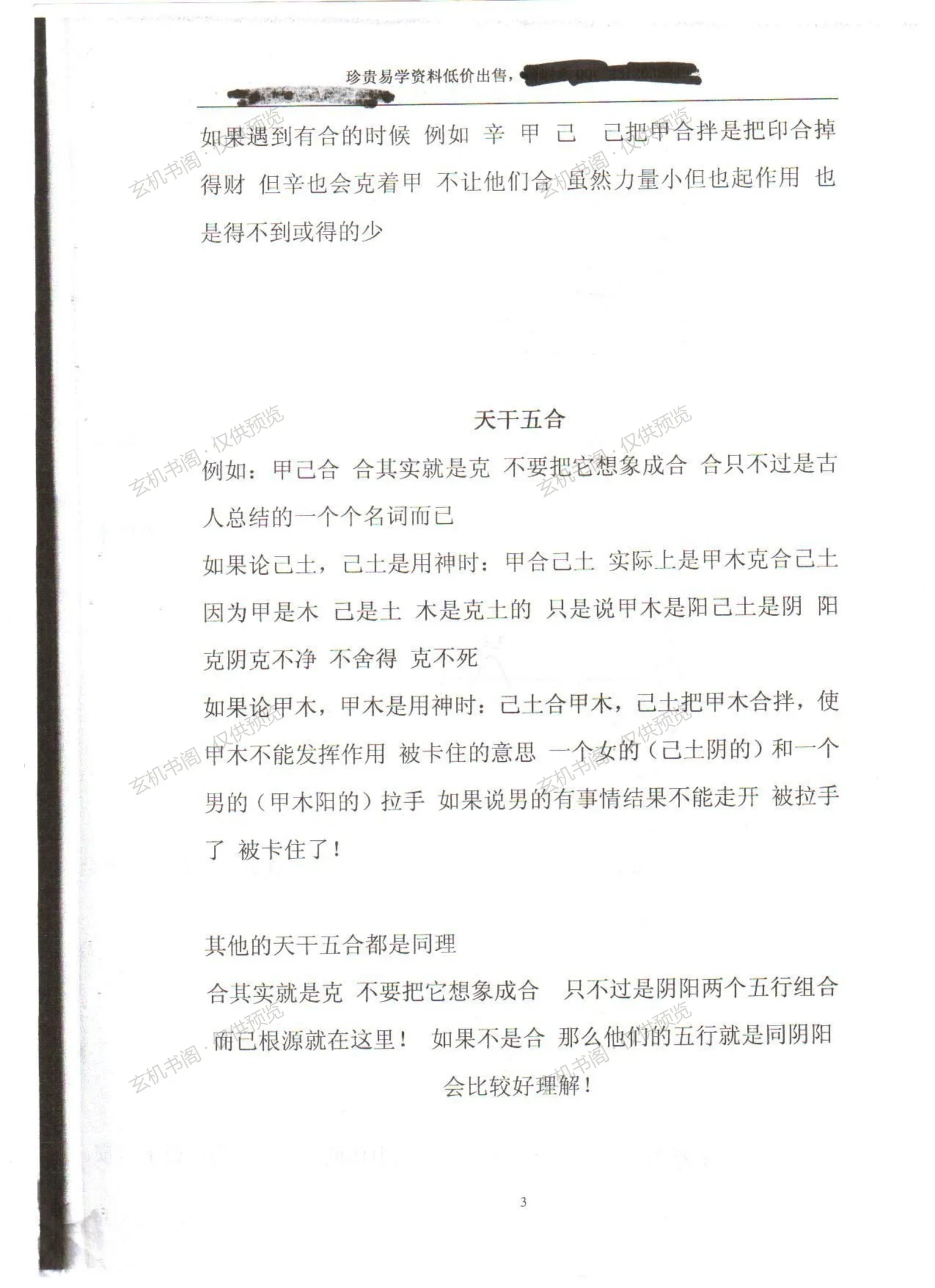
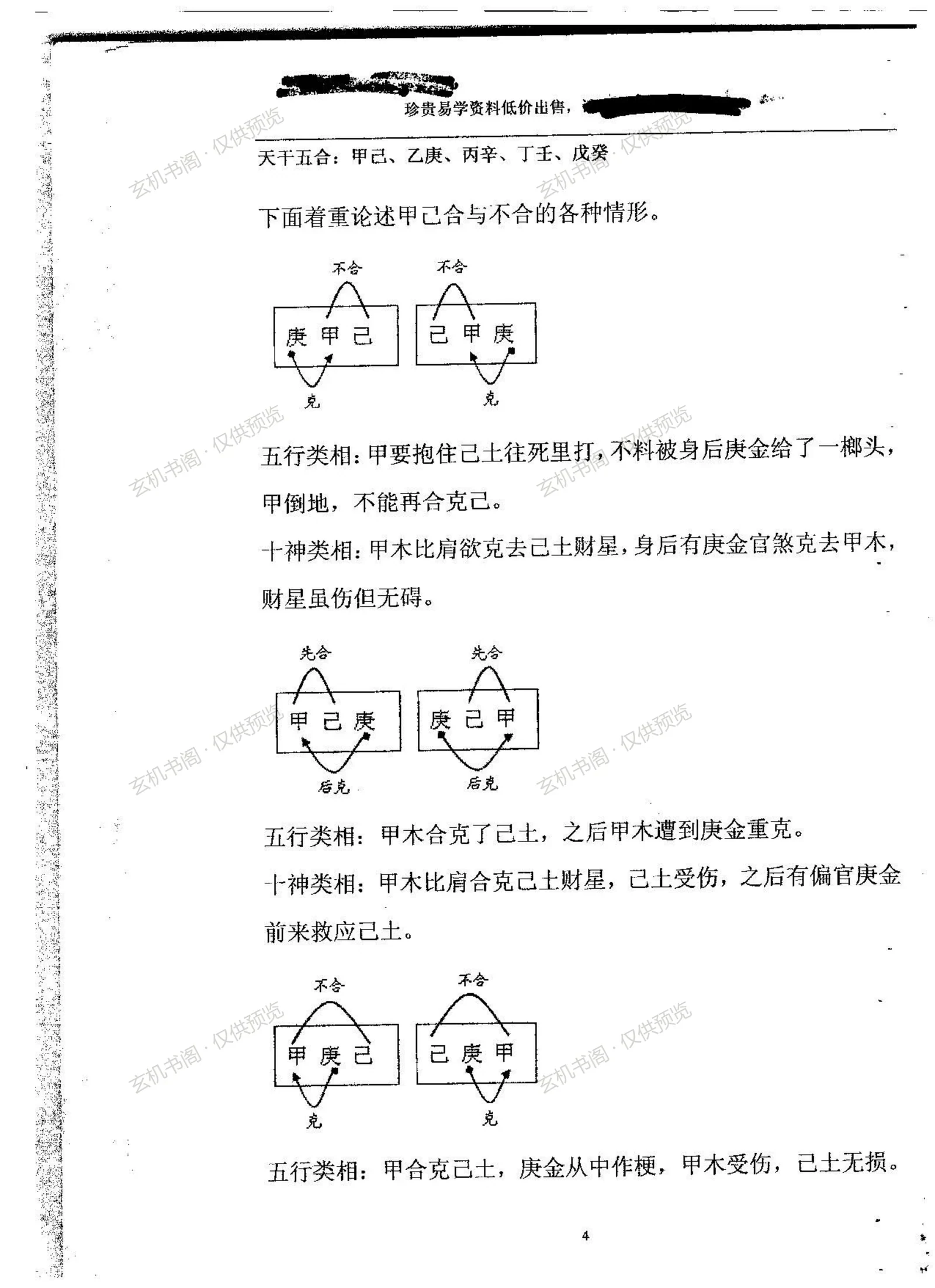
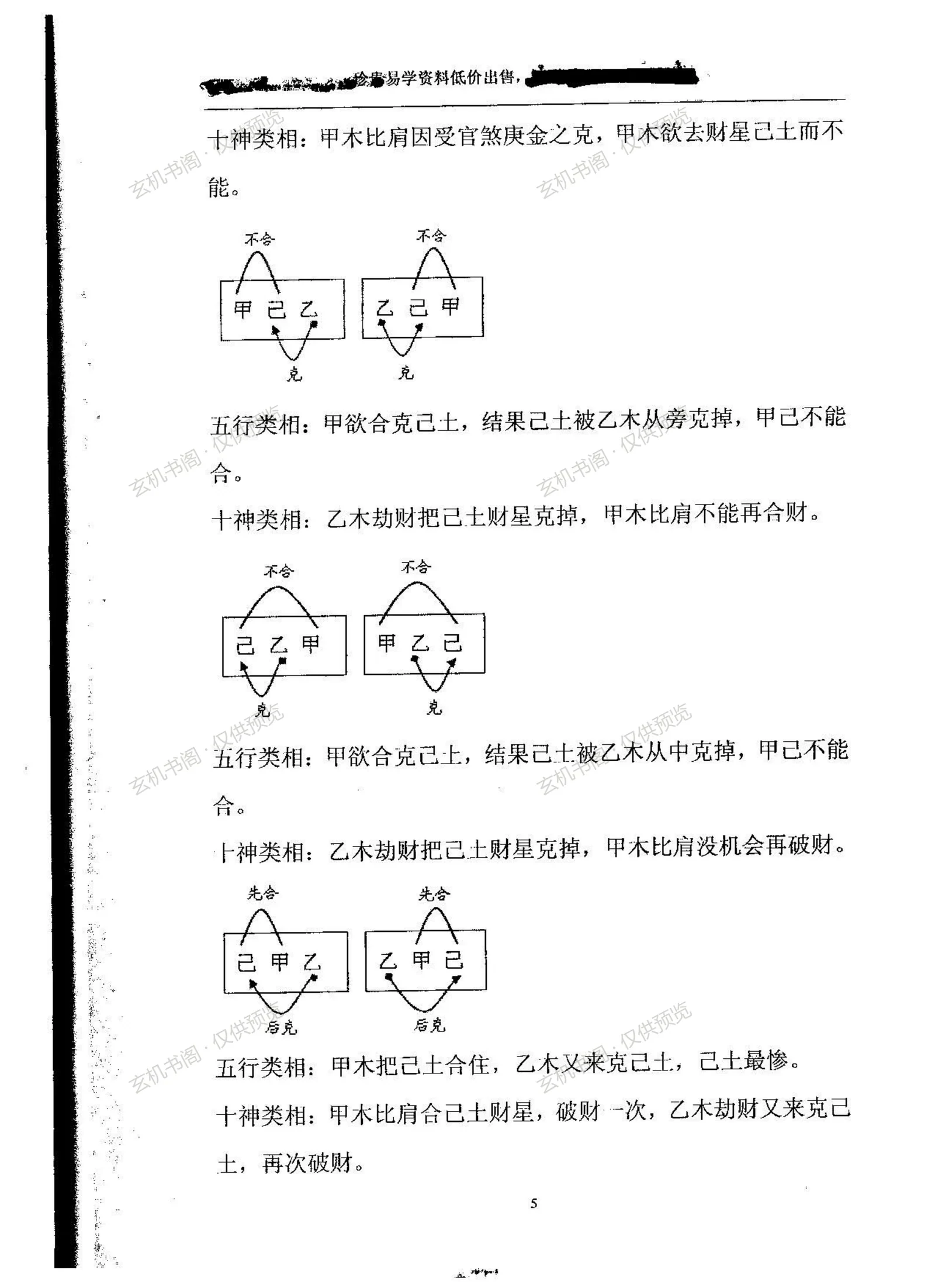
The nature of stem combinations and the Jia-Ji case
Key Points
Ten Gods are defined from the day master by generating and controlling relations
A combination is fundamentally a control relation, not simple harmony
Yang controlling yin is strong but incomplete; yin controlling yang is weaker but still effective
Diagrams show how Geng and Yi disrupt the Jia-Ji combination
The same configuration is read through both five-element and Ten Gods imagery