Reading guide
Content guideOverview
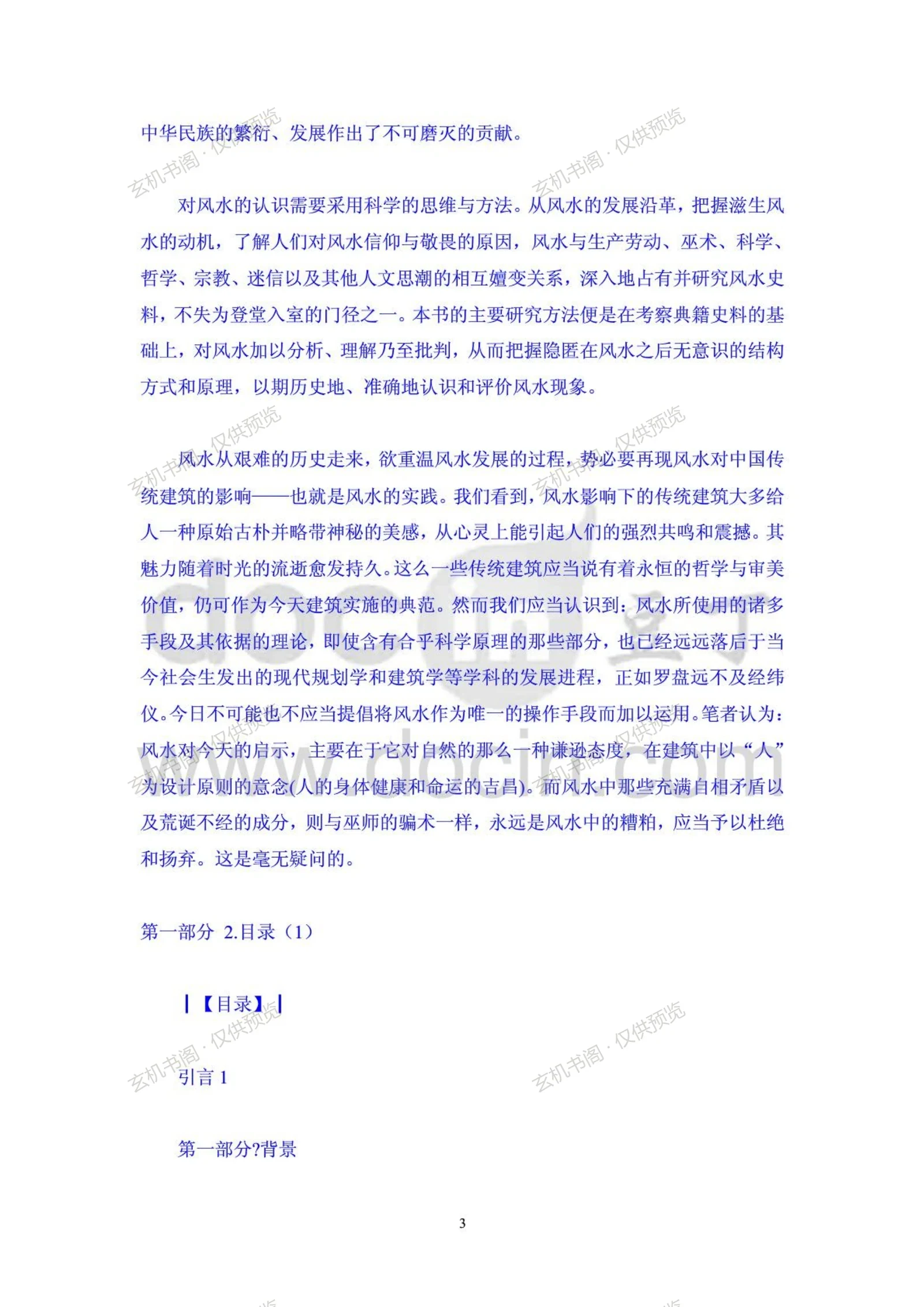
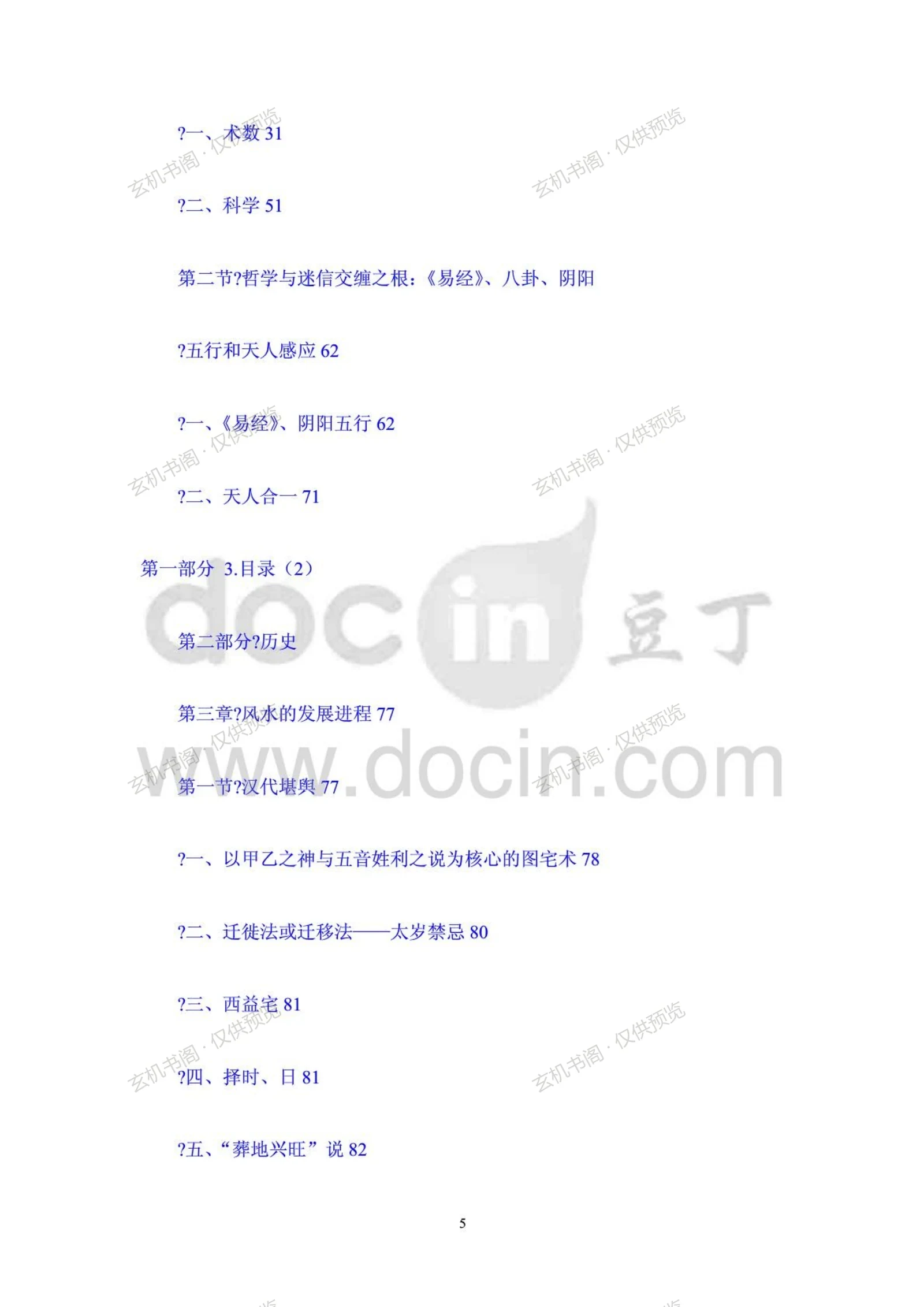
This book presents a historical study of Chinese feng shui. The introduction discusses the difficulties and methods of researching feng shui, noting that pre-Ming examples are hard to verify and that historians must draw on myths, biographies, local gazetteers, and genealogies. Part One, Background, traces the origins of feng shui in shamanism, turtle-shell divination, and ancestral worship, and surveys historical terms such as buzhai, xiangzhai, qingwu, kanyu, qingnang, and dixue. Chapter Two examines feng shui's roots in shushu, science, philosophy, and superstition, including the Yijing, bagua, yin-yang, five phases, and the idea of resonance between heaven and humanity. Part Two, History, proceeds chronologically: Han dynasty kanyu, tuzhai techniques, Tai Sui taboos, xiyizhai, time selection, the idea of burial sites bringing prosperity, and talismanic protection; Wei-Jin masters Guo Pu and Guan Lu; Tang dynasty backgrounds, masters, and texts; the Song florescence; the Yuan decline; and Ming-Qing revival and transmission. The book emphasizes textual criticism and cultural analysis, making it useful for scholars of feng shui history, architectural history, and folklore.
Contents
Introduction: difficulties and methods
Ch.1: emergence and changing names of feng shui
Ch.2: roots in shushu, science, and philosophy
Ch.3: Han kanyu and Wei-Jin masters
Tang feng shui: background, masters, texts
Song, Yuan, Ming, and Qing development
Key Points
Traces the evolution of feng shui terms and concepts from shamanism to kanyu
Emphasizes textual criticism using myths, gazetteers, and genealogies
Surveys dynastic rise and decline from Han through Qing
Discusses relations to the Yijing, yin-yang, five phases, and heaven-human resonance
Adopts an analytical and critical stance toward feng shui