Reading guide
Content guideOverview
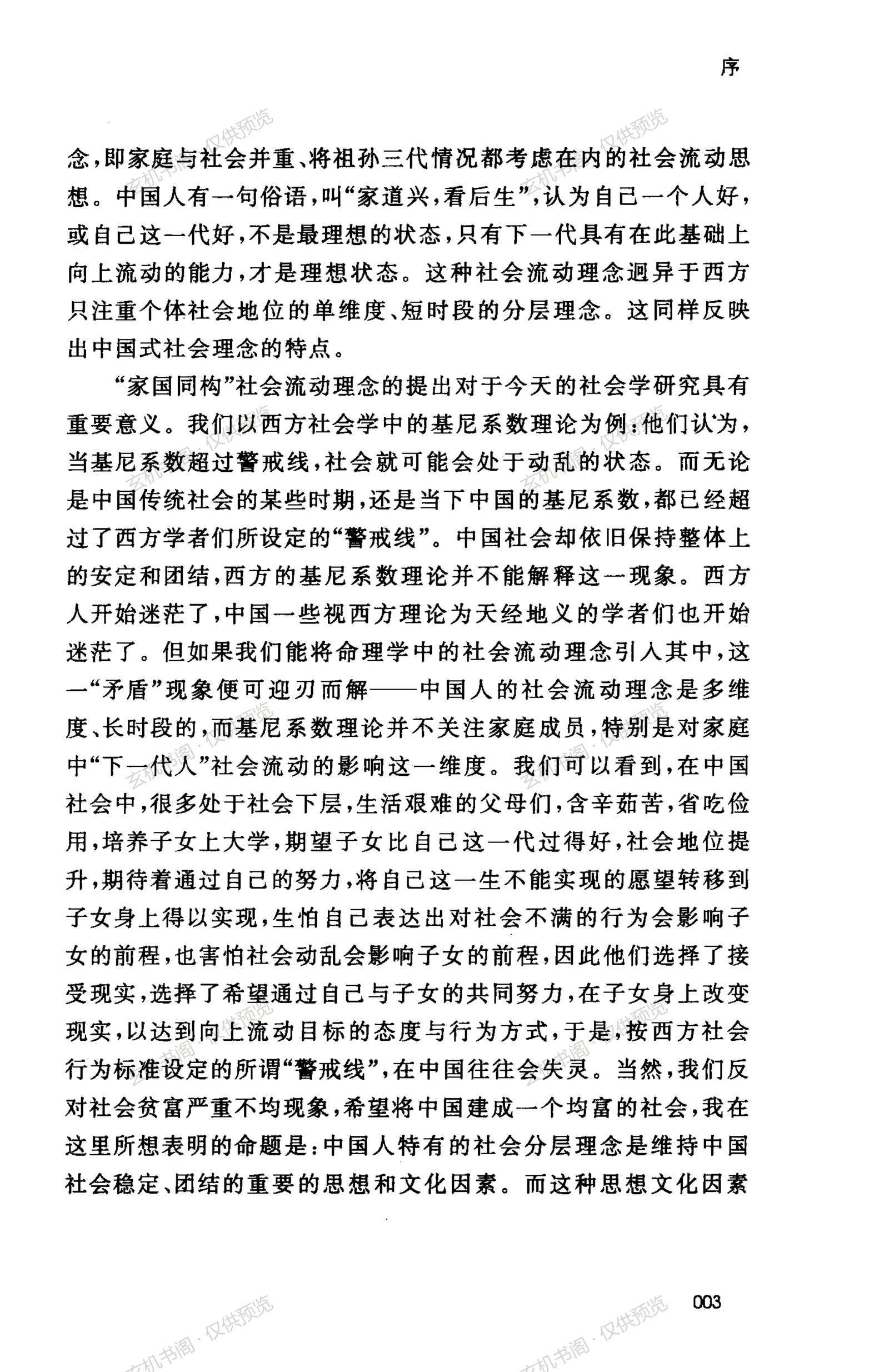
This book studies traditional Chinese beliefs about fate and destiny as a work of social-intellectual history, developed from the author's doctoral dissertation. It first traces the formation of Chinese fate calculation: the idea of heavenly mandate arose in pre-Qin times, merged with yin-yang and five-phase theory in Qin-Han, took embryonic shape in the Wei-Jin period, and received its classical model from Li Xuzhong in the Tang. In the Northern Song, Xu Ziping simplified the classical model by absorbing Jing Fang's najia method, creating the modern model still in use; the book also examines the historical authenticity of Xu Ziping himself. The core analysis reads the ten gods of the modern model—wealth, officer, seal, food god, and peer—as social categories, comparing them with Weber's three dimensions of stratification and proposing five Chinese dimensions of social position: economic, organizational, cultural, reproductive, and bodily capital. Using social mobility theory, it explains the multi-dimensional, long-duration mobility ideal that considers three generations and family together, offering a cultural explanation for why Chinese society remains relatively stable even when Gini coefficients exceed Western warning lines.
Contents
Preface: origins of the heavenly mandate and Xu Ziping
Formation of fate calculation from Han to Tang-Song
The modern model and social meanings of the ten gods
Wealth-officer-seal compared with Weberian stratification
Five dimensions of social position
Mobility ideals and the family-state analogy
Gini coefficients and Chinese social stability
Key Points
Traces the shift from the classical to the modern fate-calculation model and examines Xu Ziping's historicity.
Reads the ten gods as dimensions of social stratification and compares them with Weber.
Proposes economic, organizational, cultural, reproductive, and bodily capital as five status dimensions.
Uses multi-dimensional, long-duration mobility ideas to explain Chinese social stability.