Reading guide
Content guideOverview
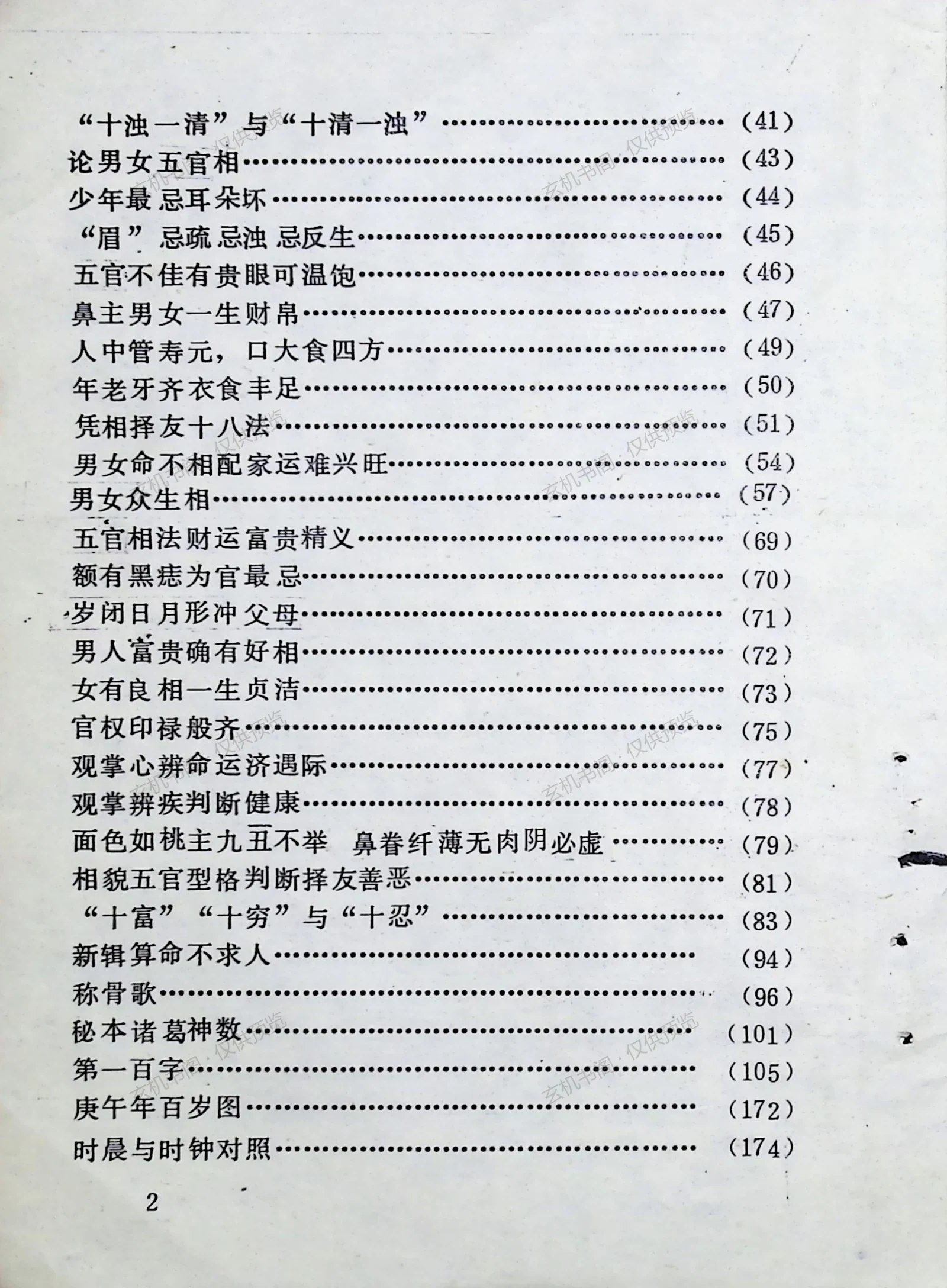
Compiled by Lin Ying and published by Fujian Science and Technology Press in July 1992, this is a popular manual that combines face reading with folk fortune-telling. The opening sections index fortunes by the twelve zodiac animals and by birth month, day and hour, listing the ages associated with each sign. The core of the book turns to physiognomy proper: wealth and misfortune, reading character behind a face, and unusual body signs such as the navel, body hair and the genitalia, with separate remarks for men and women. Facial features are treated one by one—ears, eyebrows, eyes, nose, philtrum and mouth—alongside the “ten turbid, one clear” and “ten clear, one turbid” frameworks, followed by eighteen methods of choosing friends by appearance and discussions of marital compatibility. Later chapters cover palm lines for fortune and health, “ten wealths”, “ten poverties” and “ten forbearances”, and append popular methods including the Bone Weight Song, the Zhuge oracle, a hundred-year age chart and an hour-to-clock conversion table. The format is largely itemised verdicts with diagrams, useful for seeing how folk physiognomy was packaged for general readers.
Contents
Zodiac signs and fortunes by age
Birth month, day and hour fortunes
Navel, hair and genital body signs
The five features: ears, brows, nose, mouth
Eighteen methods of choosing friends by face
Palm lines for fortune, health and character
Ten wealths, Bone Weight Song, Zhuge oracle
Hundred-year chart and hour-clock table
Key Points
Zodiac, month, day and hour form an index for looking up verdicts by birth data.
Each facial feature is discussed separately, stressing ears, brows, nose, philtrum and mouth.
Introduces the “ten turbid, one clear” and “ten clear, one turbid” physiognomy frameworks.
Includes unusual body signs such as the navel and body hair, differentiated by sex.
Appends folk methods like the Bone Weight Song and the Zhuge oracle.
Itemised verdicts with diagrams suit quick reference rather than systematic theory.