Reading guide
Content guideOverview
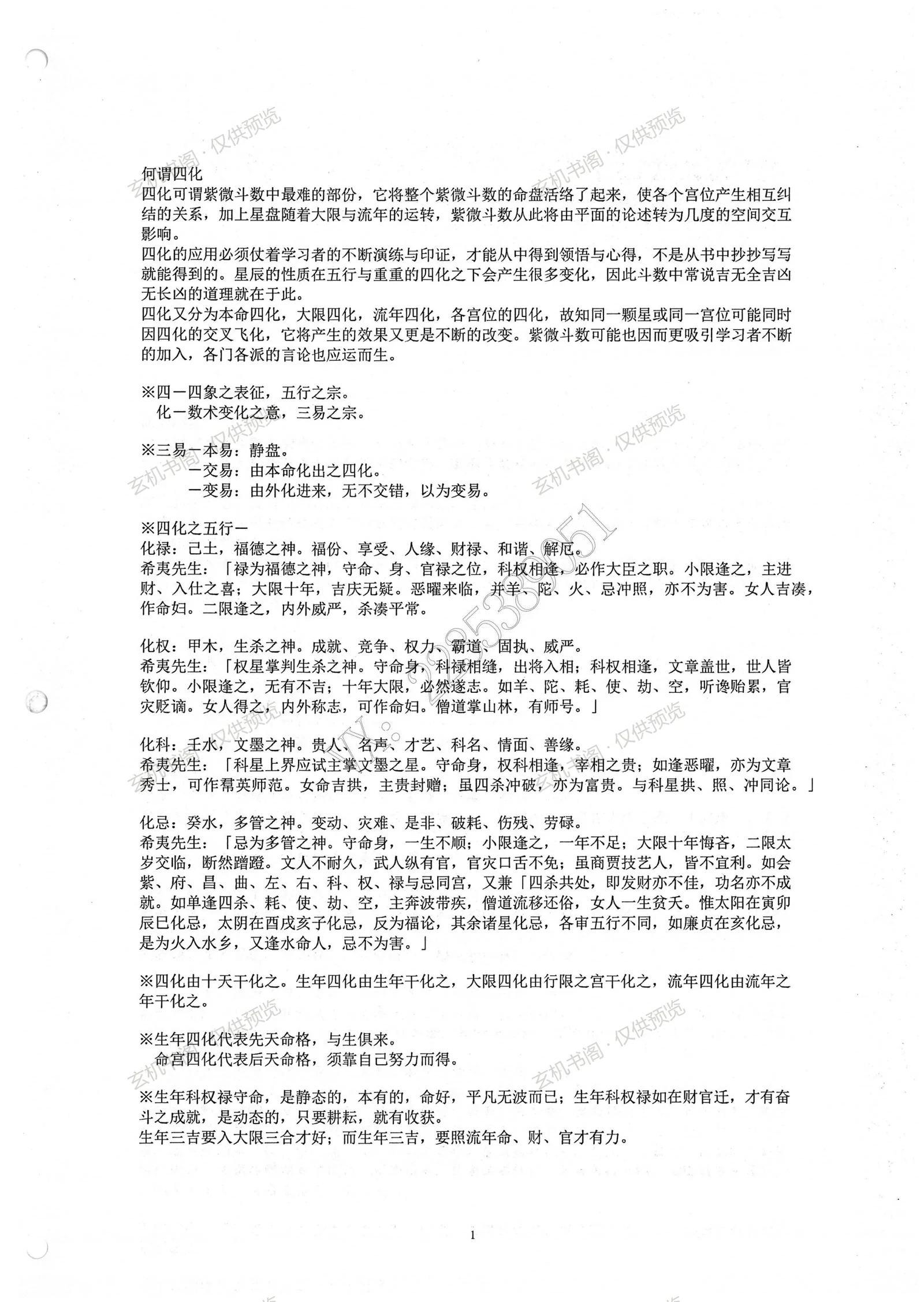
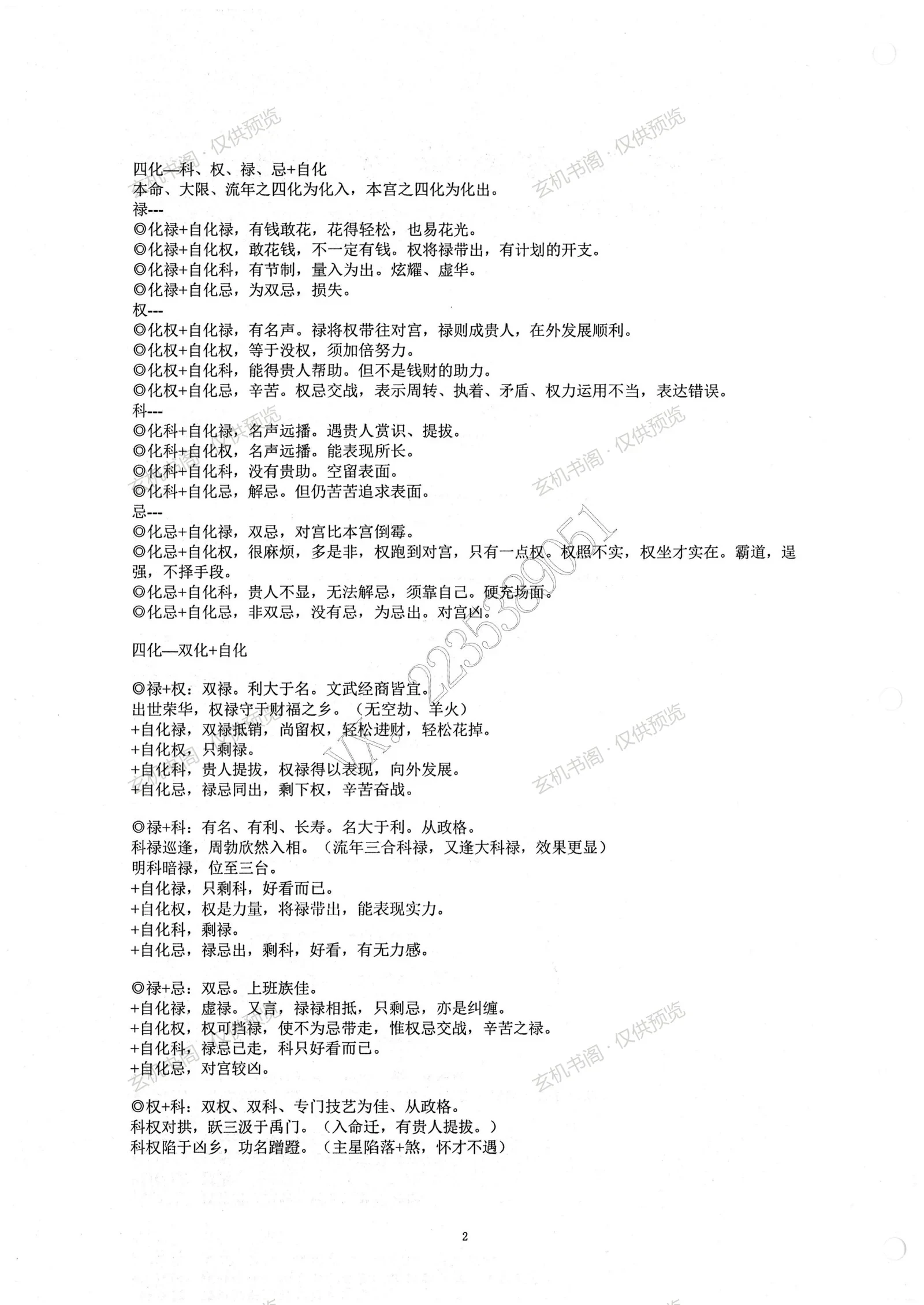
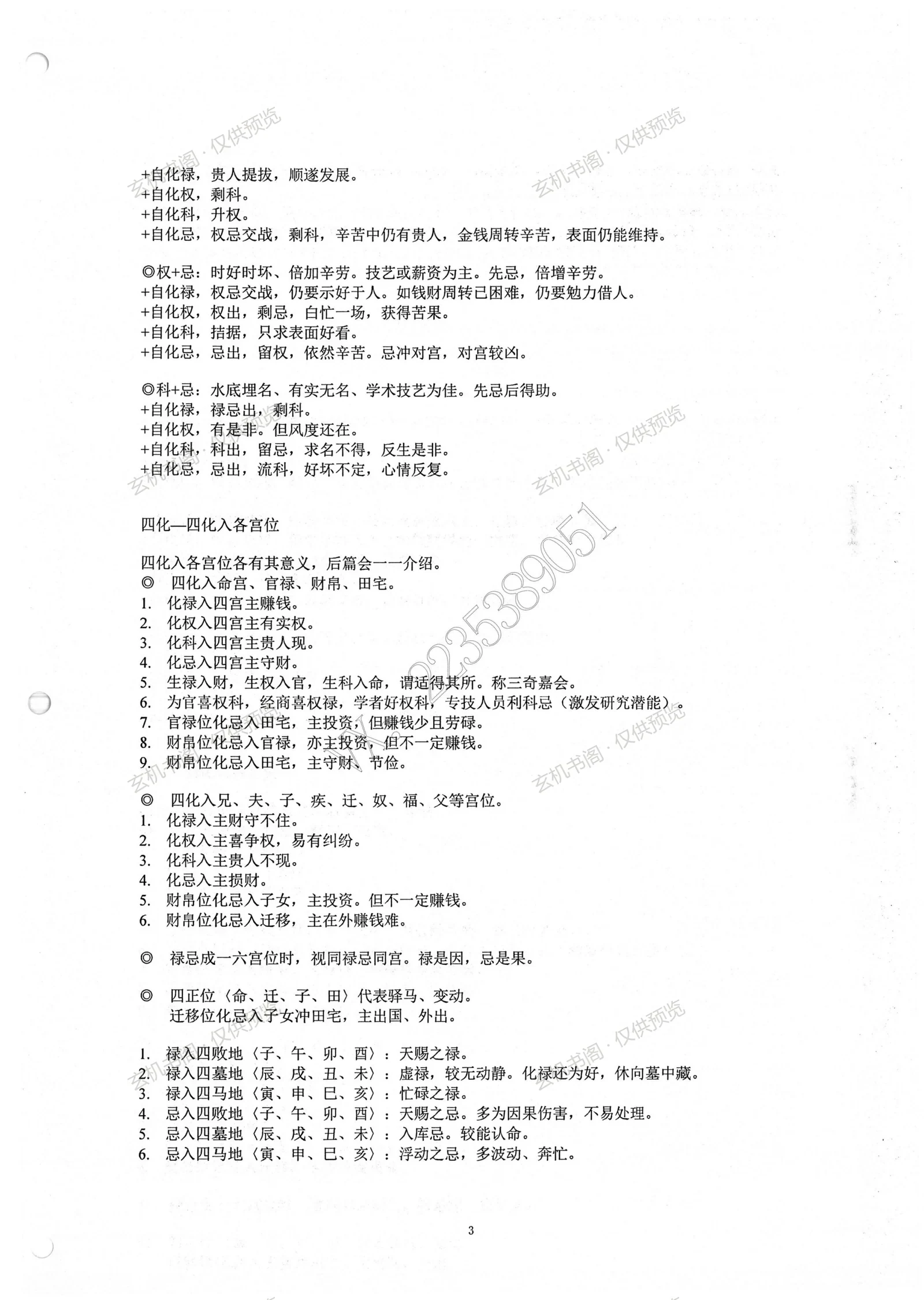
This book focuses on the four transformations (si hua) of Zi Wei Dou Shu: Hua Lu, Hua Quan, Hua Ke and Hua Ji. It begins by explaining what the four transformations are and why they are considered the most difficult yet most vital part of the system, linking the palaces together and shifting with the major and annual cycles. The text then describes the Five Elements and symbolic qualities of each transformation—Lu as earth and the spirit of fortune, Quan as wood and the spirit of achievement and power, Ke as water and the spirit of literary reputation, Ji as water and the spirit of change and trouble. A large section lists combinations of transformations with self-transformations, such as Lu with Quan, Lu with Ke, Quan with Ji, and Ke with Ji, explaining the nuanced outcomes of each. The final part discusses the transformations entering specific palaces, including the life, career, wealth and property palaces as well as the six-relation palaces, and distinguishes Lu and Ji in the four败, four墓 and four马 earth branches. The book is organized as a reference for readers already familiar with Zi Wei Dou Shu who want to deepen their understanding of the four transformations.
Contents
What are the four transformations
Five Elements and symbolic qualities of Lu, Quan, Ke and Ji
Transformations from the ten heavenly stems and birth-year transformations
Combinations of the four transformations with self-transformation
Paired transformations: Lu-Quan, Lu-Ke, Lu-Ji, Quan-Ji and more
Transformations entering the twelve palaces
Lu and Ji in the four败, four墓 and four马 branches
Key Points
The four transformations are the most difficult and dynamic part of Zi Wei Dou Shu, best learned through practice
Lu relates to fortune and wealth, Quan to power and competition, Ke to reputation and scholarship, Ji to change and trouble
Birth-year transformations indicate innate destiny, while life-palace transformations reflect acquired effort
Paired and self-transformations produce mixed outcomes, such as Lu-Quan harmony or Quan-Ji conflict
Transformations in the life, career, wealth and property palaces differ from those in the six-relation palaces
Lu and Ji in the same palace are read together, with Lu as cause and Ji as result