Reading guide
Content guideOverview
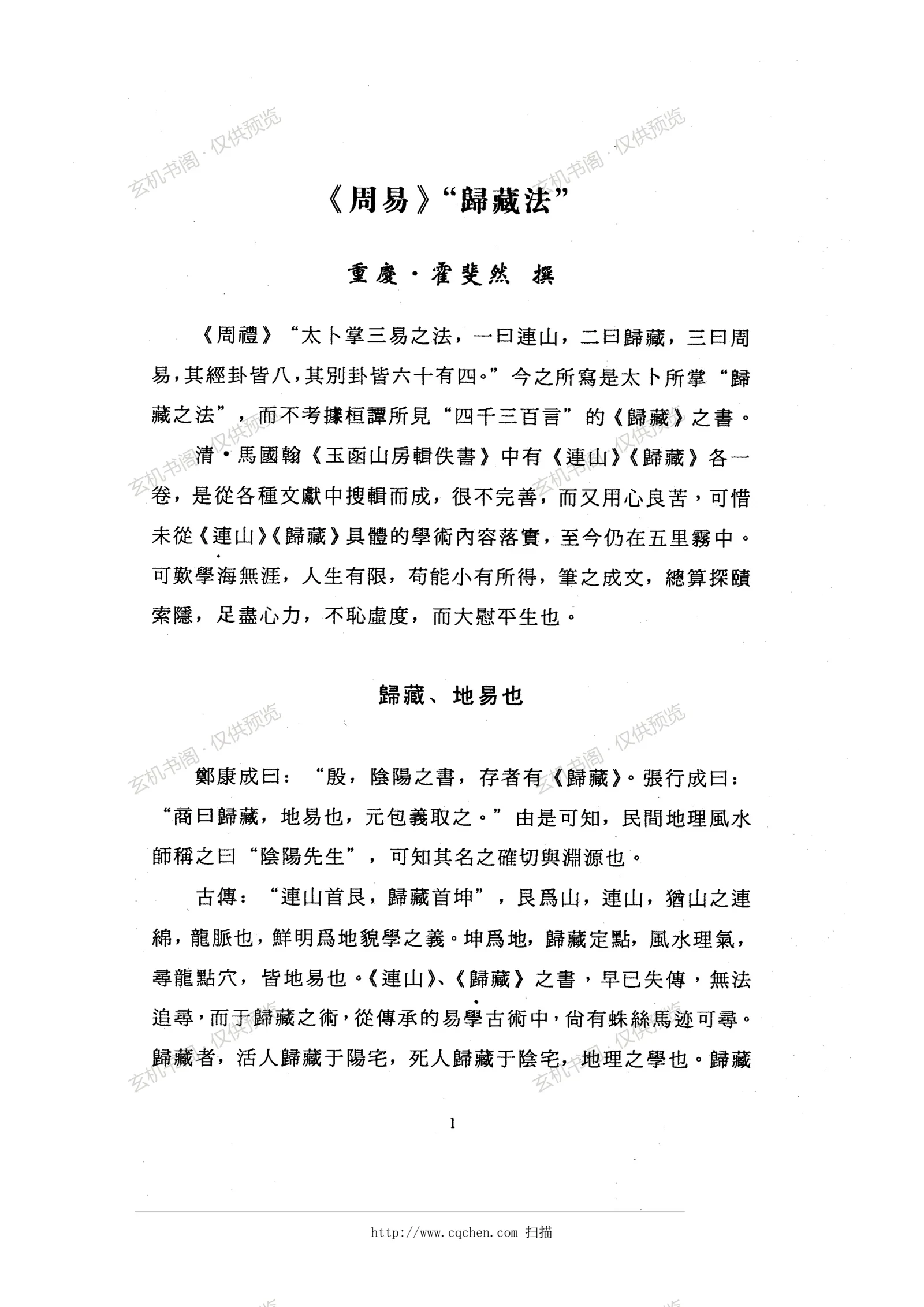
This is Huo Feiran's conference paper for the International Forum on Zhouyi Culture and Modern Application, dated November 1, 2003, in Chongqing. Rather than reconstructing the lost Guicang book mentioned by Huan Tan, Huo argues that the actual method of Guicang survives in the Shuogua commentary. He explains how odd and even numbers pair with yin and yang trigrams, and how two or more lines are merged into one and two or more hexagrams into one, a principle he calls 'joining two into one.' The table of contents shows the method extended to four-pillar fate palaces, the Nine Stars song from Yangzhai Sanyao, the great and small annual travel hexagram turning, the Fuxing water method, Taiyi Xuankong diagrams, Hetu-Luoshu charts, the eight-palace compass divisions, and a complete sexagenary Guicang table. Diagrams and mnemonic verses are central, making it a specialized paper that links Yijing theory with practical fengshui operations.
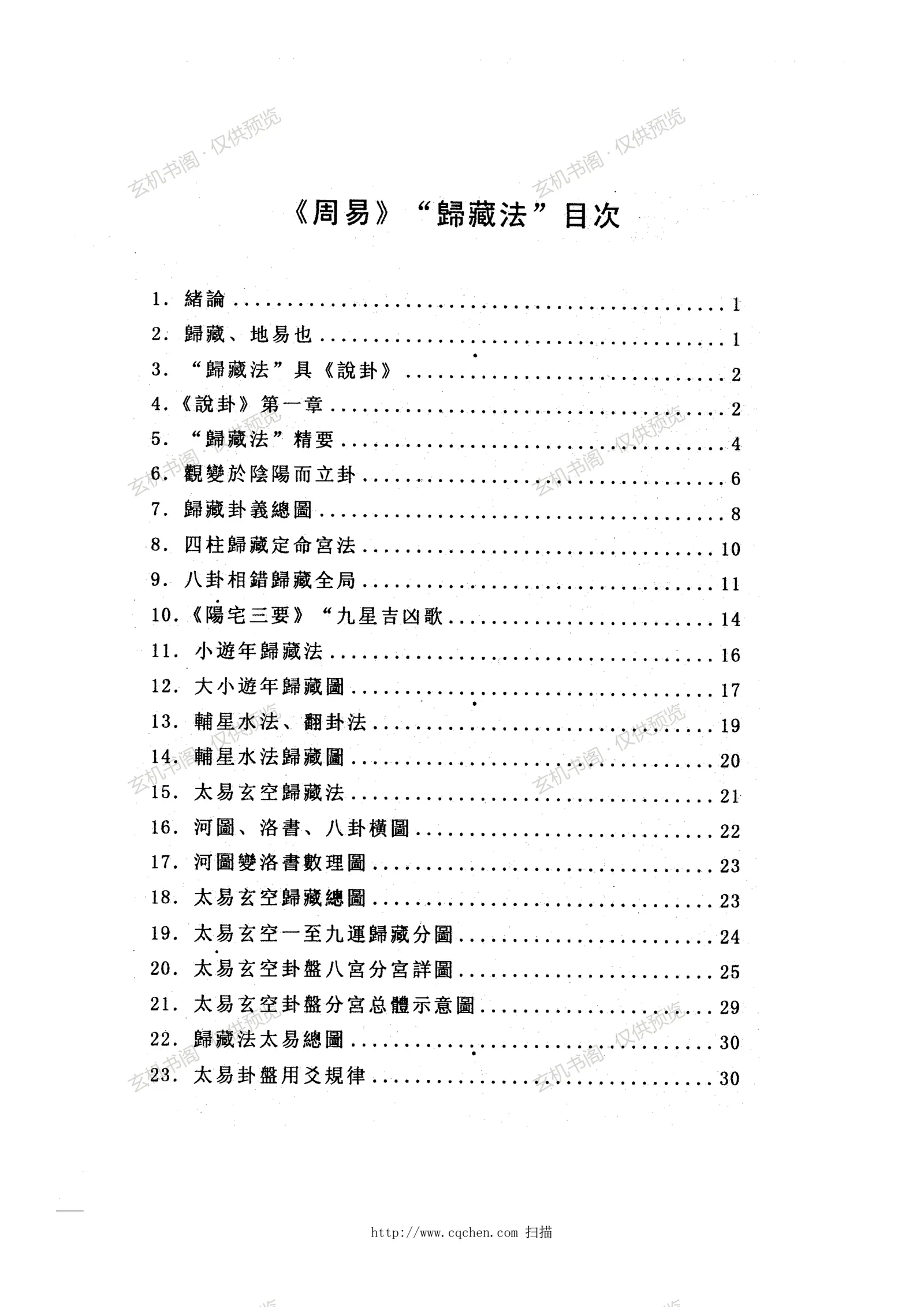
Contents
Introduction: Guicang as Earth Yi
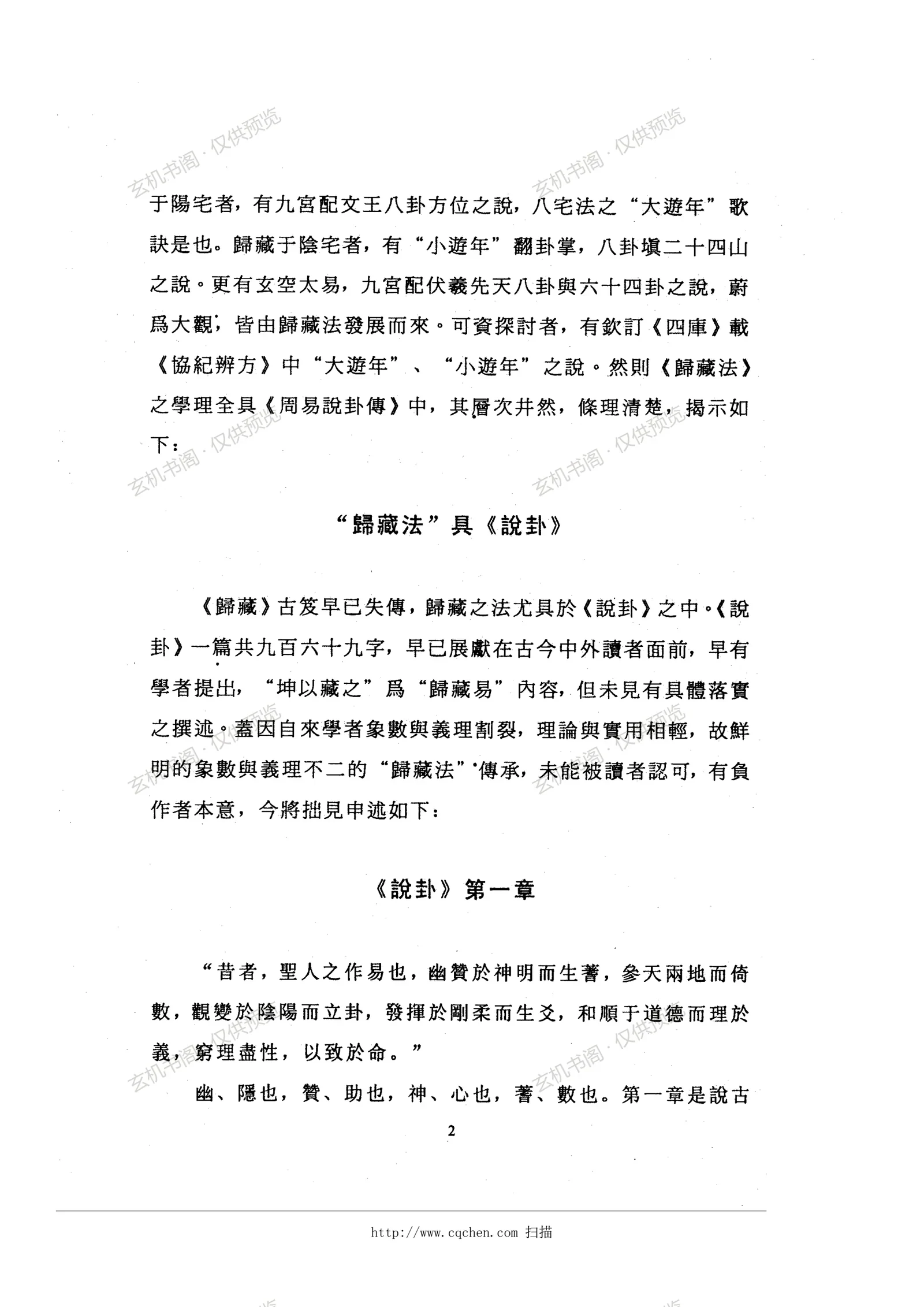
The Guicang method in the Shuogua
Observing yin-yang changes to set hexagrams
Four-pillar Guicang fate palace method
Nine Stars and annual travel in houses
Fuxing water method and Taiyi Xuankong
Hetu-Luoshu and compass palace charts
Complete sexagenary Guicang table
Key Points
Grounds Guicang in the Shuogua rather than the lost Guicang book
Core rule: merge two lines into one, two hexagrams into one
Odd numbers map to yang trigrams, even numbers to yin trigrams
Links Guicang to house travel years, Fuxing water method, and Taiyi Xuankong
Includes a sexagenary Guicang table for practical use