Reading guide
Content guideOverview
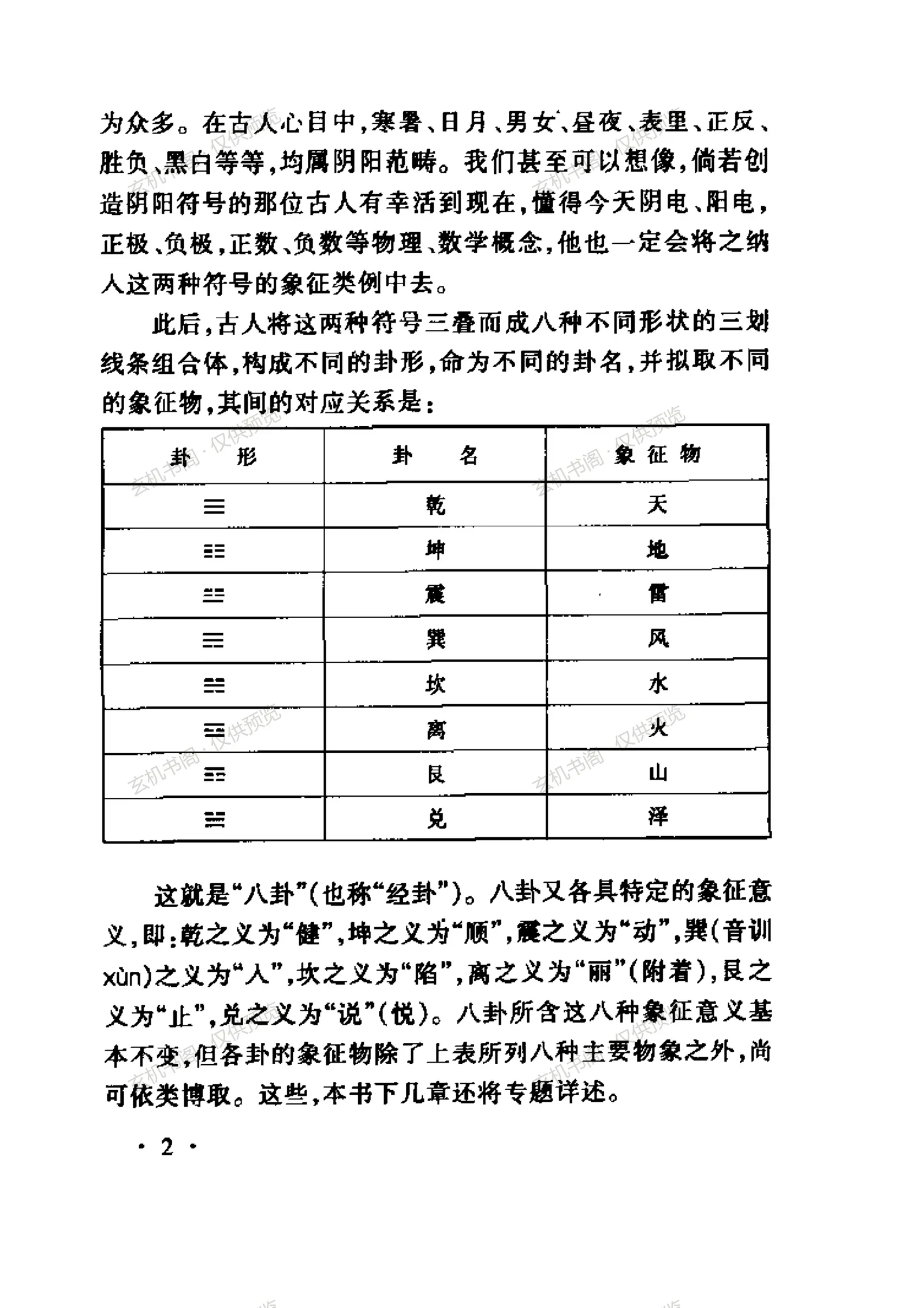
This is an introductory book on the Zhouyi by Zhang Shanwen. The preface notes that fortune-tellers once used the slogan 'King Wen's divine hexagrams' to attract clients, giving the Zhouyi a mysterious aura, while generations of scholars—from Confucius, who read the Yi so often that the leather bindings wore out, through Meng Xi, Jiao Gan, Jing Fang, Zheng Xuan and Wang Bi in the Han–Wei period, to Kong Yingda, Li Dingzuo, Shao Yong, Zhou Dunyi, Cheng Yi and Zhu Xi in the Tang–Song, and Hu Yigui, Lai Zhide, Huang Daozhou and Li Guangdi in later dynasties—devoted themselves to Yi studies, making it a specialized field. Zhu Xi also said the Zhouyi is hard to read because it uses hexagram images to hint at the principles of life. The author aims to address basic Yi questions, present the essential knowledge for studying the Zhouyi, and help beginners find the right path, noting that his teacher Professor Huang Shouqi reviewed the manuscript. The table of contents has thirteen chapters: what the Zhouyi contains; the meaning of its name; who wrote it; basic rules for reading it; how to understand its nature; the symbolic meanings of the eight trigrams; how to grasp the image-making principles of the sixty-four hexagrams; the significance of their order; why Qian and Kun are the gateway to the Zhouyi; whether it is used for divination; what the Taiji diagram is; the stages of transmission of Yi doctrine; and the main methods for studying the Zhouyi. Chapter one explains that the received Zhouyi consists of 'jing' and 'zhuan'; the jing contains the hexagram symbols and judgments and line texts. It begins with the yin and yang symbols (a broken line for yin, a solid line for yang), tripled into the eight trigrams, with a table of Qian/heaven, Kun/earth, Zhen/thunder, Xun/wind, Kan/water, Li/fire, Gen/mountain and Dui/marsh, cites Zhu Xi's 'Song of the Eight Trigrams' from the Zhouyi Benyi to aid memorization, and then explains how the trigrams are doubled into the sixty-four hexagrams, divided into lower (inner) and upper (outer) trigrams. Written in question-and-answer form, the book suits beginners seeking a systematic grasp of basic Yi concepts and approaches.
Contents
Preface: origins of the book and paths into Yi studies
Ch.1 What the Zhouyi contains
Ch.2 The meaning of the name Zhouyi
Ch.3 Who wrote the Zhouyi
Ch.4 Basic rules for reading the Zhouyi
Ch.5 How to understand the nature of the Zhouyi
Ch.6 Symbolic meanings of the eight trigrams
Ch.7–13 Hexagram imagery, order, Qian and Kun, divination, Taiji diagram, transmission and methods
Key Points
Thirteen Q&A chapters cover contents, name, authorship and nature
The received Zhouyi consists of the 'jing' and 'zhuan' sections
Traces the line from yin-yang symbols to trigrams and hexagrams
Cites Zhu Xi's mnemonic song for the eight trigrams
Discusses whether the Zhouyi is for divination and what the Taiji diagram is
Introduces stages of Yi transmission and main research methods