Reading guide
Content guideOverview
This book links Yijing principles and yin-yang Five Elements theory with lottery number analysis, attempting to build an operable prediction system for number selection. It opens with a general discussion of the lottery industry and the debate over whether winning numbers can be predicted, then lays out theoretical foundations drawn from Yijing reasoning and number theory, yin-yang, the Five Elements, holographic theory, and probability statistics. It goes on to explain calendars, the sexagenary cycle, and the correspondence between the twelve earthly branches and numbers, and analyzes structural elements of winning numbers such as main and secondary numbers, theme types, number patterns and combinations, the Five Elements attributes of positional numbers, odd-even properties, and total sums. The core chapters establish more than a dozen subsystems—sexagenary, lunar calendar, Gregorian calendar, nayin, theme, number pattern, Five Elements, odd-even, and zodiac—along with their evolution systems, and present prediction rules based on generation-restraint trajectories, theme trajectories, Nine Palace stars, addition and equal-value multiplication trajectories for each position. The final chapter summarizes overall structural prediction methods for themes and theme types. The methods are numerous and finely layered, suitable for readers interested in Yijing-number arts and lottery number structure analysis, though the predictive validity should be viewed rationally.
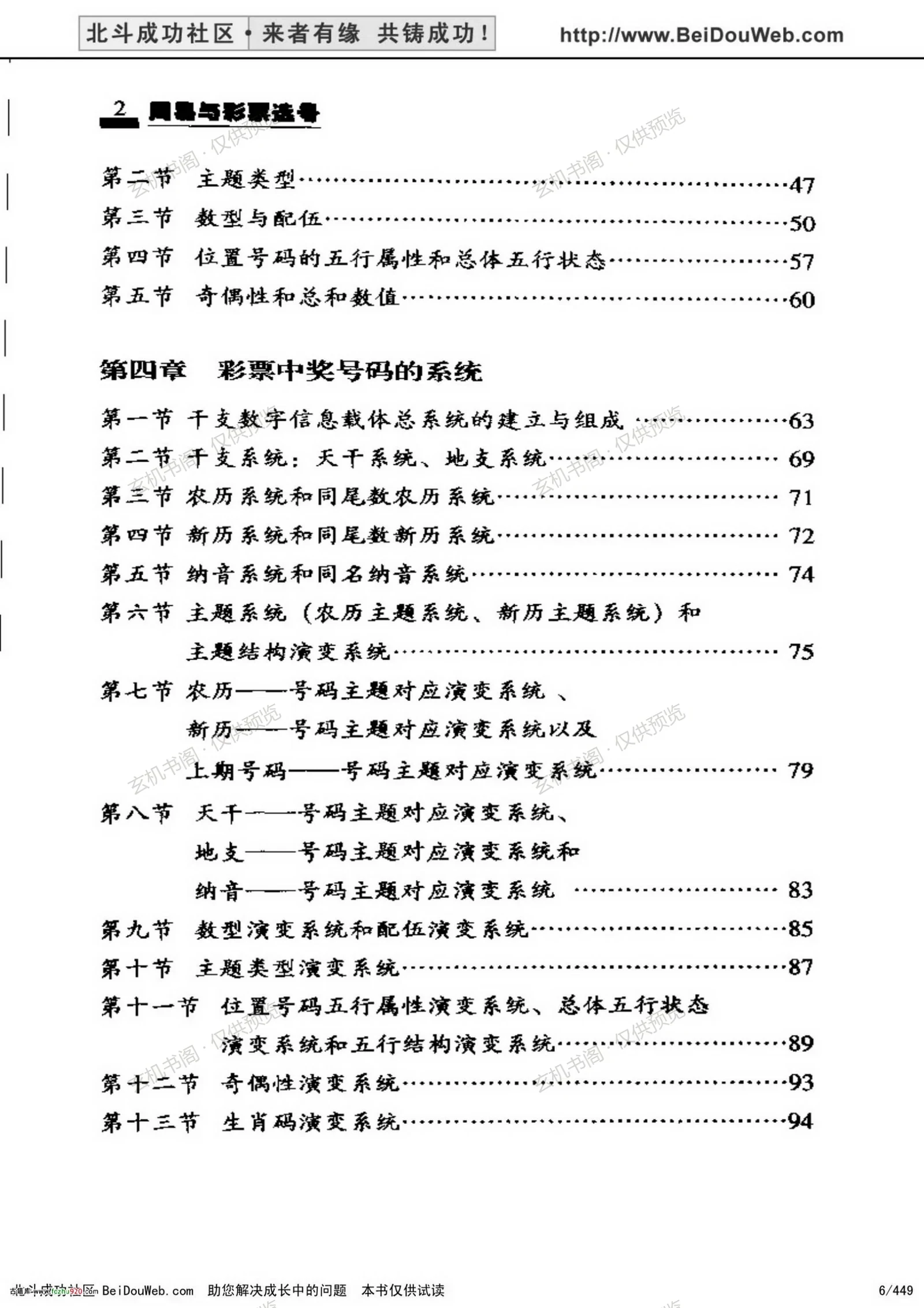
Contents
General introduction: lottery industry and the debate on predictability
Ch.1: Yijing reasoning, yin-yang Five Elements, holography, probability
Ch.2: Calendars, sexagenary cycle, earthly branches and numbers
Ch.3: Number structure—themes, patterns, Five Elements, odd-even
Ch.4: Sexagenary, calendar, nayin, theme and other subsystems
Ch.5: Positional prediction via generation-restraint, themes, Nine Palaces
Ch.6: Overall structural prediction of themes and theme types
Key Points
Builds on Yijing reasoning, yin-yang Five Elements, holography and statistics
Establishes sexagenary, lunar, Gregorian, nayin and other number systems
Gives positional prediction rules via generation-restraint, themes and Nine Palaces
Proposes verification and prediction rules such as 'things manifest by the third time'
Highly subdivided structure with many named methods and practical techniques