Reading guide
Content guideOverview
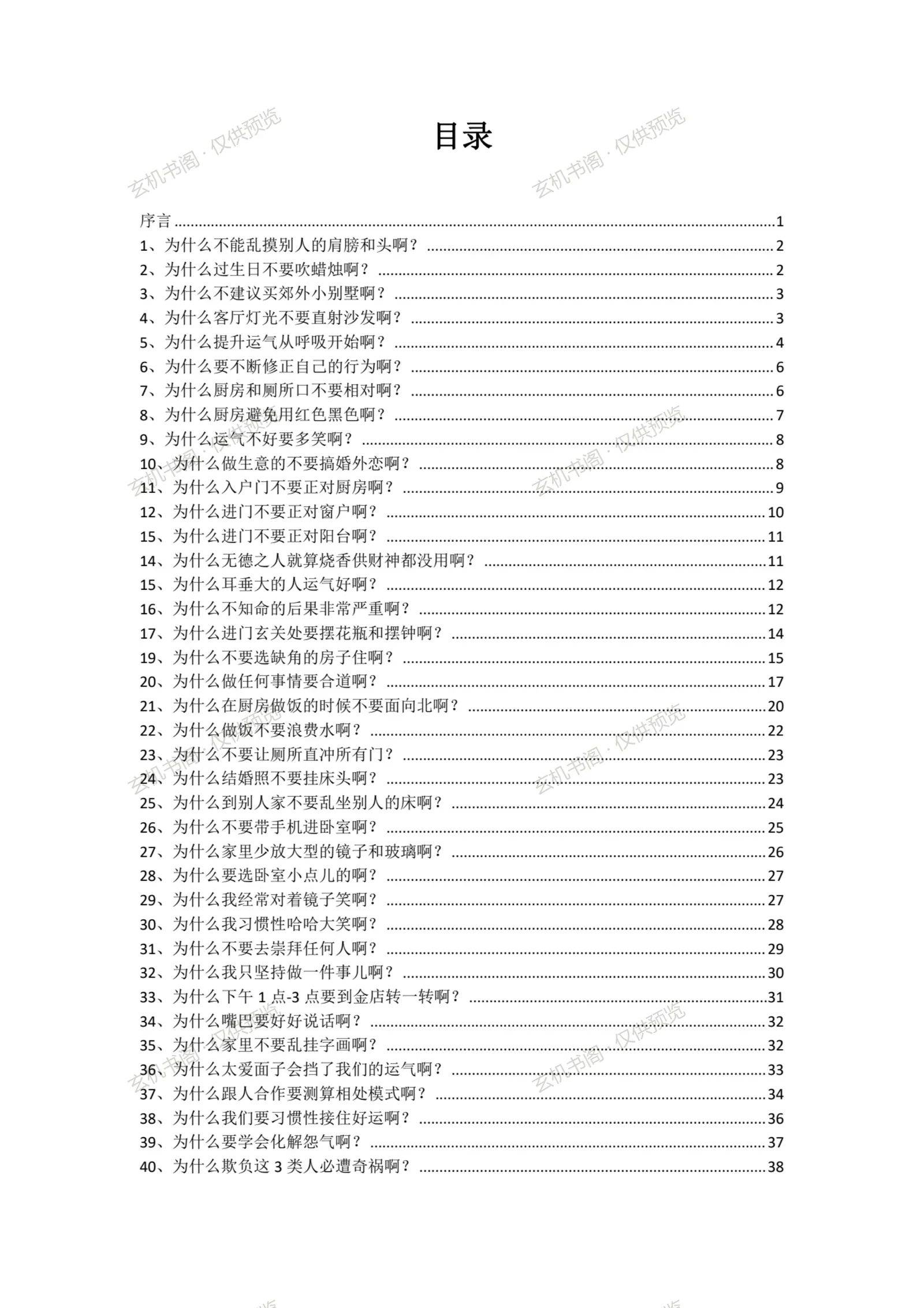
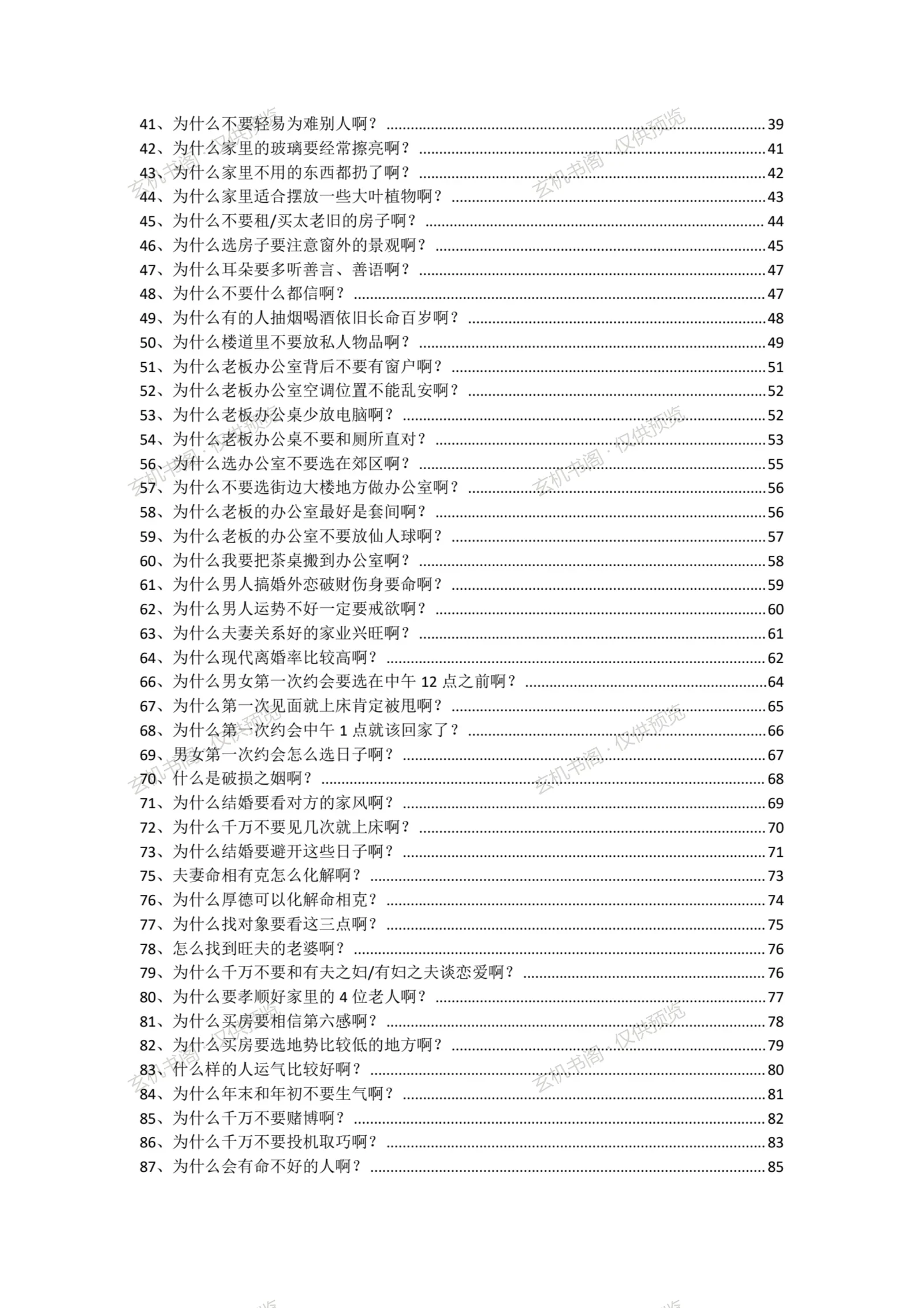
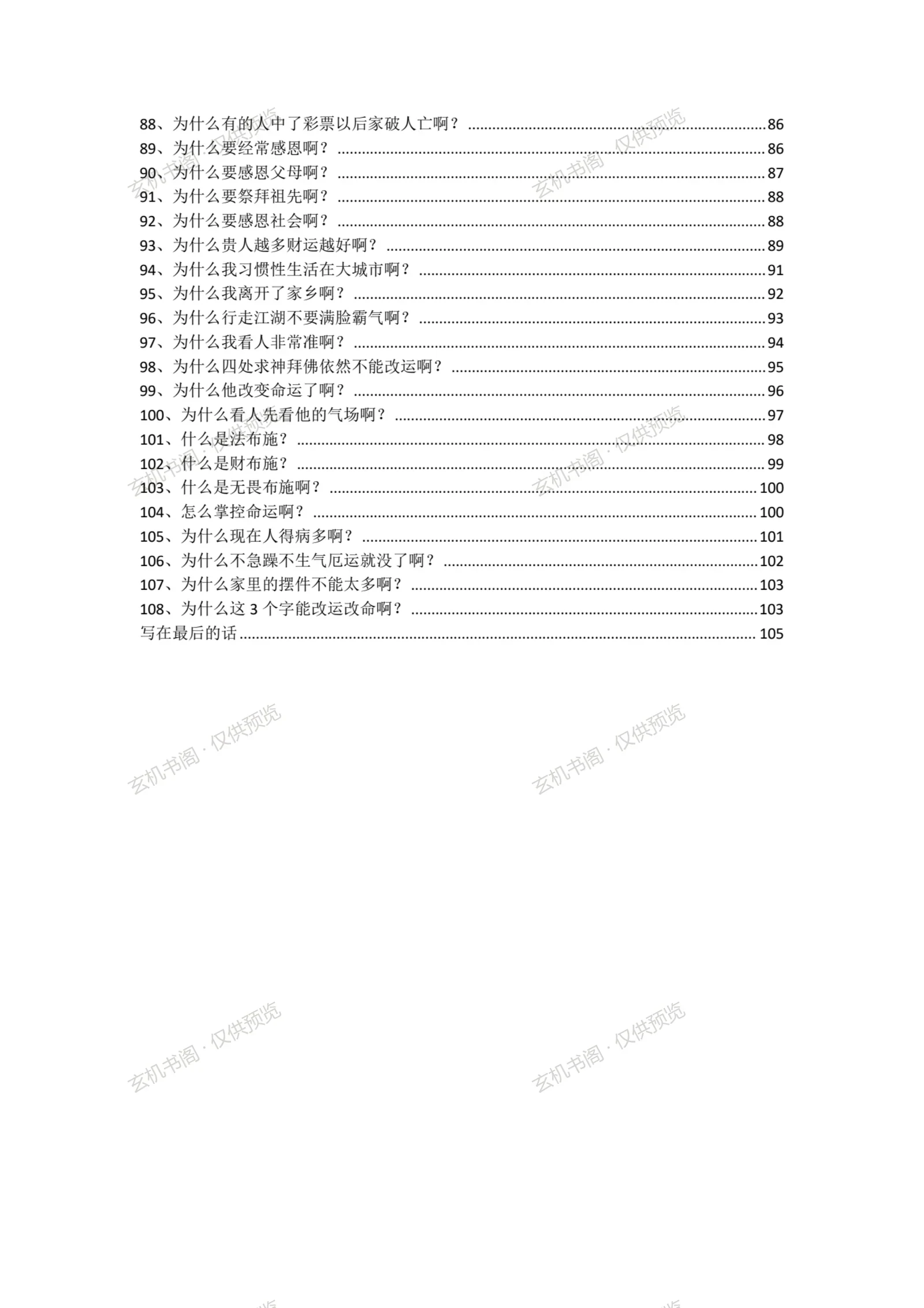
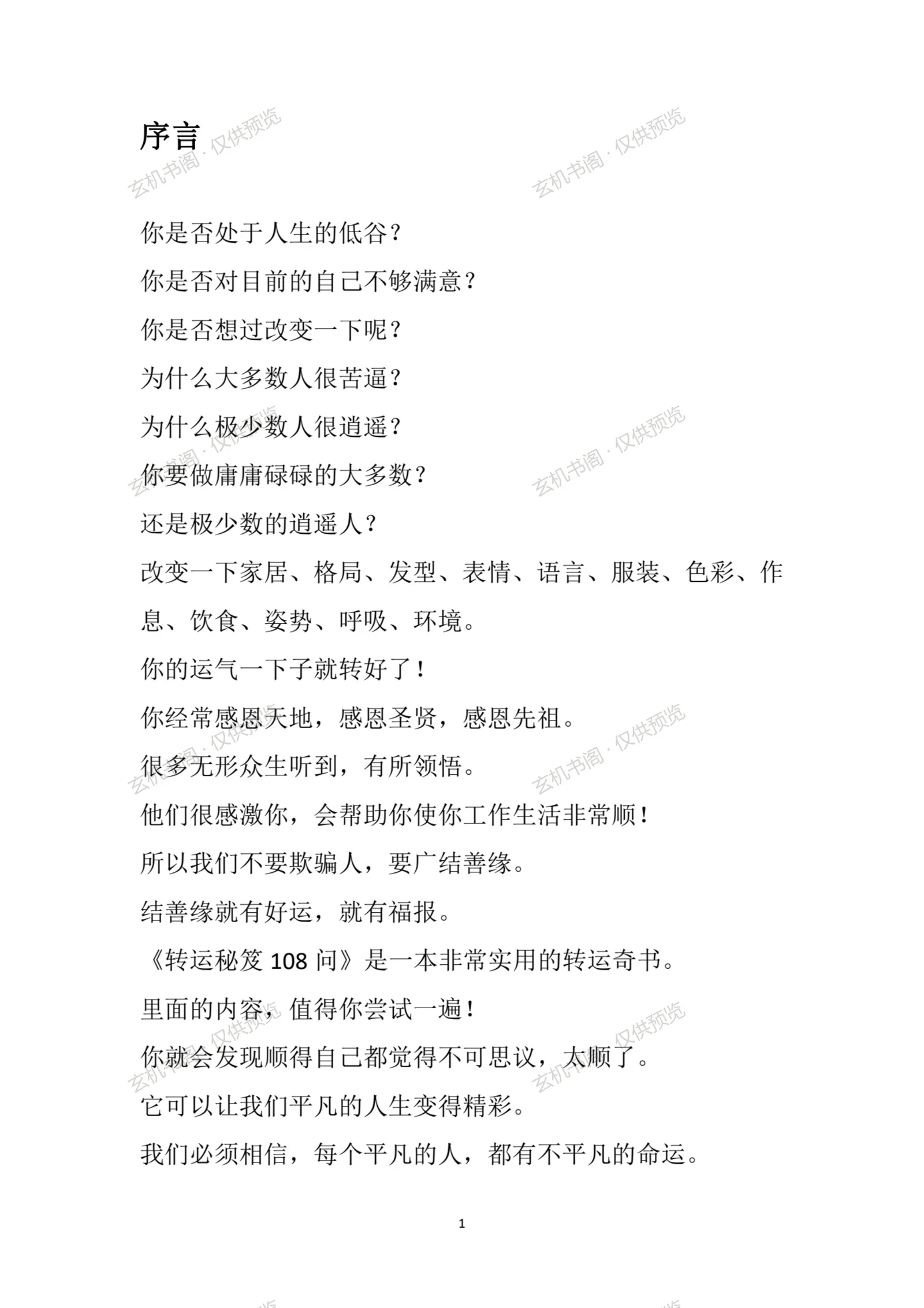
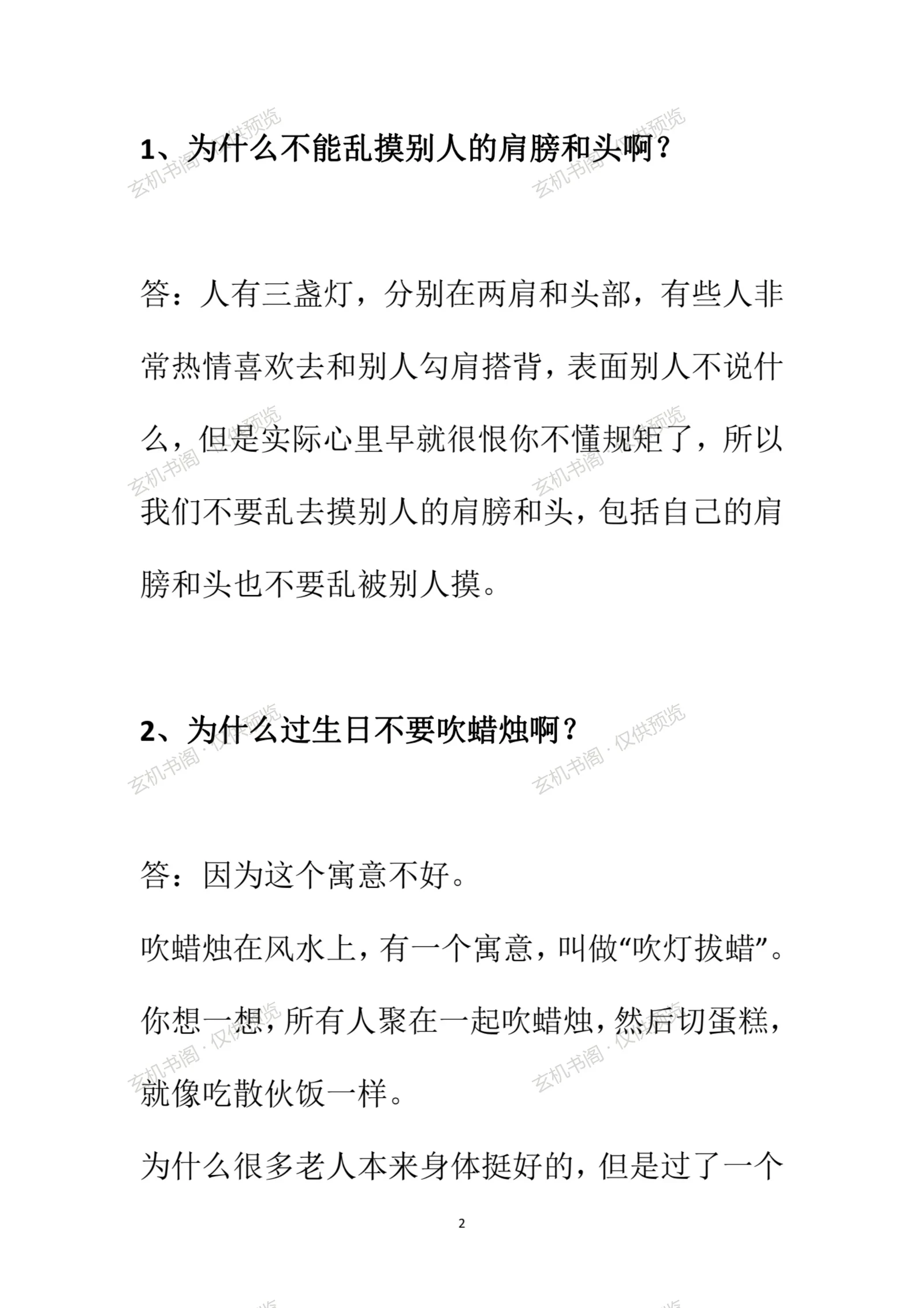
This book is organized as 108 questions, each asking “Why…” about a everyday situation and then giving a short answer. The contents mix household feng shui, folk taboos, home and office arrangement, and moral advice. The table of contents covers three broad areas: home and office environments, such as living-room lighting, kitchen and toilet placement, entryway ornaments, mirrors and glass, and desk orientation; daily customs and conduct, such as not touching others' shoulders and heads, not blowing out birthday candles, not hanging wedding photos above the bed, and not sitting on others' beds; and marriage, wealth, and virtue, such as extramarital affairs causing financial loss, marital harmony and family fortune, gratitude, giving, and emotional control. The preface recommends changing one's luck by adjusting home layout, hairstyle, facial expression, speech, clothing, color, daily routine, diet, posture, breathing, and environment, and encourages gratitude and good deeds. The first entry explains the taboo on touching shoulders and heads with the image of “three lamps” on the body, and the second explains birthday candles through the phrase “blowing out the lamp and pulling the candle,” showing that the reasoning relies on folk beliefs and metaphors rather than formal divination methods.
Contents
Preface: changing luck through home, conduct, and mindset
Daily customs and bodily taboos (Q1–10)
Entryway, kitchen, and toilet layout (Q11–24)
Bedroom, mirrors, and household objects (Q25–40)
House selection, offices, and desk feng shui (Q41–60)
Marriage, date selection, and couple compatibility (Q61–80)
Wealth, gratitude, giving, and mastering fate (Q81–108)
Key Points
108 short “why” questions make it easy to look up specific topics.
Content leans toward everyday feng shui and folk taboos in home, office, marriage, and conduct.
Explanations often use folk sayings and metaphors rather than formal methods.
The preface frames luck-changing as practical adjustments to environment, routine, expression, and speech.
It stresses gratitude, good deeds, and emotional control as part of changing one's fate.