Reading guide
Content guideOverview
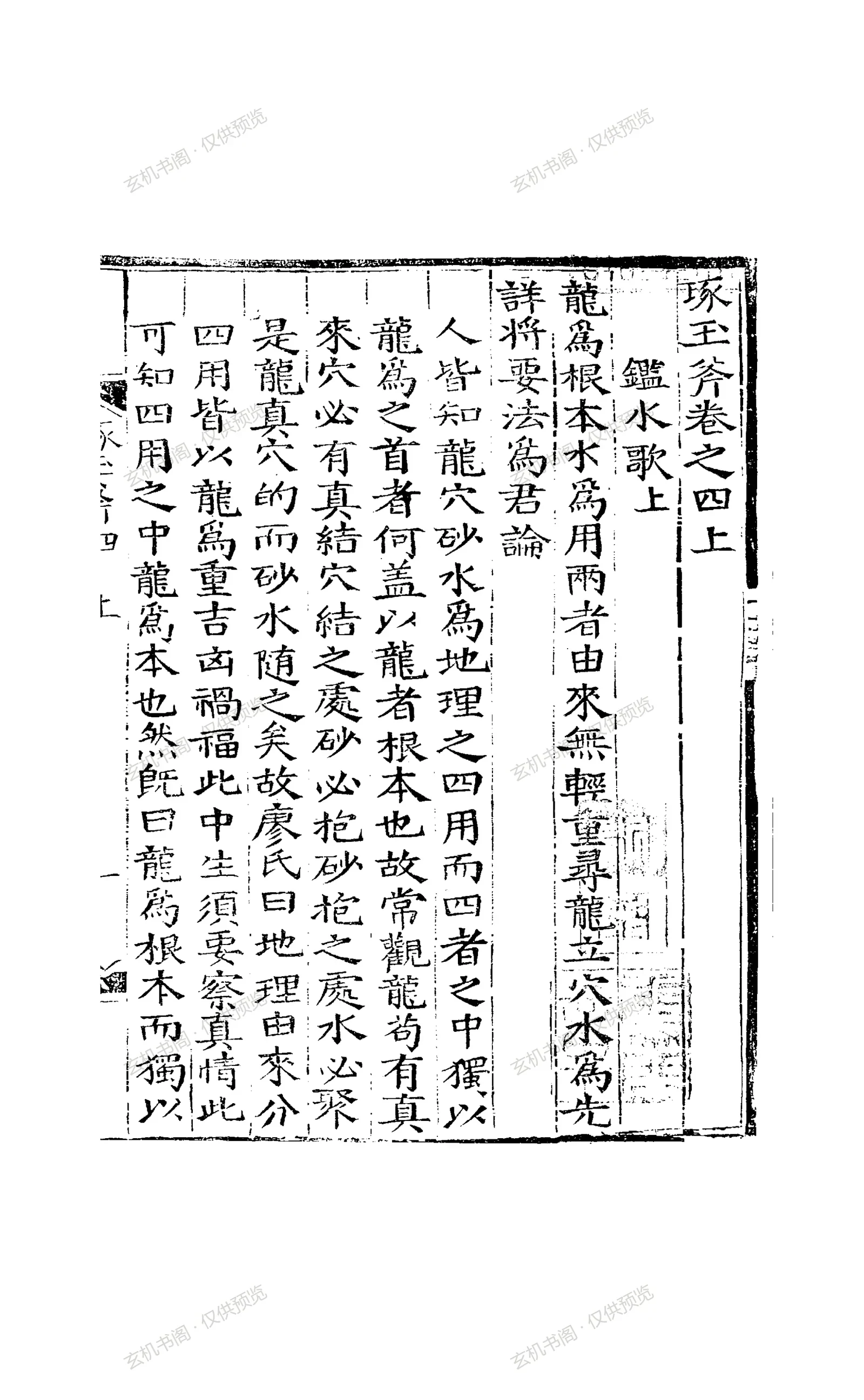
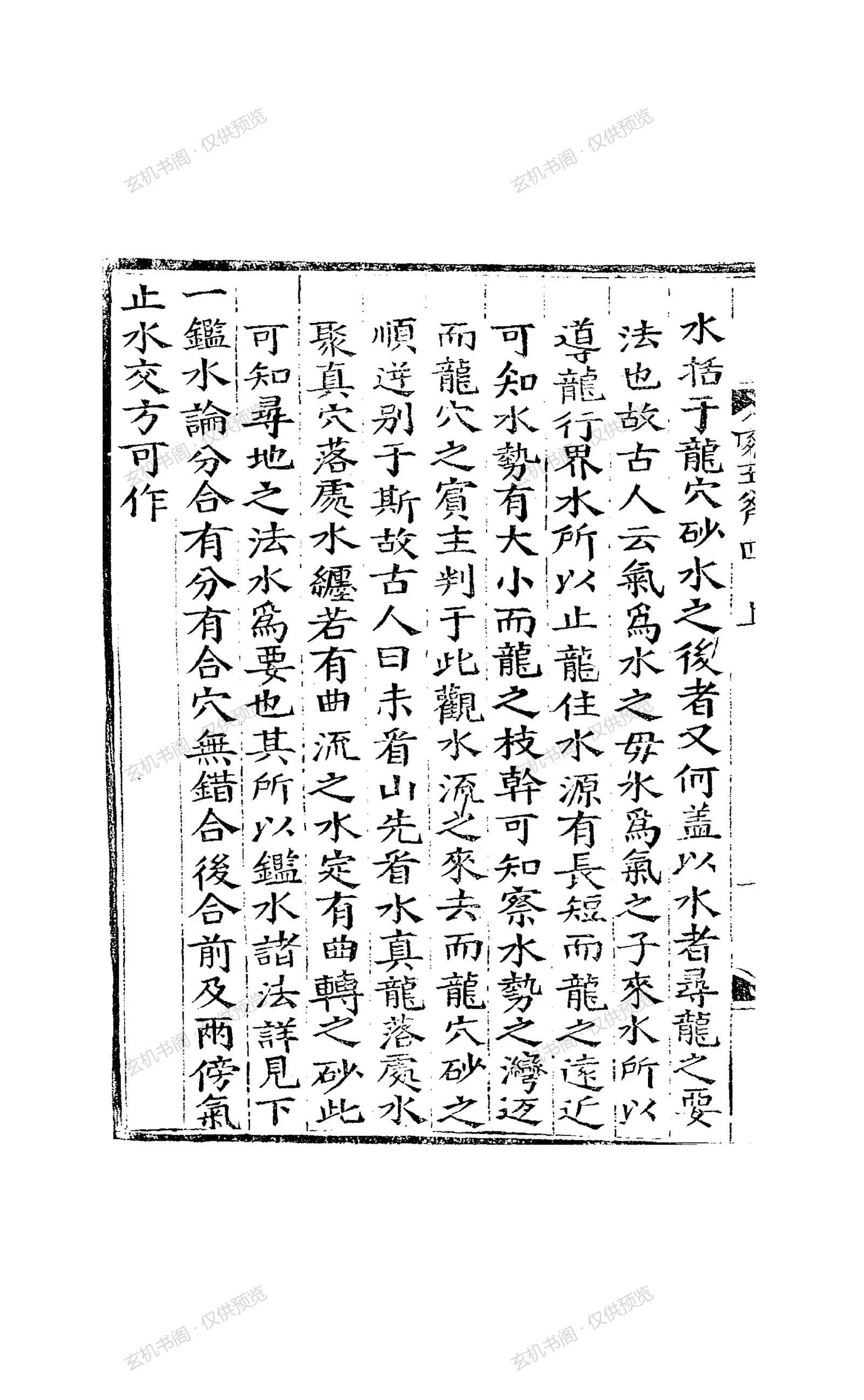
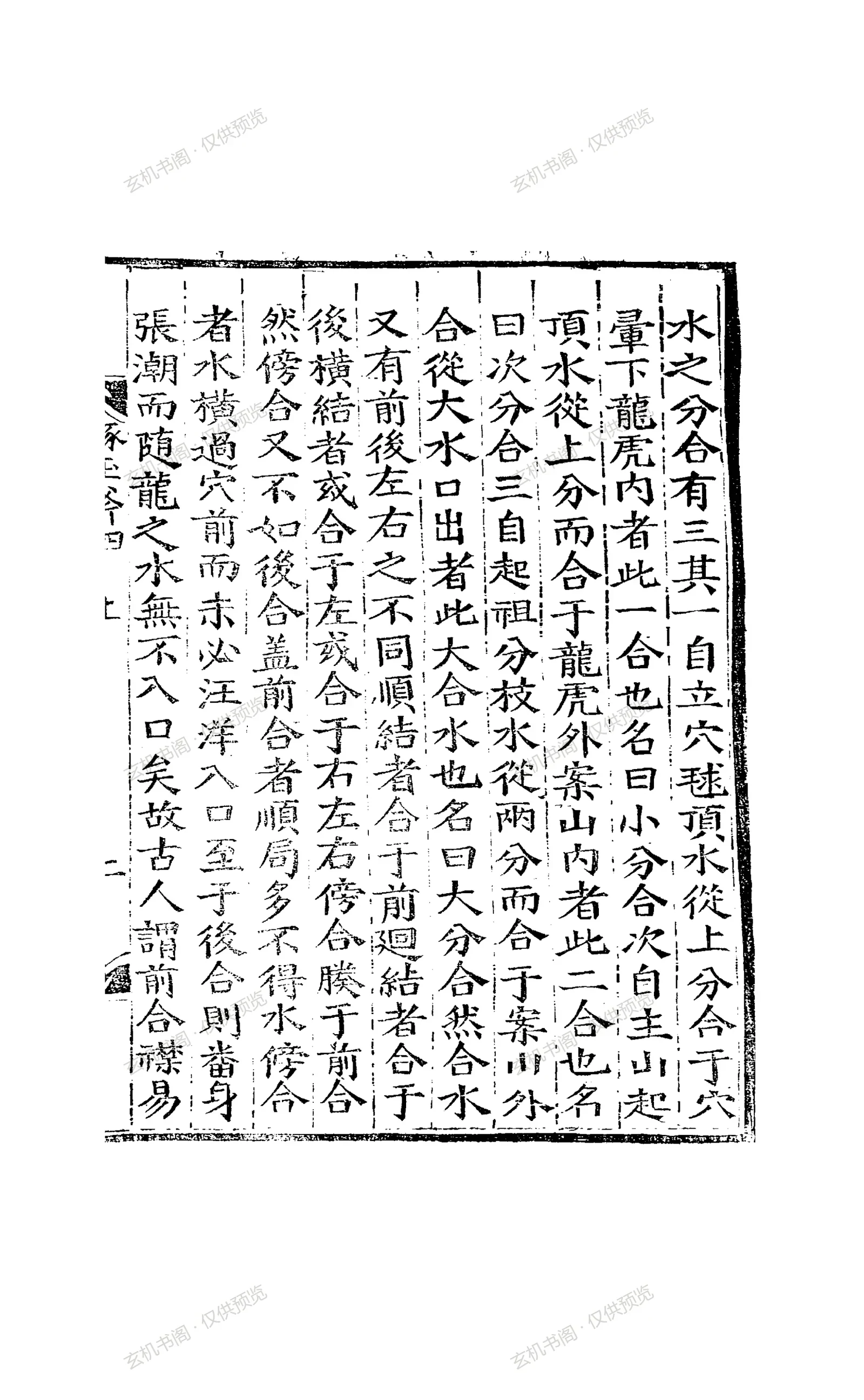
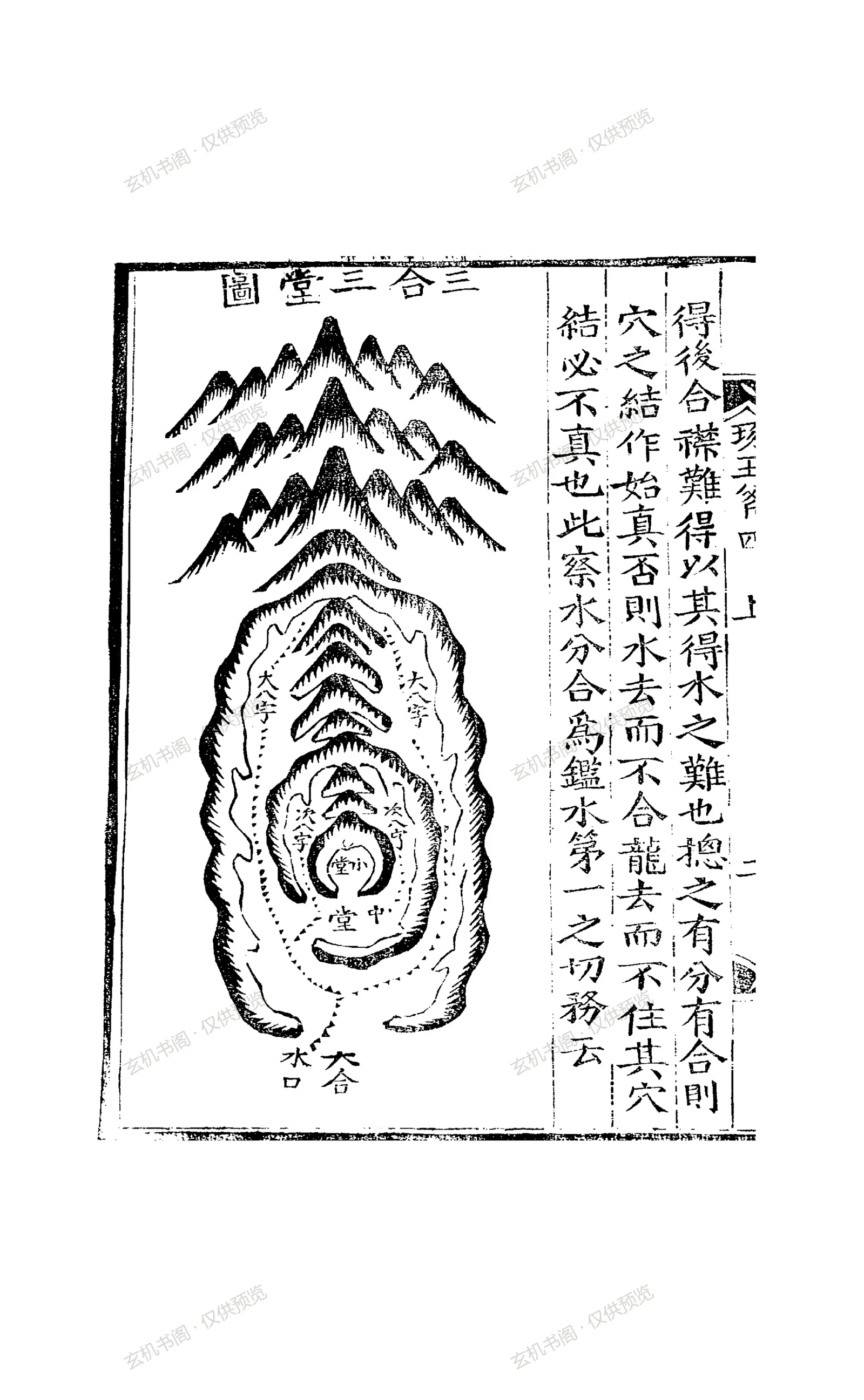
This is the upper part of volume four of Zhuo Yu Fu, a classical Chinese text on kanyu (fengshui geography). The opening pages present the 'Mirror-Water Song' and a discourse on the essential methods, arguing that the dragon is the root and water is the function. The text explains how dragon, point, sand and water relate to one another: the dragon is fundamental, and only where sand encircles and water gathers can a true point form. It teaches readers to examine the dragon first and then the coming and going of water, judging its curves, direction and size in order to assess the host-guest relation and authenticity of a site. A detailed section on the division and convergence of water introduces small, large and triple convergences, and includes diagrams such as the 'Three Convergences and Three Halls' chart to show how water is enclosed layer by layer from the inner to the outer hall. The language is classical and terminology-dense, making the book suitable for readers with some background in fengshui who wish to study water methods and site assessment in depth.
Contents
Title page and opening of the 'Mirror-Water Song'
Essential methods: dragon as root, water as function
Host-guest and authenticity of dragon, point, sand and water
Division and convergence of water: small, large and triple
Diagrams of the Three Convergences and Three Halls
Practical notes on front and rear convergence in site formation
Key Points
Dragon is the root and water the function; dragon dominates the four elements
A true point requires true convergence where sand embraces and water gathers
Examine the dragon first, then the coming and going of water
Water converges in layers: small, large and triple halls
Front convergence is easier than rear; correct division and convergence confirms a true point