Reading guide
Content guideOverview
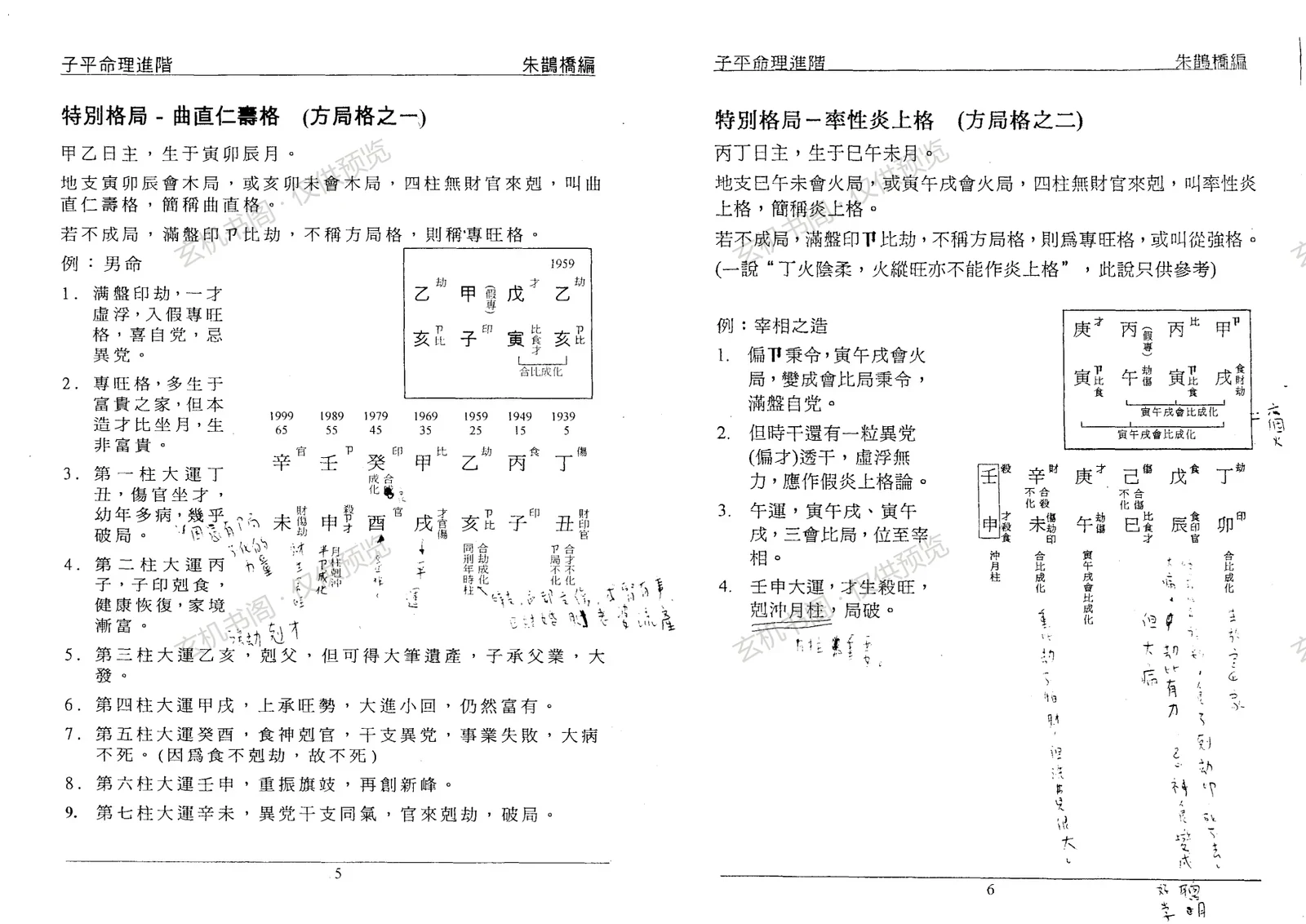
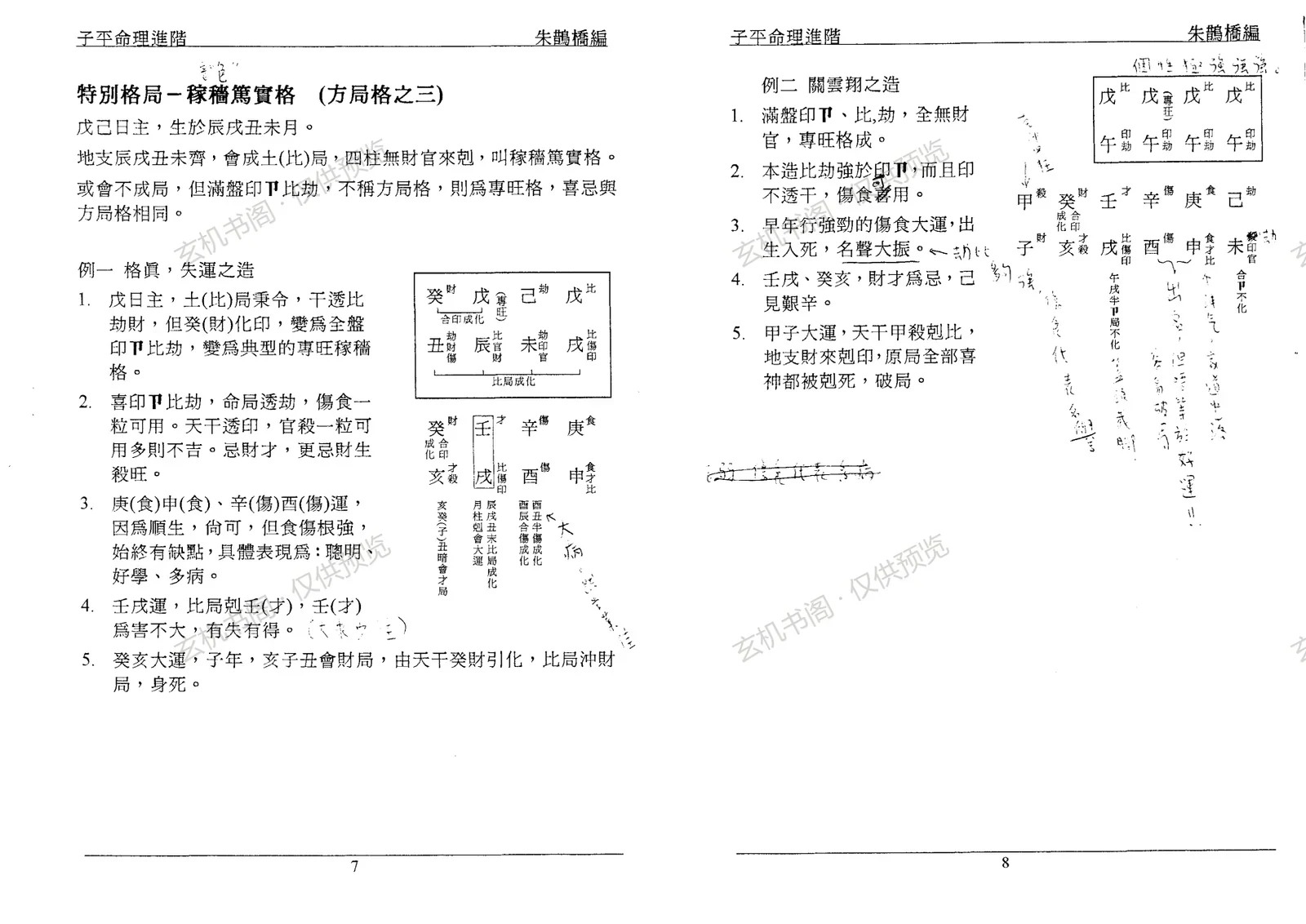
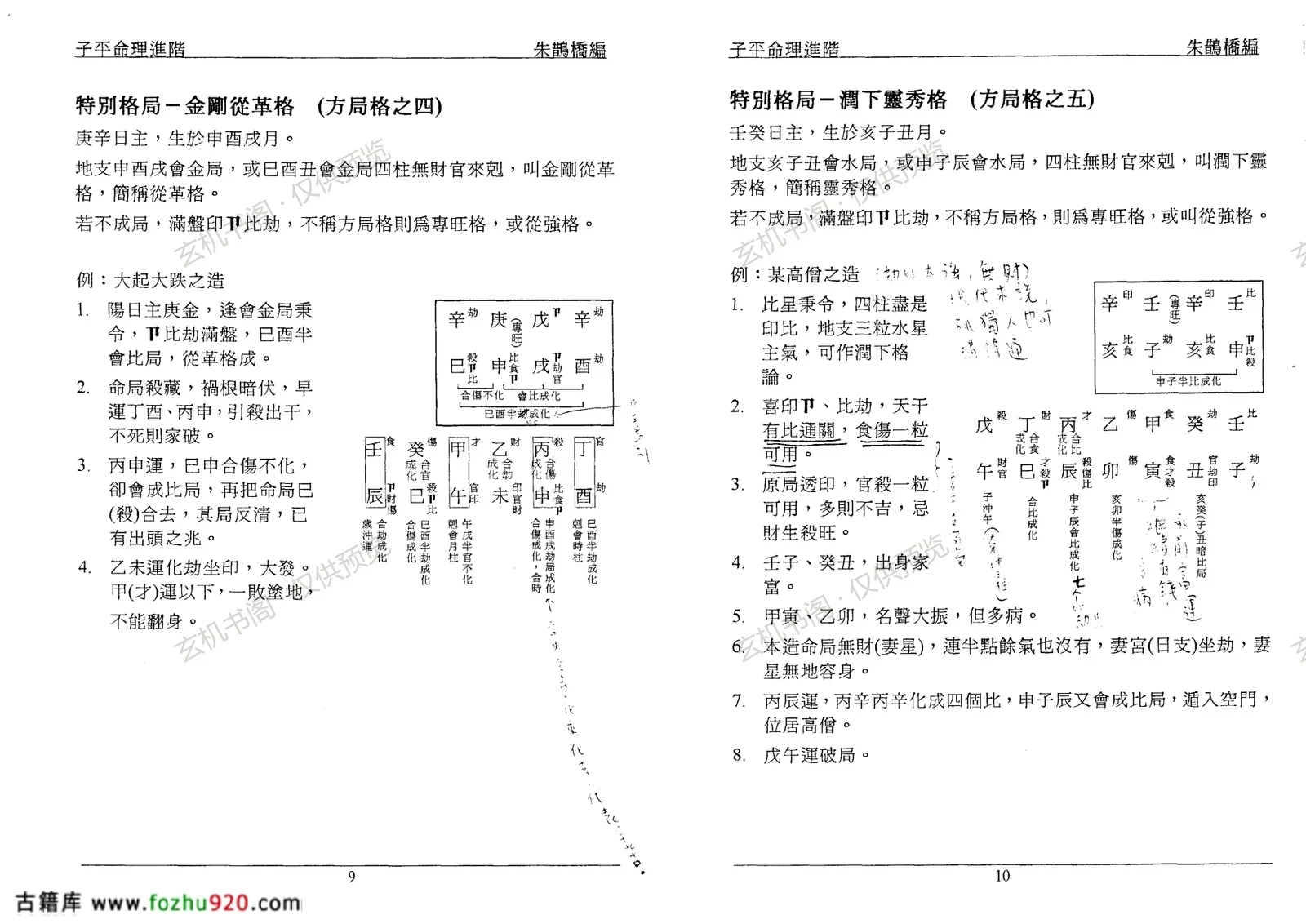
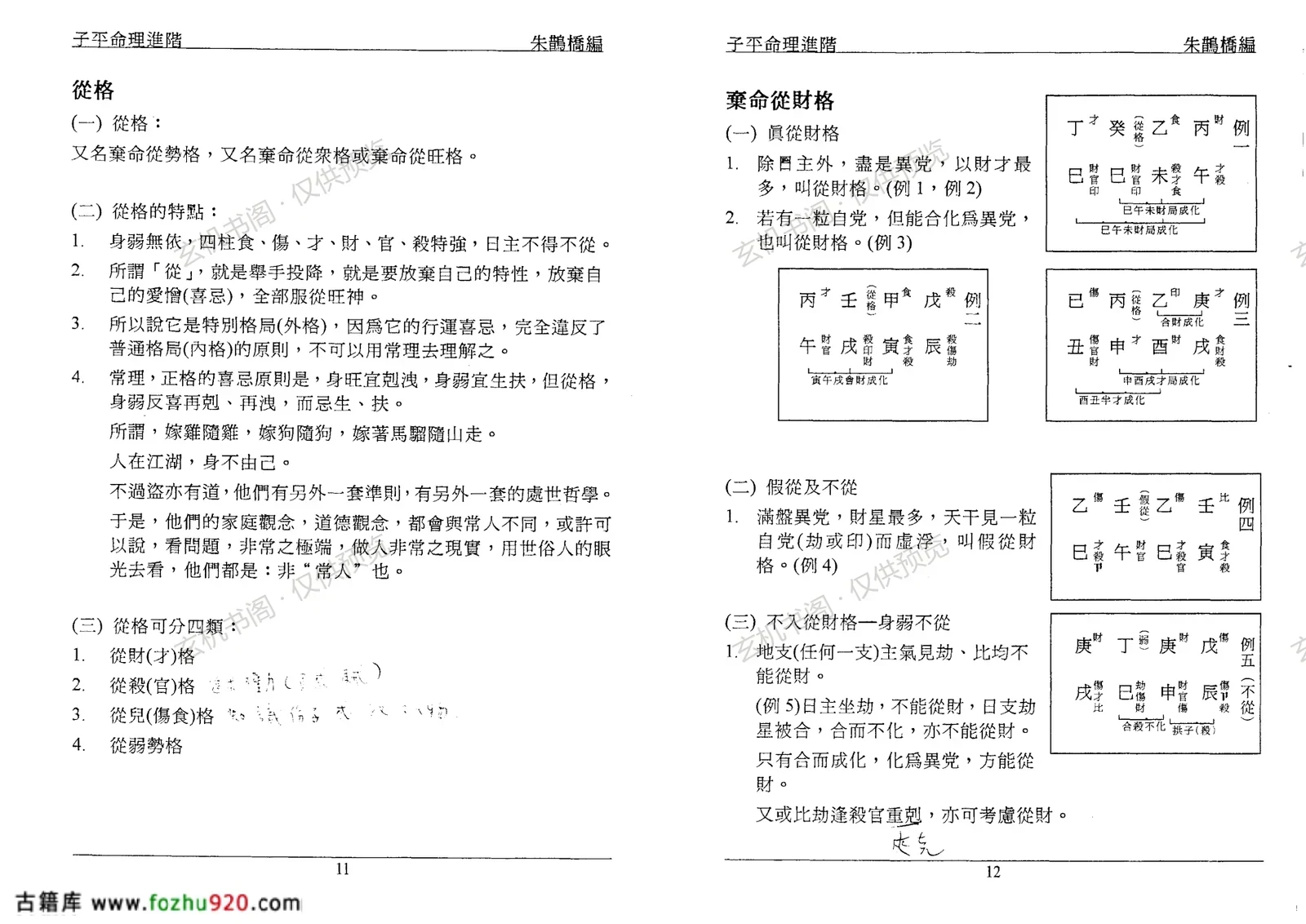
These visible pages of Zhu Queqiao's advanced Zi Ping (Four Pillars) lecture notes focus on special chart patterns. It first defines the Zhuan Wang pattern (also called Zhuan Wang Cong Qiang), distinguishing true from false forms, with yin and bi-jie as favorable and wealth/officer as unfavorable, illustrated by charts showing how luck cycles clash with the month branch and break the pattern. It then presents the Fang Ju pattern, described as the most typical type of Zhuan Wang, divided by the five elements into Qu Zhi Ren Shou (wood), Shuai Xing Yan Shang (fire), Jia Se Du Shi (earth), Jin Gang Cong Ge (metal), and Run Xia Ling Xiu (water), each with formation rules and preferences. Finally it turns to Cong Ge, also called Qi Ming Cong Shi, Qi Ming Cong Cai, or Qi Ming Cong Wang, explaining how a weak day master with strong output, wealth, officer, or killing must follow the dominant force, and distinguishing true Cong Cai from false or non-following cases. The text is rule-based with worked charts, making it an advanced pattern-specific reference for readers who already know Four Pillars casting and the Ten Gods.
Contents
Zhuan Wang pattern: true and false formation criteria
Zhuan Wang preferences: yin and bi-jie favored, wealth/officer avoided
Fang Ju patterns: the most typical Zhuan Wang type
Qu Zhi Ren Shou (wood) with chart example
Shuai Xing Yan Shang (fire) with a minister's chart
Jia Se Du Shi (earth) with Guan Yunxiang's chart
Jin Gang Cong Ge and Run Xia Ling Xiu
Cong Ge: true Cong Cai, false following, and non-following
Key Points
Zhuan Wang requires abundant yin, bi-jie, and branches forming a bi-jie combination.
False Zhuan Wang, with hidden or floating rival elements, brings short-lived wealth and status.
Fang Ju patterns follow the same preference rule: favor yin and bi-jie, avoid officer, killing, and wealth.
Cong Ge applies when the day master is weak and other forces dominate; its rules reverse normal patterns.
Worked charts show how luck cycles clash with the month branch and break patterns.