Reading guide
Content guideOverview
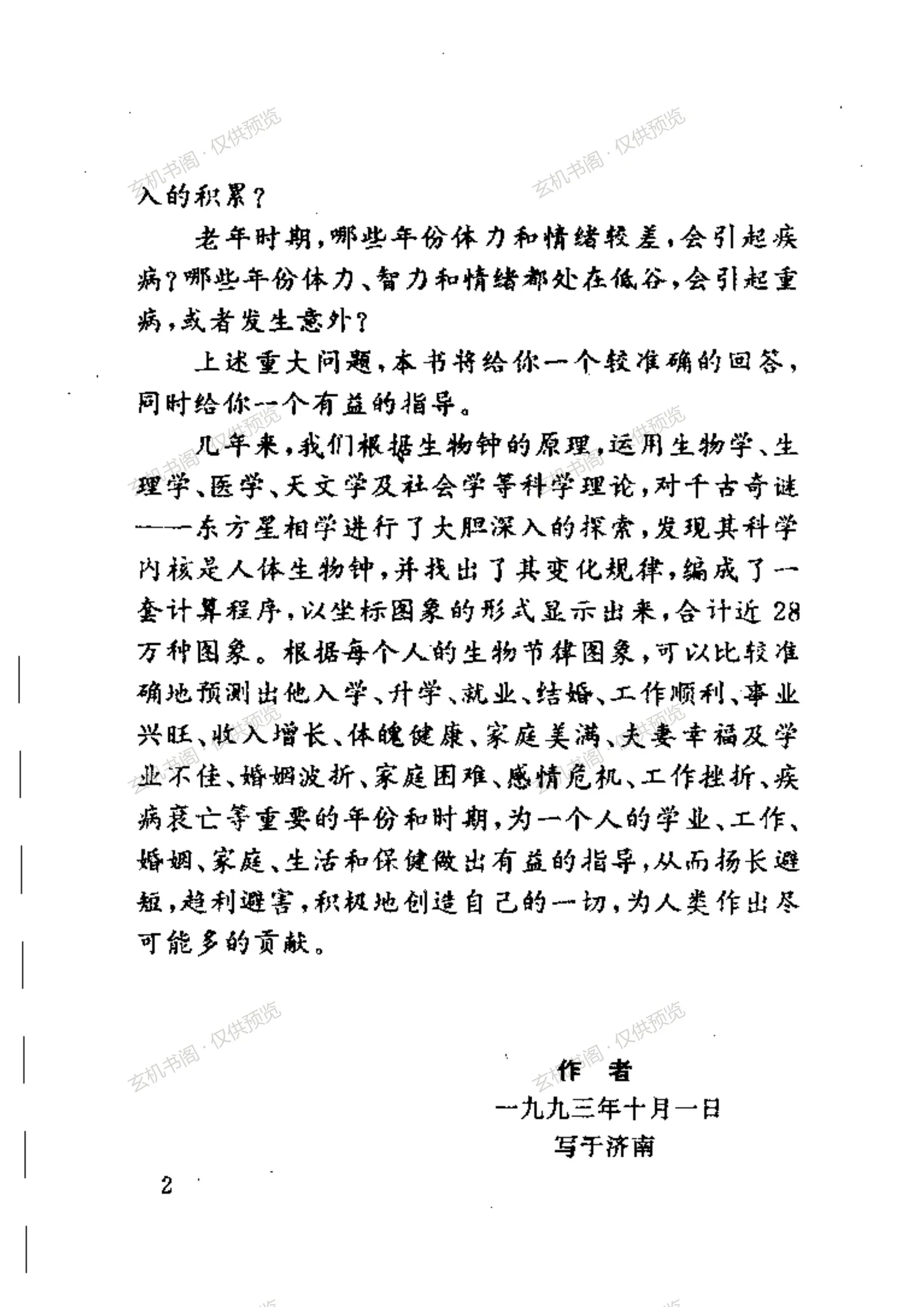
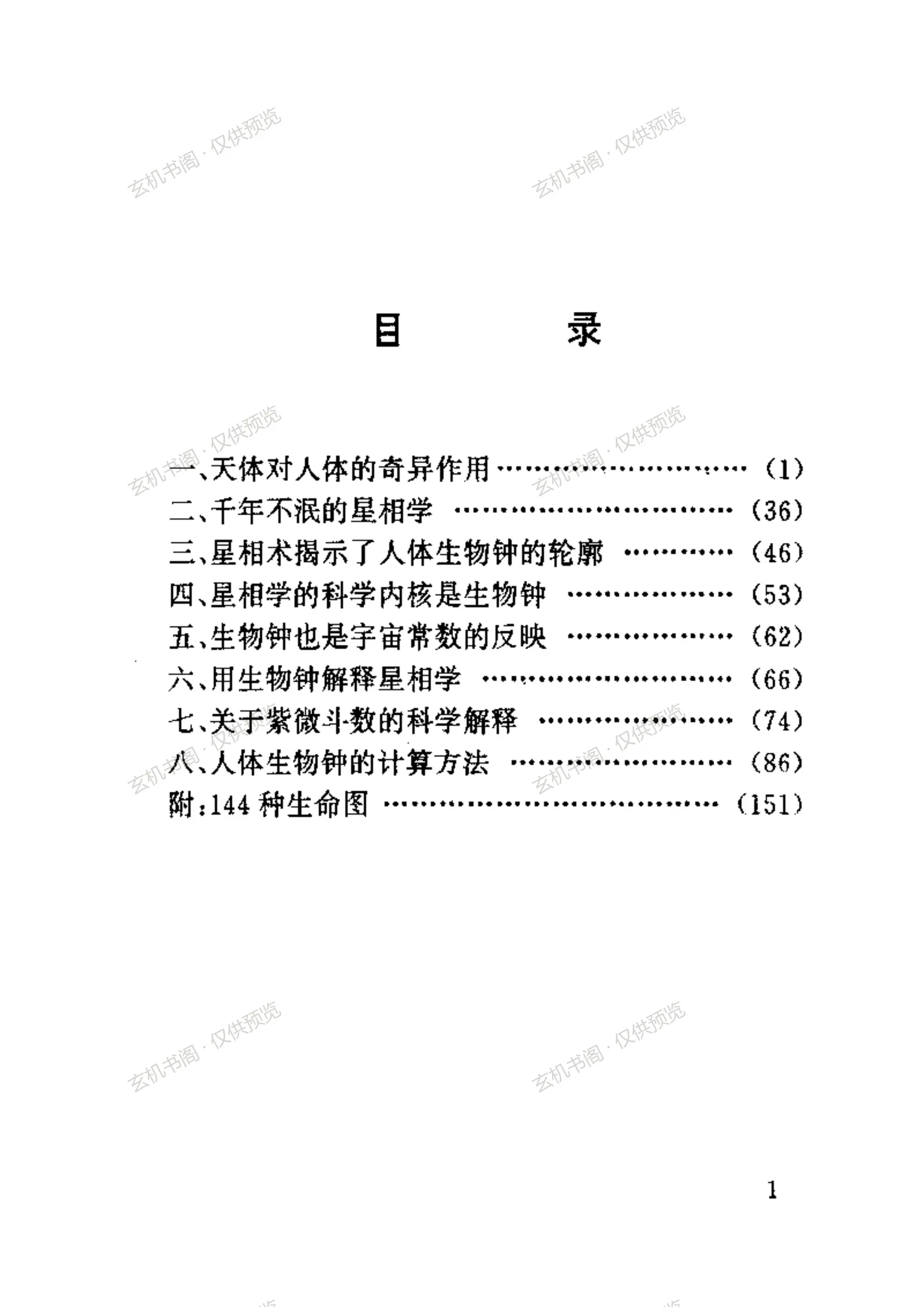
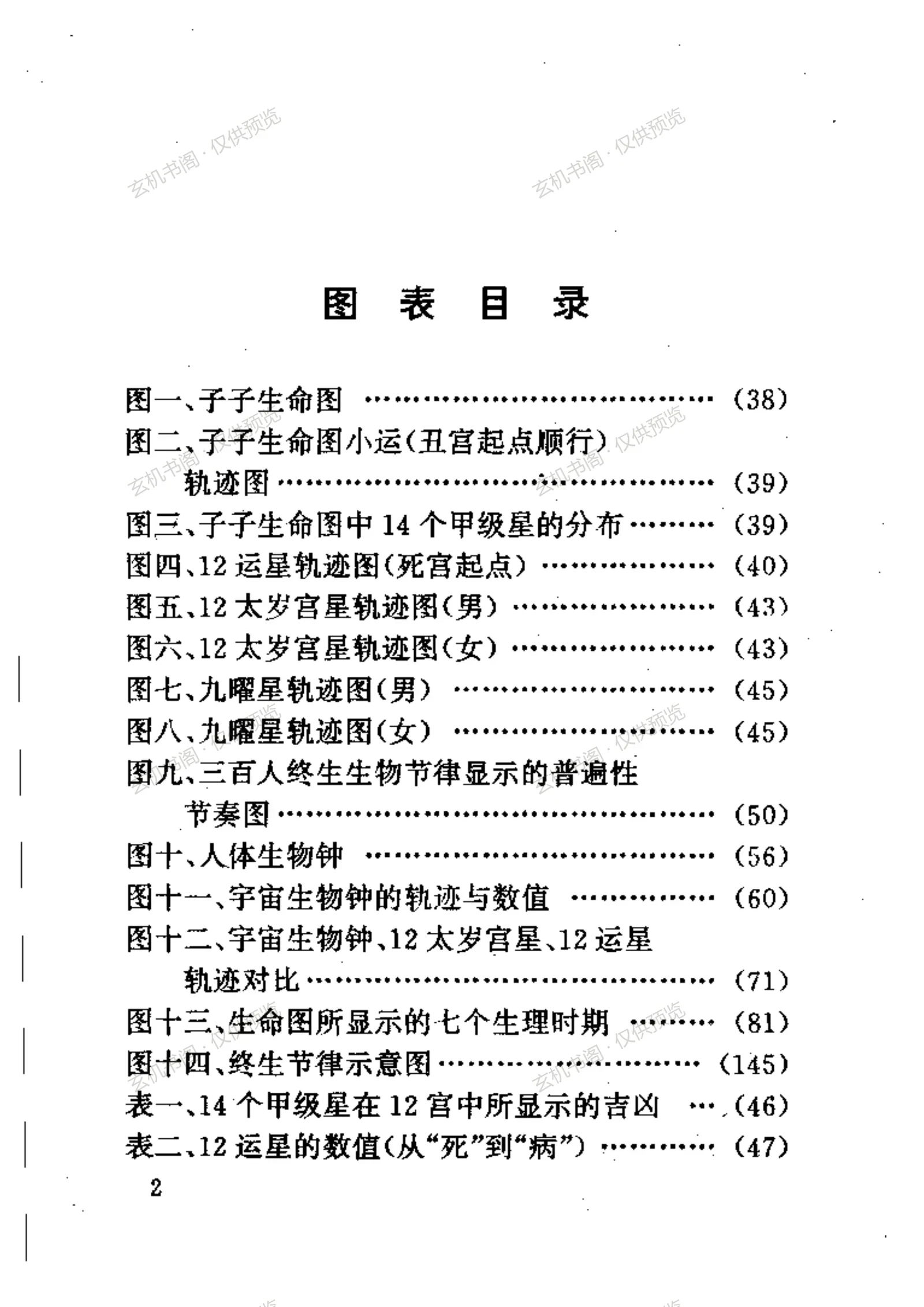
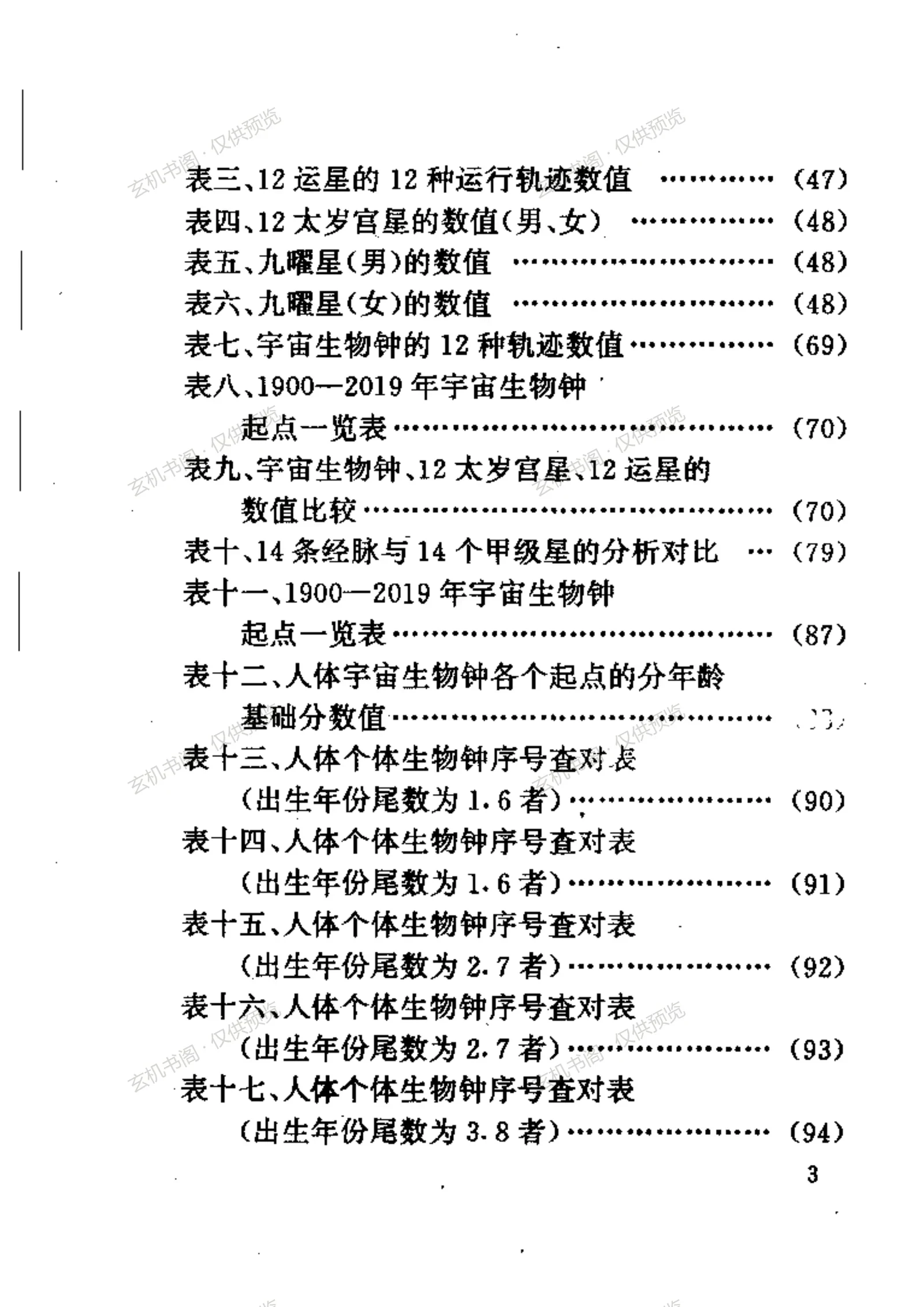
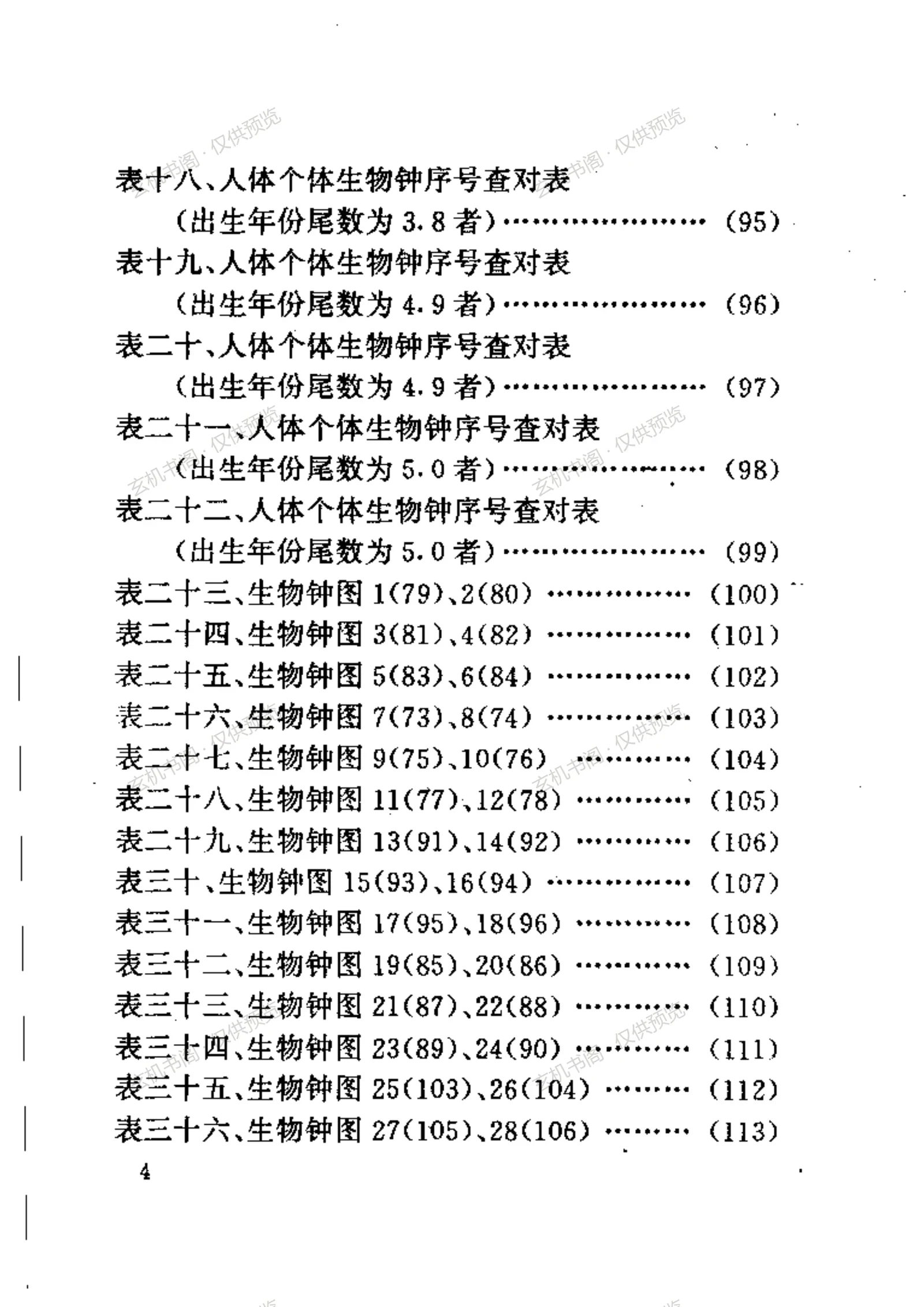
This book approaches Eastern astrology not through conventional star-lore commentaries but through a modern scientific lens. The preface proposes using biorhythm principles drawn from biology, physiology, medicine, astronomy, and sociology to examine changes in physical strength, intelligence, and emotion across childhood, adolescence, youth, middle age, and old age. The table of contents moves from celestial influences on the human body and the persistence of astrology to the claim that astrology reveals the outline of the human biological clock, that biorhythm is the scientific core of astrology, and that the biological clock reflects cosmic constants. A dedicated chapter offers a scientific explanation of Zi Wei Dou Shu, followed by methods for calculating the human biorhythm. The appendix contains 144 life diagrams, with figure lists covering life charts, minor-limit trajectories, twelve fortune-star trajectories, twelve Tai Sui palace-star trajectories, nine luminous star trajectories, cosmic biorhythm values, auspicious and inauspicious tables of fourteen major stars in the twelve palaces, comparisons between fourteen meridians and fourteen major stars, and lookup tables for cosmic biorhythm starting points from 1900 to 2019. The overall work is a calculation manual that uses Zi Wei Dou Shu vocabulary as a framework and biorhythm as its explanatory model.
Contents
Celestial influences on the human body
The enduring tradition of astrology
Astrology reveals the human biological clock
Biorhythm as the scientific core of astrology
The biological clock as a reflection of cosmic constants
Explaining astrology through biorhythm
A scientific explanation of Zi Wei Dou Shu
Biorhythm calculation methods and 144 life diagrams
Key Points
Explains Eastern astrology through biorhythm rather than traditional star-lore commentary.
Compares Zi Wei Dou Shu palaces, stars, and limits with cosmic biorhythm values.
Highlights peaks and troughs of physical, intellectual, and emotional states across life stages.
Uses numerous charts and lookup tables to form an operational system.
Includes 144 life diagrams indexed by the last digit of the birth year.