Reading guide
Content guideOverview
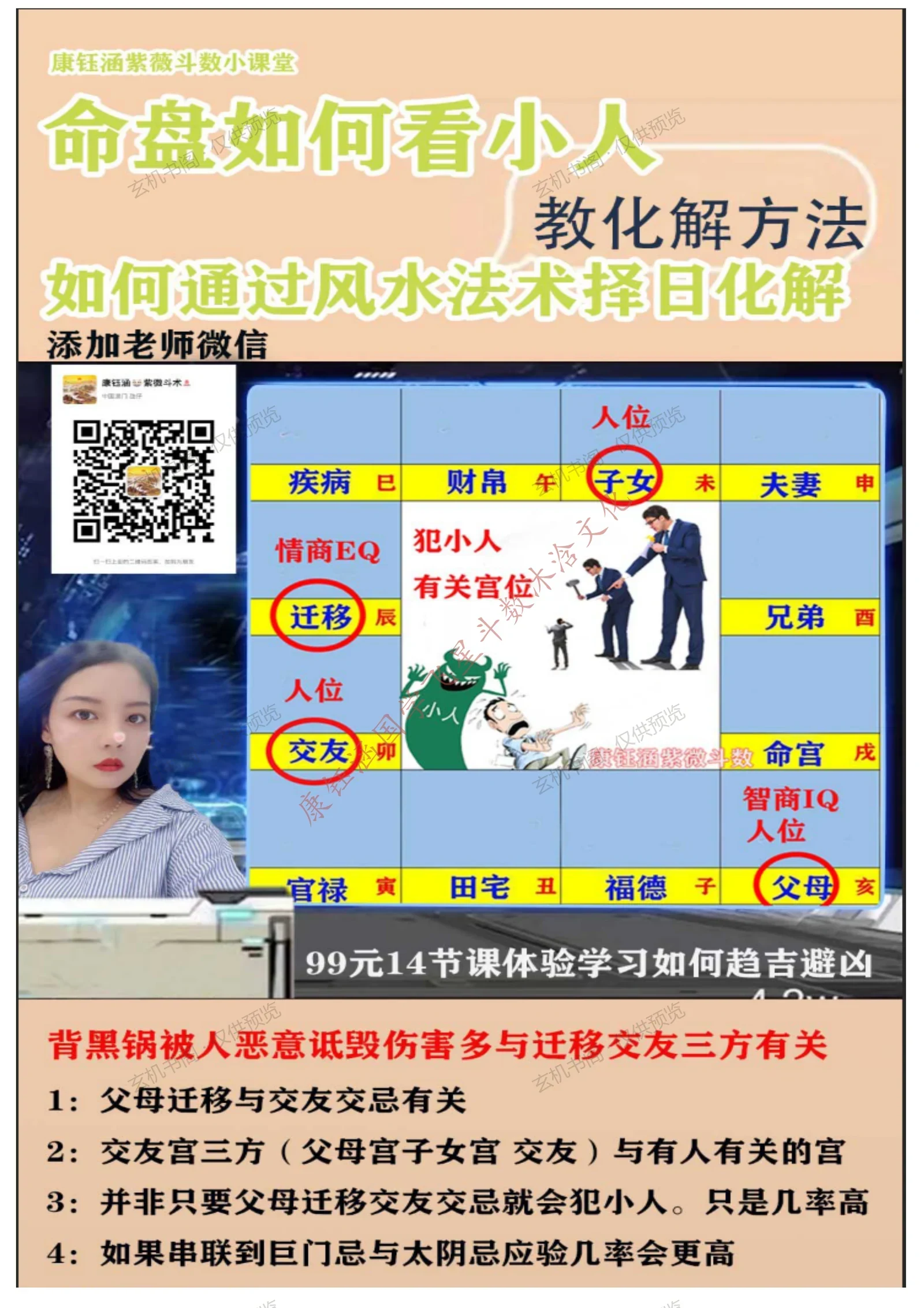
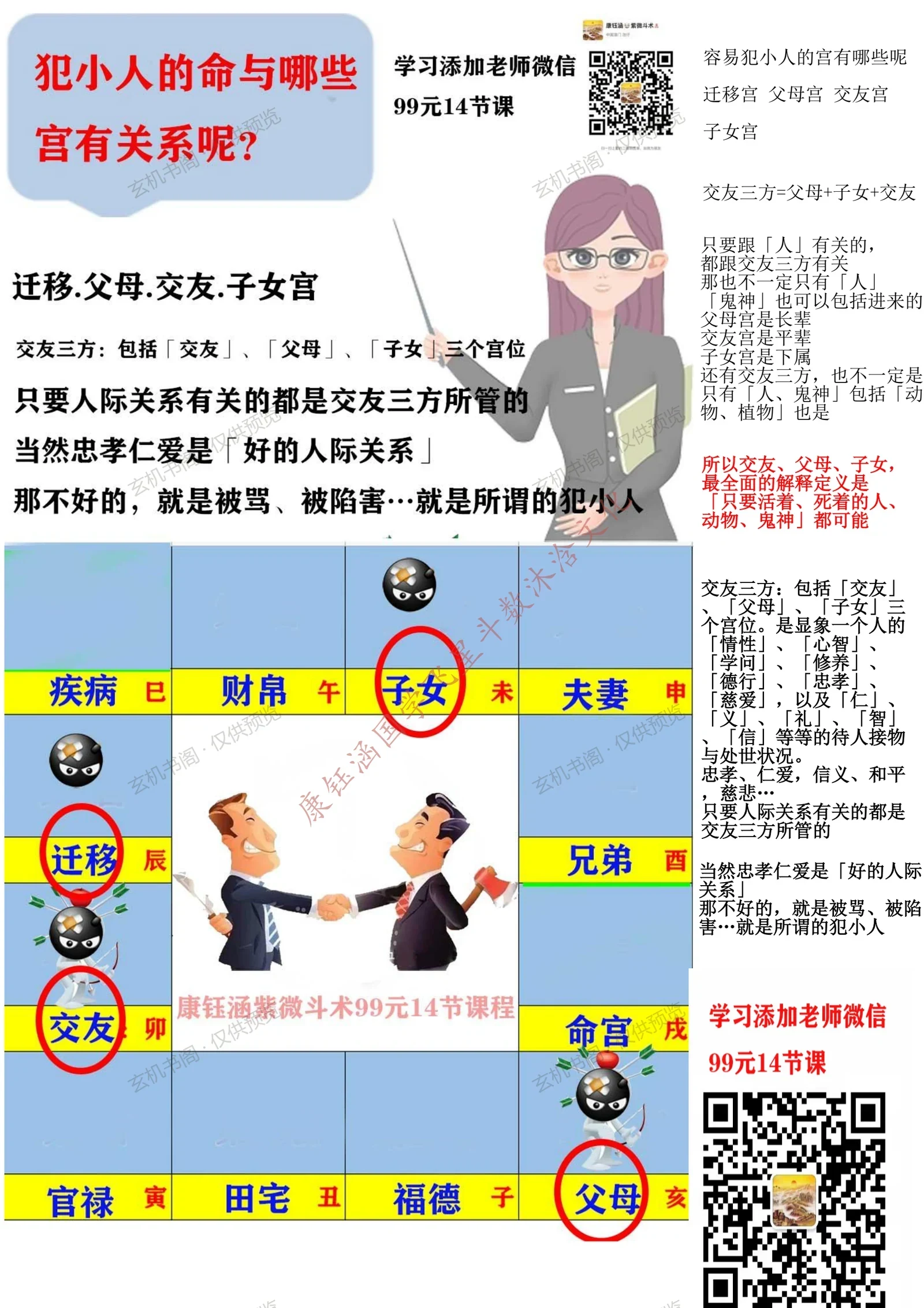
This is the tenth lesson of a Zi Wei Dou Shu course, focused on the common problem of running into 'petty people' (xiao ren). It begins with an overview of San He, Flying Star, Four Transformations, and He Luo approaches, then introduces the twelve palaces and their interlocking relationships. The main body explains how to read 'petty people' from the chart by grouping the parents, children, and friends palaces into the 'three friendship palaces,' which govern all human relations—peers, elders, juniors, subordinates, and even spirits. It notes that the travel, parents, friends, and children palaces are the key indicators, and that combined Ju Men or Tai Yin Hua Ji raises the likelihood of such troubles. The lesson also links the travel palace to emotional intelligence and the parents palace to IQ, and suggests feng shui, ritual, date selection, and charitable giving as remedies.
Contents
Introduction to the patriarch and course setup
Twelve-palace chart and the 'one-six shared origin' relation
How to read petty people in the chart
Which palaces relate to petty people
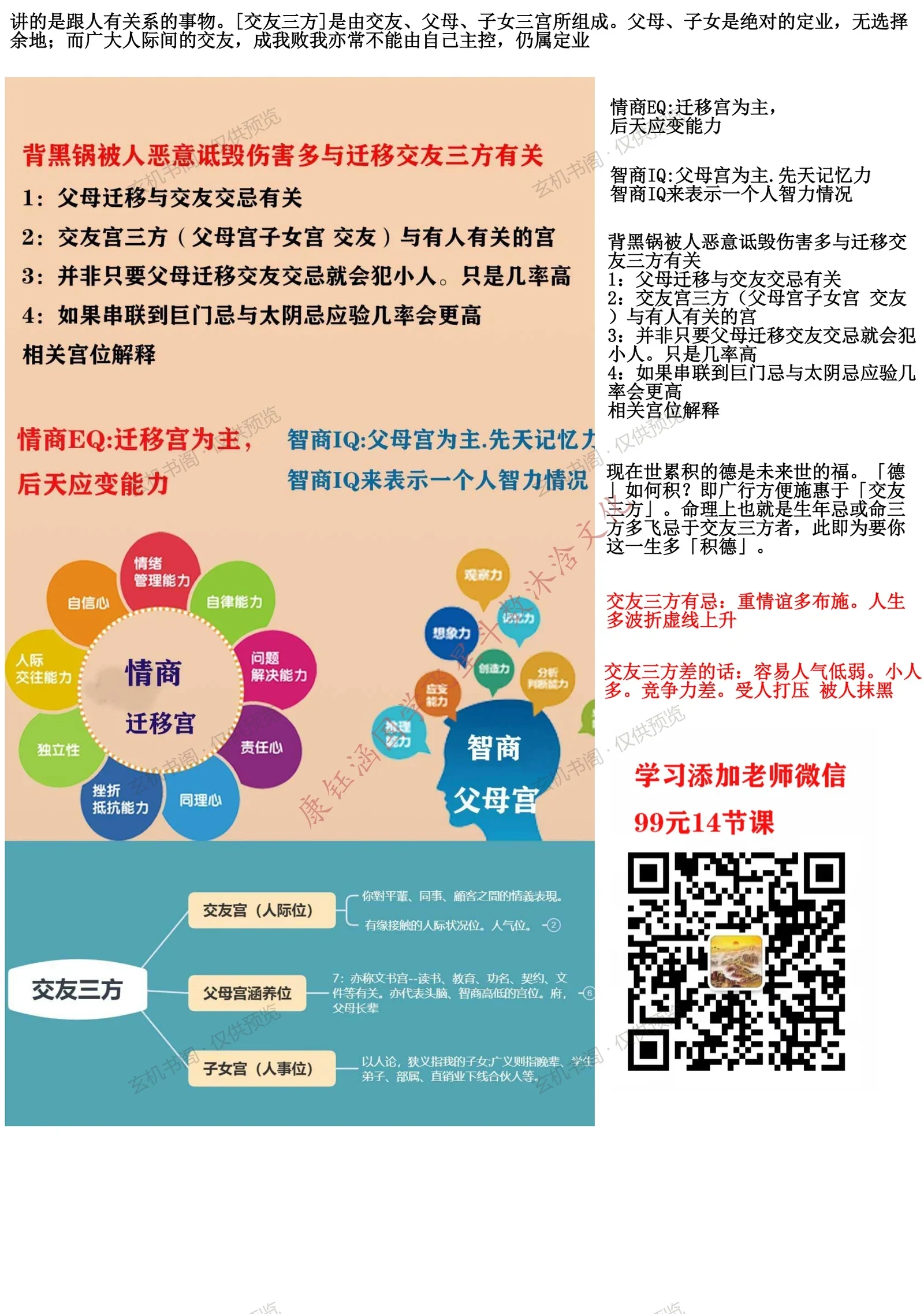
The three friendship palaces, EQ, and IQ
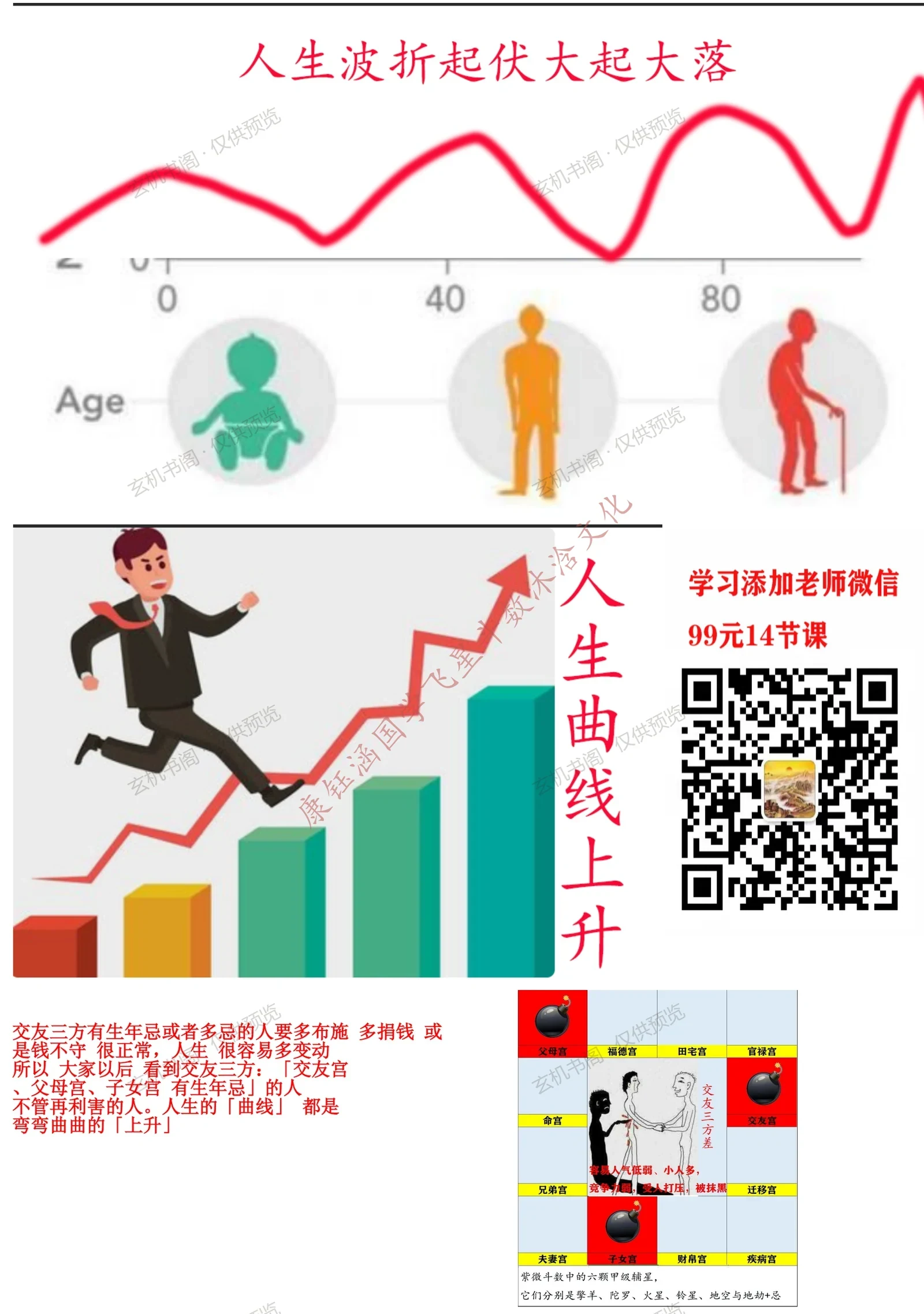
Life curve and annual/multiple Hua Ji in the friendship palaces
Key Points
The three friendship palaces are parents, children, and friends, governing all relationships
Travel, parents, friends, and children palaces indicate petty people
Combined Ju Men and Tai Yin Hua Ji raise the likelihood of such troubles
Travel palace relates to EQ, parents palace to IQ; weak friendship palaces mean low popularity and smear risk
Remedies include feng shui, ritual, date selection, and charitable giving