Reading guide
Content guideOverview
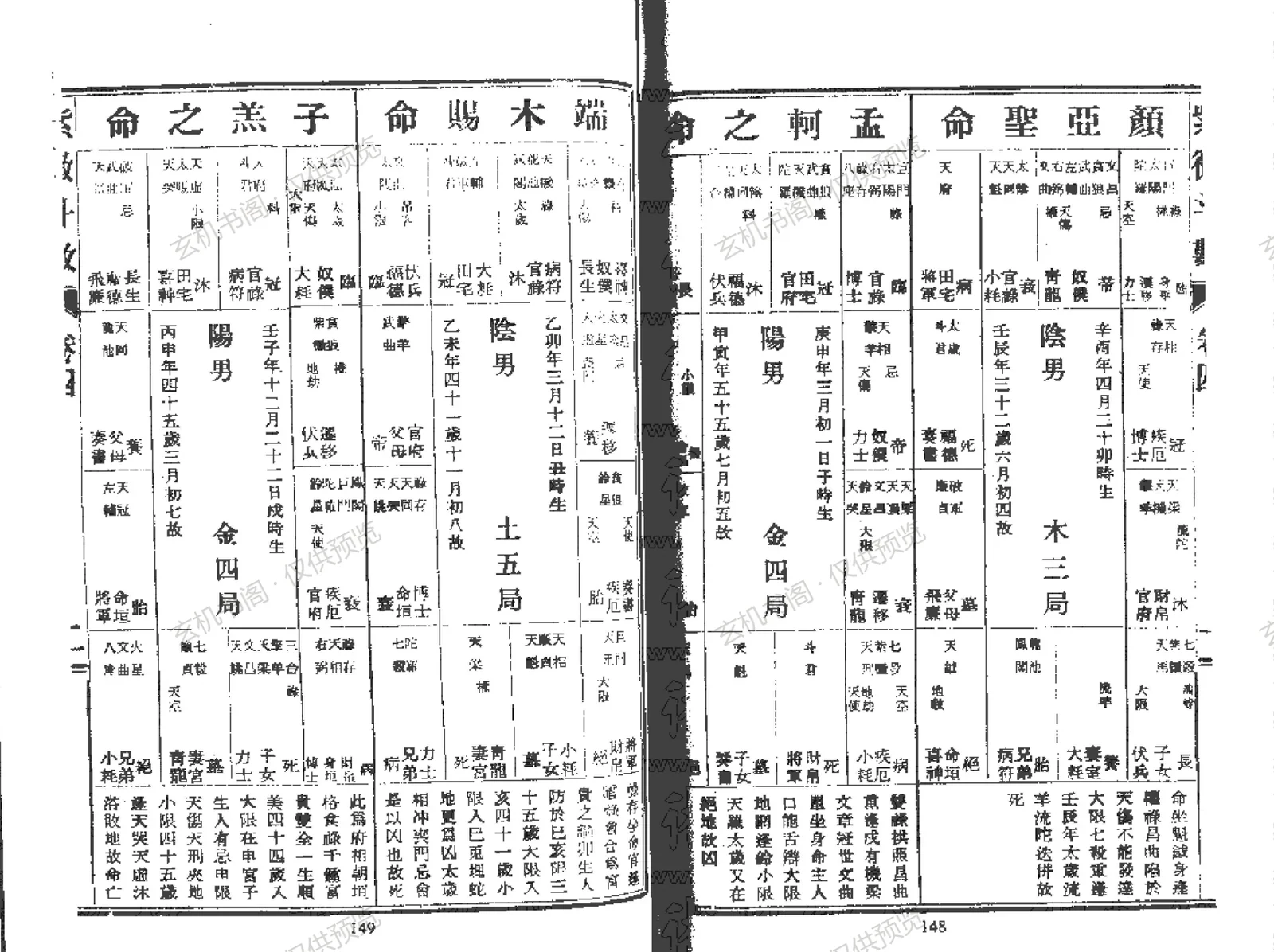
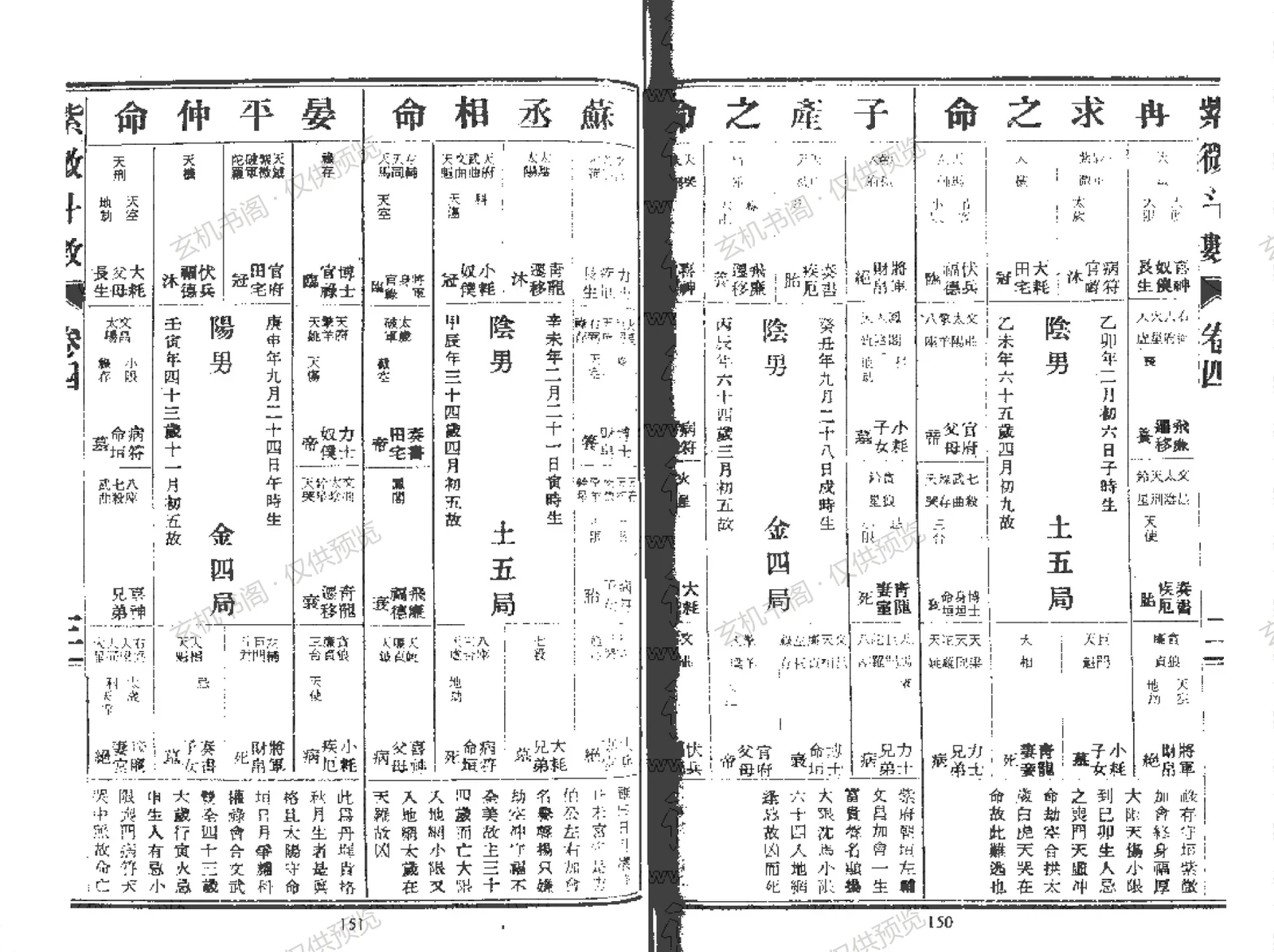
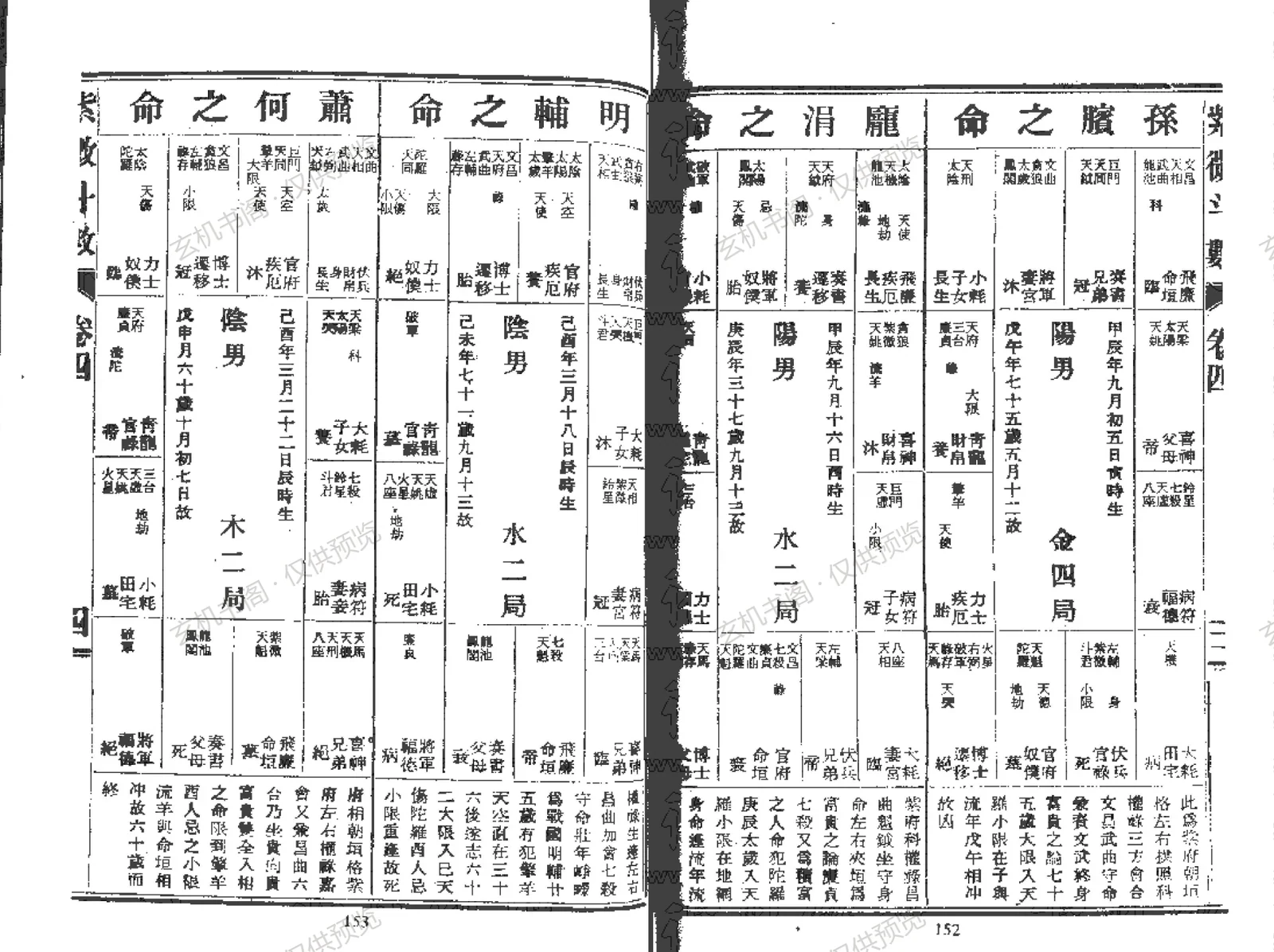
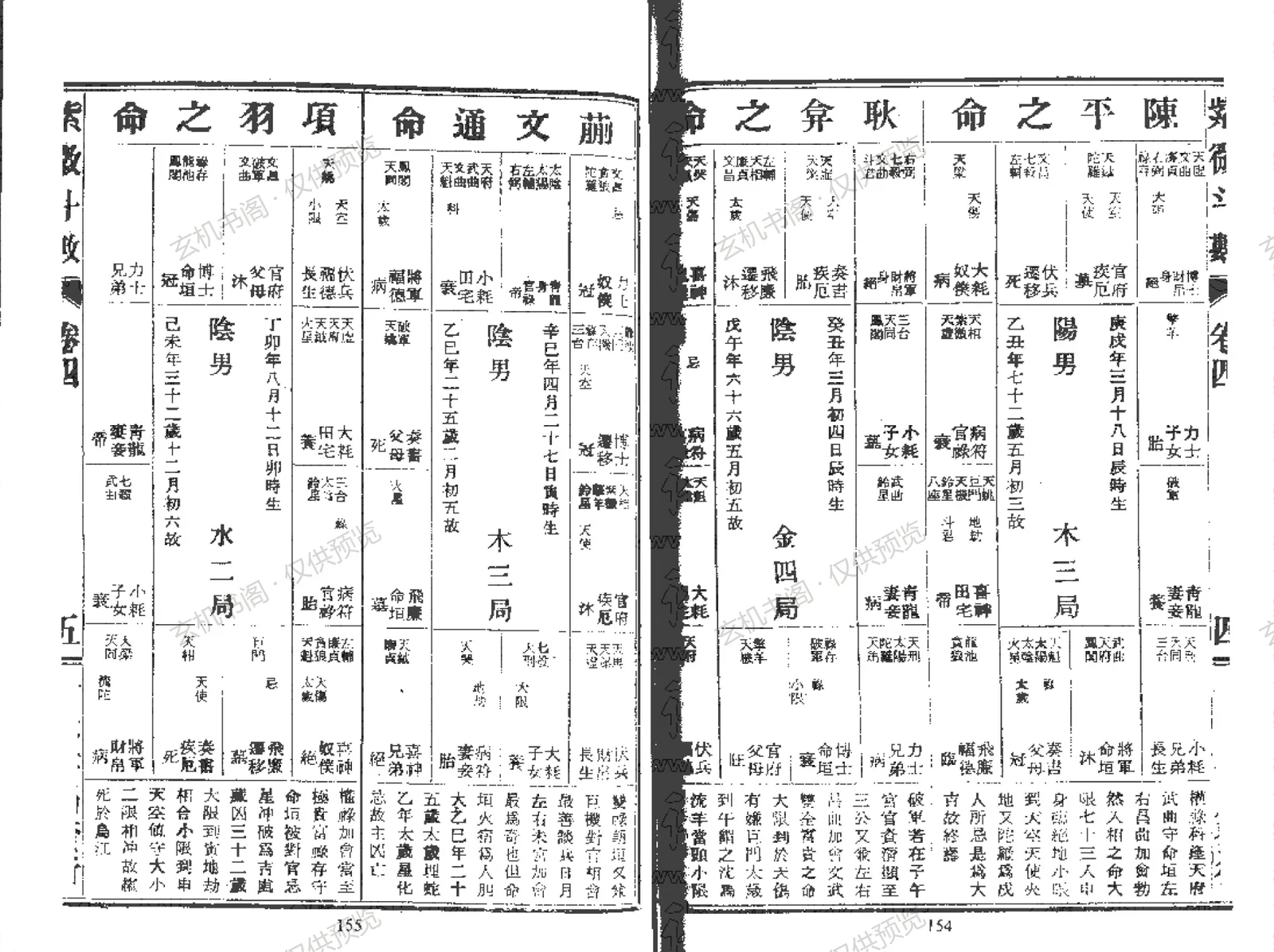
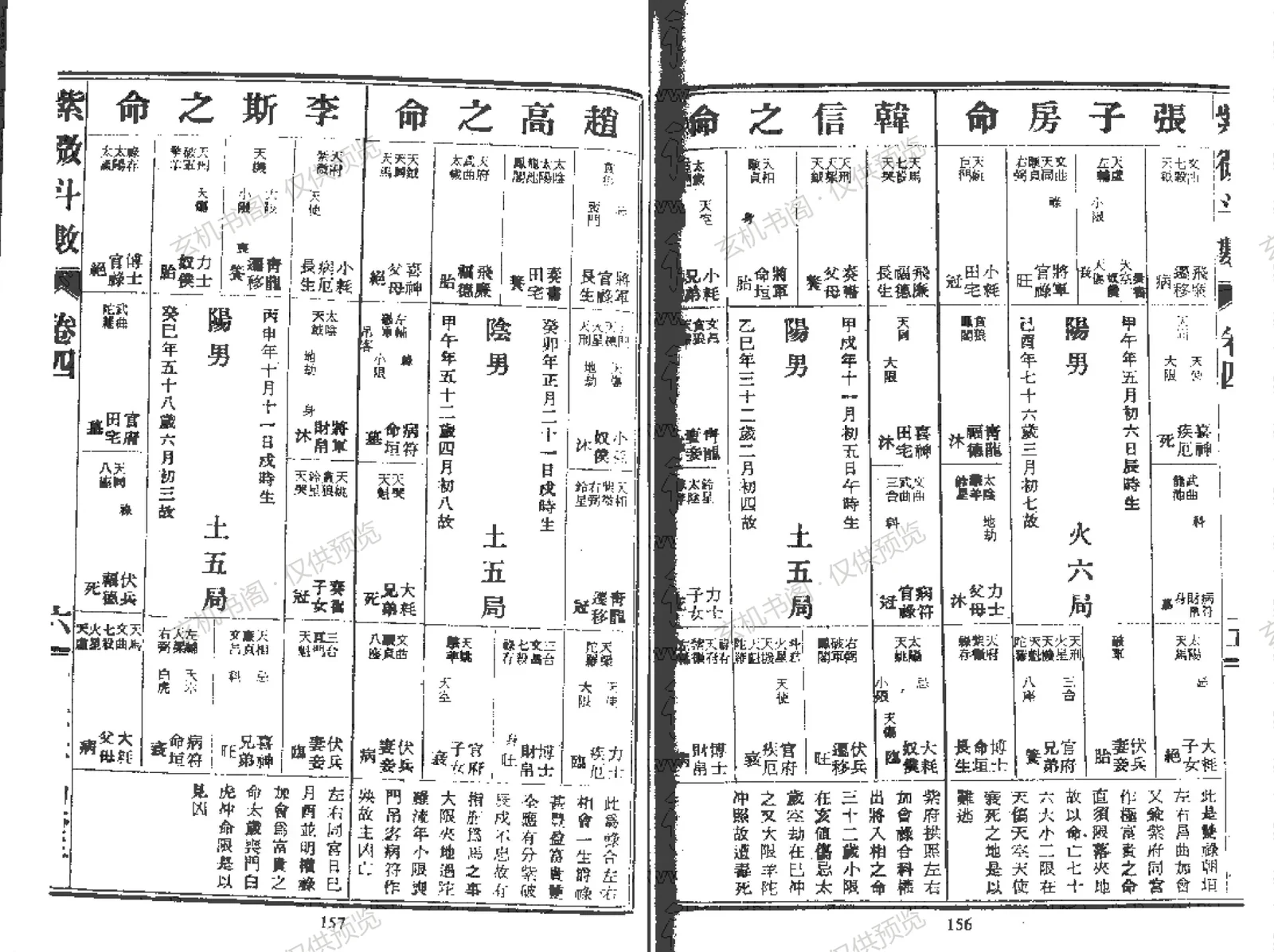
This work presents a series of Zi Wei Dou Shu chart examples attributed to historical figures such as Confucius, Yan Hui, Mencius, Su Qin, and Zhang Liang. Each case records birth data, yin-yang gender, and the five-element bureau, then lays out the twelve palaces with major and minor stars, major and minor limits, and classical judgment text. The pages are densely typeset in vertical traditional Chinese, functioning as a reference for the traditional format of chart construction and interpretation rather than a systematic textbook. Readers can observe how old practitioners arranged palaces, placed stars, marked transformations, and phrased prognostications. Basic familiarity with Zi Wei Dou Shu terminology is needed to read the tables and judgments accurately.
Contents
Chart of Confucius
Chart of Yan Hui
Chart of Mencius
Chart of Duanmu Ci
Chart of Zi Gao
Chart of Yan Pingzhong
Chart of Su Qin
Chart of Zhang Zifang
Key Points
Presents complete Zi Wei Dou Shu charts for historical figures
Each case lists birth data, yin-yang gender, and five-element bureau
Twelve palaces with major and minor stars plus major and minor limits
Includes classical judgment text explaining auspicious and inauspicious signs