Reading guide
Content guideOverview
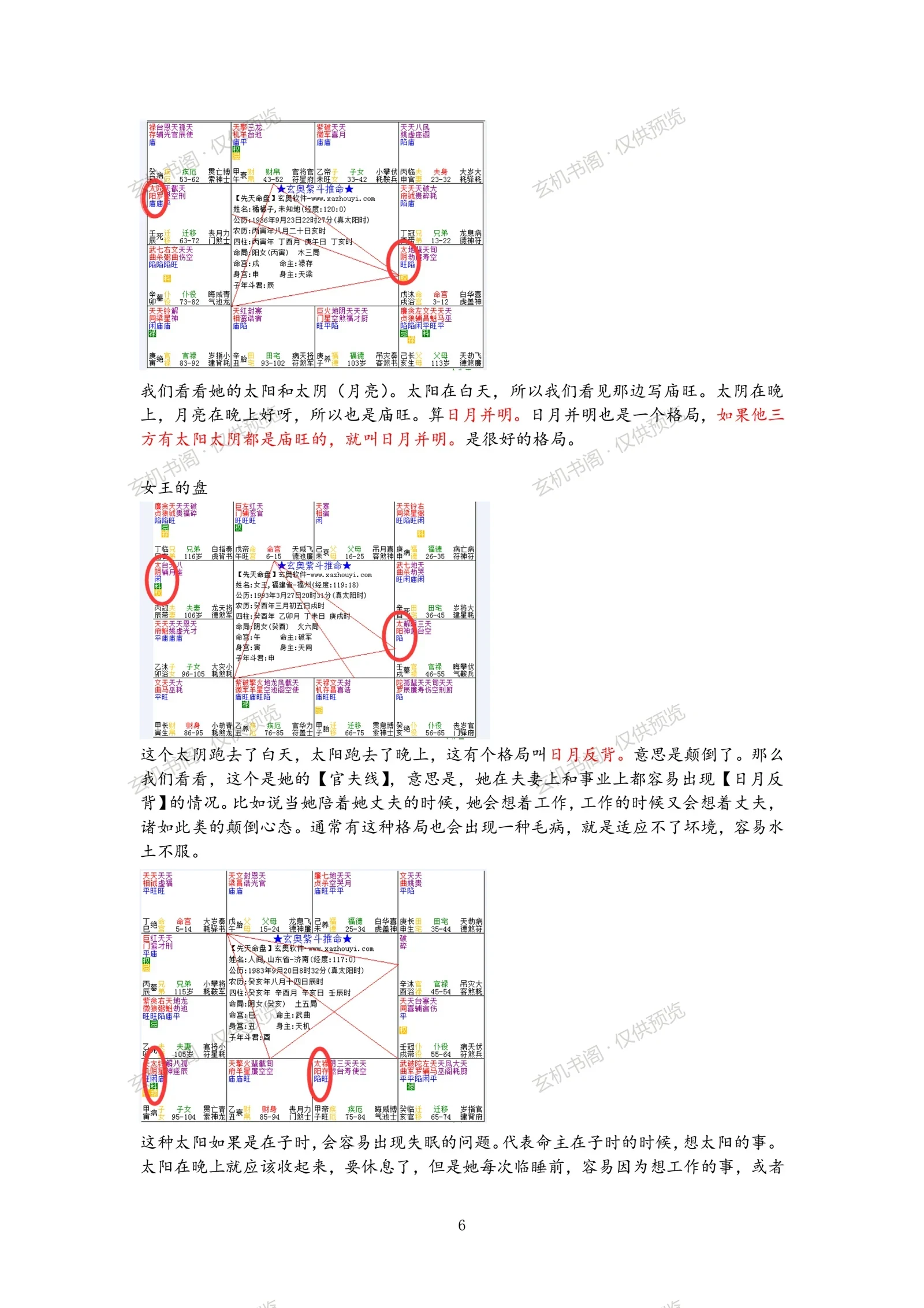
These are Yiting's lecture notes on Zi Wei Dou Shu, running 291 pages; the first six pages show the opening of the text. It begins with several fate stories—Zhu Yuanzhang seeking a person born at the same time, a man destined for wealth who starves, a predicted top scholar and beggar, a farmer and a bag of gold, and a postman waiting to die—used to argue that identical charts do not mean identical lives and that fortune-telling should not be treated as fixed fate. The first week's lesson stresses that charts must be cast using true solar time corrected by longitude, and that gender must not be entered wrongly. It then explains the twelve palaces and twelve earthly branches as time units, with the zi hour running from 23:00 to 1:00, and introduces opposite palaces and the four-direction triangle. Sample charts show how the pointer moves through the palaces, and the Sun and Moon are used to illustrate brightness by day and night, including the day-moon-bright and day-moon-reversed patterns, with remarks on the spouse palace, career and insomnia. The style is conversational classroom notes, suited to readers with some Zi Wei Dou Shu background who want to follow Yiting's teaching approach.
Contents
Fate stories and views on fortune-telling
Week one: chart casting and true solar time
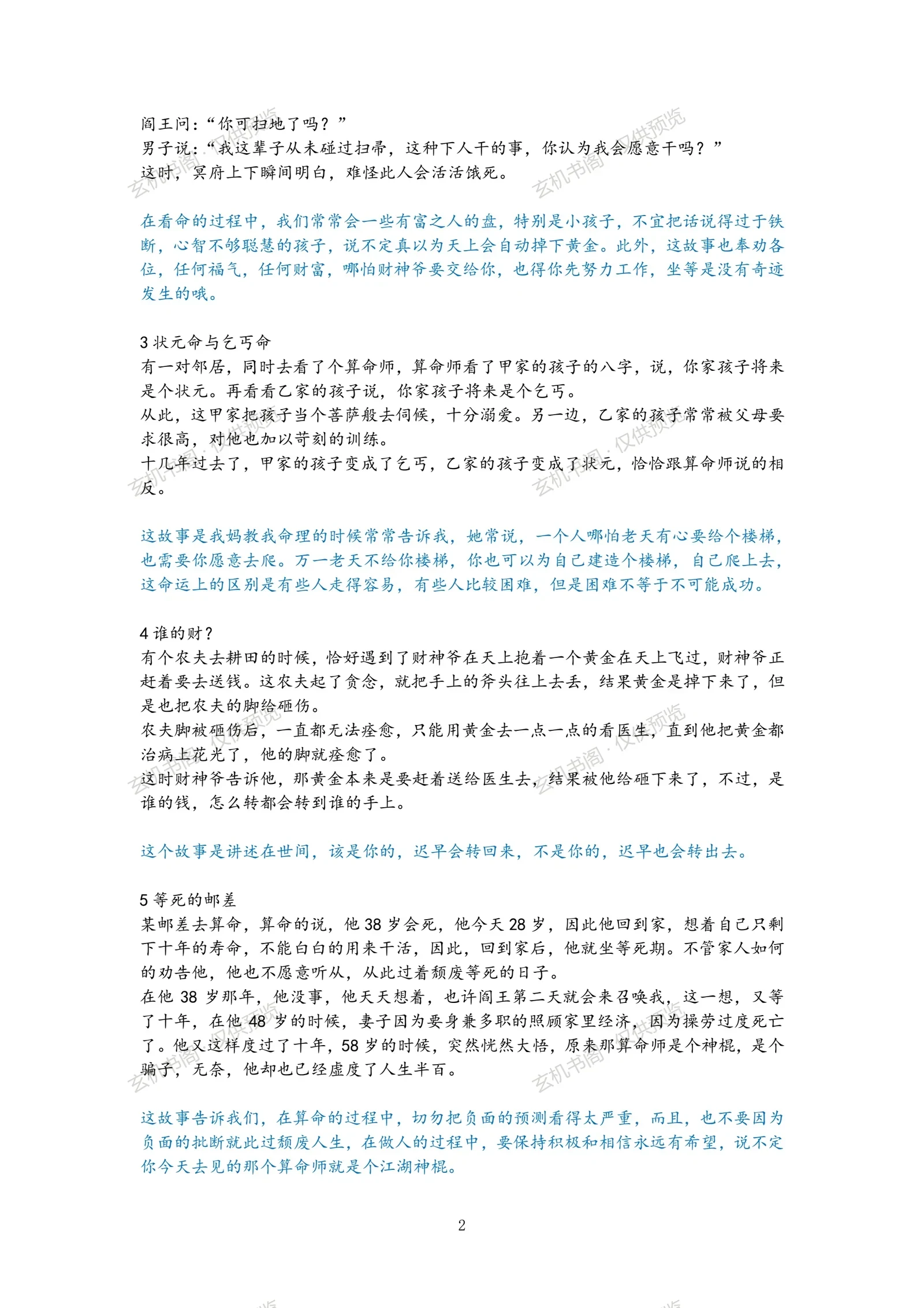
The twelve palaces and twelve double-hours
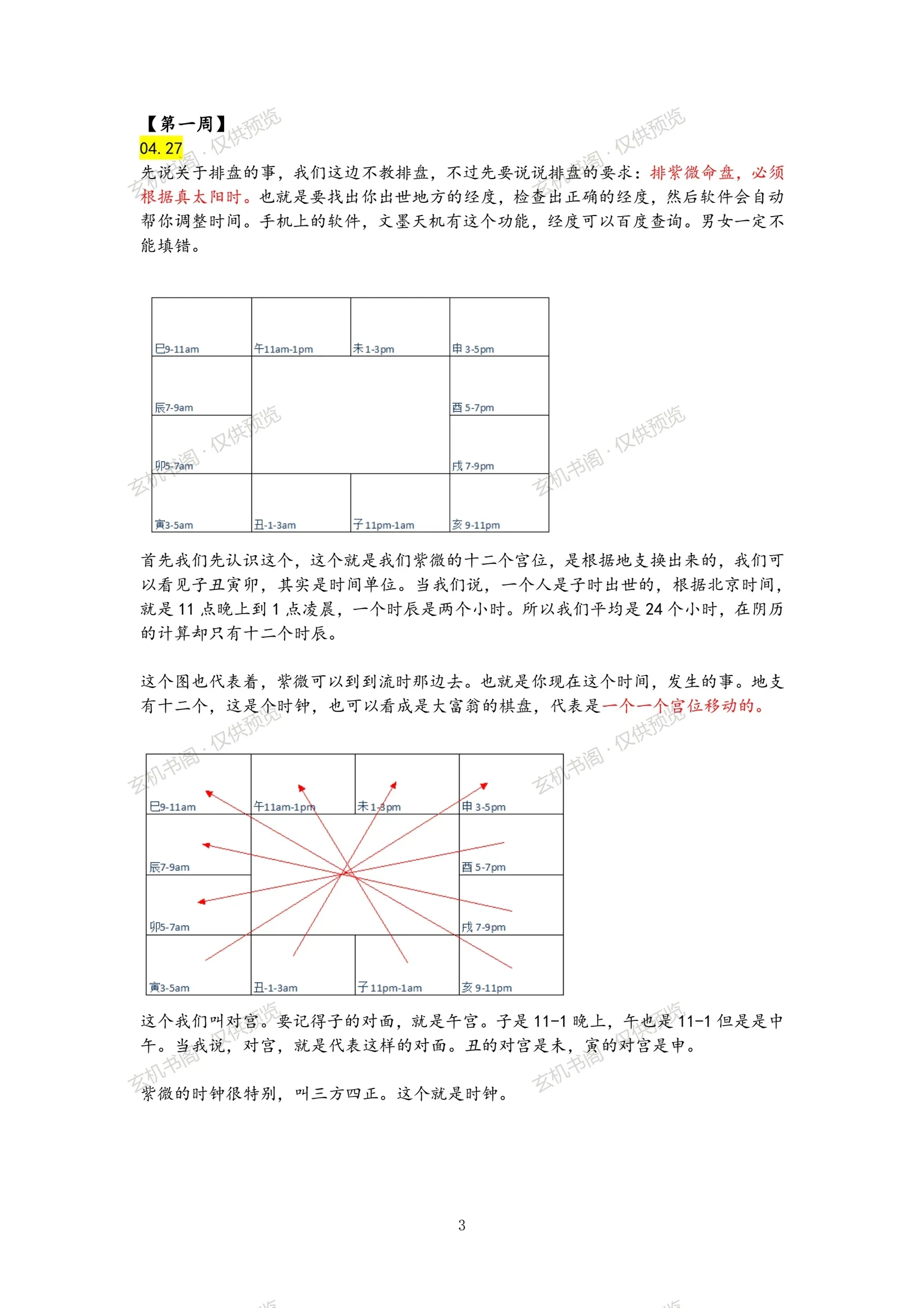
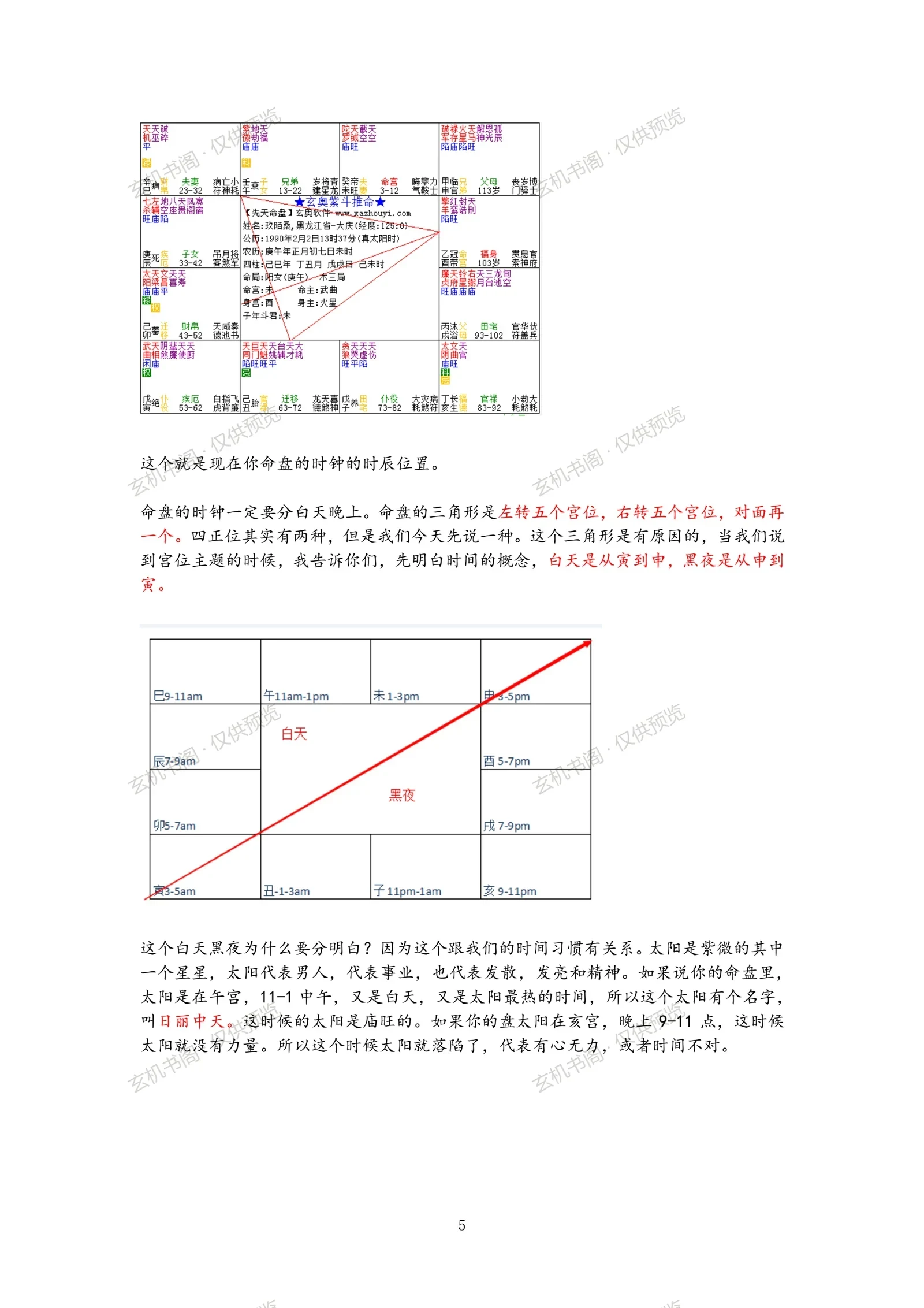
Opposite palaces and the four directions
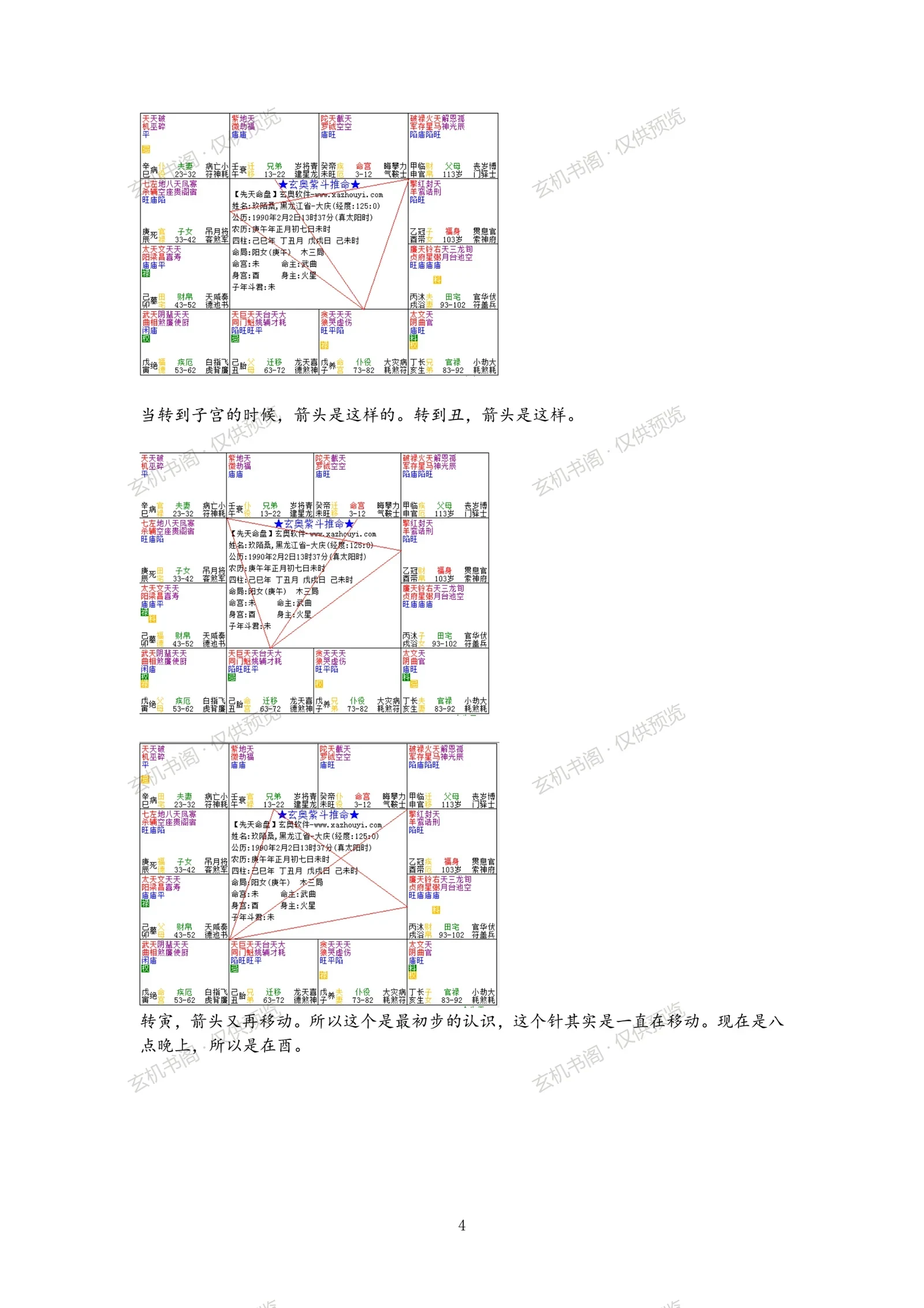
Demonstrating pointer movement on charts
Sun and Moon brightness and related patterns
Key Points
Charts must use true solar time corrected for birth longitude
The twelve branches map to twelve double-hours; zi hour is 23:00–1:00
Opposite palaces pair zi with wu, chou with wei, and so on
The Sun is bright in the wu palace and weak in the hai palace
Sun and Moon both bright form the day-moon-bright pattern; reversed is the opposite