Reading guide
Content guideOverview
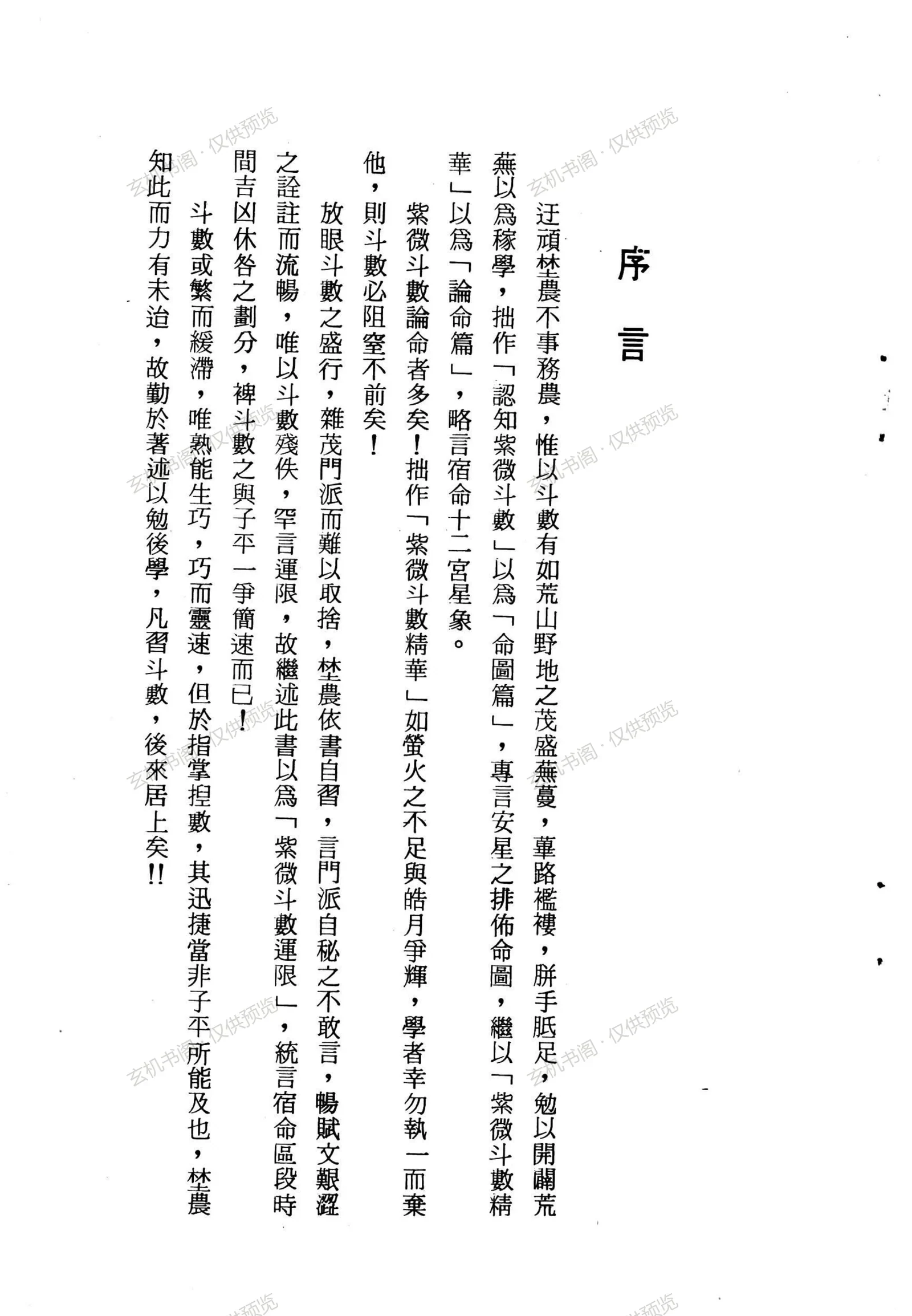
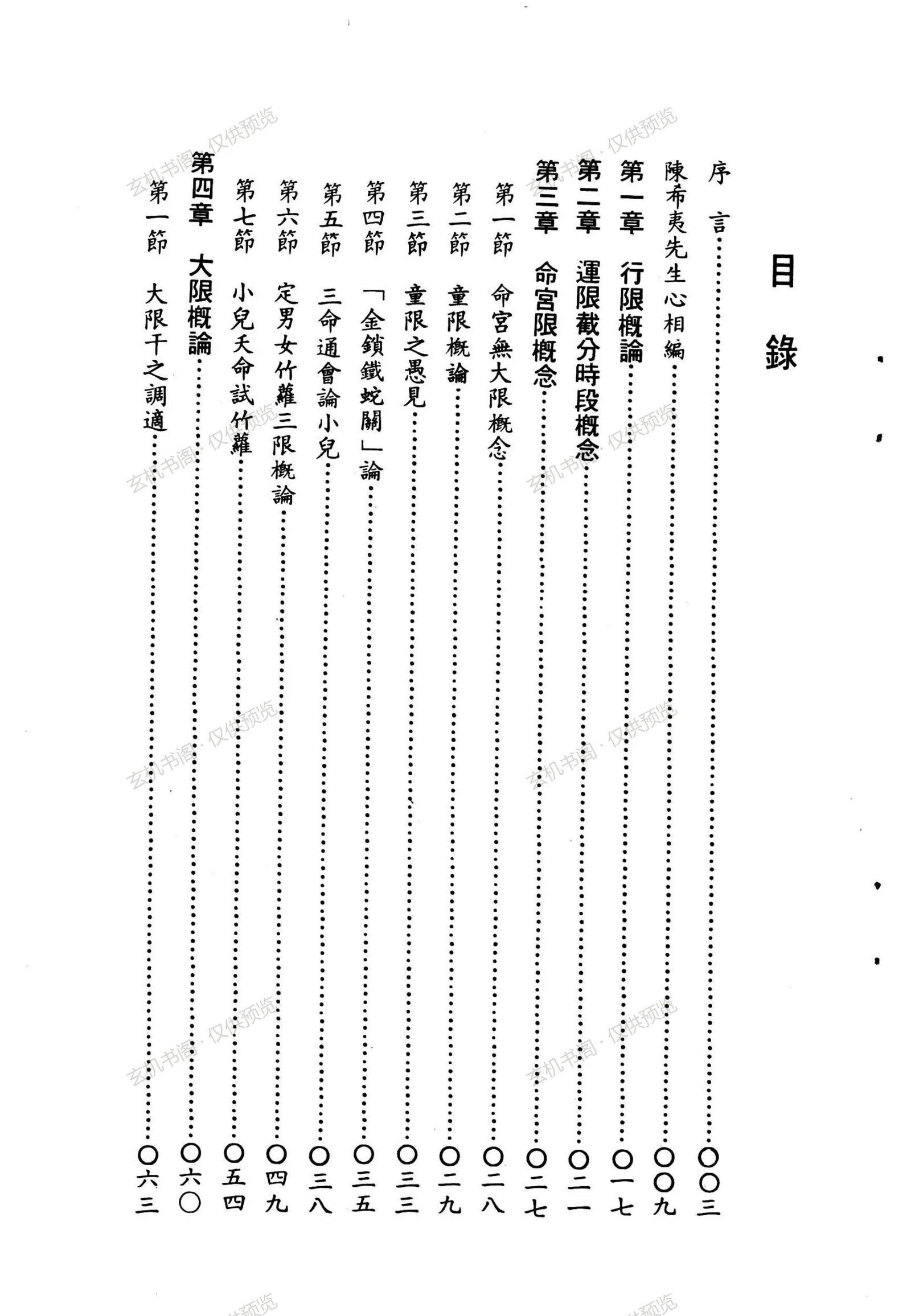
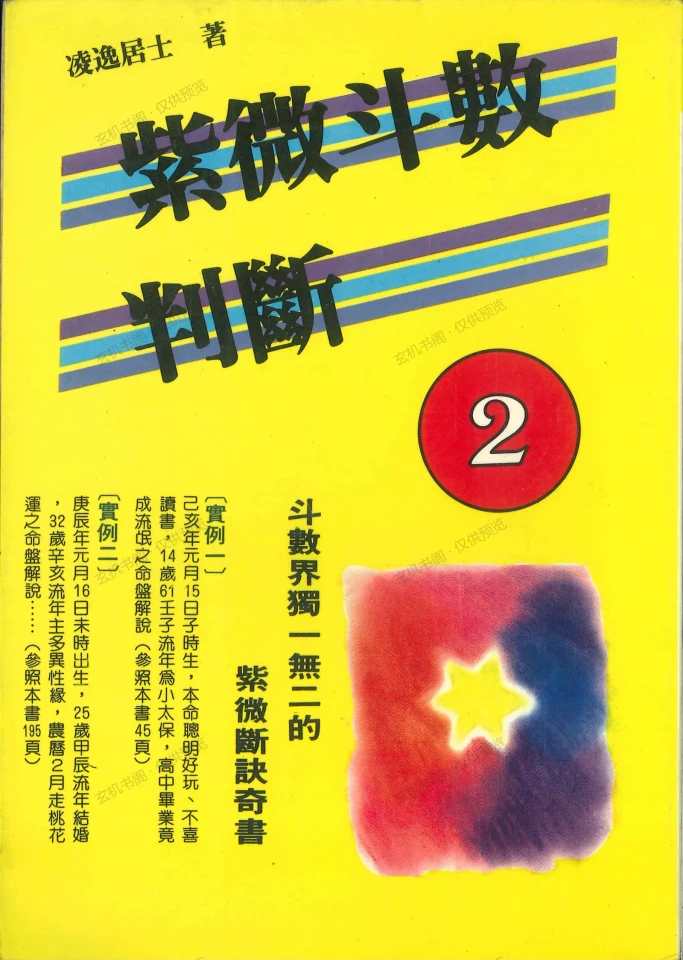
This is the second volume in Yuwan Yenong's Zi Wei Dou Shu series, published by Wuling Press. It concentrates on the time-based side of the art: how a natal chart is divided into major limits (da xian), annual limits (liu nian), minor limits and childhood limits, and how fortune and misfortune are judged within each period. The preface notes that most classical Dou Shu texts say little about period limits and that schools differ widely, so the author sets out a unified framework. The table of contents opens with Chen Buyi's Xiang Xin Bian, then moves through general principles of period limits, the segmentation of time periods, the concept of the life palace limit, and major limits, with detailed sections on charts without a major limit, childhood limits, the Golden Lock Iron Snake Gate, and children's fate in the San Ming Tong Hui. The book suits readers who already know basic chart construction and want to go deeper into annual forecasting; the traditional vertical layout and older terminology require some patience.
Contents
Preface and Chen Buyi's Xiang Xin Bian
Chapter 1: General principles of period limits
Chapter 2: Segmenting time periods
Chapter 3: Life palace limit, childhood limits and the Golden Lock Iron Snake Gate
Chapter 4: Major limits and the tuning of major-limit stems
Key Points
Centers on period limits: major, annual and minor
Argues that classical texts neglect period limits and fills the gap
Separate treatment of childhood limits and children's taboo gates
Draws on San Ming Tong Hui and related star-fate literature
Discusses how major-limit stems combine with the life palace