Reading guide
Content guideOverview
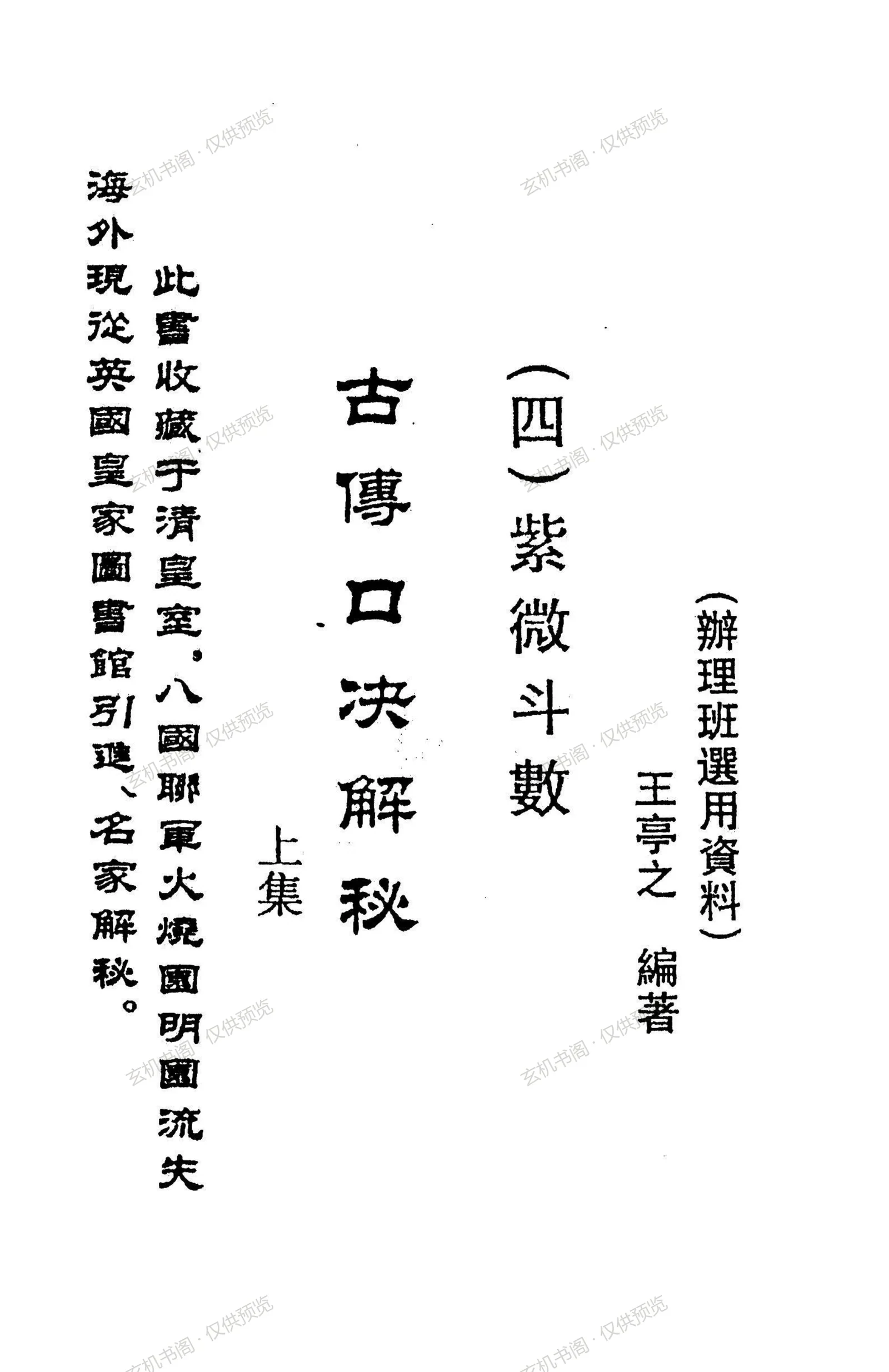
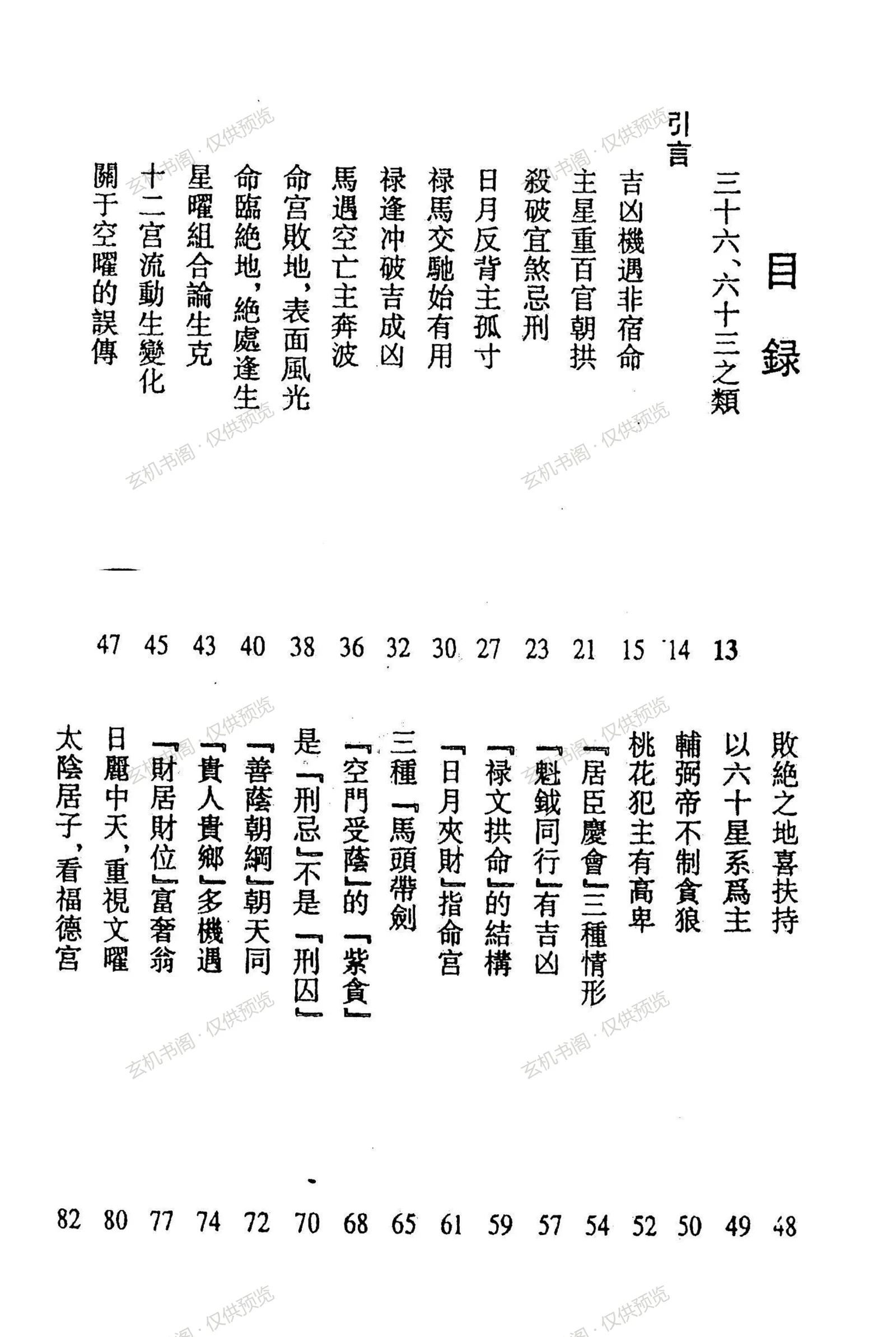
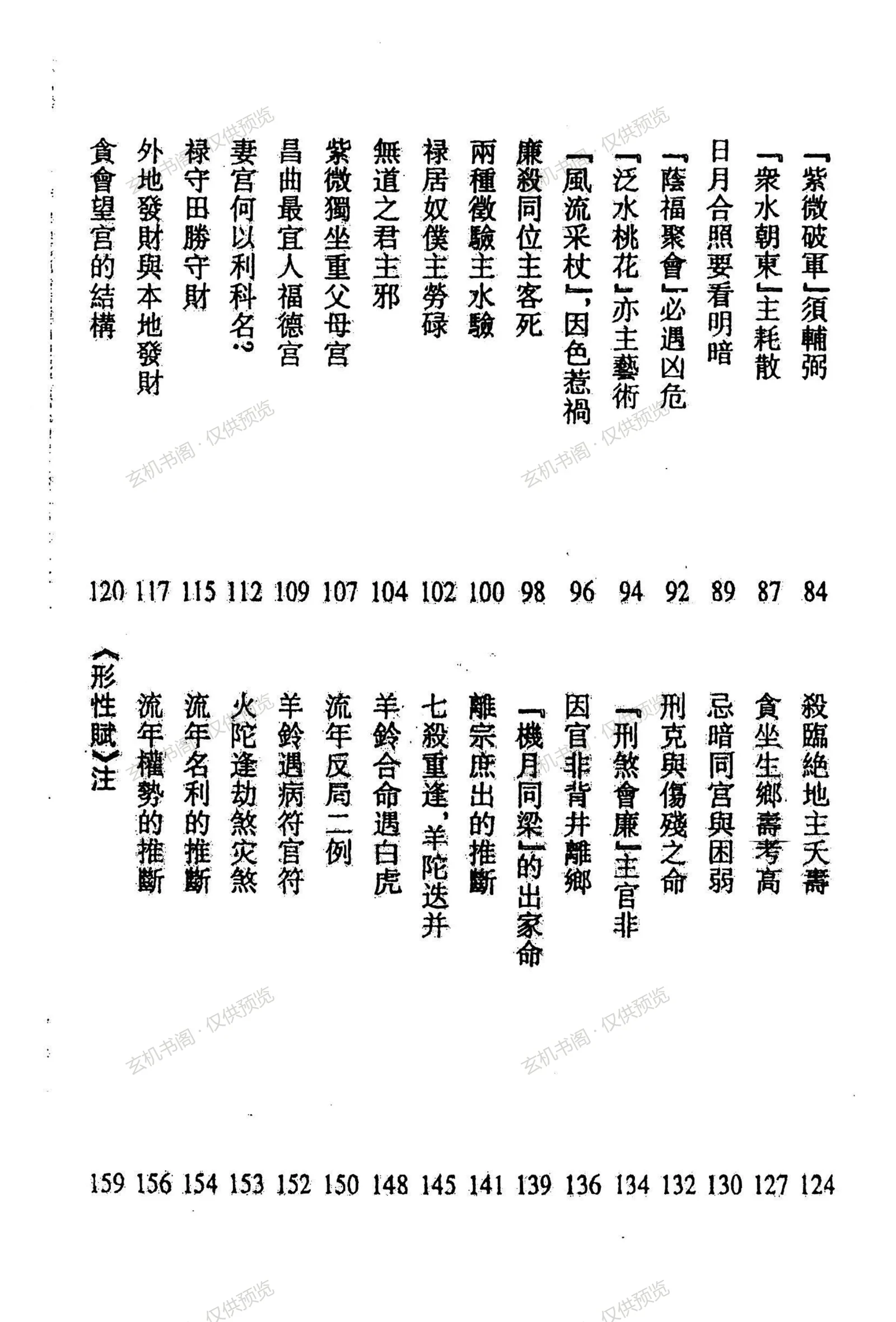
This is the fourth volume, upper part, of Wang Tingzhi's Complete Collection of Zi Wei Dou Shu, prepared as teaching material for his classes. The cover names it 'Explaining the Secrets of Traditional Oral Formulas.' A prefatory note states that the source text was an old collection of the Qing imperial household, lost when the Eight-Nation Alliance burned the Old Summer Palace and now held in the British Royal Library, with explanations added by noted commentators. The table of contents is organized under a general heading of 'thirty-six and sixty-three types,' covering topics such as auspicious and inauspicious encounters, major stars with courtiers in attendance, the Seven Killings, Breaking Army, and Wolf stars with malefic and restrictive influences, the Sun and Moon reversed, Lu and Horse in mutual flight, void and defeat, star combinations and their generating and overcoming relations, and the transformations of the twelve palaces. It also includes structural patterns such as 'emperor and minister in celebration,' '魁 and 钺 together,' and '禄, 文, and 拱命,' along with specific methods for Zi Wei sitting alone and Lian Zhen in the same palace. The text is set in traditional vertical typography and expands each formula sentence by sentence, making it advanced study material.
Contents
Introduction and general typology of thirty-six and sixty-three
Formulas on auspicious encounters, star attendance, and malefic restrictions
Sun-Moon reversal, Lu-Horse flight, and void-defeat methods
Star combinations and transformations of the twelve palaces
Patterns such as emperor-minister celebration and 魁钺同行
Methods for Zi Wei alone and Lian Zhen in the same palace
Notes on the Xingxing Fu and examples of annual inference
Key Points
Uses traditional oral formulas as the framework for Zi Wei Dou Shu inference
Covers star combinations, palace interactions, and structural patterns
Includes specific patterns such as emperor-minister celebration and 禄文拱命
A class textbook arranged for formula-by-formula study