Reading guide
Content guideOverview
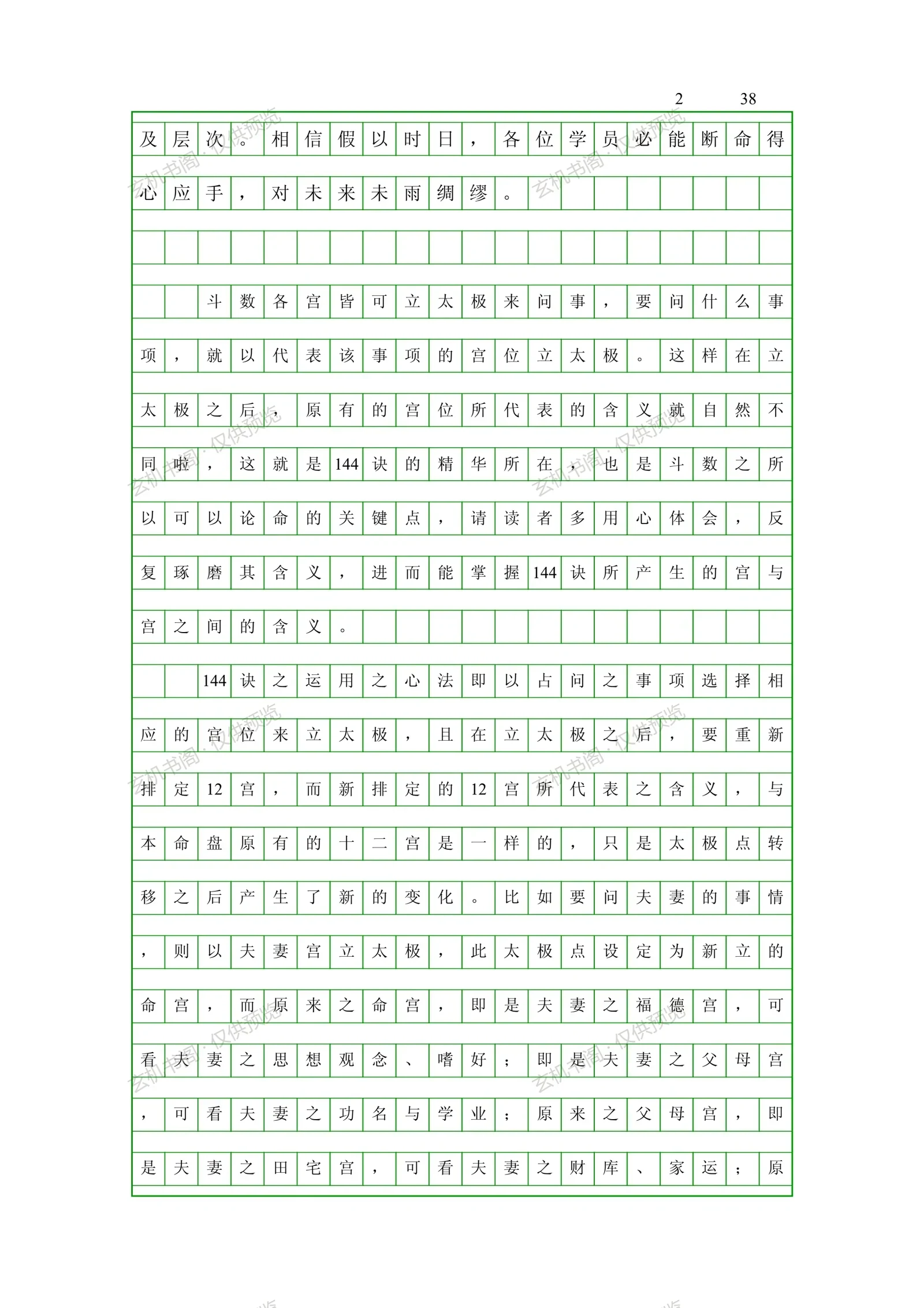
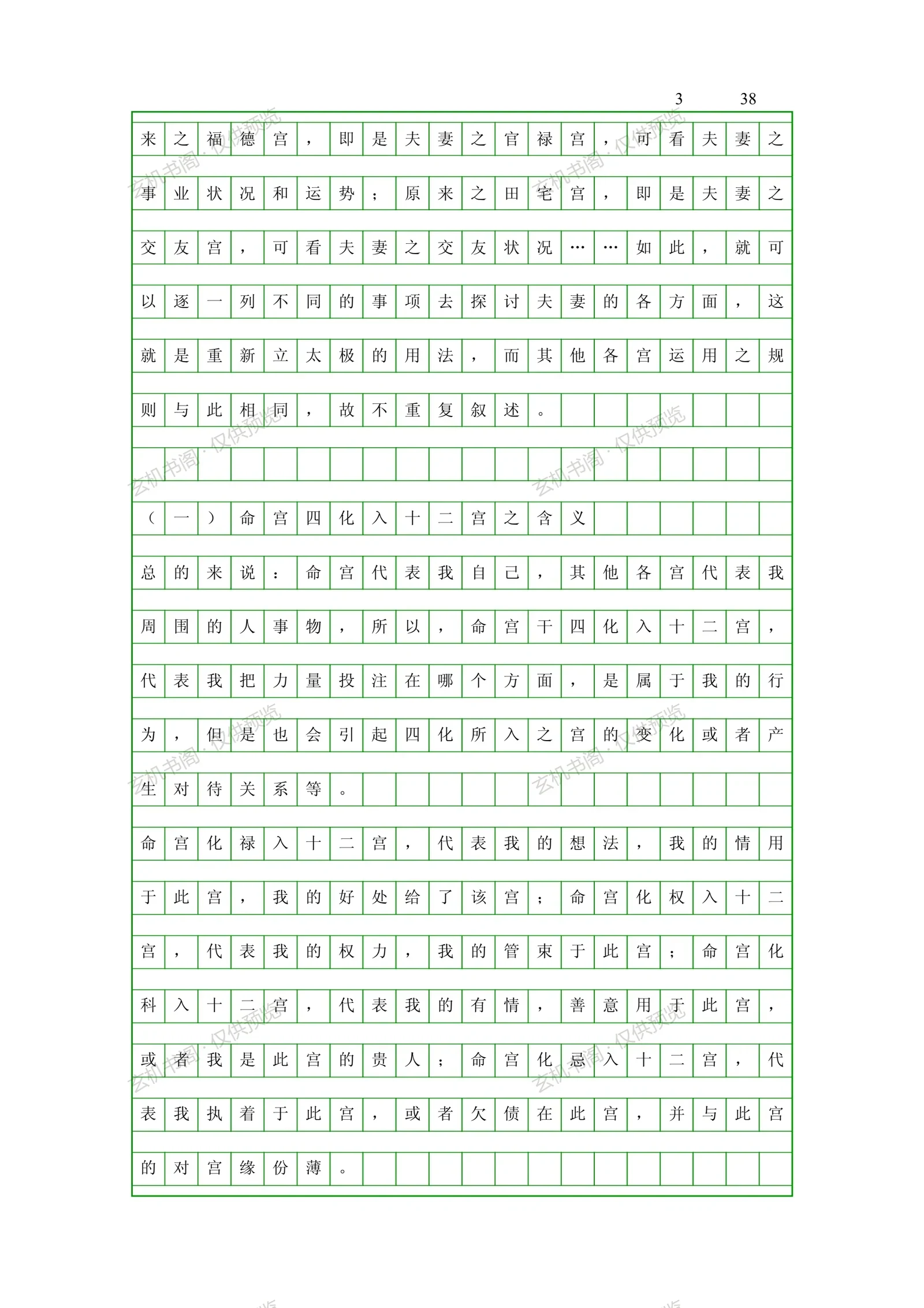
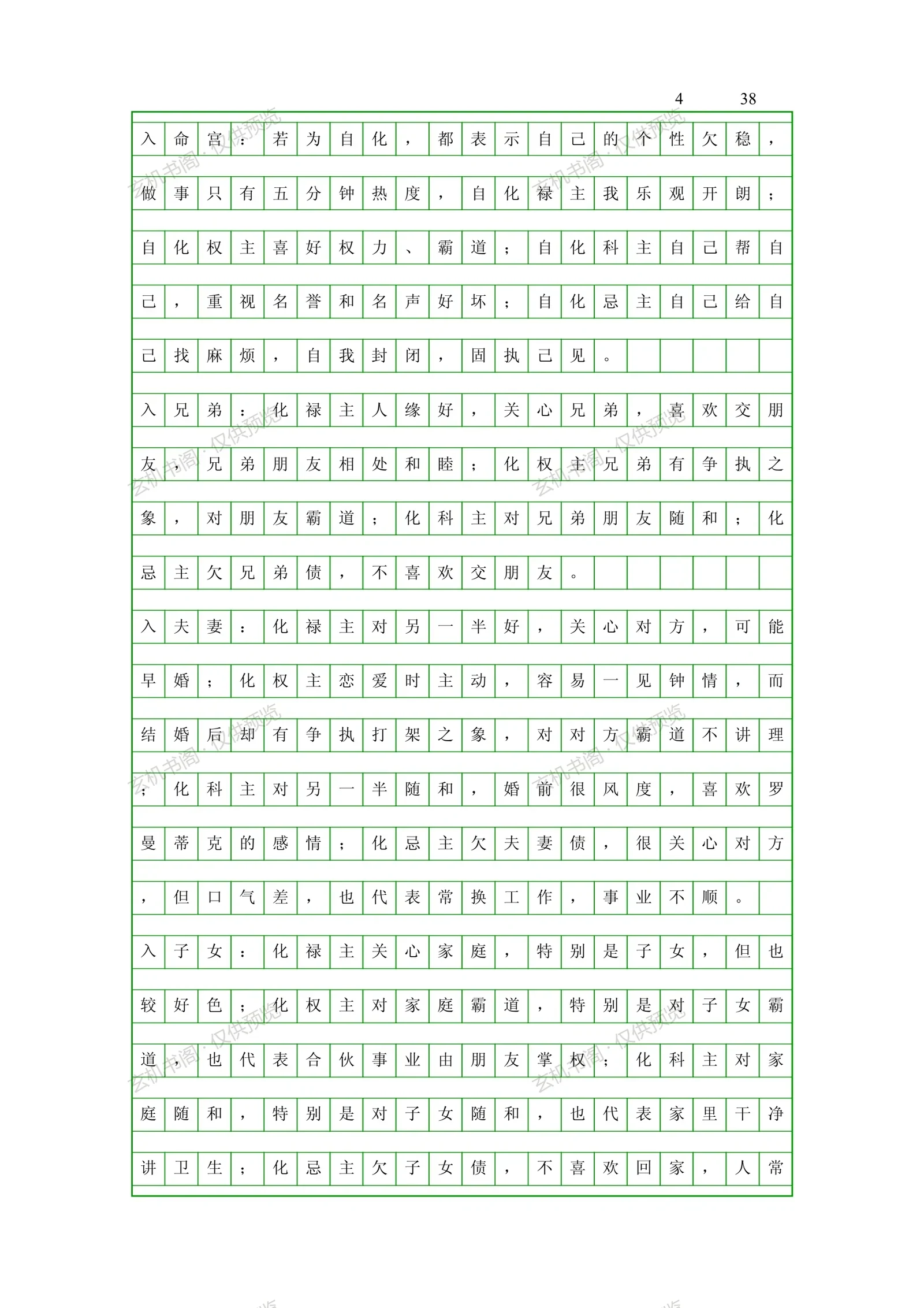
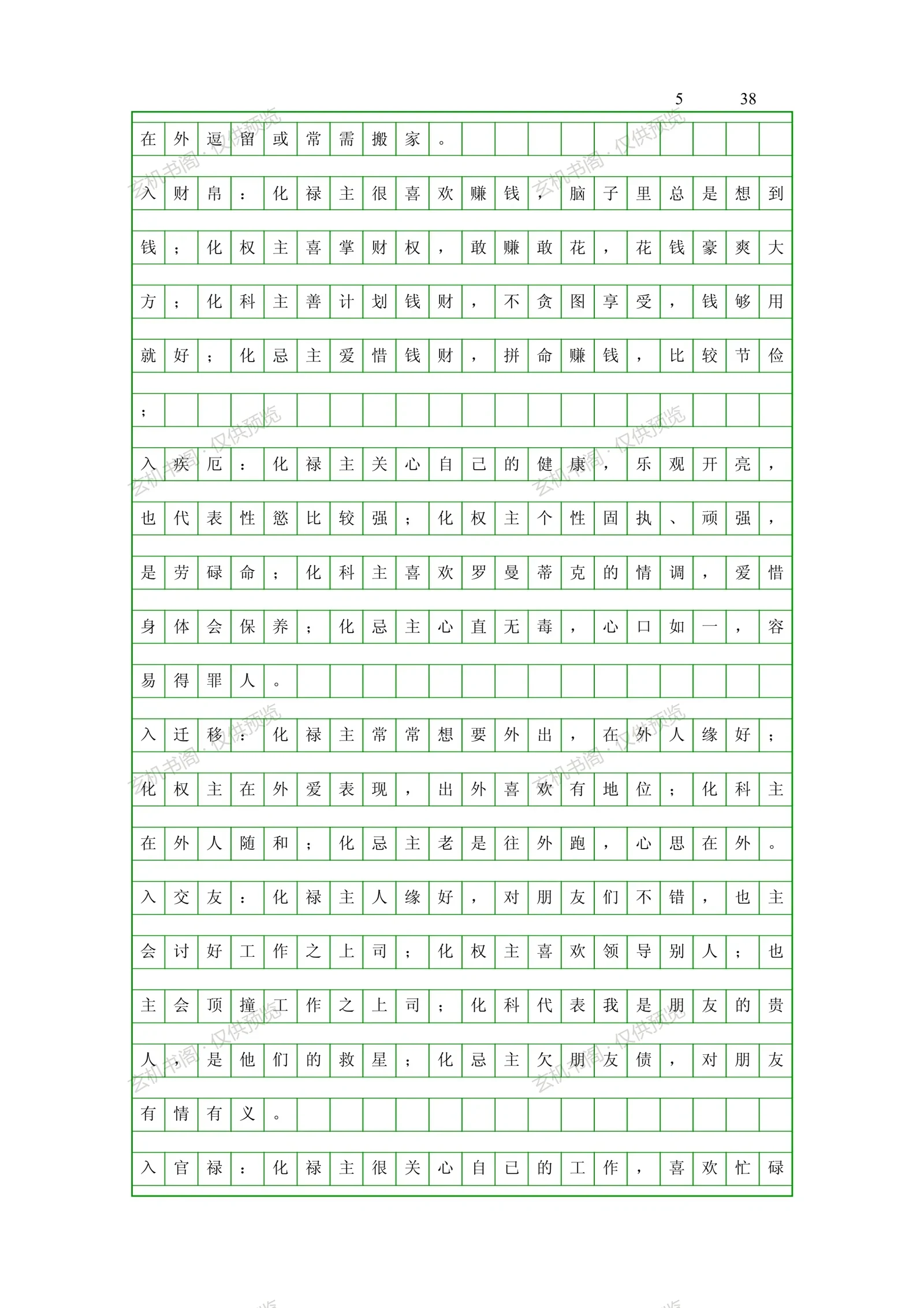
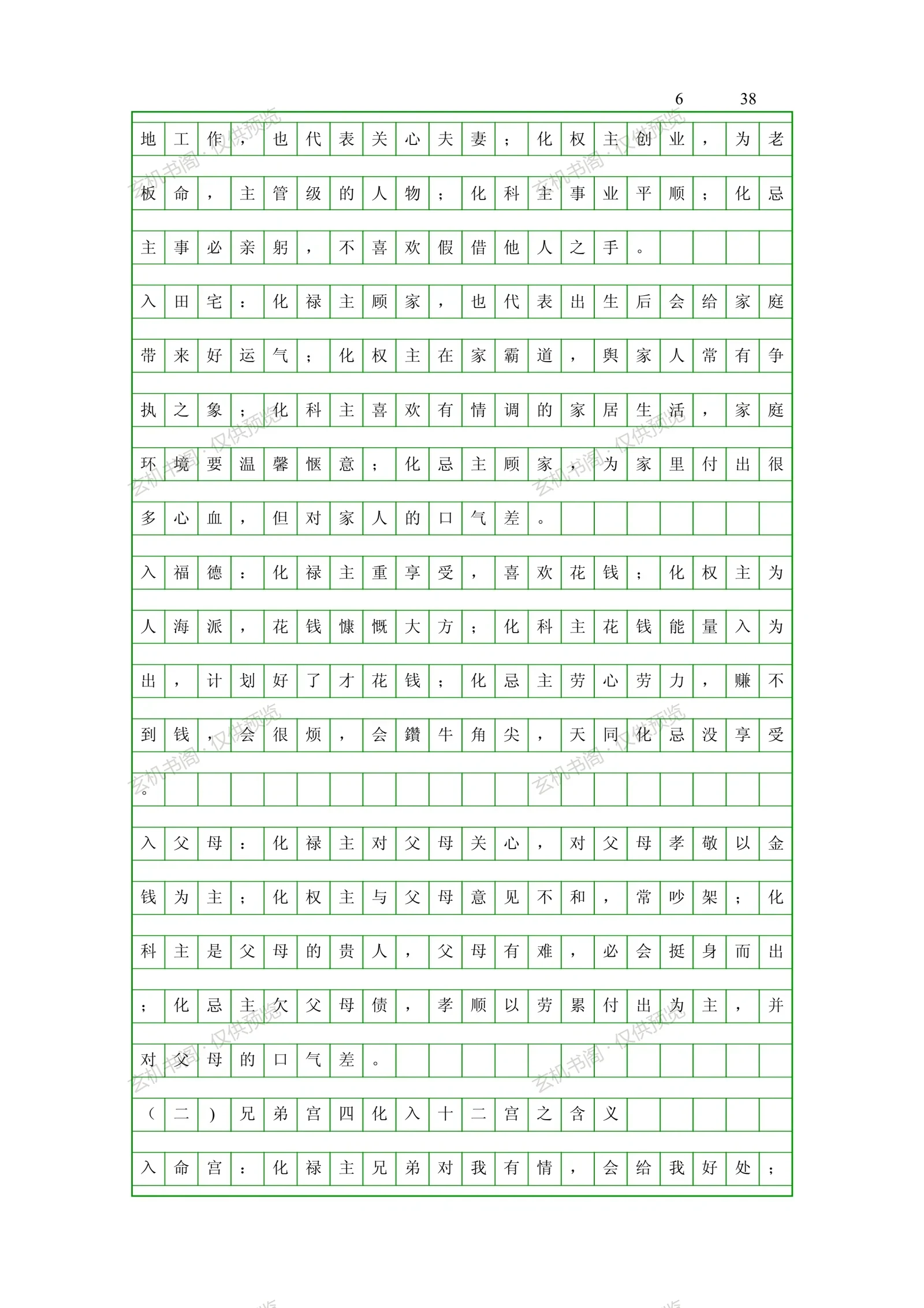
This is a lecture-note textbook on Zi Wei Dou Shu compiled by Jin Ruixue, printed on grid manuscript paper. In the preface the author explains that, dismayed by the uneven quality and widespread errors in popular Dou Shu books, he discussed the subject online with fellow enthusiasts and, at readers' request, set out in 2012 to write a systematic textbook. The book focuses on the correct method of flying the four transformations (lu, quan, ke, ji), the combined use of the three plates, and the meaning of the 144 verses and 576 images. The main text first explains how to 'set the taiji': any palace can serve as the taiji for a question, and once set, the meanings of the twelve palaces shift accordingly, illustrated by using the spouse palace as the new taiji and reading each palace from there. Following sections detail the four transformations of the life palace entering each of the twelve palaces, then those of the siblings palace, explaining the human affairs, fortune and character traits indicated by lu, quan, ke and ji in each position.
Contents
Preface: why the book was written and its focus
Setting the taiji: re-arranging the twelve palaces for a topic
Four transformations of the life palace into the twelve palaces
Self-transformation and transformations into siblings, spouse and other palaces
Four transformations of the siblings palace into the twelve palaces
Key Points
Set the taiji on the palace of the matter at hand and re-read the twelve palaces
Fly the four transformations by the correct method, not popular errors
Life-palace transformations show where one invests one's energy
Self-transformation indicates unstable character and short-lived enthusiasm
Lu, quan, ke and ji in each palace map to popularity, power, reputation and debt