Reading guide
Content guideOverview
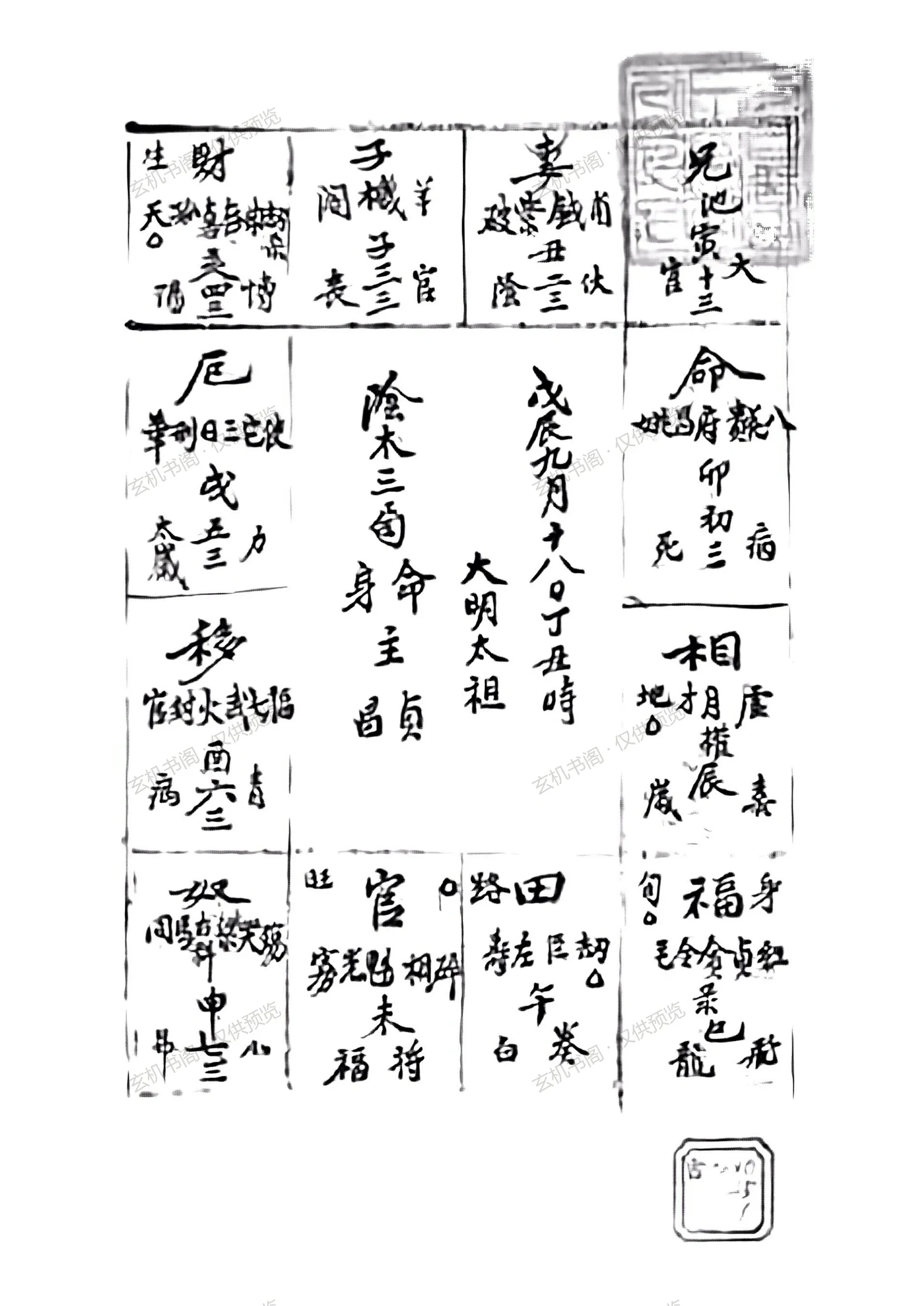
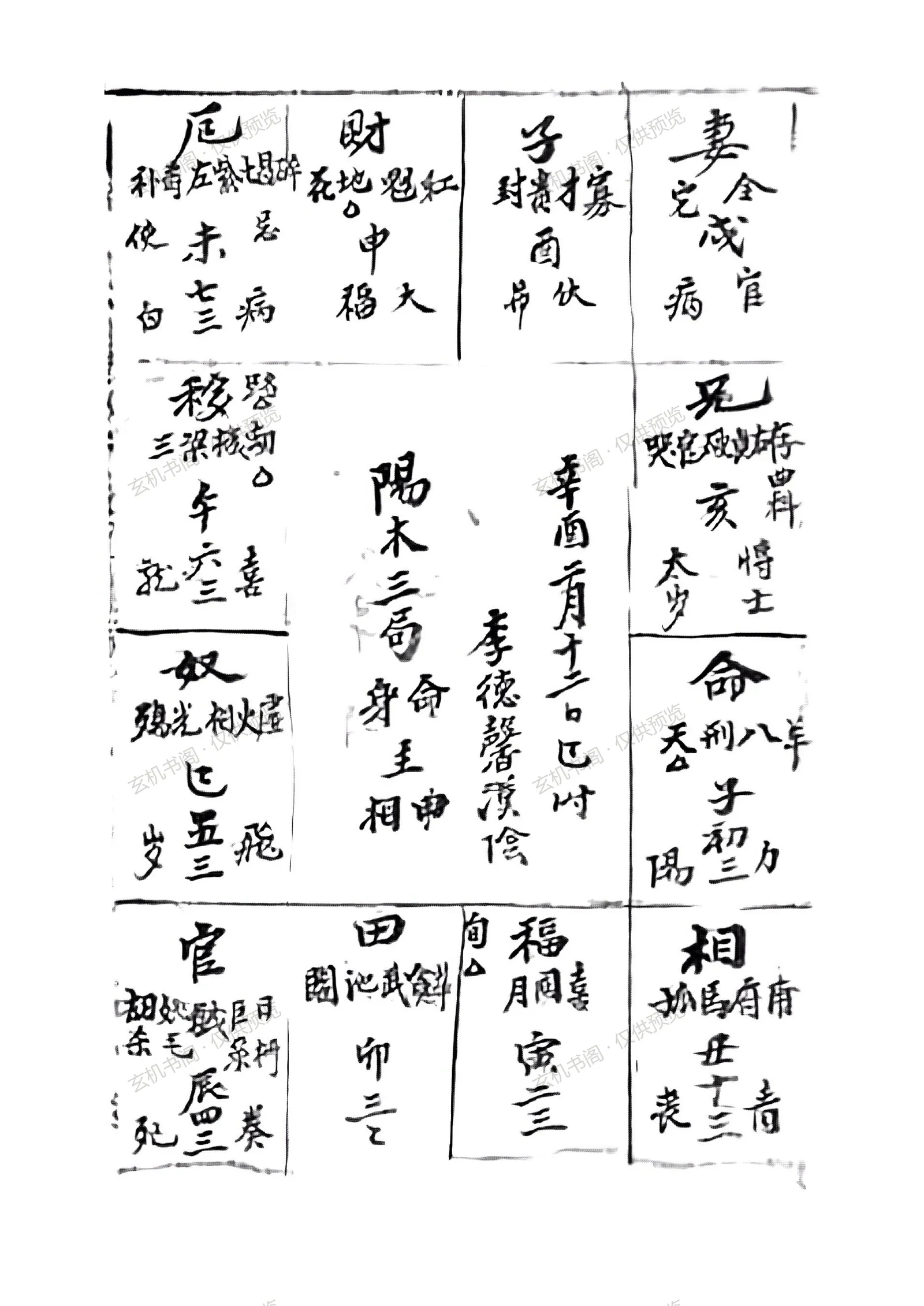
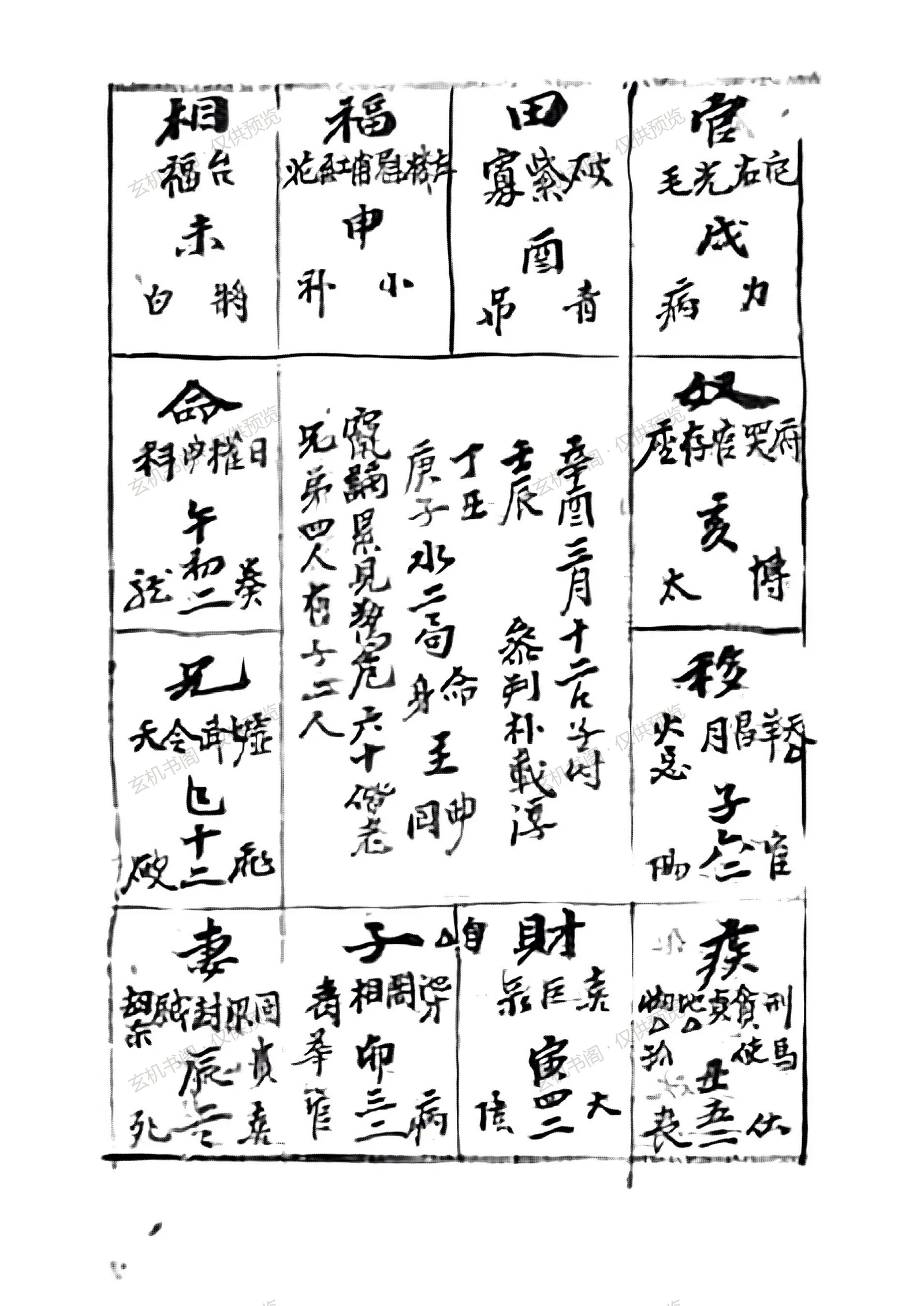
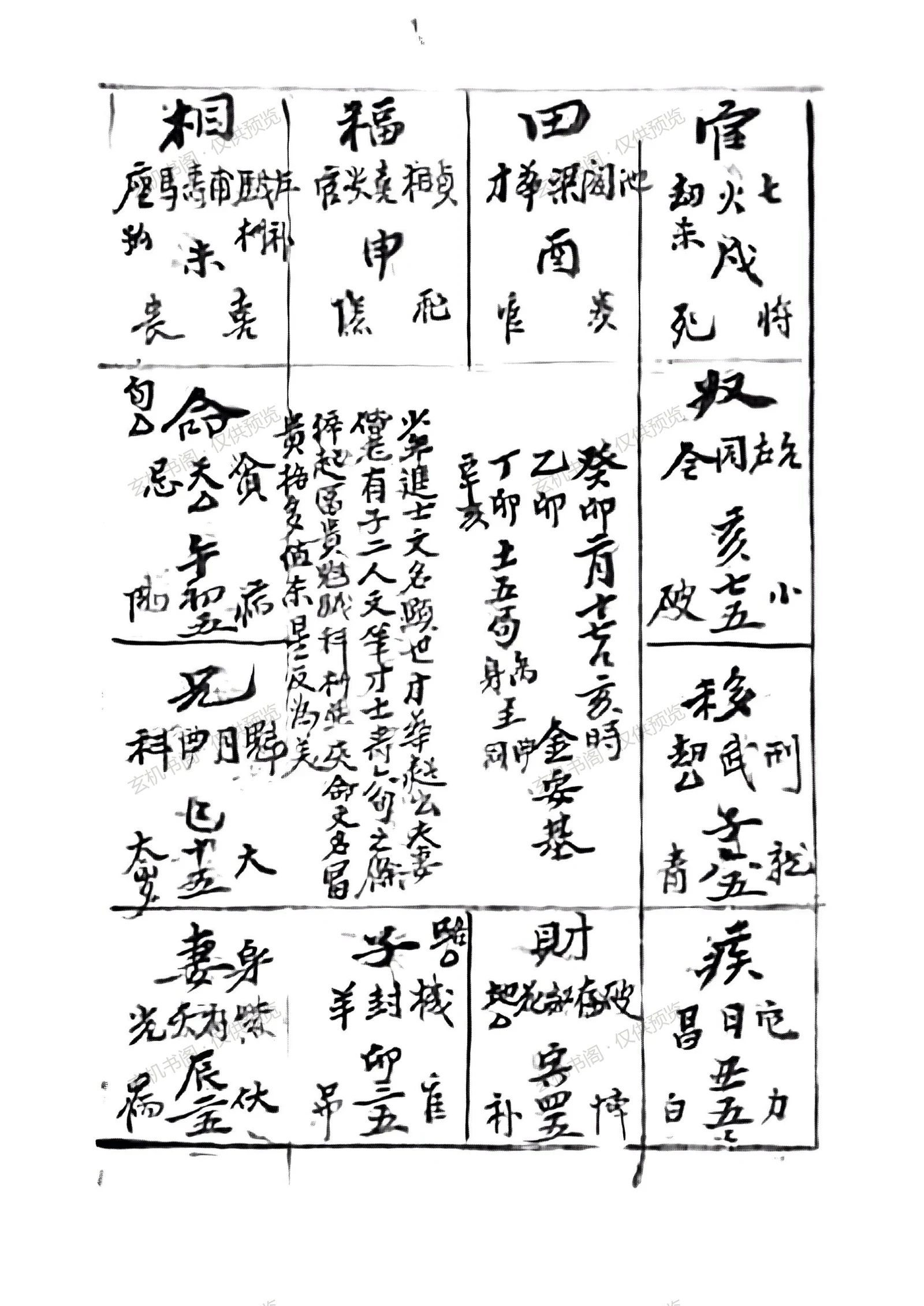
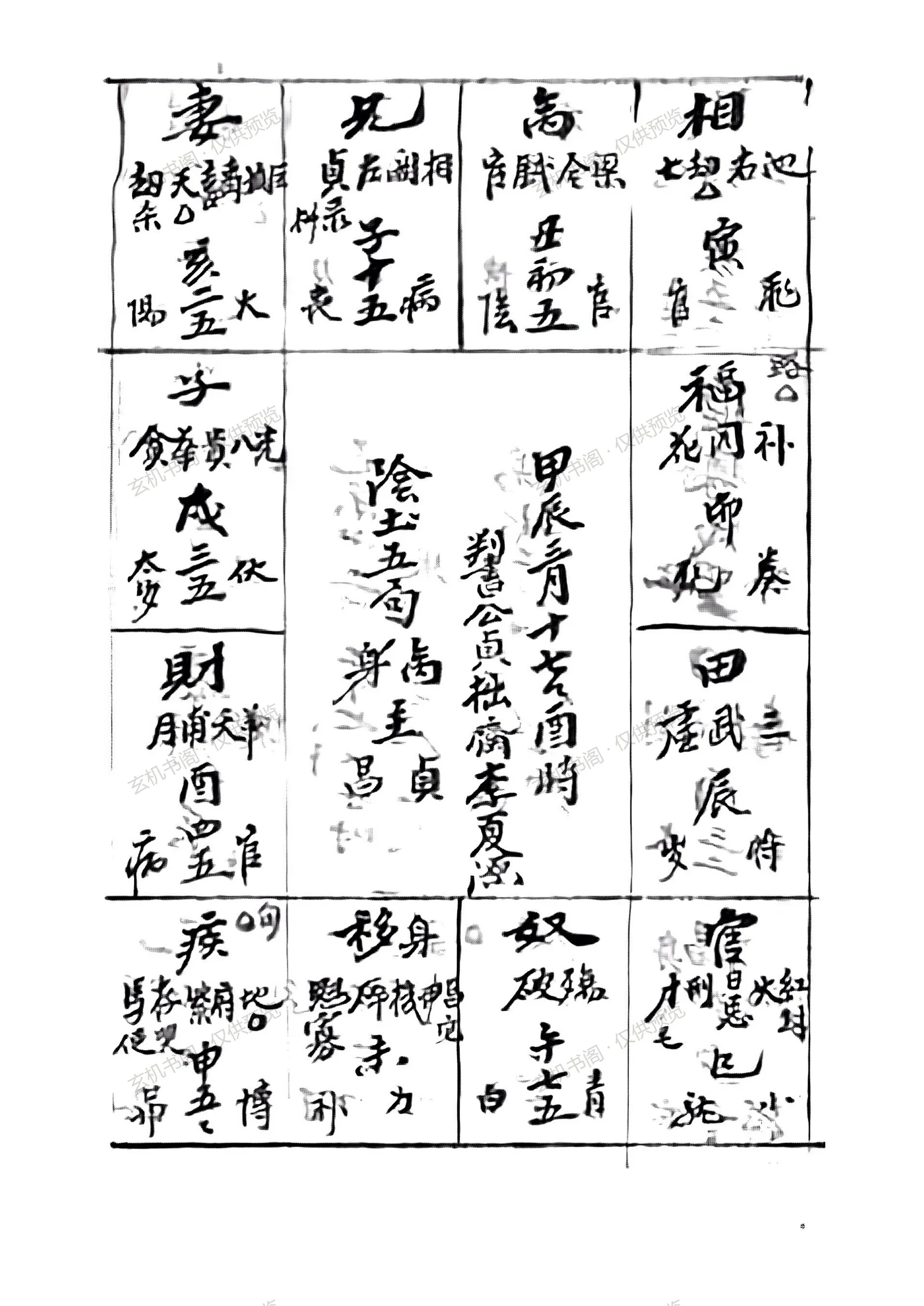
This Qing-dynasty handwritten manuscript, Ziwei Qiankun, survives here only as a cover and five pages of hand-drawn astrological charts. The cover bears the title in regular script; the remaining text is too blurred to identify an author or preface. Each page is divided into twelve palace squares arranged in the standard order of life, siblings, spouse, children, wealth, health, travel, servants, career, property, fortune and parents. Inside the squares are main stars, auxiliary stars, the four transformations, the twelve growth phases and annual limits, written in cursive with many abbreviations. The central palace records the birth year, month, day and hour, the life and body masters, and the yin-yang gender, along with named examples such as “Ming Taizu” and “Li Dexin”. The format matches modern Ziwei Doushu charts, but the careless cursive and shorthand show it is a practitioner's working draft or teaching copy rather than a systematic treatise. Its value lies in preserving actual Qing folk charting style and terminology for those studying the evolution of chart format, star placement and transformation marking; lacking explanatory text, it is not suitable as an introductory reader.
Contents
Cover: title “Ziwei Qiankun” in regular script
Chart 1: twelve palaces with birth data in the center
Chart 2: another case with limits and small limits
Chart 3: star transformations and twelve growth phases
Chart 4: multi-palace chart with cursive notes
Chart 5: final chart with sparse entries
Key Points
The book consists of handwritten twelve-palace Ziwei charts, not a theoretical treatise.
Each palace notes main stars, auxiliary stars, four transformations and growth phases.
The central palace records birth year, date and hour, life and body masters, and gender.
Named cases such as “Ming Taizu” and “Li Dexin” indicate copied example charts.
Cursive shorthand makes the text hard to read without a standard chart for comparison.