Reading guide
Content guideOverview
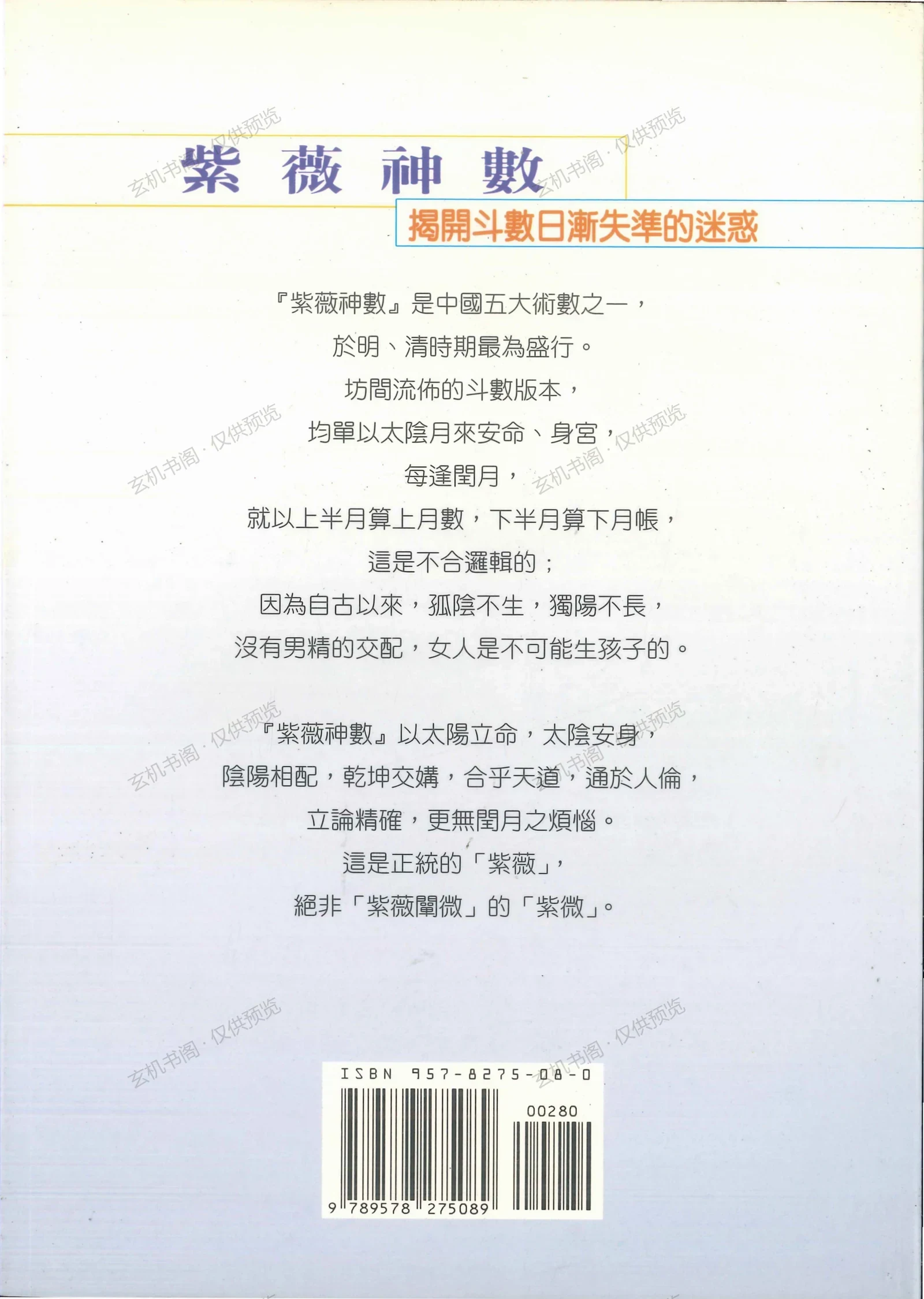
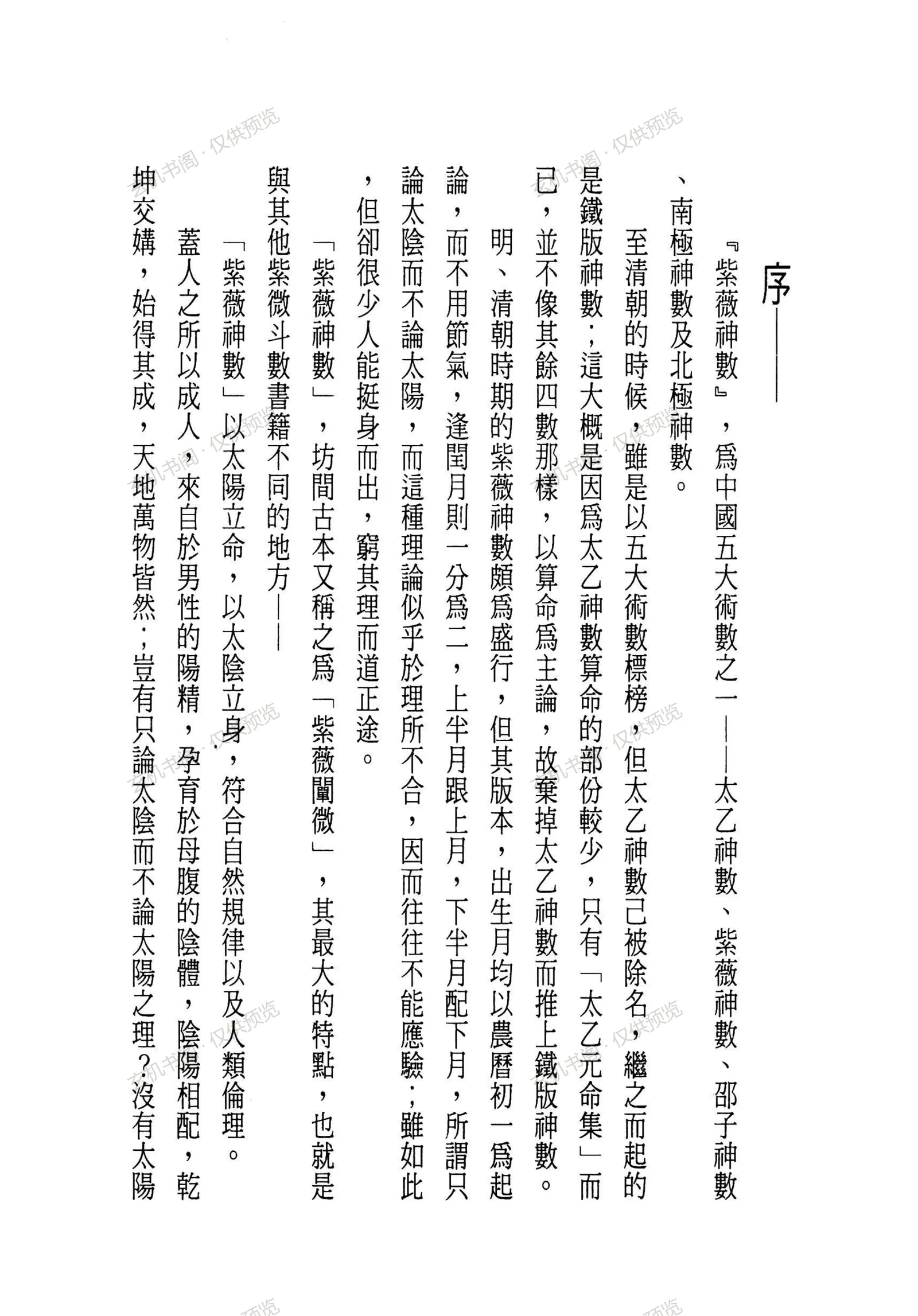
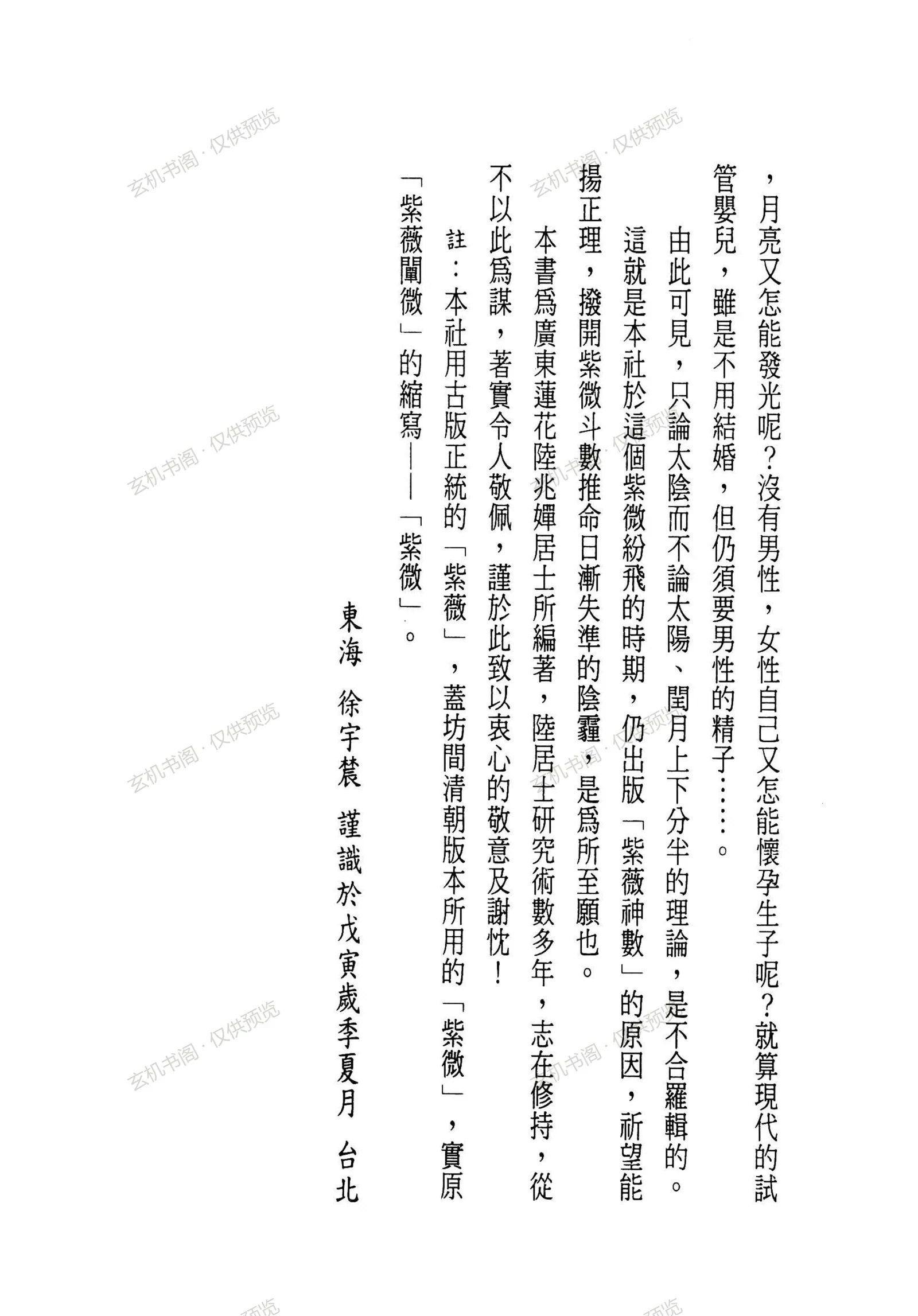
Compiled by Lu Zhaochang, this book examines the 'Purple Star Divine Numbers' (Zi Wei Shen Shu) tradition. Its central argument is that the popular Zi Wei Dou Shu method, which places the life and body palaces using only the lunar month and splits leap months into upper and lower halves, is logically inconsistent. Instead, it advocates a classical system that establishes the life palace by the sun and the body palace by the moon, aligning with yin-yang principles and human ethics. A preface by Xu Yunong traces the tradition and distinguishes it from the Zi Wei Chan Wei lineage. The main text proceeds through the basic chart-building steps: setting up the four pillars, placing the life and body palaces, arranging the twelve palaces, determining the five-element bureau, placing the Zi Wei star, the northern and southern dipper stars, and the fire, bell, literature and music stars. The book is aimed at readers already familiar with Zi Wei Dou Shu who wish to understand an alternative logic for palace placement and chart construction, and it emphasizes that this method does not rely on solar terms and is not troubled by leap months.
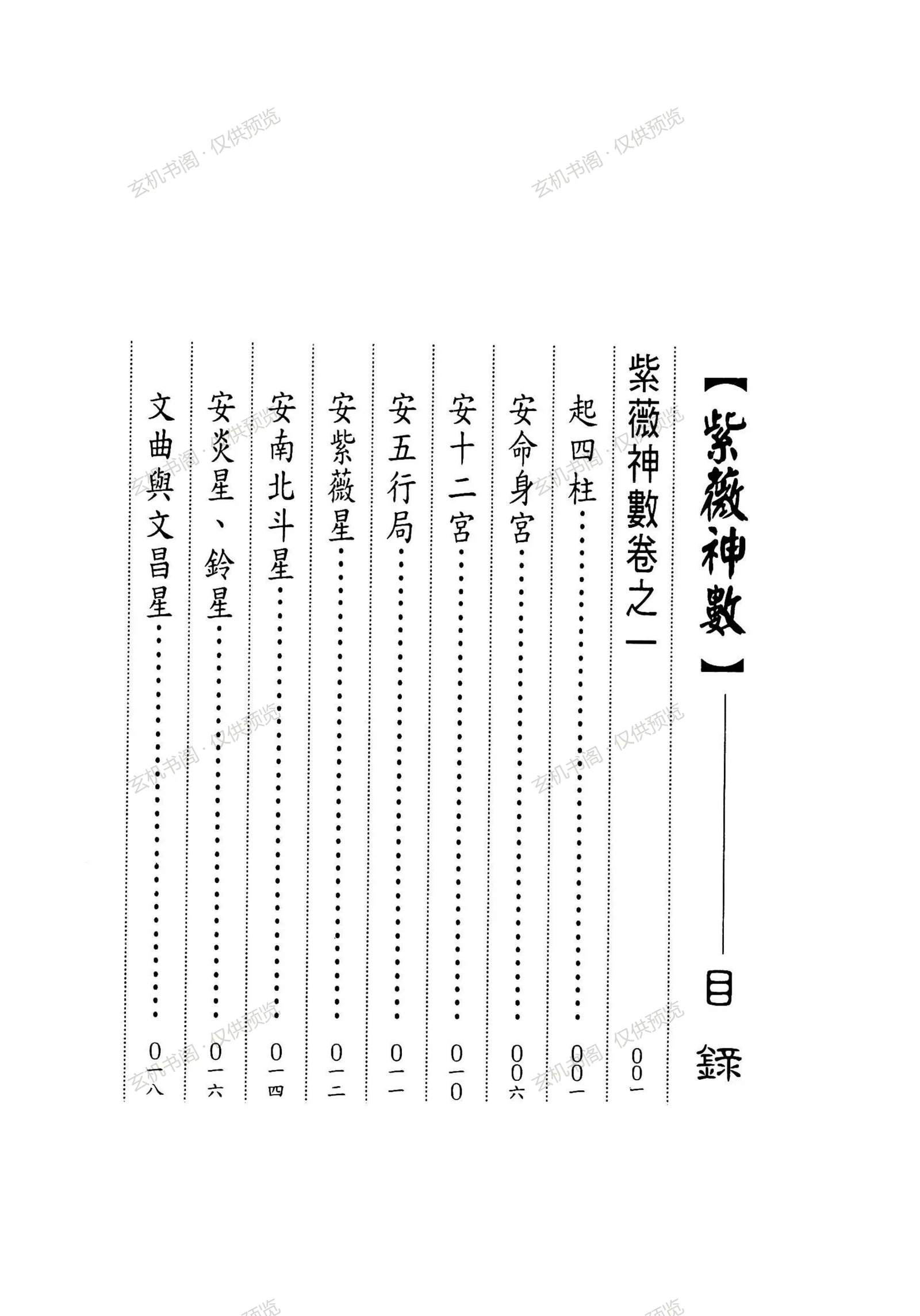
Contents
Preface: origins of Zi Wei Shen Shu and the flaws of popular Dou Shu
Setting up the four pillars
Placing the life and body palaces
Arranging the twelve palaces
Determining the five-element bureau
Placing the Zi Wei star
Placing the northern and southern dipper stars
Placing the fire, bell, literature and music stars
Key Points
Critiques the popular method of placing life and body palaces solely by lunar month and splitting leap months
Advocates sun for the life palace and moon for the body palace to reflect yin-yang harmony
Treats the classical 'Zi Wei' as orthodox, distinct from 'Zi Wei Chan Wei'
Explains chart construction step by step from four pillars to star placement
Emphasizes freedom from solar terms and leap-month complications