Reading guide
Content guideOverview
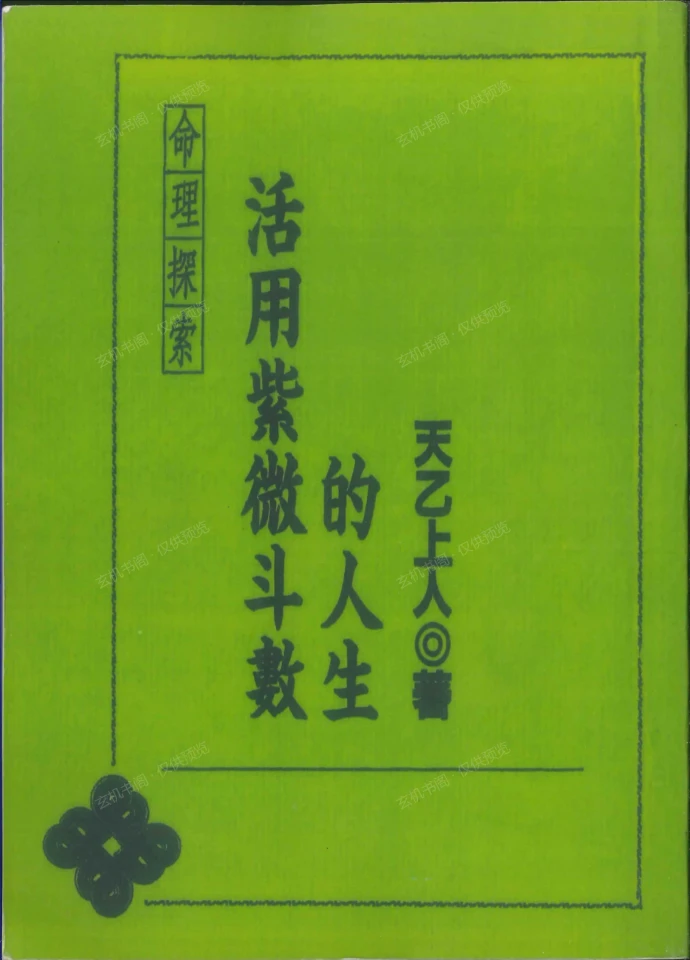
This is the first volume, the 'Ziwei section,' of Tianyi Shangren's Comprehensive Mirror of Ziwei, described on the cover as a commemorative work for the author's seventy-fifth anniversary. Judging from the visible preface and introduction, it begins with the concepts of ming and yun, comparing Eastern and Western approaches to fate calculation, then reviews the Chinese five arts (mountain, medicine, fate, divination, physiognomy). The author notes the long history and rich textual tradition of fate study while warning about dubious works, and divides practitioners into jianghu, scholarly-study, and academic schools, stressing both theory and verification. The core sections discuss the name and origins of Ziwei Doushu, linking it with Qimen Dunjia and the transmission attributed to Chen Tuan (Xiyi), along with references to Ming-dynasty Wuxin Daoren and a Wudang Daoist temple in Hubei, and introduce the Zhan Yan school and its patriarch Chen Jiasheng. Overall it is a source-and-concepts introduction, useful as background before studying Ziwei Doushu proper.
Contents
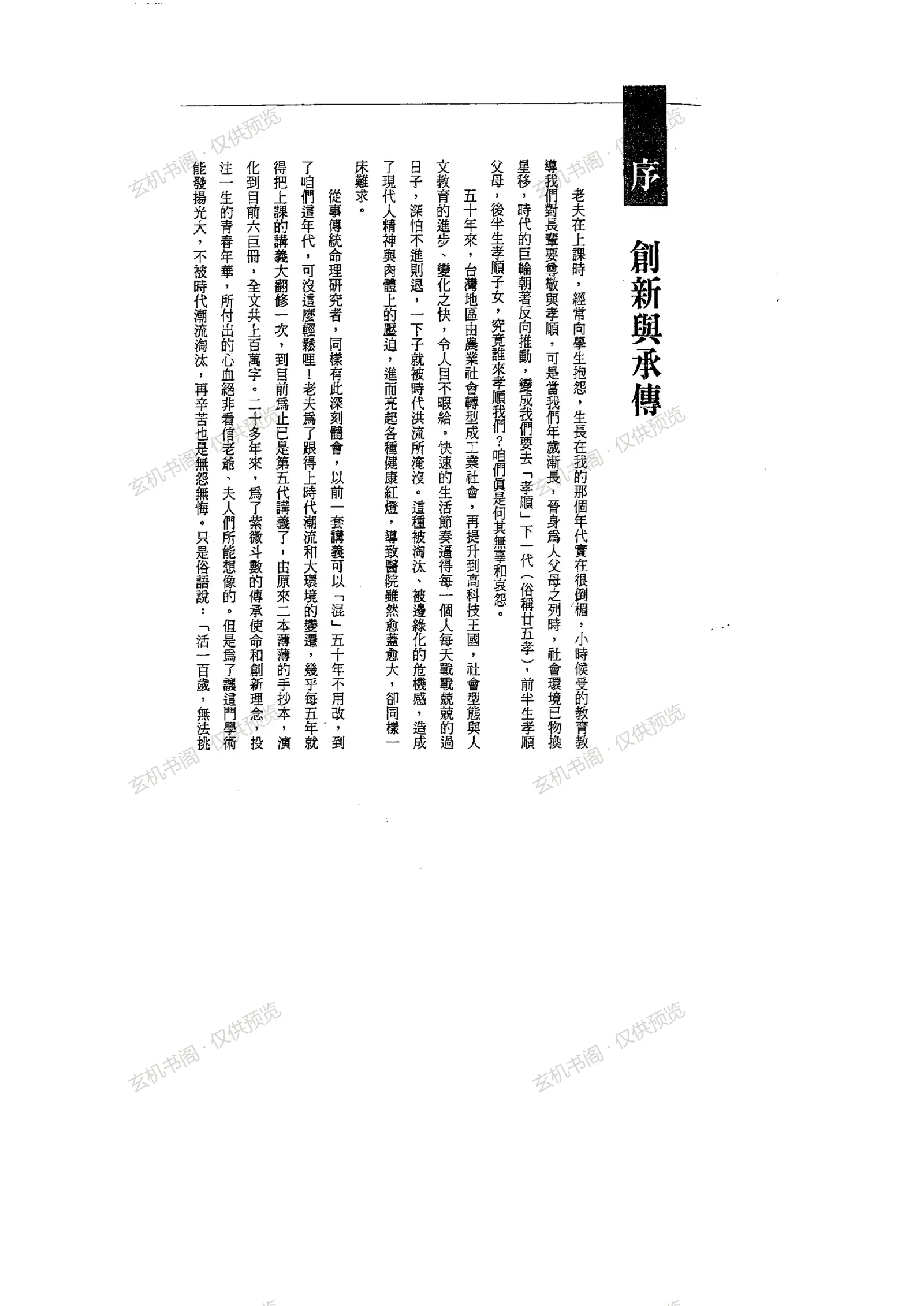
Preface: Innovation and Transmission
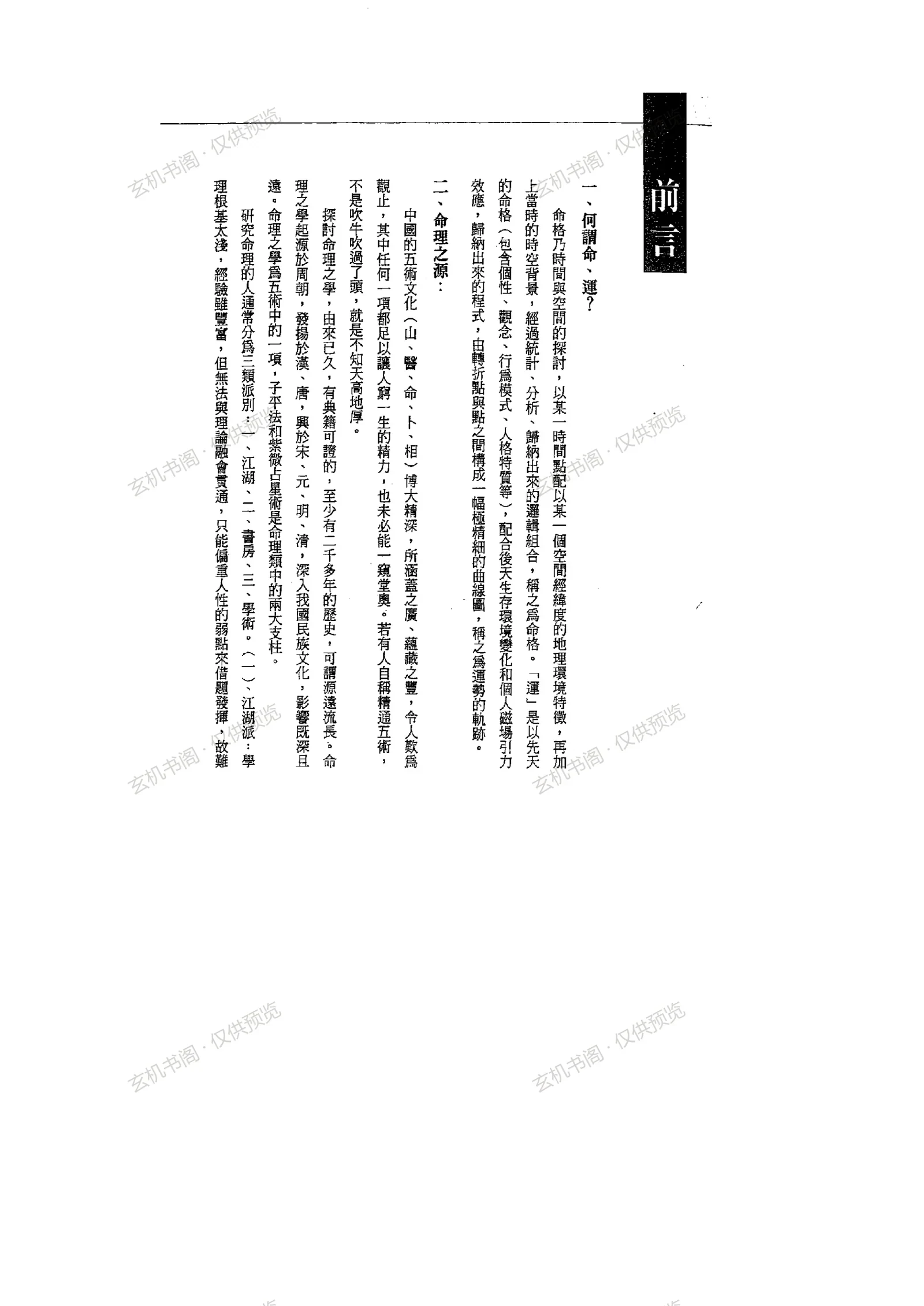
Introduction: What Are Ming and Yun?
Sources of Fate Theory and the Five Arts
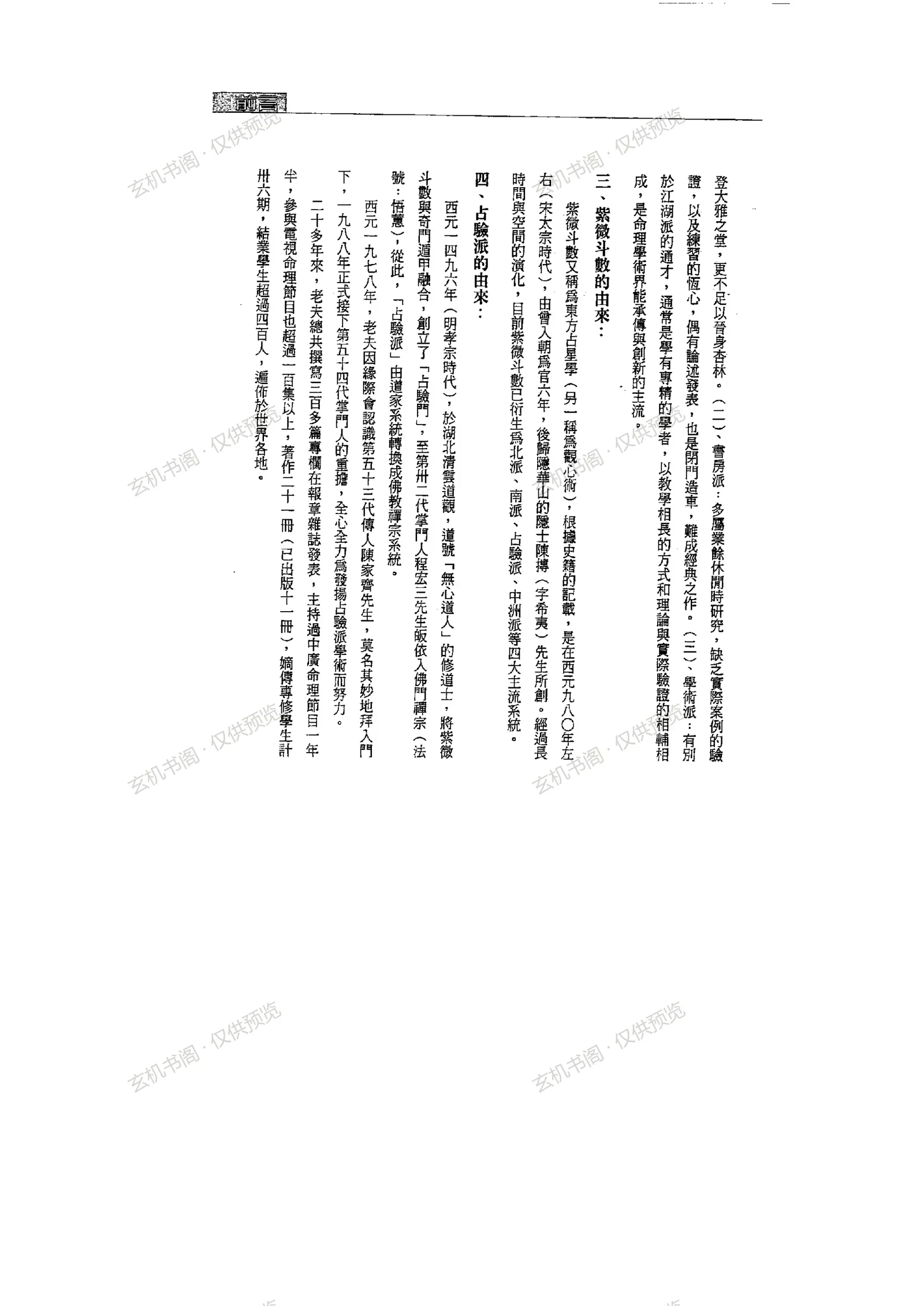
Origins of Ziwei Doushu
Origins and Lineage of the Zhan Yan School
Key Points
Distinguishes ming from yun and compares Eastern and Western fate calculation
Surveys the five arts and classical fate texts
Divides practitioners into jianghu, study, and academic schools
Discusses the name and Chen Tuan transmission of Ziwei Doushu
Introduces Zhan Yan patriarch Chen Jiasheng and related works