Reading guide
Content guideOverview
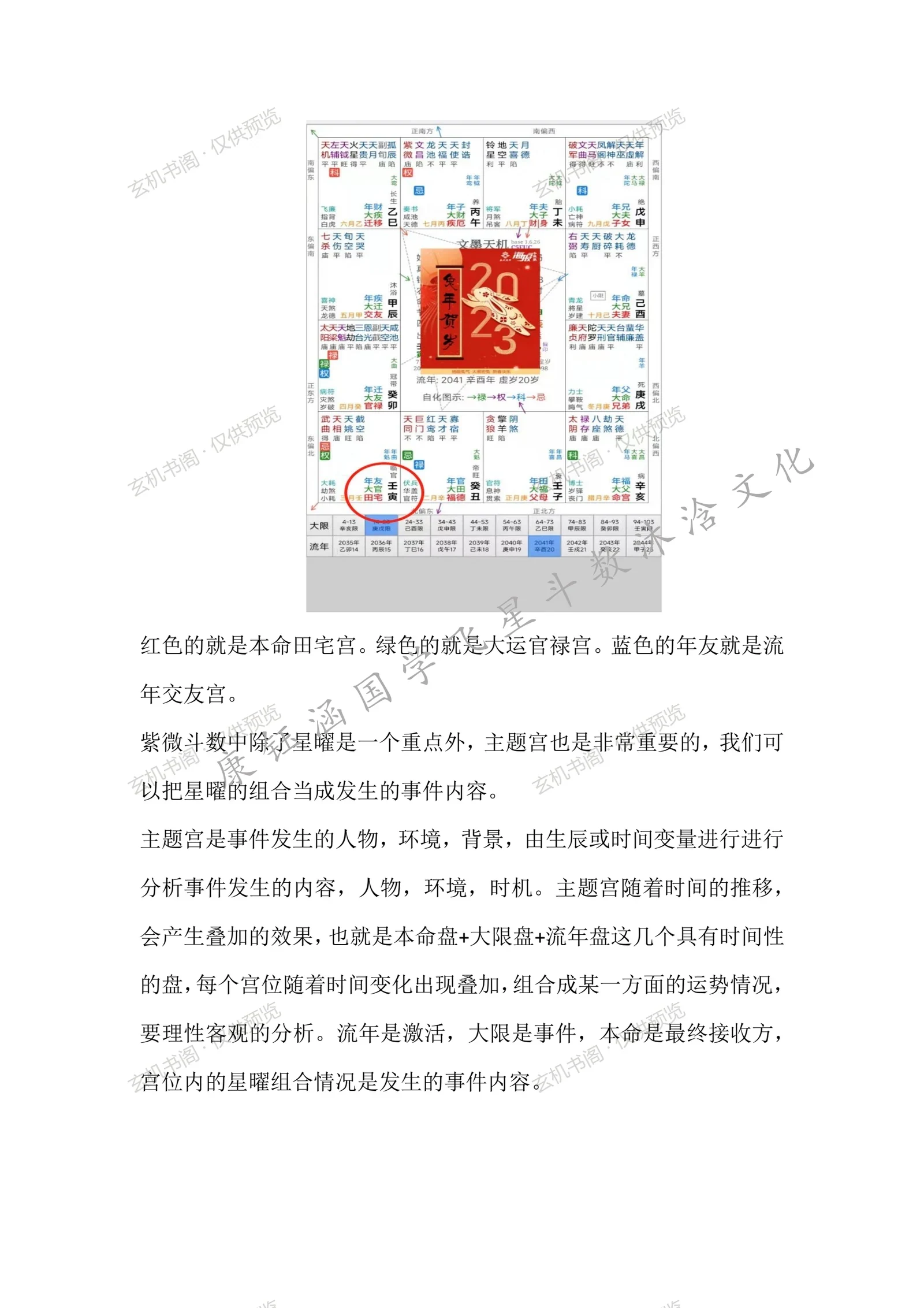
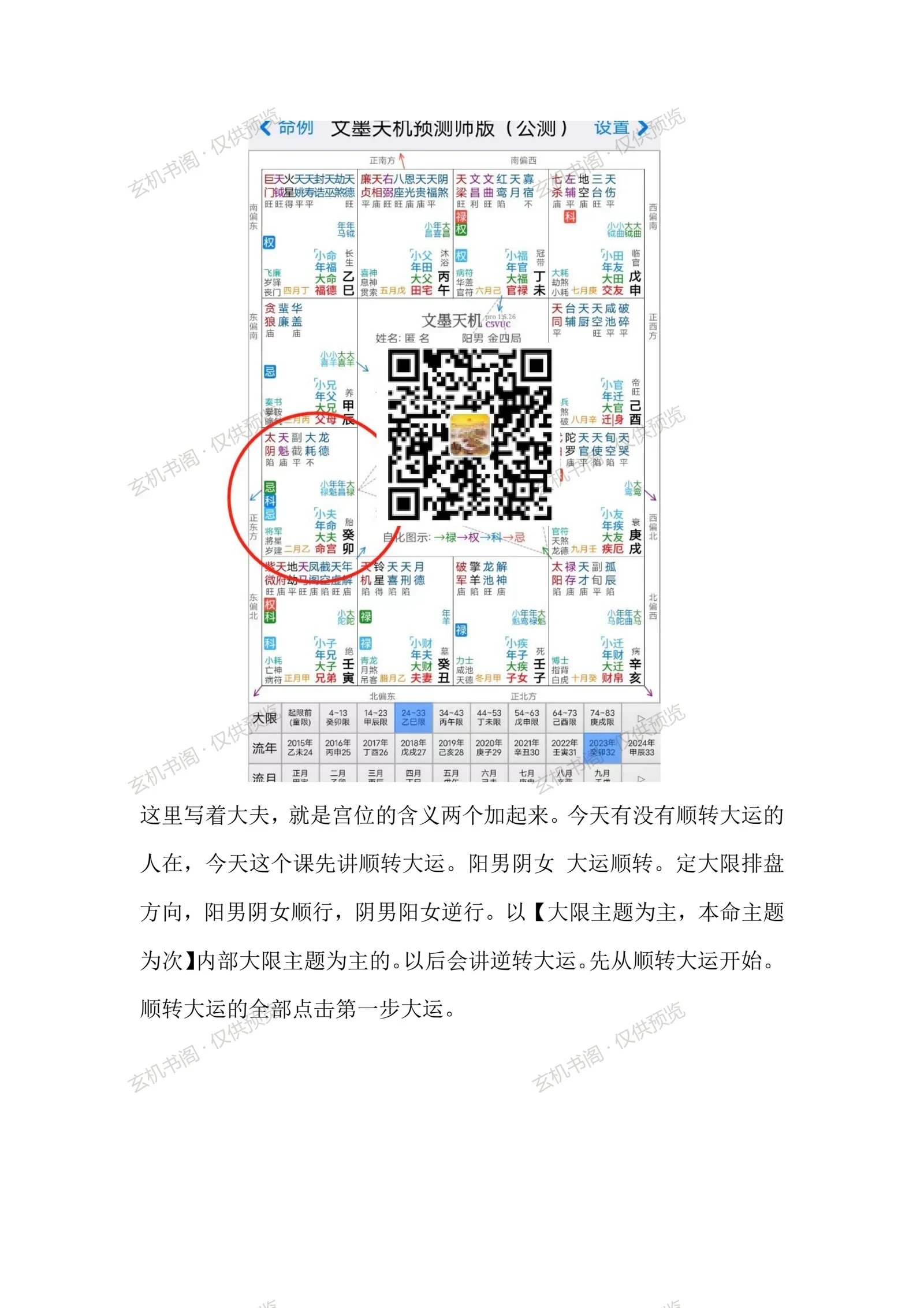
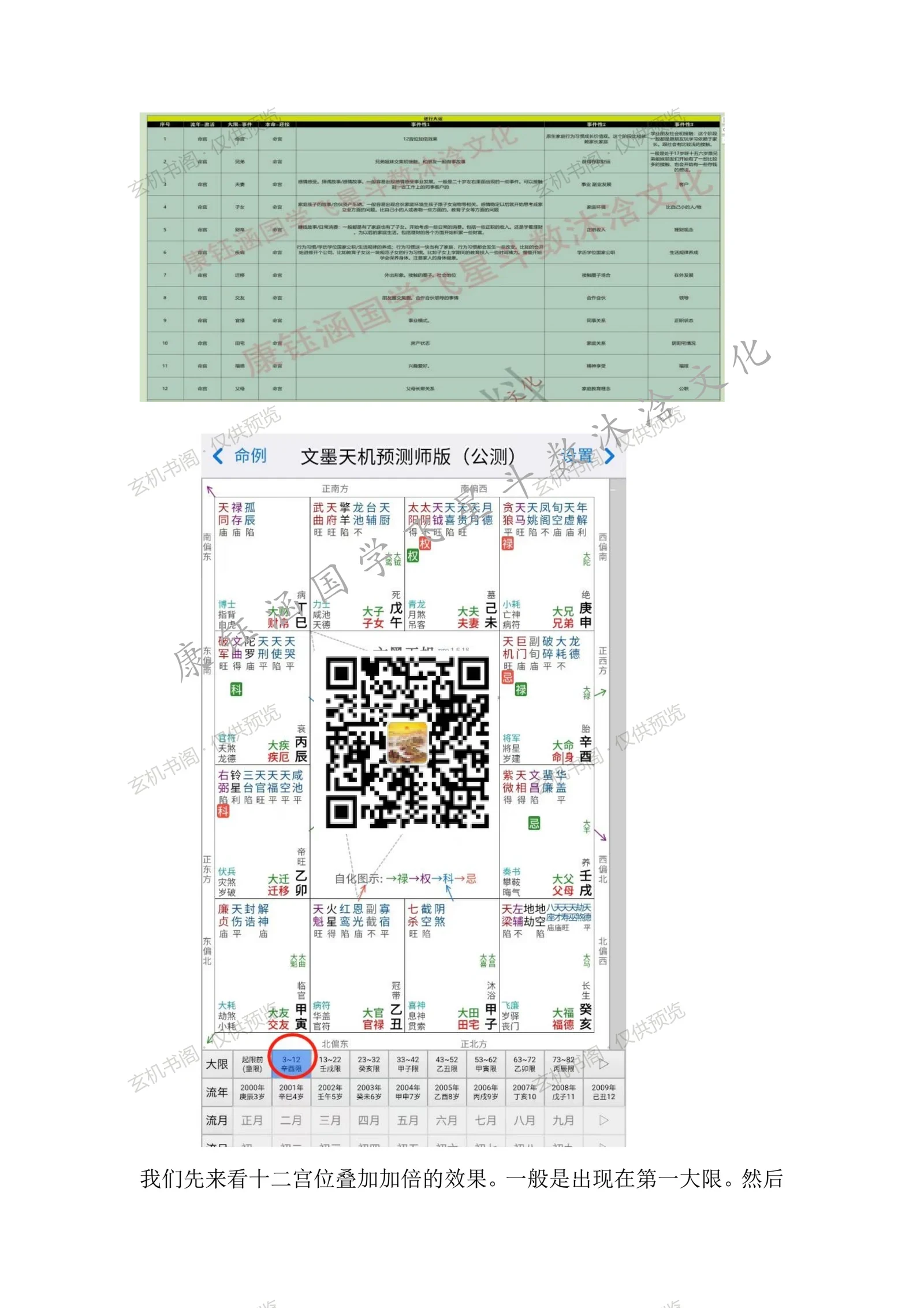
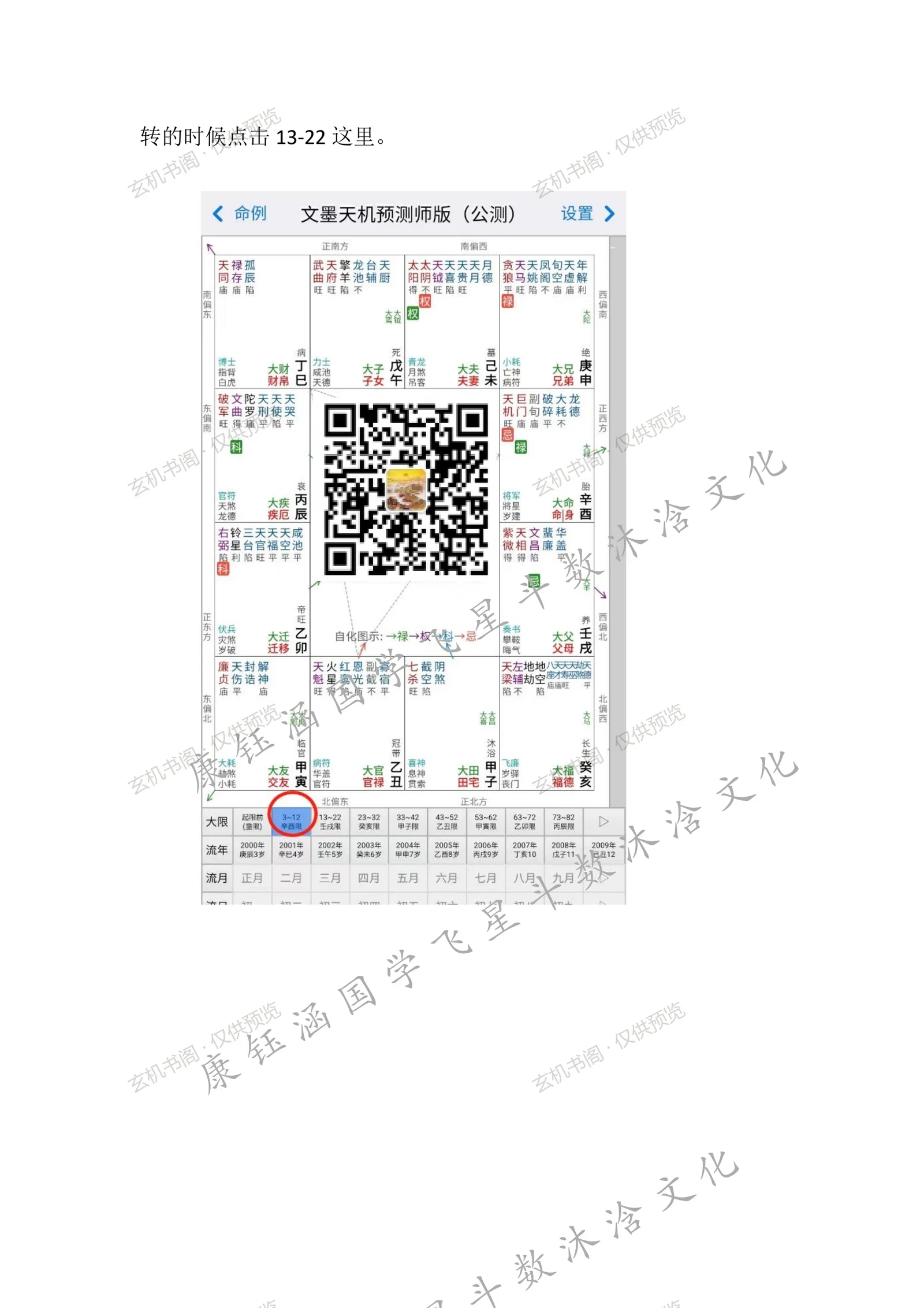
This lecture handout explains the concept of overlapping palaces (叠宫) in Zi Wei Dou Shu annual forecasting. It sets out the basic rule: palaces define people and matters, stars determine fortune, the four transformations reveal triggers, and cycles show change. Overlapping means stacking the natal chart, the decade (大限) chart, and the annual (流年) chart. The natal chart is the final receiver, the decade chart supplies the event, and the annual chart activates it, while the theme palace determines the people and setting involved. Using Wenyu Tianji charts, the handout marks the natal property palace in red, the decade career palace in green, and the annual friends palace in blue to demonstrate how the three layers combine. Later pages present a twelve-palace overlap table and real charts, explain the forward sequence for yang males and yin females and the reverse for yin males and yang females, and walk through the first decade step by step. A key example analyzes the decade spouse palace overlapping the natal palace to interpret spouse, opposite-sex, and side-job relationships.
Contents
Basic rules of Zi Wei Dou Shu judgment
The three-layer overlapping concept
Theme palaces and star combinations
Forward decade sequence and chart direction
Doubling effect of twelve-palace overlap
Example: decade spouse palace over natal palace
Key Points
Overlapping combines natal, decade, and annual charts
Annual activates, decade events, natal receives
Theme palace sets people and setting
Yang male/yin female go forward; yin male/yang female reverse
Decade spouse over natal palace reads spouse and relationships