Reading guide
Content guideOverview
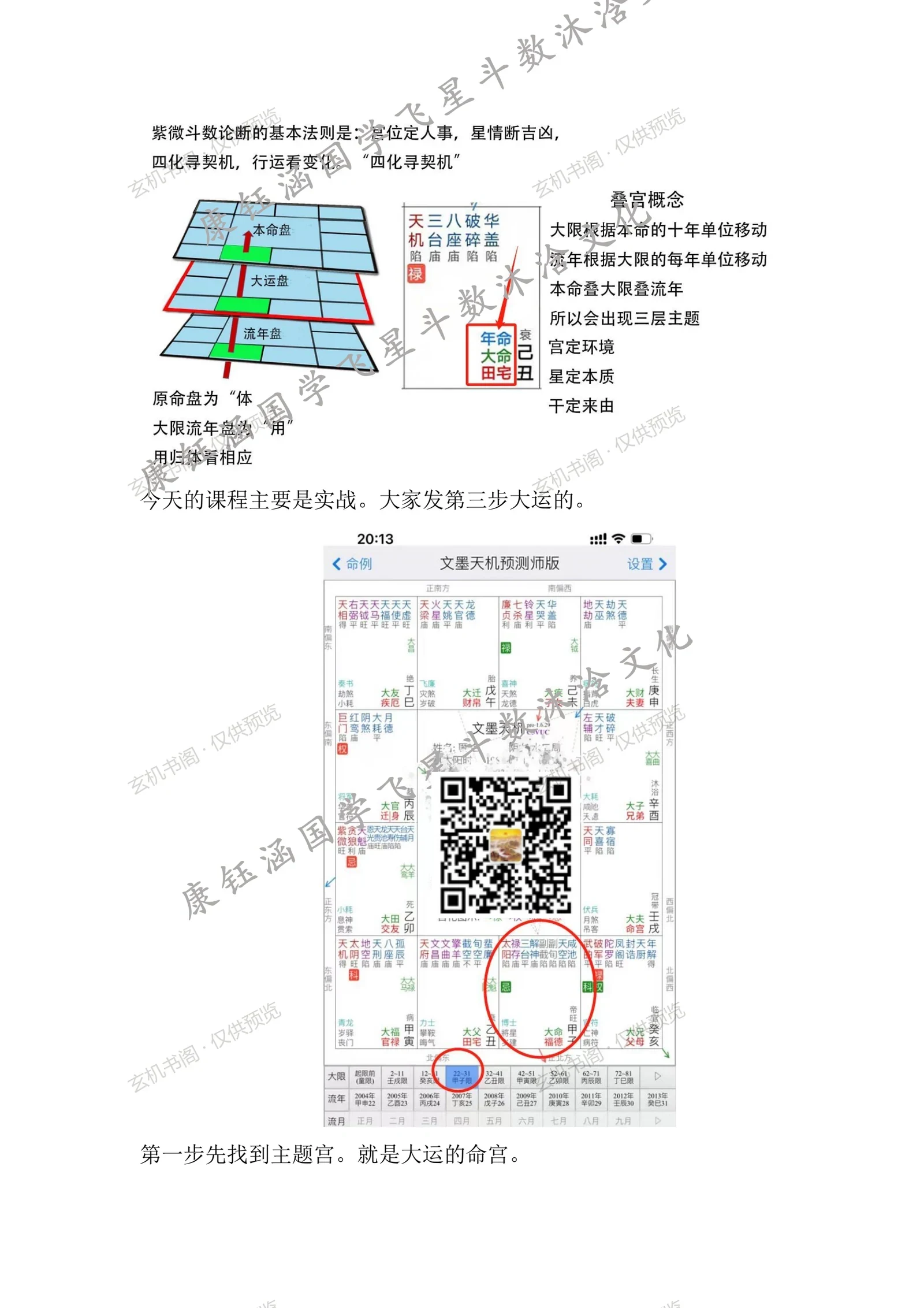
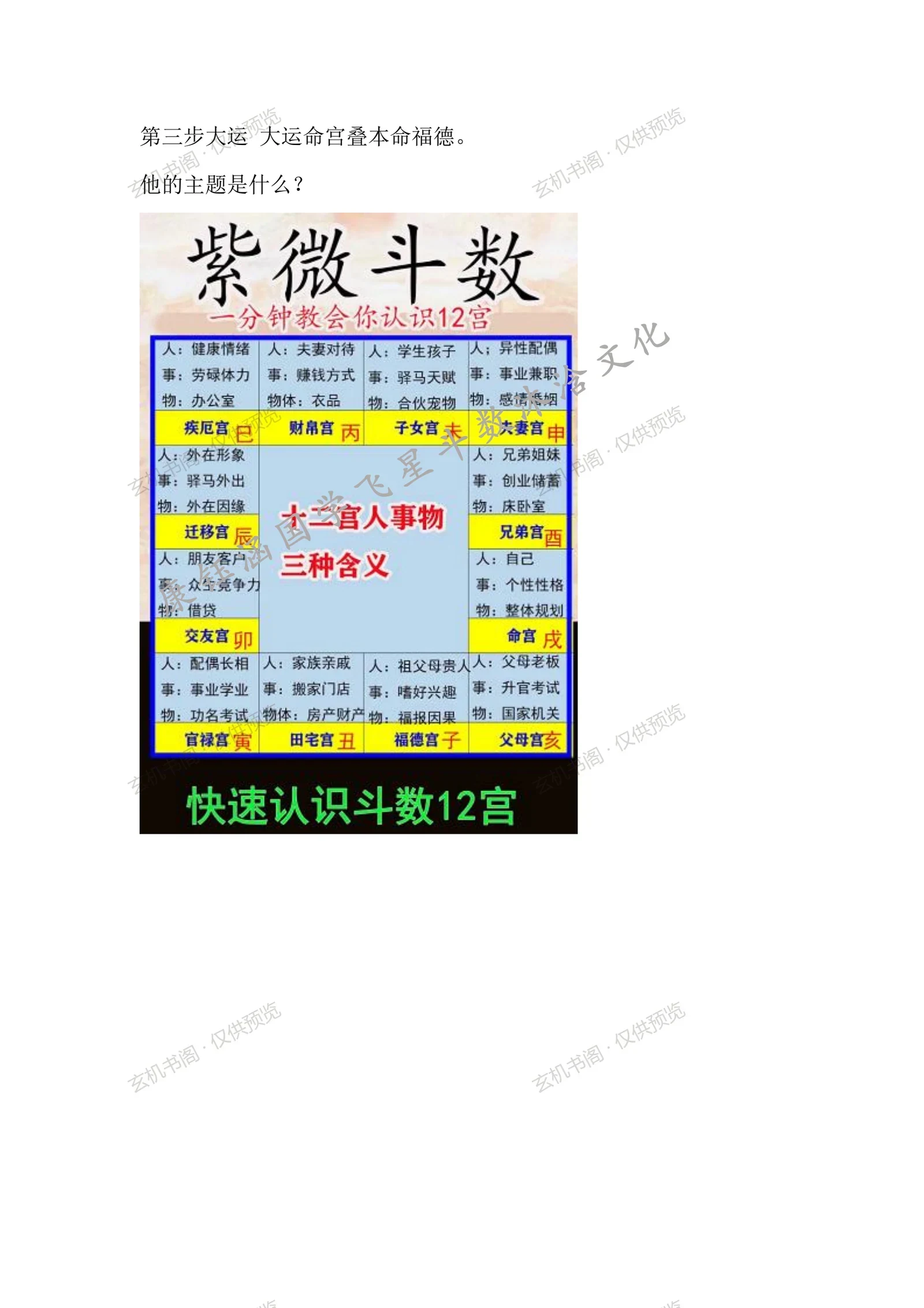
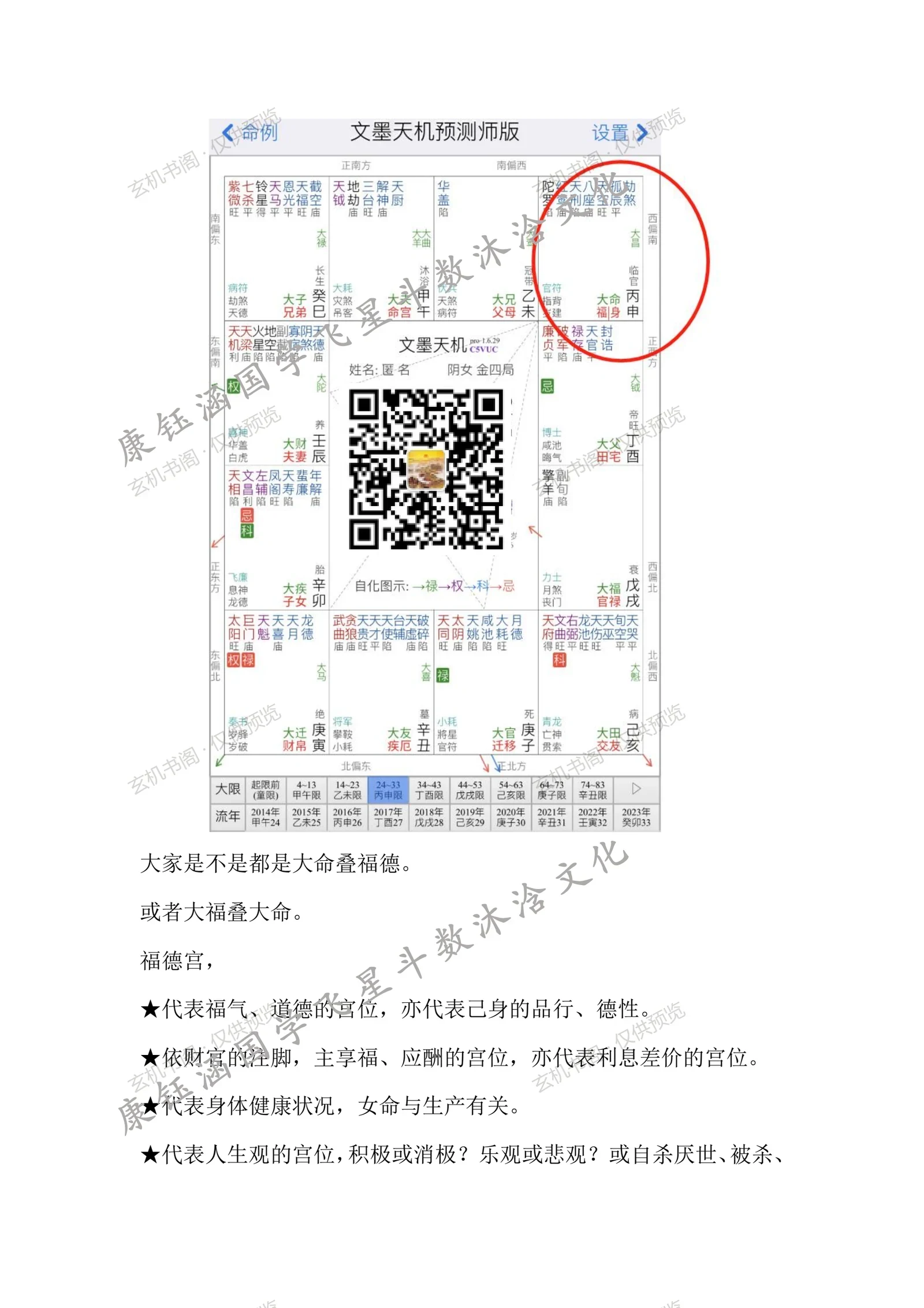
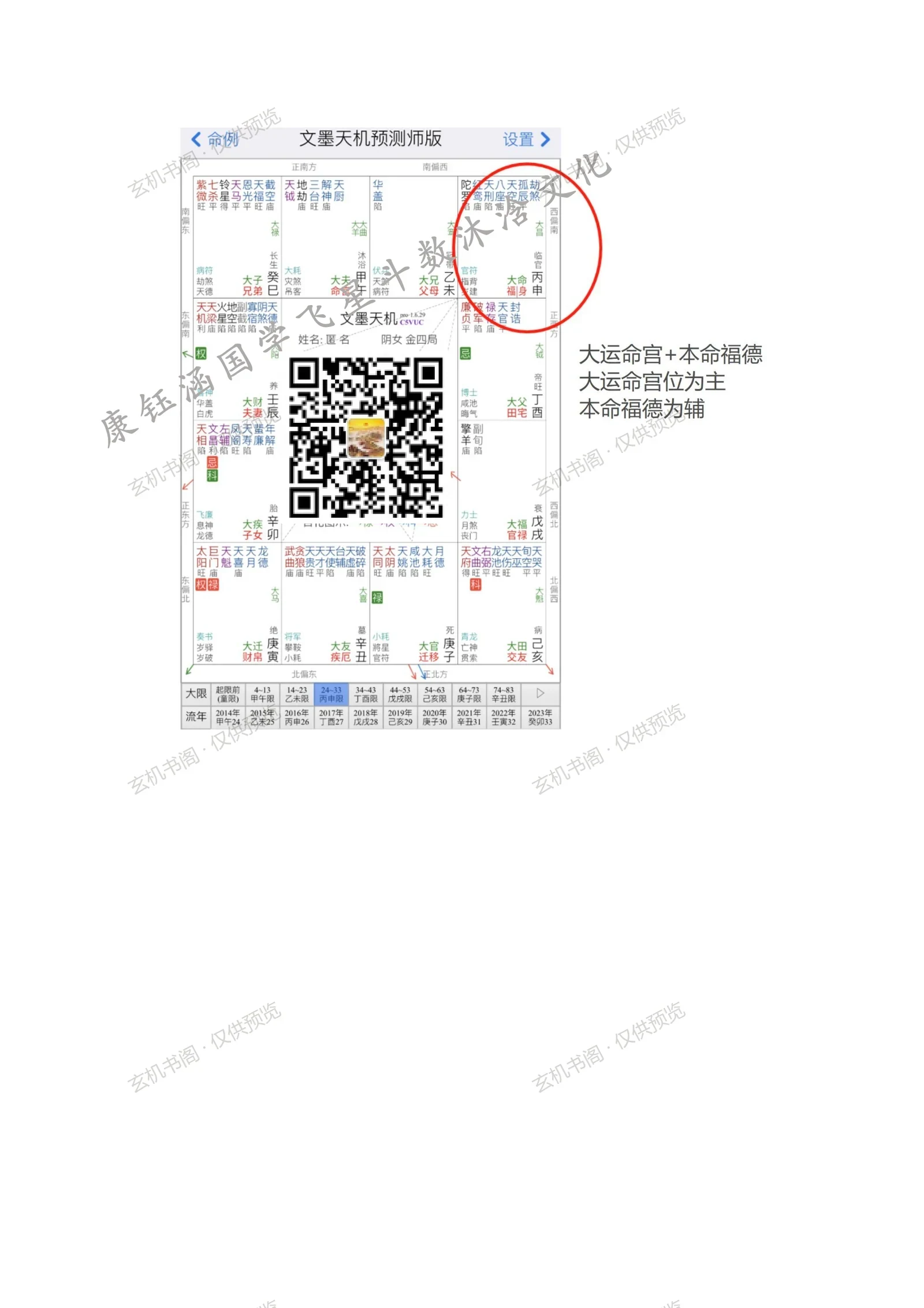
This handout explains the overlapping palaces method in Zi Wei Dou Shu. It begins with the basic principles of palace, star, and four transformations analysis, then illustrates how the natal chart, decade chart, and annual chart are layered, with the natal chart as substance and the moving charts as function. It defines overlapping palaces as the result of decade and annual units shifting, creating three layers of themes. Using a sample chart, the text demonstrates how to locate the theme palace (the decade life palace) and interpret its overlap with the natal fortune palace, detailing the multiple meanings of the fortune palace such as blessings, morality, wealth, health, and worldview. The text concludes that the decade chart is primary and the natal chart secondary in judgment.
Contents
Basic principles: palace, star, four transformations, movement
Layering natal, decade, and annual charts as substance and function
Overlapping palaces: moving units and three layers of themes
Palace defines setting, star defines nature, stem defines origin
Practical step: locate the theme palace (decade life palace)
Overlap of decade life palace with natal fortune palace and its meanings
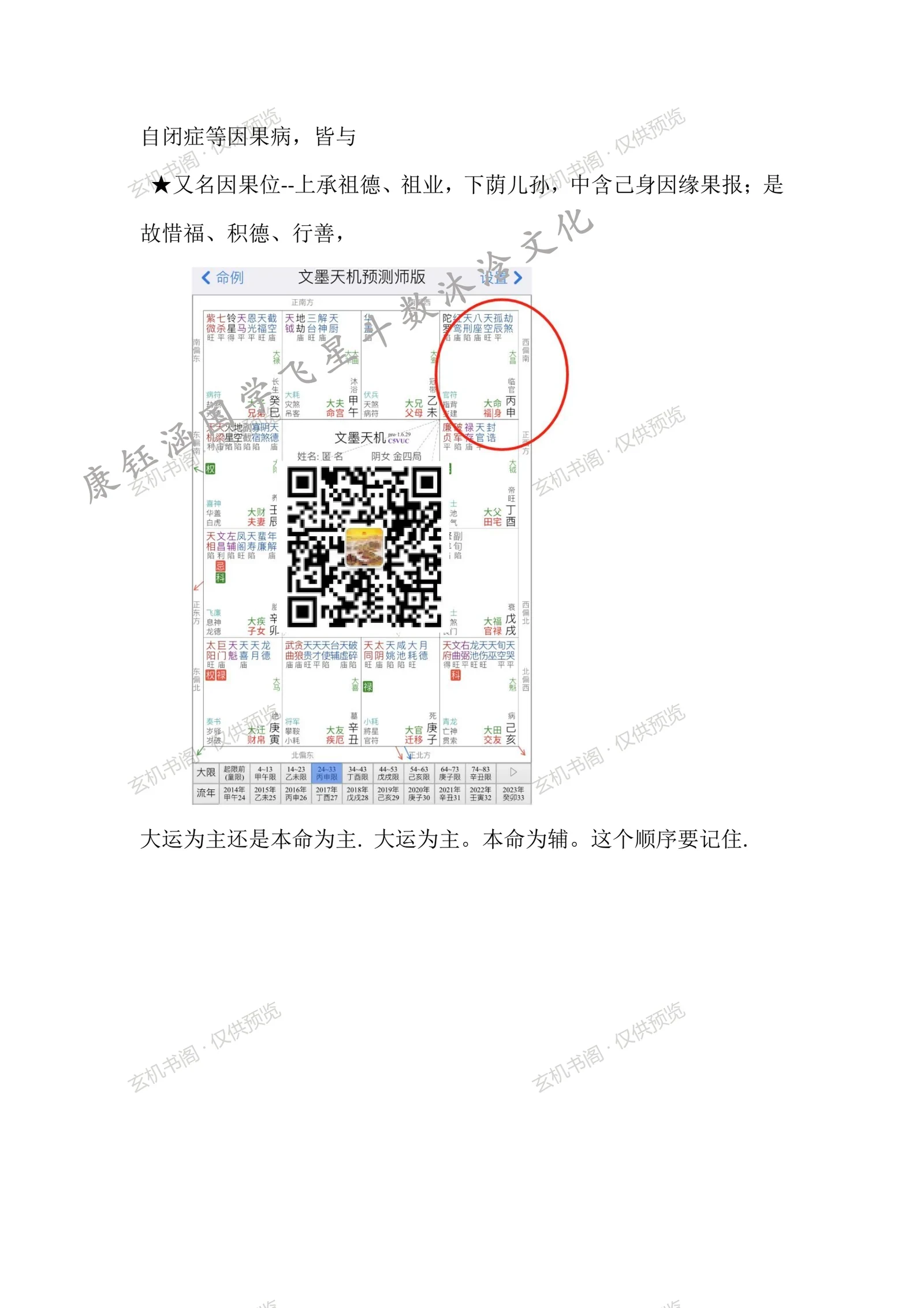
Order of judgment: decade primary, natal secondary
Key Points
Overlapping palaces layer natal, decade, and annual charts; function returns to substance
First locate the theme palace, the decade life palace
Palace sets the setting, star sets the nature, stem sets the origin
When decade life palace overlaps natal fortune palace, analyze the fortune palace's meanings
Judgment order: decade primary, natal secondary
Fortune palace represents blessings, morality, wealth, health, worldview, and karma