Reading guide
Content guideOverview
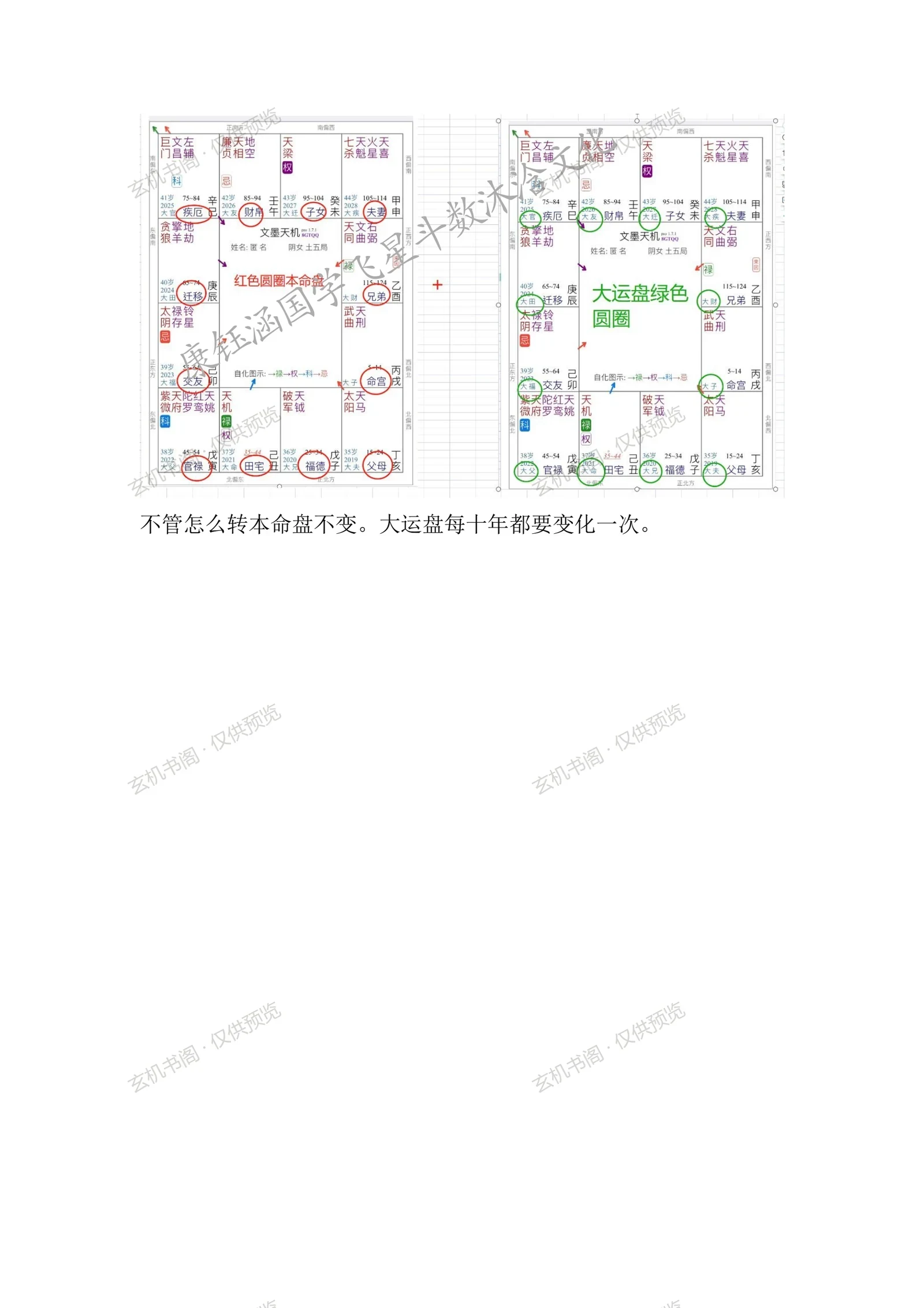
This handout from Kang Yuhan's Zi Wei Dou Shu mini-class focuses on overlapping palaces (叠宫) for reading events across the decade and annual cycles. It opens with a three-layer chart diagram showing the natal chart, decade chart, and annual chart, noting that the annual chart activates, the decade chart marks events, and the natal chart is the final receiver. A second section uses a diagram of the four transformations (lu, quan, ke, ji) to explain the imagery-based logic, stressing that one should understand the essence rather than memorize, since overlapping palaces is essentially a technique of taking images and重合. A chart then lists the twelve palaces with composite meanings, followed by explanations of each palace's significance during transits. Examples of karmic illness are given, such as a ji transformation of Wen Chang or Wen Qu in the Children Palace relating to reproductive issues. The final pages show sample charts with red circles for the natal chart and green circles for the decade chart, noting the natal chart stays fixed while the decade chart changes every ten years. It is a practical course companion for readers with basic Zi Wei Dou Shu knowledge who want to grasp the logic of overlapping-palace judgment.
Contents
Overlapping concept: natal, decade, annual charts
Annual activates, decade events, natal receives
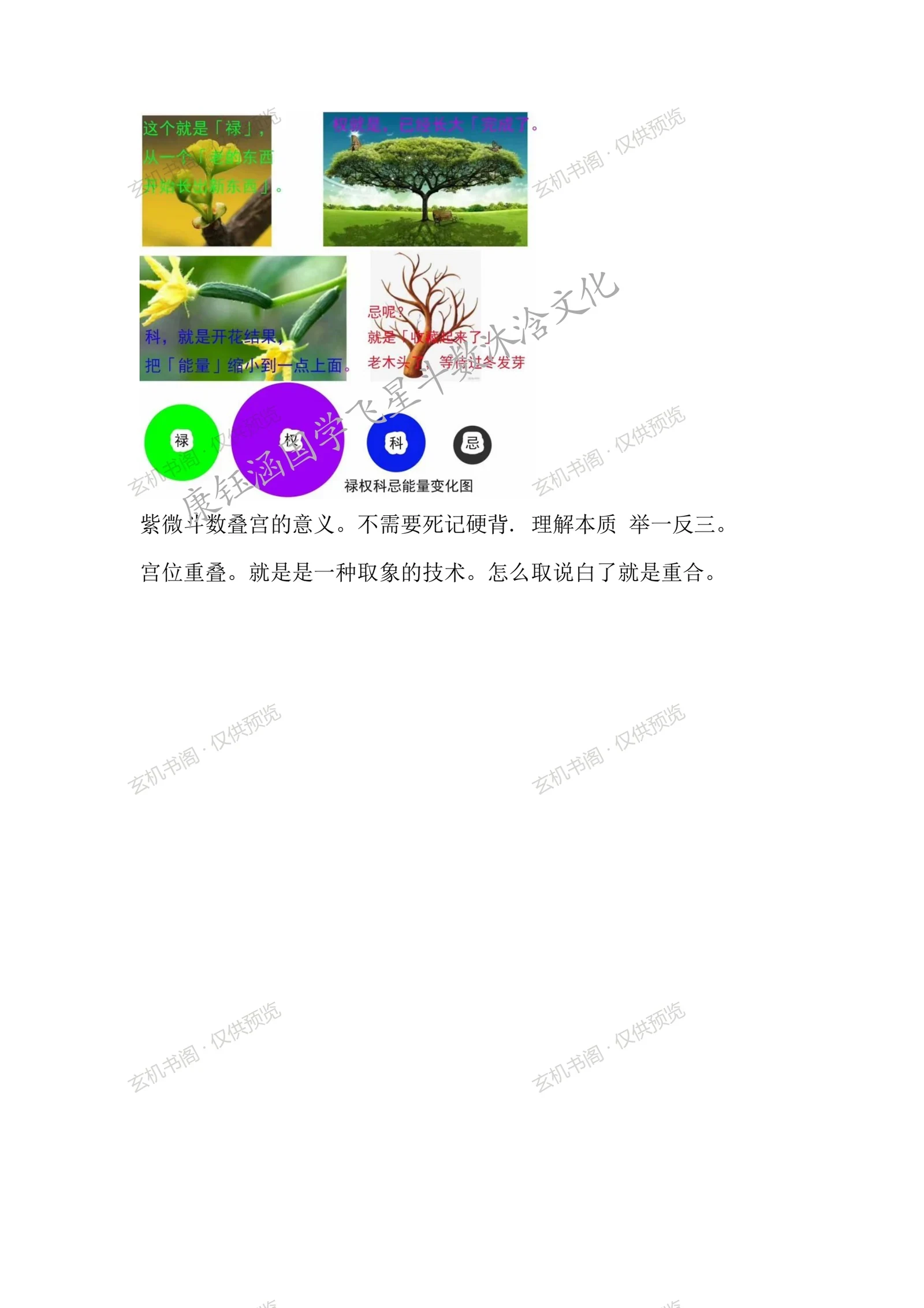
Four transformations diagram and image-taking
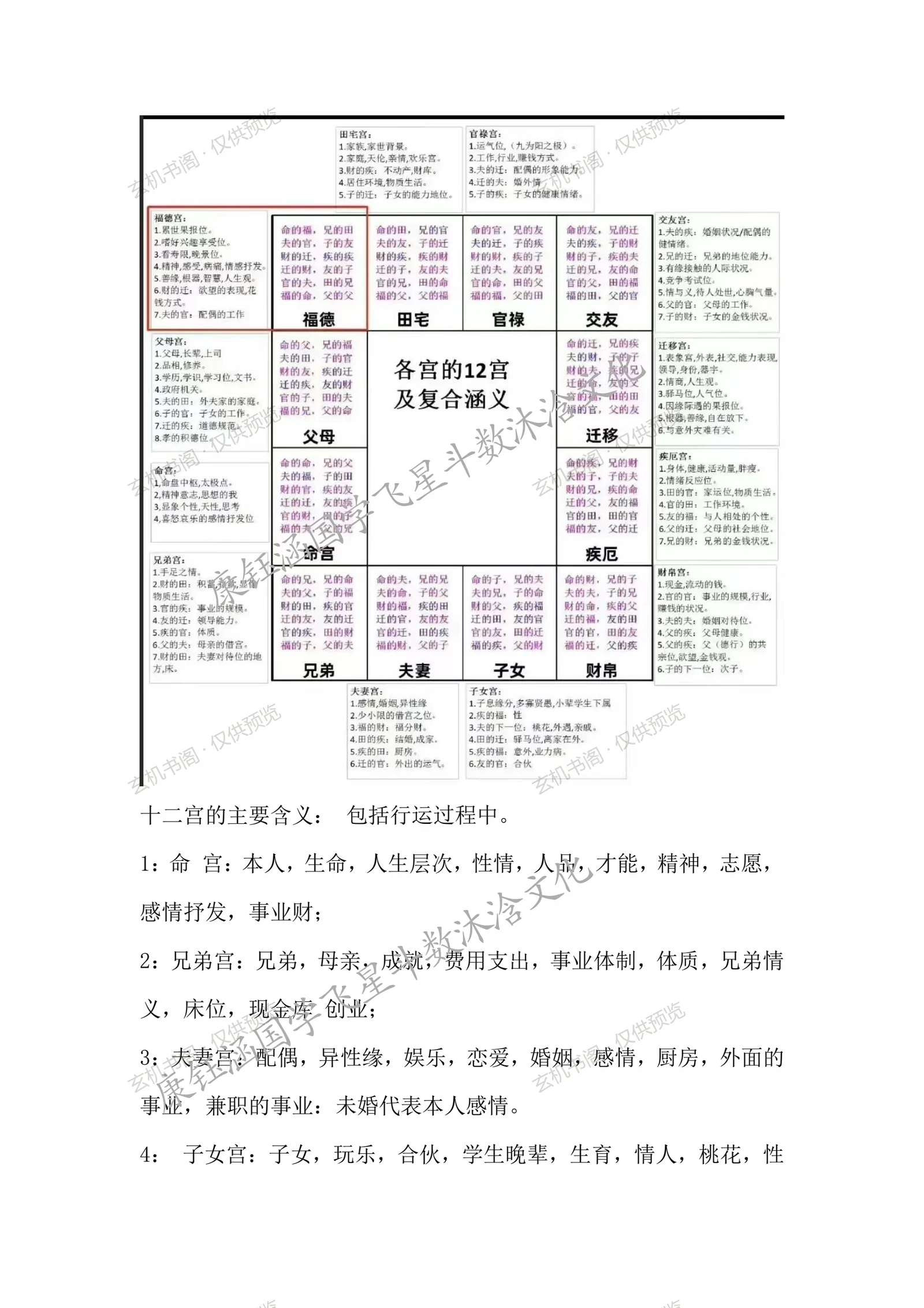
Chart of the twelve palaces and composite meanings
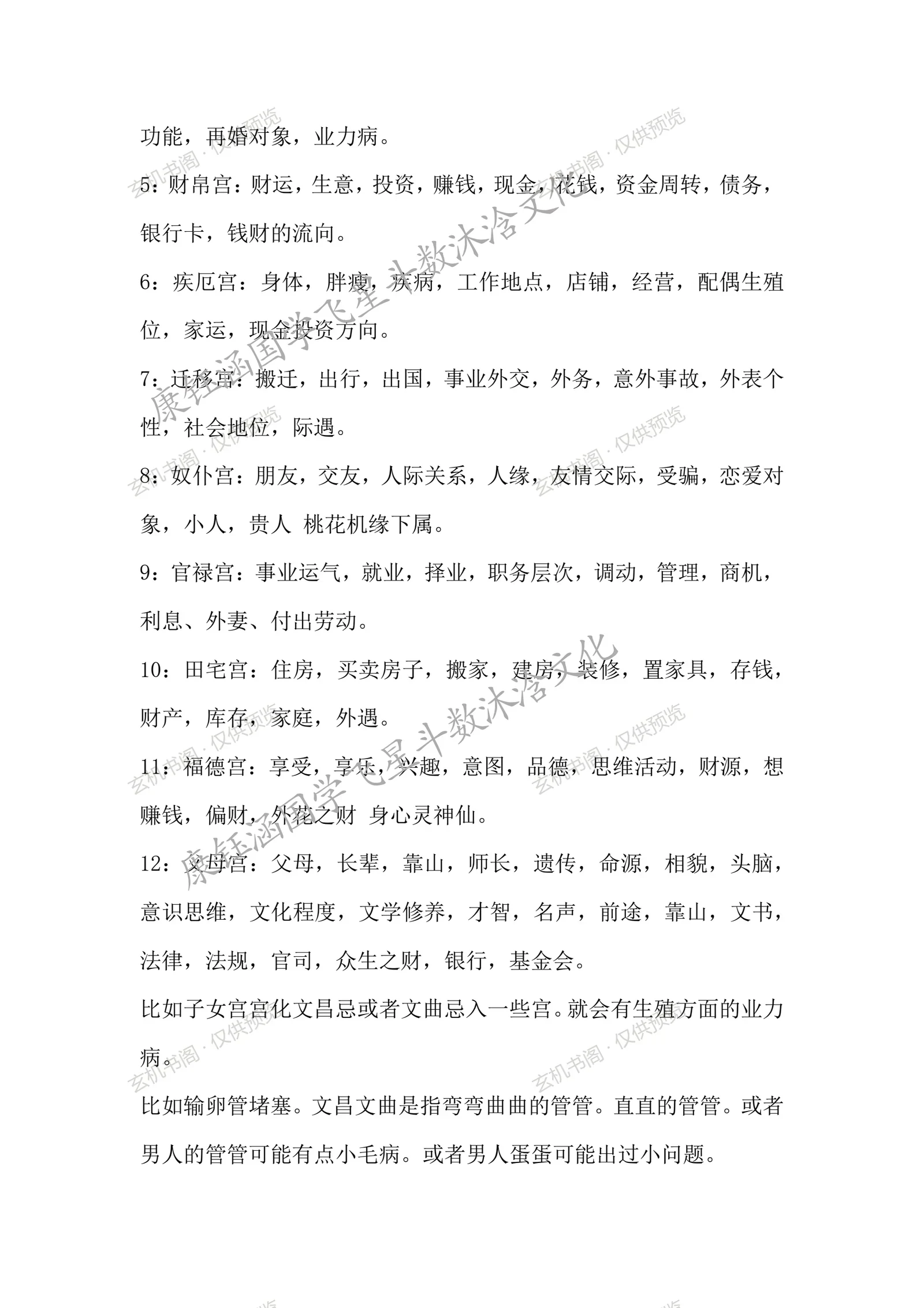
Palace meanings during transits
Karmic illness example: Children Palace ji
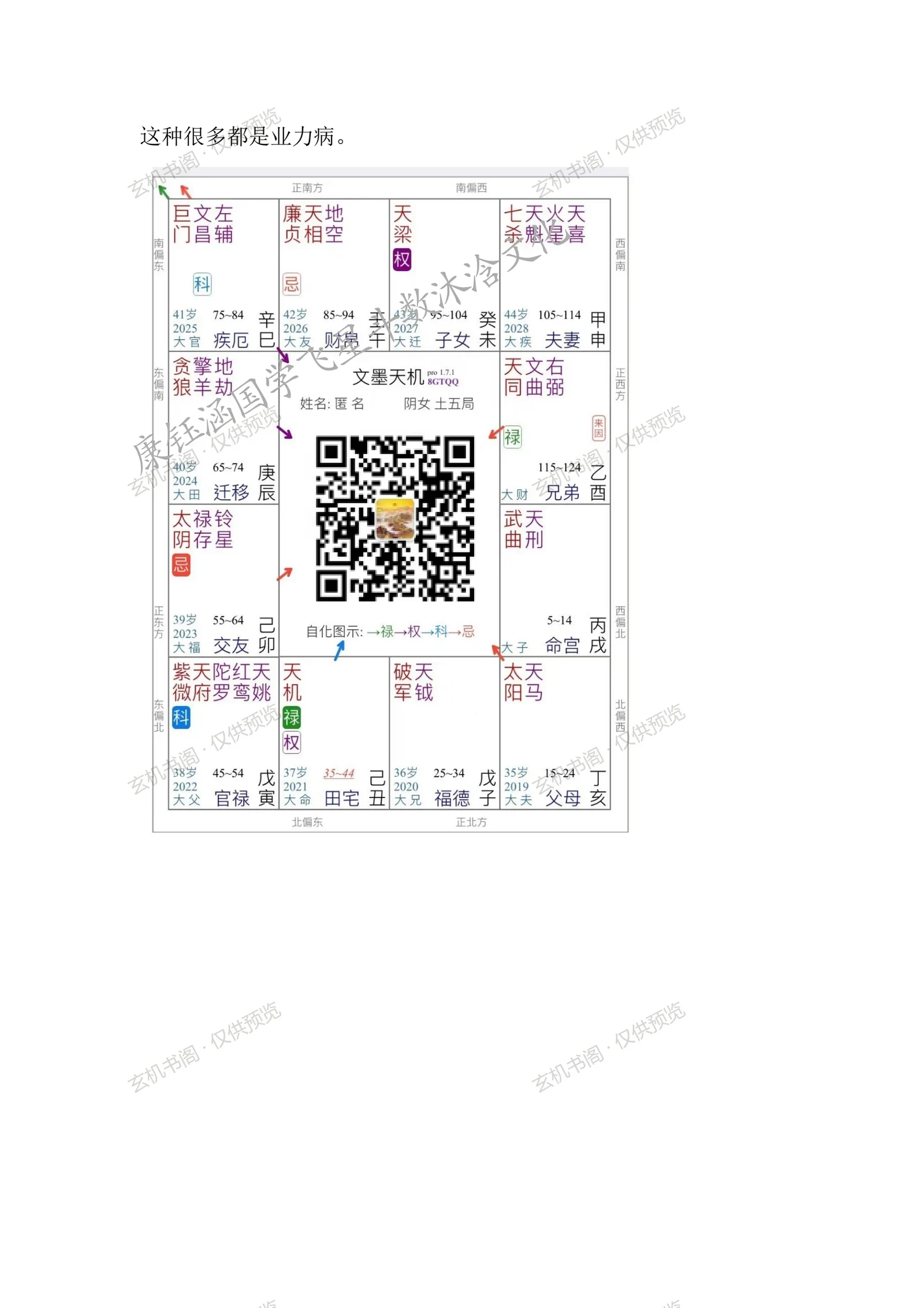
Sample charts: red natal, green decade circles
Key Points
Overlapping palaces layers natal, decade, and annual charts
Annual activates, decade marks events, natal receives
Four transformations rely on understanding, not memorization
Twelve palace meanings must be read in transit context
Natal chart is fixed; decade chart changes every ten years